- Tuesday, July 14: Bank of America, Citigroup, Goldman Sachs, JPMorgan Chase, Wells Fargo.
- Wednesday, July 15: Johnson & Johnson, BlackRock, Morgan Stanley.
- Thursday, July 16: Netflix, GE Aerospace, Taiwan Semiconductor Manufacturing Co. (TSMC), UnitedHealth Group.
Members get to take advantage our special AI tools you will not find anywhere else
Earnings Volatility Strategy
Precomputed earnings signals for companies reporting over the next 7 days, with extra emphasis on the next 24 hours. EVS combines grounded AI research, insider activity, analyst context, and valuation framing into an actionable pre-earnings view.
Attaboy Strategy
When companies beat and raise, they make Wall Street analysts look good. They can’t control their emotions and our AI discerns what companies elicit favorable responses and likely upgrades or positive commentary. Get ahead of the street- no need to listen to countless earnings webcasts or plumb the transcripts for positive sentiment. Our AI Attaboy does the heavy lifting for you.
Insider Buying Strategy
Open-market purchases by corporate insiders above $200,000, When corporate insiders buy in front of quarterly earnings, they may be forecasting better earnings than expectations. If the purchases are withing the typical earnings blackout, the greed factor might be too much to contain. Only Form 4 open-market purchases (transaction code P) are shown. Excludes option exercises, gifts, and other non-cash transactions.
Always remember, this is just a starting point. Use these AI tools to help but do your own research. Insomniac Hedge Fund Guy is here to give you an edge on the competition, not replace your brain.
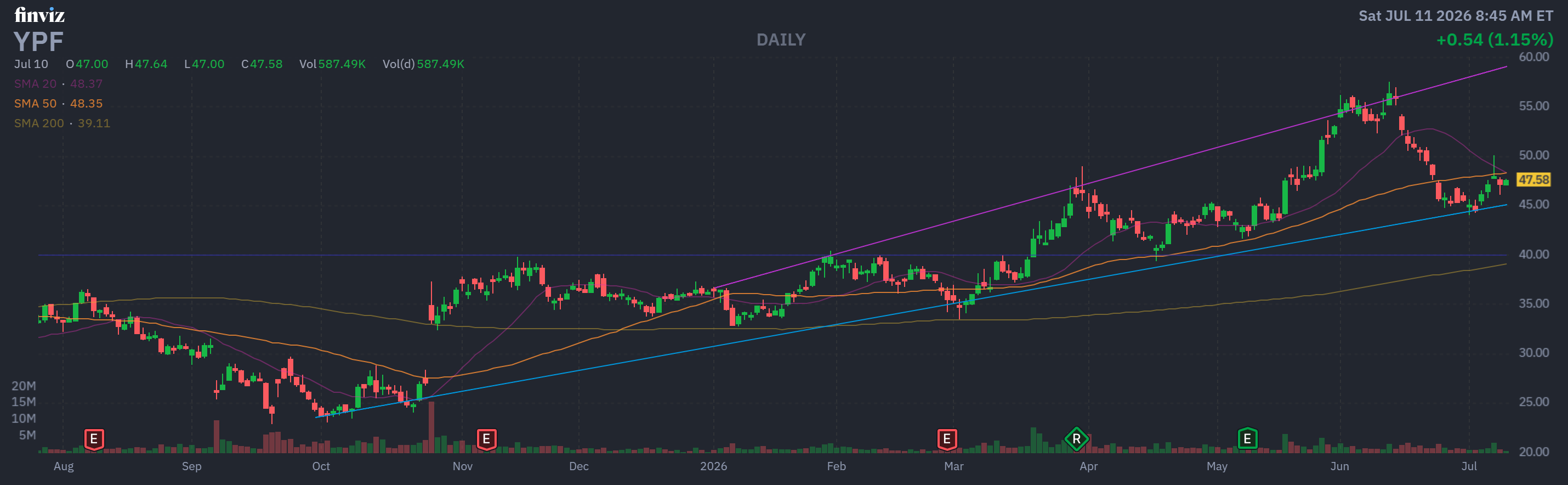
Name: Horacio Daniel Marin
Position: Chairman of the Board/CEO
Transaction Date: 07-02-2026 Shares Bought: 2,840 shares an average price paid of $46.35 for Cost: $131,634
Name: Matias Osvaldo Farina
Position: VP Upstream
Transaction Date: 07-02-2026 Shares Bought: 4,357 shares an average price paid of $46.26 for Cost: $201,555
Company: YPF Sociedad Anonima (YPF)
YPF Sociedad Anónima is an energy firm that in gas upstream and downstream sectors in South America and Argentina. The company also sells fertilizers and crop protection goods, flours, oils, and grains, asphalts, naphtha, and petroleum coke. Furthermore, it is involved in the transportation and commercialization of natural gas to third parties as well as the Midstream and Downstream segments; the separation and fractionation of natural gas liquids, as well as storage and transportation to produce ethane, propane, butane, and gasoline, as well as their commercialization; the development of liquefied natural gas liquefaction capacity; and power generation activities. The company was established in 1977 and is headquartered in Buenos Aires, Argentina.
Horacio Daniel Marín became CEO of YPF January 26, 2024, following his appointment as Chairman of the Board on December 14, 2023. He joined the firm in December 2023, when he was elected to the Board and became Chairman, where he oversaw YPF’s strategic transformation and expansion efforts. Marín joined YPF after 35 years in the oil and gas business, including senior leadership responsibilities at Tecpetrol. He has a Bachelor’s degree in Chemical Engineering from the National University of La Plata, a Master of Science in Petroleum Engineering from the University of Texas at Austin, and has attended the Stanford Executive Program at the Stanford Graduate School of Business.
Matías Osvaldo Farina is the Vice President of Upstream YPF 2024. He is presently the Vice President of Upstream, handling the company’s oil and gas exploration and production operations. He is not the Chief Executive Officer and has never served as Chairman or a member of the YPF Board of Directors; hence, no CEO or Board appointment date is applicable. Prior to joining YPF, Farina had significant technical and operational leadership positions in the energy sector, including Tecpetrol. He has a degree in petroleum engineering from the Instituto Tecnológico de Buenos Aires.
Insomniac Hedge Fund Guy Opinion: YPF is Argentina’s largest integrated energy company, operating across oil and gas exploration, production, refining, petrochemicals, and fuel retail. The company’s biggest opportunity is the Vaca Muerta shale formation, one of the world’s largest unconventional oil and gas resources.
YPF’s competitive advantage comes from its dominant domestic market position, extensive infrastructure, and government-backed access to strategic energy assets. While this provides scale, state ownership also exposes the company to political intervention and regulated fuel pricing.
Over the past five years, revenue has grown at a high-single-digit to low-double-digit annual rate, supported by rising shale production and improved energy prices. Unlike software businesses, YPF has low recurring revenue (under 20%), as most revenue comes from commodity-based oil and gas sales. Net revenue retention is not applicable for its business model.
Management has prioritized increasing production from Vaca Muerta, reducing costs, and improving operational efficiency while balancing government policy objectives. Recent results have shown stronger profitability than historical levels, helped by higher production, better margins, and disciplined capital spending, although earnings remain sensitive to oil prices and Argentina’s economic environment.
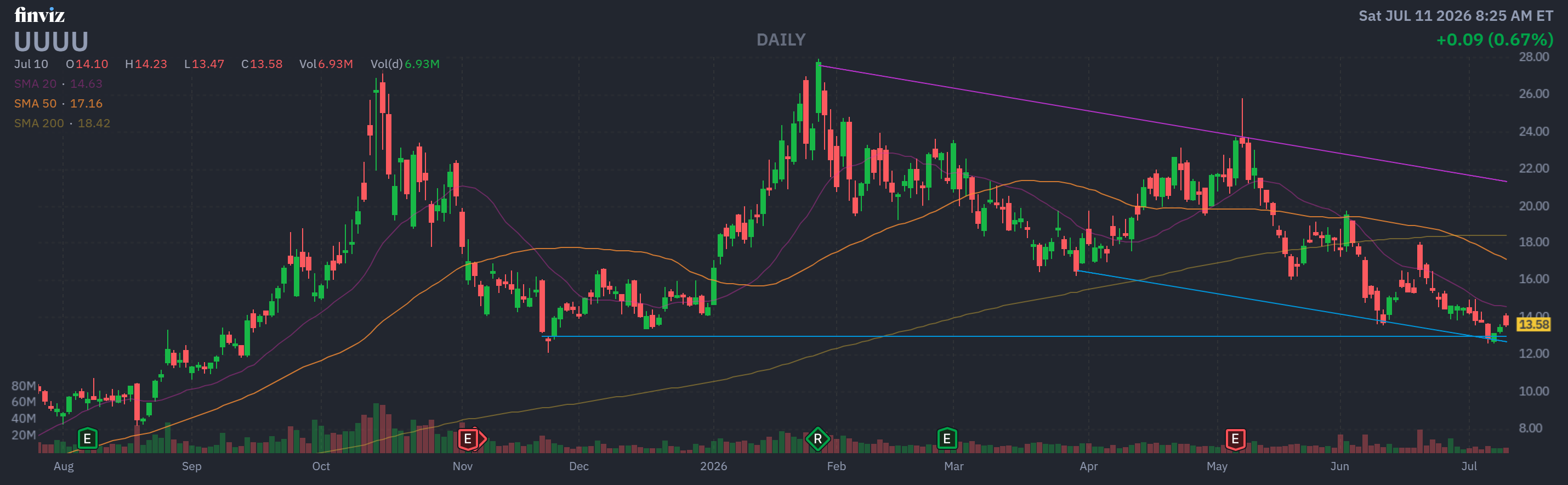
Name: Ross R. Bhappu
Position: President and CEO
Transaction Date: 07-07-2026 Shares Bought: 74,000 shares an average price paid of $13.08 for Cost: $967,920
Name: Bruce D. Hansen
Position: Director
Transaction Date: 07-08-2026 Shares Bought: 4,000 shares an average price paid of $12.70 for Cost: $50,780
Company: Energy Fuels Inc. (UUUU)
Energy Fuels Inc. and its subsidiaries operate in the exploration, recovery, recycling, exploration, operation, development, permitting, evaluation, and sale of uranium mineral properties in the United States. It operates in three segments: uranium, REE, and HMS. It manufactures and sells vanadium pentoxide, rare earth elements, carbonate, and heavy mineral sands including ilmenite, rutile, zircon, and monazite. The company was previously known as Volcanic Metals Exploration Inc., but it changed its name to Energy Fuels Inc. in May 2006. Energy Fuels Inc. was established in 1987 and is based in Lakewood, Colorado.
Ross R. Bhappu has been President and CEO of Energy Fuels Inc. since April 15, 2026, having first joined the firm as President on August 4, 2025, as part of the company’s long-term leadership succession strategy. He was appointed to the Board of Directors concurrently with his appointment as CEO. Before joining Energy Fuels, Bhappu worked with Resource Capital Funds for nearly 25 years, where he directed mining-focused private equity investments and held senior leadership positions in the global mining business. He earned a Ph.D. in Mineral Economics from the Colorado School of Mines, as well as B.S. and M.S. degrees in Metallurgical Engineering from the University of Arizona.
Bruce D. Hansen has been a Director at Energy Fuels Inc. since January 2007, when he joined the company’s Board of Directors. On June 11, 2025, he was appointed Chairman of the Board, succeeding J. Birks Bovaird, who had held the position for nearly two decades. Hansen is a retired mining executive with over 40 years of industry experience. He previously served as CEO and CFO of General Moly Inc. and held various leadership positions, including CFO, at Newmont Mining Corporation. He earned a Master of Business Administration in Finance from the University of New Mexico and a Bachelor of Science in Mining Engineering from the Colorado School of Mines.
Insomniac Hedge Fund Guy Opinion: Energy Fuels is North America’s leading uranium producer with a unique twist—it is also building a business in rare earth elements and critical minerals. The company owns the White Mesa Mill, the only conventional uranium mill operating in the U.S., giving it a strategic advantage as governments prioritize domestic nuclear fuel supply.
The company’s moat comes from its licensed processing infrastructure, large uranium resource base, and ability to process multiple critical minerals. Replacing these assets would require years of permitting and significant capital, creating high barriers to entry.
Over the past five years, revenue has been volatile because uranium production depends on market prices and contract timing rather than steady sales. Unlike software or service businesses, Energy Fuels has little recurring revenue, and net revenue retention is not applicable.
Management, led by CEO Mark Chalmers, has focused on maintaining a strong balance sheet while positioning the company to benefit from rising uranium demand and the growing rare earth supply chain outside China. This long-term strategy has diversified the business beyond uranium alone.
Profitability has historically been inconsistent due to fluctuating uranium prices, but the company remains financially stronger than many mining peers, with low debt and substantial cash reserves. Future earnings are expected to improve if uranium prices remain elevated and rare earth production scales successfully.
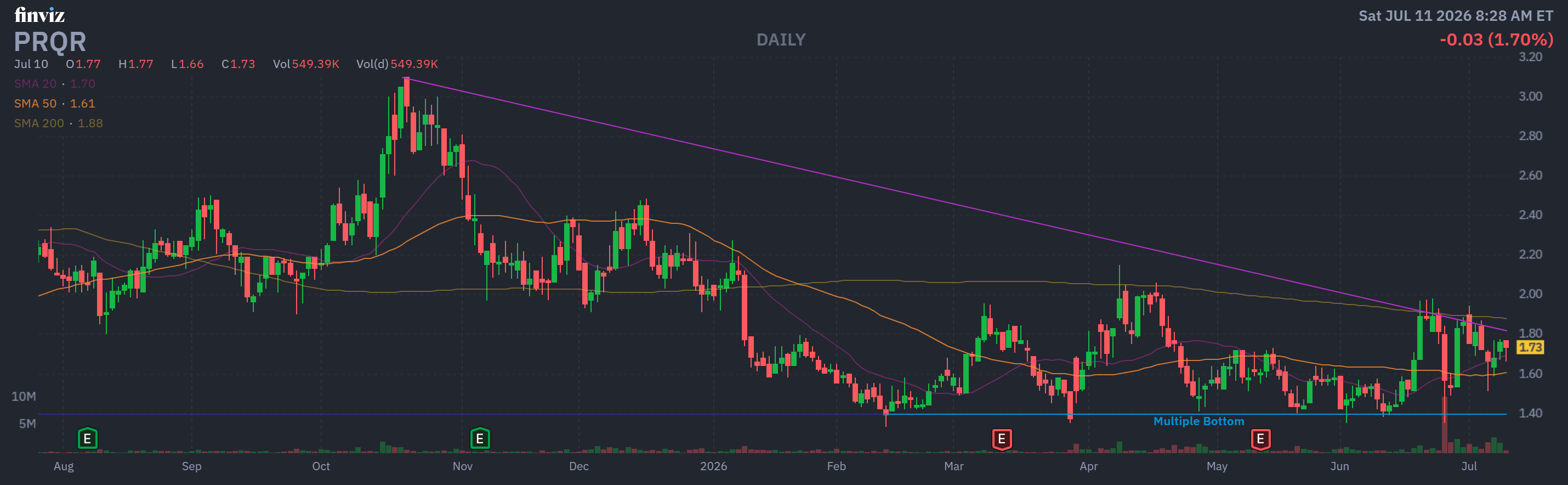
Name: Daniel Anton de Boer
Position: Chief Executive Officer
Transaction Date: 07-07-2026 Shares Bought: 150,000 shares an average price paid of $1.59 for Cost: $238,500
Company: ProQR Therapeutics N.V. (PRQR)
ProQR Therapeutics N.V., a clinical-stage biotechnology firm, specializes in of innovative therapeutic medications. The firm uses its Axiomer RNA editing technology to provide an RNA editing platform for genetic illnesses that have unmet needs. AX-0810, the company’s primary pharmaceutical candidate, aims to treat cholestatic disorders by targeting na-taurocholate cotransporting polypeptide. It has a research and partnership agreement with Eli Lilly & Company to find, develop, and commercialize potential novel treatments for genetic illnesses of the liver and nervous system. The company was established in 2012 and is headquartered in Leiden, Netherlands.
Daniel Anton de Boer founded ProQR Therapeutics N.V. and has been the company’s CEO since February 21, 2012. He also joined the Board of Directors as an Executive Director in 2012, where he contributed to the company’s long-term strategy and the evolution of its RNA editing platform for rare diseases. Prior to creating ProQR, de Boer was a successful technology entrepreneur who oversaw multiple software and IT companies.
Insomniac Hedge Fund Guy Opinion: ProQR Therapeutics is a clinical-stage biotechnology company developing RNA-based medicines for rare genetic diseases. Unlike established biotech firms, ProQR currently generates minimal recurring commercial revenue and depends largely on partnerships, milestone payments, and cash reserves to fund its research pipeline.
The company’s moat lies in its proprietary RNA editing technology and expertise in treating rare diseases. If its clinical programs succeed, ProQR could address markets with significant unmet medical needs. However, the business remains highly dependent on clinical trial outcomes and regulatory approvals.
Over the past five years, revenue has been volatile, reflecting collaboration payments rather than product sales. Recurring revenue is essentially 0%, and net revenue retention is not applicable because the company does not have a subscription or recurring customer model.
Management has strategically shifted the company toward RNA editing after discontinuing earlier programs, focusing capital on higher-potential assets while maintaining financial discipline.
Profitability remains negative, which is typical for a clinical-stage biotech. The company continues to invest heavily in research and development, with losses expected until a product reaches commercialization or additional partnerships are secured.
This blog is solely for educational purposes and the author’s own amusement. IT IS NOT INVESTMENT ADVICE. Think of the blog as part of my personal investment journal that I am willing to share with the DIY investor. We could be long, short, or have no position at all in any of the stocks mentioned and express no written or implied obligation to disclose any of that. Nothing contained here constitutes a recommendation to buy or sell any security. Investing involves risk, including the possible loss of principal, and past performance is not indicative of future results.
“The insomniac hedge fund guy” is a moniker Harvey Sax, the portfolio manager for The Insiders Fund” has used from time to time on email, blog ,and social media posts. While Mr. Sax is the portfolio manager of The Insiders Fund, these posts are not communications from, nor endorsed by, Alpha Wealth Funds, LLC or any of its managed funds. References to Alpha Wealth Funds or its affiliates are for identification only and do not imply sponsorship or approval.
All company names, logos, and trademarks belong to their respective owners. The use of company logos is solely for descriptive and illustrative purposes under fair use. Any information provided is based on publicly available data and should not be considered financial, investment, or legal advice. Readers should conduct their own research or consult with a professional before making any investment decisions. Insiders sell the stock for many reasons, but they generally buy for just one – to make money. You’ve always heard the best information is inside information. Everyone with any stock market experience pays close attention to what insiders are doing. After all, who knows a business better than the people running it? Officers, directors, and 10% owners are required to inform the public through a Form 4 Filing of any transaction, buy, sell, exercise, or any other within 48 hours of doing so.
This info is available for free from the SEC’s Web site, Edgar, although we subscribe to SECForm4 as they provide a way to manage and make sense of the vast realms of data. I’ve tried a lot of vendors. SECForm4 is one of the smaller ones, but I like supporting Frank. He is not arrogant. He’s helpful and has great prices. He also trades on his own data, so I like people that eat what they kill. The bar is different from selling because the natural state of management is to be a seller. This is because most companies provide significant amounts of management compensation packages as stock and options. Therefore, we analyze unusual patterns with selling, such as insiders selling 25 percent or more of their holdings or multiple insiders selling near 52-week lows. Another red flag is large planned sale programs that start without warning. Unfortunately, the public information disclosure requirements about these programs, referred to as Rule 10b5-1, are horrendously poor. Also, planned sales that pop up out of nowhere are basically sales and are seeking cover under this corporate welfare loophole.
I also generally ignore 10 percent shareholders as they tend to be OPM (other people’s money) and perhaps not the smart money on which we are trying to read the tea leaves. I say generally because some 10% shareholders are great investor, think Warren Buffett and others. Of course, insiders can also be wrong about their Company’s prospects. Don’t let anyone fool you into believing they never make mistakes. Do your own analysis. They can easily be wrong, and in many cases, maybe most cases, have no more idea what the future may hold than you or me. In short, you can lose money following them. We have, and we curse aloud; what were they thinking!
We like Fly on the Wall for keeping up with what events might be happening, analysts’ comments, and whatever else could be moving the stock. Dow Jones news service is an essential tool, but many services pick up their feed like they do Bloomberg. My assistant probes the 10k for a reasonable description of the business. I’ve found that to be the most accurate and succinct place to find out what a business actually does.