 Name: David A. Ricks
Position: Director
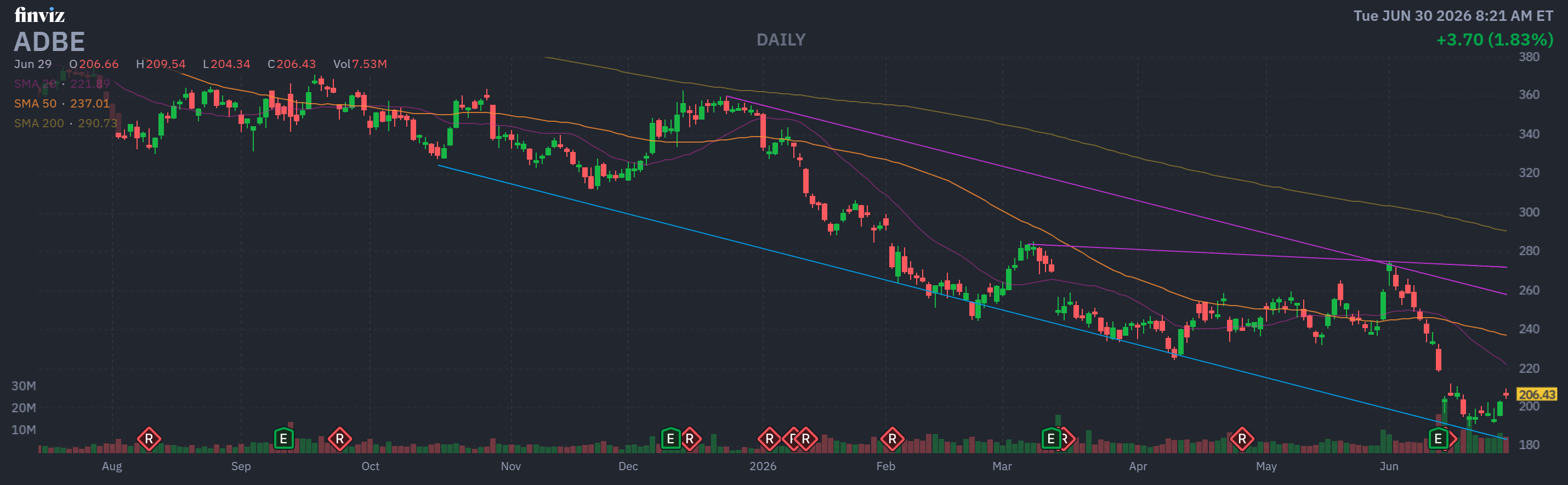
Transaction Date: 06-25-2026 Shares Bought: 10,000 shares an average price paid of $194.51 for Cost: $1,945,130
Company: Adobe Inc. (ADBE)
Adobe Inc. is a global technology firm that produces software and services for digital content production, document management, marketing, and customer experience management. Its goods cater to a diverse spectrum of users, including creative professionals, businesses, students, marketers, developers, and enterprises. Adobe is well recognized for its creative software portfolio, digital experience solutions, and document services, which enable clients to create, manage, and optimize content and consumer interactions across numerous platforms. The company sells its products through direct web channels, app stores, merchants, and strategic partners throughout the world. Formerly known as Adobe Systems Incorporated, the corporation changed its name in 2018. Adobe was created in 1982 and has its headquarters in San Jose, California.
David A. Ricks has been an independent director of Adobe Inc. since April 2024, when he joined the company’s Board of Directors. Ricks has never served as Chief Executive Officer of Adobe, but rather as a non-executive director. He is best known as the Chairman and CEO of Eli Lilly & Company, where he has served since 2017, and offers considerable experience in global operations, innovation, and strategic leadership to Adobe’s board. Before becoming CEO, he held various senior positions at Eli Lilly in the United States, Canada, and China. Ricks holds a Bachelor of Science degree in Industrial Engineering from Purdue University and an MBA from Indiana University’s Kelley School of Business.
Insomniac Hedge Fund Guy Opinion: Adobe is one of the highest-quality software businesses in the world. Its Creative Cloud, Document Cloud, and Experience Cloud products dominate creative design, PDF workflows, and digital marketing. Photoshop, Illustrator, Acrobat, and Premiere Pro remain industry standards, creating a powerful ecosystem that is difficult for professionals to leave.
Adobe’s competitive moat is built on brand, switching costs, and an integrated product suite. Creative professionals invest years mastering Adobe’s software, while enterprises rely on Acrobat and Experience Cloud for mission-critical workflows. The company generates over 95% of its revenue from recurring subscriptions, providing exceptional visibility and predictable cash flow.
Over the past five years, Adobe has delivered approximately 10–13% annual revenue growth, supported by subscription expansion and steady customer retention. Net revenue retention is estimated to remain above 100%, driven by upselling higher-value products and AI-powered features rather than aggressive customer acquisition.
CEO Shantanu Narayen has transformed Adobe into a subscription powerhouse and continues to position the company at the forefront of generative AI through Adobe Firefly and AI-enhanced creative tools. Management has consistently balanced innovation, profitability, and shareholder returns.
Profitability remains outstanding. Adobe regularly posts operating margins above 35% while generating substantial free cash flow, making it one of the most profitable large-cap software companies. This insider buying at Adobe — a board member committing nearly $2 million of personal capital — reinforces the market’s confidence in Adobe’s AI-driven growth story.
 Name: Perry A. Sook
Position: Chief Executive Officer
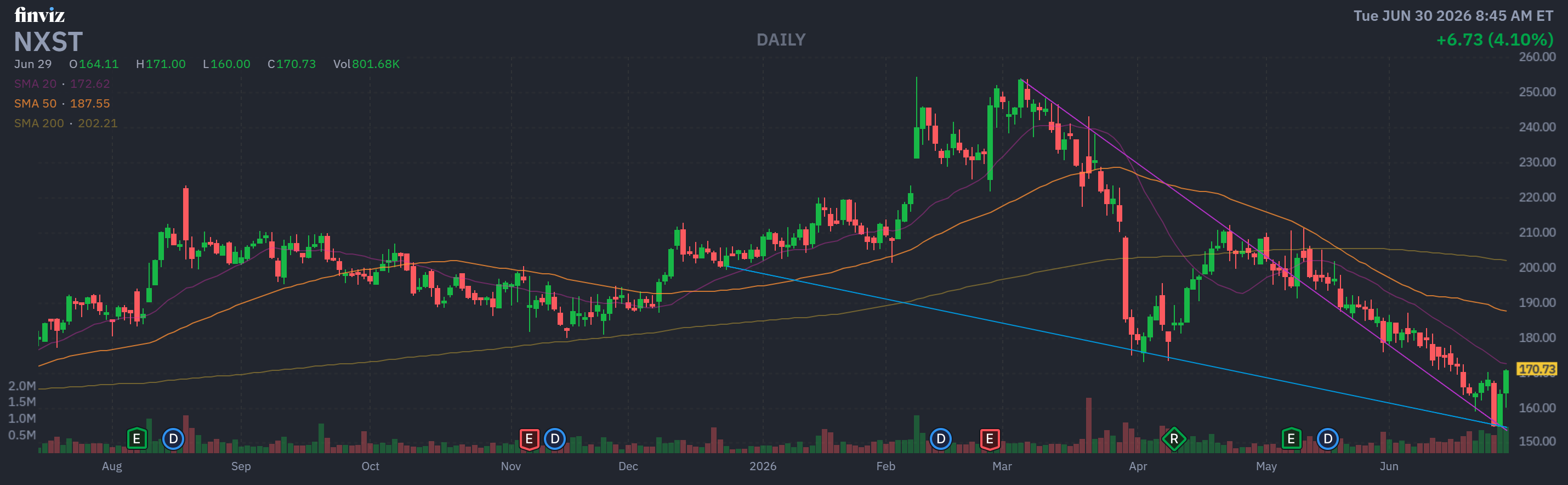
Transaction Date: 06-26-2026 Shares Bought: 12,235 shares an average price paid of $162.26 for Cost: $1,985,309
Company: Nexstar Media Group Inc. (NXST)
Nexstar Media Group, Inc. is a multi-platform media firm that develops and distributes local and national news, sports, and entertainment content in the United States. The company owns and runs several television and radio stations, national cable network assets, and a diverse portfolio of digital products such as websites, mobile applications, and linked television platforms. Nexstar makes money from advertising, television content, and digital media services, and it works with major broadcast networks like ABC, NBC, FOX, CBS, and The CW. Formerly known as Nexstar Broadcasting Group, Inc., the corporation changed its name in 2017. Nexstar Media Group was created in 1996 and is based in Irving, Texas.
Perry A. Sook has been Chairman and CEO of Nexstar Media Group, Inc. since its inception in 1996, and has been on the company’s Board of Directors since then. Nexstar has risen from a modest television station operator to the largest local television broadcasting corporation in the United States thanks to a series of strategic acquisitions and digital development initiatives led by him. Sook worked as an executive for various broadcasting organizations before creating Nexstar, including Superior Communications and WSMV-TV. He holds a Bachelor of Science degree in Communications from Ohio University and has completed executive education programs in broadcasting and management.
Insomniac Hedge Fund Guy Opinion: Nexstar Media Group is the largest owner of local television stations in the U.S., operating more than 200 stations across major networks including CBS, NBC, ABC, and Fox. Beyond traditional broadcasting, the company owns NewsNation, The CW, and digital media assets, generating revenue from advertising, retransmission fees, and political advertising.
The company’s moat comes from its unmatched local market presence and long-term distribution agreements with cable and satellite providers. Retransmission consent fees provide a highly recurring revenue stream, while political advertising creates significant earnings upside during election years.
Over the past five years, revenue has grown at a healthy pace, supported by acquisitions and higher retransmission revenue. Roughly 50% of revenue is recurring, primarily from distribution fees, while advertising remains cyclical. Although Nexstar does not disclose a net revenue retention metric, its affiliate agreements and market leadership provide strong customer stability.
Management, led by CEO Perry Sook, has built an impressive track record of disciplined acquisitions, debt reduction, and shareholder-friendly capital allocation through dividends and share repurchases. The company has consistently integrated acquisitions while maintaining strong cash generation.
Profitability remains one of Nexstar’s strengths. Even outside election years, the business generates robust free cash flow and healthy operating margins. Election cycles provide meaningful earnings spikes, allowing management to strengthen the balance sheet and return excess capital to shareholders. This kind of CEO-led insider buying at Nexstar signals strong internal conviction heading into an election year.
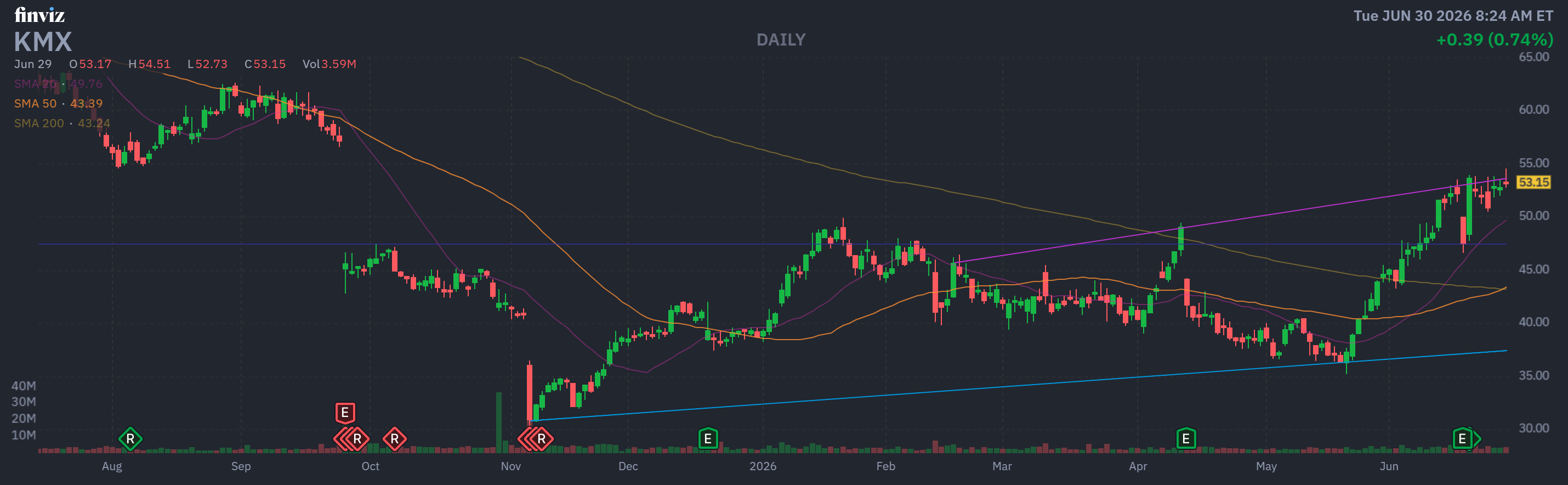 Name: Sona Chawla
Position: Director
Transaction Date: 06-25-2026 Shares Bought: 2,000 shares an average price paid of $53.39 for Cost: $106,780
Name: Mark F. ONeil
Position: Director Transaction Date: 06-24-2026 Shares Bought: 9,600 shares an average price paid of $52.36 for Cost: $502,656
Company: Carmax Inc. (KMX)
CarMax, Inc. and its subsidiaries sell used vehicles and related products in the United States. CarMax has two business segments: CarMax Sales Operations and CarMax Auto Finance. The CarMax Sales Operations segment provides customers with a variety of used vehicle makes and models, including domestic, imported, and luxury vehicles, as well as hybrid and electric vehicles; used vehicle auctions; extended warranty plans for customers at the time of sale; and reconditioning and vehicle repair services. The CarMax Auto Finance sector offers financing options to retail clients across a wide credit spectrum through partnerships with numerous financial institutions. The company was created in 1993 and is headquartered in Richmond, Virginia.
Sona Chawla has been an independent director at CarMax, Inc. since 2017, when she joined the company’s Board of Directors. She has never served as CarMax’s CEO, instead working as a non-executive director with substantial experience in digital transformation, e-commerce, technology, and consumer interaction. Chawla most recently served as CDW Corporation’s Chief Growth and Innovation Officer from 2020 to 2025, having previously held senior leadership positions at Kohl’s Corporation, Walgreens Boots Alliance, Inc., and Dell Technologies, Inc. She also has a CERT Certification in Cybersecurity Oversight from the Software Engineering Institute at Carnegie Mellon University.
Mark F. O’Neil has been an independent director of CarMax, Inc. since joining the board in 2019. He has never served as CarMax’s CEO, instead acting as a non-executive director with extensive experience in automotive retail, technology, and digital transformation. O’Neil previously worked as Cox Automotive’s Chief Operating Officer and as the CEO of Dealertrack Technologies, Inc. from 2001 to 2015, where he also served as Chairman of the Board from 2005 to 2015. He holds a Bachelor of Science degree in Electrical Engineering from the University of South Florida and an MBA from Harvard Business School.
Insomniac Hedge Fund Guy Opinion: CarMax is the largest used car retailer in the U.S., selling vehicles through a nationwide network of stores and a growing omnichannel platform. The company also generates high-margin income from financing, extended protection plans, and wholesale vehicle auctions, creating multiple revenue streams beyond retail sales.
CarMax’s competitive advantage lies in its trusted brand, nationwide scale, pricing transparency, and integrated digital buying experience. While used-car retail is highly competitive, few players can match CarMax’s inventory selection, logistics network, and financing capabilities. These advantages have helped it remain the market leader despite economic cycles.
Over the past five years, revenue growth has been modest, reflecting the volatility of the used vehicle market and changing interest rates. Unlike software businesses, CarMax has very little recurring revenue, as sales are primarily transaction-based. However, financing and service products provide a steadier stream of profits and strengthen customer relationships. Net revenue retention is not a relevant metric for the business.
Management has successfully navigated one of the toughest periods in automotive retail by maintaining inventory discipline, improving operational efficiency, and expanding digital capabilities. The company has also continued returning capital to shareholders through share repurchases.
Profitability remains below peak pandemic levels due to higher financing costs and softer consumer demand, but margins have shown signs of recovery as the used-car market stabilizes. Insider buying from two independent directors at CarMax is a useful signal in an industry currently facing headwinds.
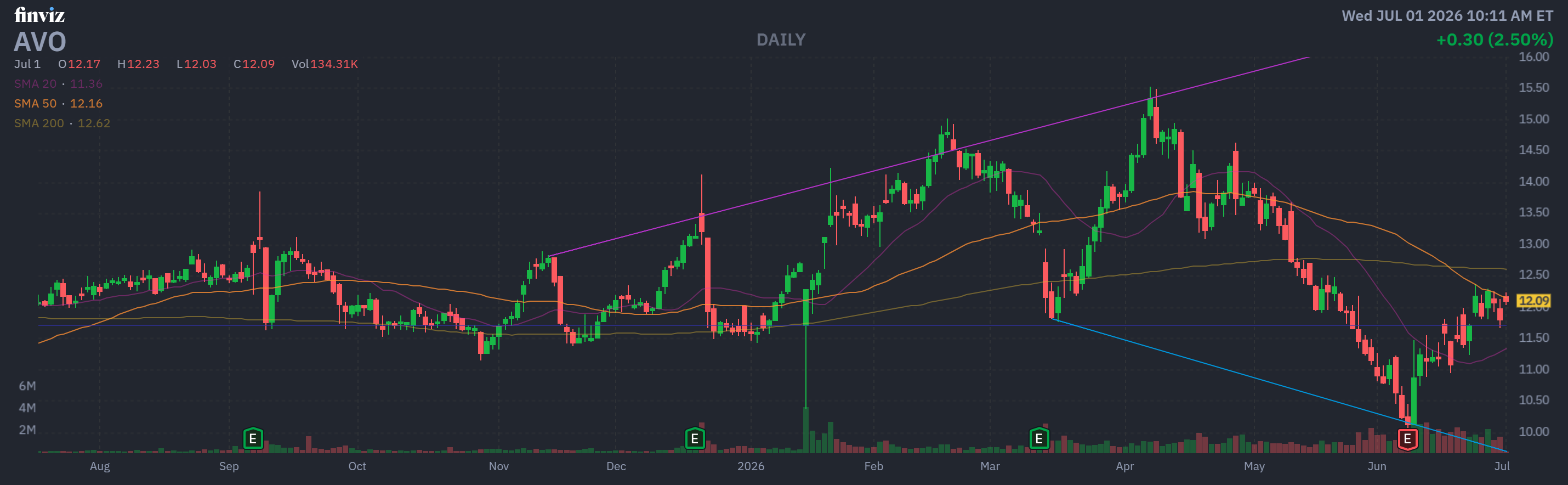 Name: Jay A. Pack
Position: Director
Transaction Date: 06-30-2026 Shares Bought: 40,000 shares an average price paid of $12.10 for Cost: $484,000
Name: Bruce C. Taylor
Position: Director
Transaction Date: 06-22-2026 Shares Bought: 100,000 shares an average price paid of $11.28 for Cost: $1,128,269
Company: Mission Produce, Inc. (AVO)
Mission Produce, Inc. sources, farms, packages, markets, and distributes avocados, mangos, and blueberries to food stores, wholesalers, and foodservice consumers in the United States and around the world. The company is divided into three segments: marketing and distribution, international farming, and blueberries. It also offers ripening, bagging, bespoke packing, logistics management, and quality assurance services. In addition, the organization provides merchandising and promotional help, as well as market trend information and training. Mission Produce, Inc. was founded in 1983 and is based in Oxnard, California.
Jay A. Pack has been an independent director at Mission Produce, Inc. since October 2020, when he joined the company’s Board of Directors in connection with its initial public offering. Pack is a long-time food industry executive with extensive experience in finance, operations, and corporate governance. He previously served as Executive Vice President and Chief Financial Officer of Fresh Del Monte Produce Inc. and held senior leadership positions in the agricultural and consumer products sectors. His experience in financial management and worldwide operations has been beneficial to Mission Produce’s board. Pack earned a Bachelor of Science degree in Business Administration from the University of Southern California.
Bruce C. Taylor has been an independent director of Mission Produce, Inc. since October 2020, when he joined the company’s Board of Directors following its initial public offering. Taylor is an experienced executive in the food and consumer products industries, having previously served as President and CEO of Taylor Fresh Foods, Inc. and held top positions in the agricultural sector. He has decades of experience in fresh produce operations, supply chain management, and strategic expansion, which provides Mission Produce’s board with important industry perspectives. Taylor received a Bachelor of Science degree in Agricultural Business from California Polytechnic State University, San Luis Obispo.
Insomniac Hedge Fund Guy Opinion: Mission Produce is the world’s largest avocado distributor, sourcing, ripening, packaging, and marketing avocados while expanding into mangoes and other fresh produce. The business benefits from a global sourcing network that allows it to supply customers year-round, reducing dependence on any single growing region.
Its moat isn’t brand power—it’s scale, logistics, and relationships. Mission has built an integrated supply chain with sourcing operations across multiple countries, making it difficult for smaller competitors to match its reliability and efficiency. That said, the avocado business remains a commodity market, so pricing and harvest conditions can heavily influence results.
Over the past five years, revenue has grown at a mid-single-digit pace, although results have been volatile due to fluctuating avocado prices. The company has little true recurring revenue, and management does not disclose a net revenue retention metric. Instead, long-term value comes from repeat business with major grocery retailers and foodservice customers.
Management has done a solid job expanding the global sourcing footprint while investing in distribution and ripening infrastructure. Their disciplined approach has helped Mission navigate supply disruptions and changing market conditions.
Profitability has improved from recent lows as avocado pricing normalized, though margins remain much thinner than those of branded consumer companies. Earnings can swing significantly depending on supply, demand, and fruit pricing.
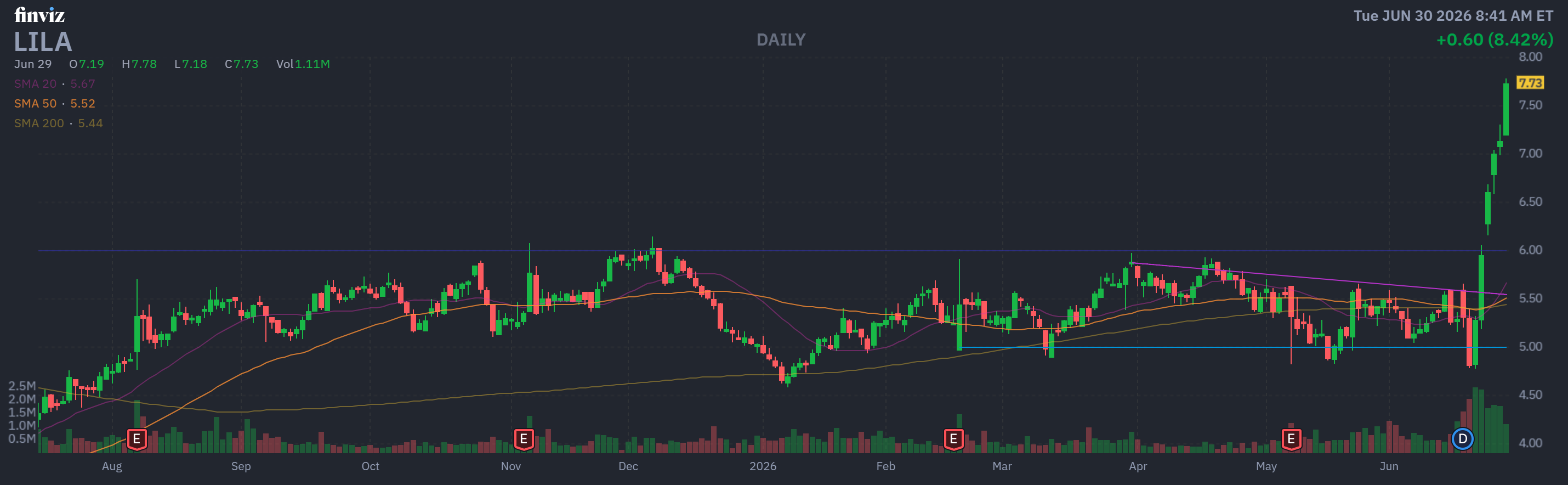 Name: John C. Malone
Position: Director Emeritus
Transaction Date: 06-25-2026 Shares Bought: 354,399 shares an average price paid of $6.96 for Cost: $2,467,798
Company: Liberty Latin America Ltd. (LILA)
Liberty Latin America Ltd. and its subsidiaries offer fixed, mobile, and subsea telecommunications services in Puerto Rico, Panama, Costa Rica, Jamaica, Latin America and the Caribbean, the Bahamas, Trinidad & Tobago, Barbados, Curacao, Chile, and globally. The company operates in five segments: C&W Caribbean, C&W Panama, Liberty Networks, Liberty Puerto Rico, and Liberty Costa Rico. It provides residential and business customers with communications and entertainment services such as video, broadband internet, fixed-line, telephony, and mobiles, as well as business products and services such as enterprise-grade connectivity, data centers, hosting, and managed solutions, as well as information technology solutions for small and medium-sized businesses, international corporations, and governmental agencies. The company was established in 2017 and is headquartered in Hamilton, Bermuda.
John C. Malone has been Director Emeritus of Liberty Latin America Ltd. since January 2025, following his service as a member of the company’s Board of Directors beginning in July 2018. He has never been the Chief Executive Officer of Liberty Latin America, instead working as a strategic advisor and important board member. Malone is widely regarded as one of the most powerful persons in the worldwide cable and telecommunications industries, having founded and overseen multiple media and communications companies, including acting as Chairman Emeritus of Liberty Media Corporation. He received bachelor’s degrees in Economics and Electrical Engineering from Yale University, a master’s degree from New York University, and a doctorate in Operations Research from Johns Hopkins University.
Insomniac Hedge Fund Guy Opinion: Liberty Latin America is a telecommunications provider serving more than 20 countries across Latin America and the Caribbean. The company offers broadband, mobile, pay TV, enterprise connectivity, and data center services, with key markets including Puerto Rico, Panama, Jamaica, and Costa Rica.
The investment case centers on infrastructure rather than rapid growth. Its extensive fiber, cable, and wireless networks create high barriers to entry, while bundled services help reduce customer churn. Approximately 70–80% of revenue is recurring, generated from monthly subscriptions, although growth has been modest as mature markets offset expansion in broadband and mobile.
Over the past five years, revenue growth has been relatively flat, reflecting currency headwinds, asset sales, and competitive pressures. The company does not disclose a net revenue retention metric, but its subscription-based model provides a stable cash flow profile.
CEO Balan Nair has focused on simplifying operations, reducing leverage, expanding fiber networks, and improving free cash flow. Capital allocation has become increasingly disciplined, with management prioritizing operational efficiency over aggressive expansion.
Profitability remains mixed. EBITDA margins are healthy for a telecom operator, but high depreciation, interest expense, and capital expenditures continue to weigh on net earnings. As a result, the company has struggled to consistently translate operating performance into bottom-line profits.
This blog is solely for educational purposes and the author’s own amusement. IT IS NOT INVESTMENT ADVICE. Think of the blog as part of my personal investment journal that I am willing to share with the DIY investor. We could be long, short, or have no position at all in any of the stocks mentioned and express no written or implied obligation to disclose any of that. Nothing contained here constitutes a recommendation to buy or sell any security. Investing involves risk, including the possible loss of principal, and past performance is not indicative of future results.
“The insomniac hedge fund guy” is a moniker Harvey Sax, the portfolio manager for The Insiders Fund” has used from time to time on email, blog ,and social media posts. While Mr. Sax is the portfolio manager of The Insiders Fund, these posts are not communications from, nor endorsed by, Alpha Wealth Funds, LLC or any of its managed funds. References to Alpha Wealth Funds or its affiliates are for identification only and do not imply sponsorship or approval.
All company names, logos, and trademarks belong to their respective owners. The use of company logos is solely for descriptive and illustrative purposes under fair use. Any information provided is based on publicly available data and should not be considered financial, investment, or legal advice. Readers should conduct their own research or consult with a professional before making any investment decisions. Insiders sell the stock for many reasons, but they generally buy for just one – to make money. You’ve always heard the best information is inside information. Everyone with any stock market experience pays close attention to what insiders are doing. After all, who knows a business better than the people running it? Officers, directors, and 10% owners are required to inform the public through a Form 4 Filing of any transaction, buy, sell, exercise, or any other within 48 hours of doing so.
This info is available for free from the SEC’s Web site, Edgar, although we subscribe to SECForm4 as they provide a way to manage and make sense of the vast realms of data. I’ve tried a lot of vendors. SECForm4 is one of the smaller ones, but I like supporting Frank. He is not arrogant. He’s helpful and has great prices. He also trades on his own data, so I like people that eat what they kill. The bar is different from selling because the natural state of management is to be a seller. This is because most companies provide significant amounts of management compensation packages as stock and options. Therefore, we analyze unusual patterns with selling, such as insiders selling 25 percent or more of their holdings or multiple insiders selling near 52-week lows. Another red flag is large planned sale programs that start without warning. Unfortunately, the public information disclosure requirements about these programs, referred to as Rule 10b5-1, are horrendously poor. Also, planned sales that pop up out of nowhere are basically sales and are seeking cover under this corporate welfare loophole.
I also generally ignore 10 percent shareholders as they tend to be OPM (other people’s money) and perhaps not the smart money on which we are trying to read the tea leaves. I say generally because some 10% shareholders are great investor, think Warren Buffett and others. Of course, insiders can also be wrong about their Company’s prospects. Don’t let anyone fool you into believing they never make mistakes. Do your own analysis. They can easily be wrong, and in many cases, maybe most cases, have no more idea what the future may hold than you or me. In short, you can lose money following them. We have, and we curse aloud; what were they thinking!
We like Fly on the Wall for keeping up with what events might be happening, analysts’ comments, and whatever else could be moving the stock. Dow Jones news service is an essential tool, but many services pick up their feed like they do Bloomberg. My assistant probes the 10k for a reasonable description of the business. I’ve found that to be the most accurate and succinct place to find out what a business actually does.