Last week, I experienced two insightful realizations. While these seem obvious in retrospect, predicting their occurrence is the trick. Not impossible but reminiscent of the saying, “What’s the difference between being early and being wrong? The Answer- None.” Commodity inflation is likely to increase, as demonstrated by the closure of the Strait of Hormuz and the resulting stranded hydrocarbons. The elevated input costs will likely permeate the broader economy, increasing input, transportation, and precursor costs, among others. Commodity inflation is likely to increase. Jeffrey Gundlach of Double Line Capital, in my opinion a knowledgeable individual, has stated his belief that the next rate adjustment will likely be an increase rather than a decrease.
The other epiphany was spawned by Jim Cramer and legendary trader Paul Tudor Jones who both think that the supply of new mega prices IPOs Space X, Anthropic, OPEN AI new stock issuance will disrupt the supply demand balance of the equity market.
When that happens is the key. Jones says look as the lock ups. At any rate we don’t want to be the one holding without a chair when the music stops.
Management, led by CEO Terry Duffy, is pragmatic and capital allocation-focused—returning massive cash via dividends while steadily expanding into new areas like crypto derivatives and prediction markets.
Name: Balan Nair
Position: Director
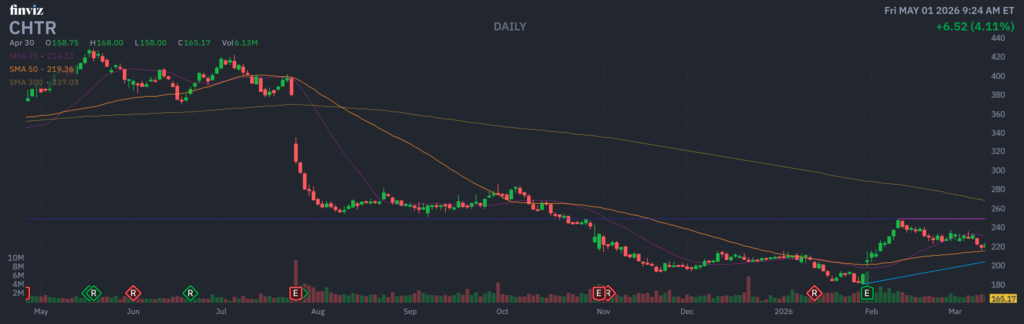
Transaction Date: 04-28-2026 Shares Bought: 1,000 shares an average price paid of $175.46for a cost of $175,460
Name: Christopher L. Winfrey
Position: President and CEO
Transaction Date: 04-28-2026 Shares Bought: 6,936 shares an average price paid of $172.23 for a cost of $1,194,621
Company: Charter Communications Inc. (CHTR)
Charter Communications, Inc. is a broadband connectivity provider in the United States. The company provides subscription-based internet, mobile, video, and voice services; broadband connectivity services, such as fixed internet, WiFi, and mobile; Spectrum internet products; advanced WiFi services; and in-home WiFi, which provides customers with high-performance wireless routers and managed WiFi services to improve their wireless internet experience. It also provides wireline voice communications services based on voice over internet protocol technology, Call Guard, an advanced caller ID and robocall blocking solution, video programming and video services, broadband communications solutions such as internet access, data networking, fiber connectivity, video entertainment, and business telephone services. The company was created in 1993 and is based in Stamford, Connecticut.
Balan Nair joined the Charter Communications Inc. board of directors in May 2013, when he was appointed. He has remained with the company since then, working as an independent director and bringing his significant experience in telecommunications and technology leadership. In addition to his board position, he is President and CEO of Liberty Latin America and has over 20 years of industry experience, including key positions at Liberty Global, AOL, and Qwest Communications. He earned a Bachelor of Science in Electrical Engineering and a Master of Business Administration from Iowa State University.
Christopher L. Winfrey was appointed President and Chief Executive Officer of Charter Communications Inc. on December 1, 2022, after previously serving as Chief Operating Officer and Chief Financial Officer for more than a decade, beginning in November 2010. He has been with Charter since 2010, and was appointed to the company’s board of directors in November 2023, extending his leadership role. As CEO, he is responsible for the company’s strategic direction, network expansion, and operations across broadband and media services. He earned a Bachelor of Science and a Master of Business Administration from the University of Florida.
Insomniac Hedge Fund Guy Opinion: Charter Communications is a classic cable/broadband utility masquerading as a growth stock. Through its Spectrum brand, it provides broadband internet, cable TV, and increasingly mobile services to ~30M+ customers in the U.S. The core business today is broadband—video is in structural decline, and mobile is the “offset narrative.”
The moat used to be local monopolies. Cable infrastructure is expensive to replicate, and Charter still benefits from regional dominance. But that moat is eroding. Fixed wireless from telcos and fiber overbuilds are now real competitors, and subscriber losses are showing up—Charter lost 120,000 internet customers in a recent quarter, highlighting pressure on its core product.
Revenue growth tells the story: essentially flat. Over the last five years, revenue has grown only ~2–3% CAGR, with 2025 revenue ~$54.8B actually declining slightly YoY. This is not a growth business anymore.
That said, the model is highly recurring. Monthly subscriptions make up the vast majority of revenue (~90%+), giving strong visibility. But “recurring” doesn’t mean “growing”—ARPU is flat to down, and customer counts are slipping.
Management, led by CEO Christopher Winfrey, is leaning into bundling (broadband + mobile) and pursuing scale via the pending Cox merger. The strategy is logical: bigger footprint, more pricing power, more cost synergies. Whether that offsets secular decline is the real debate.
Profitability is still solid. Charter generates billions in annual net income and strong free cash flow, but it carries massive leverage (~$90B+ debt), which limits flexibility.
Name: Philip P. Boudreau
Position: EVP AND CFO
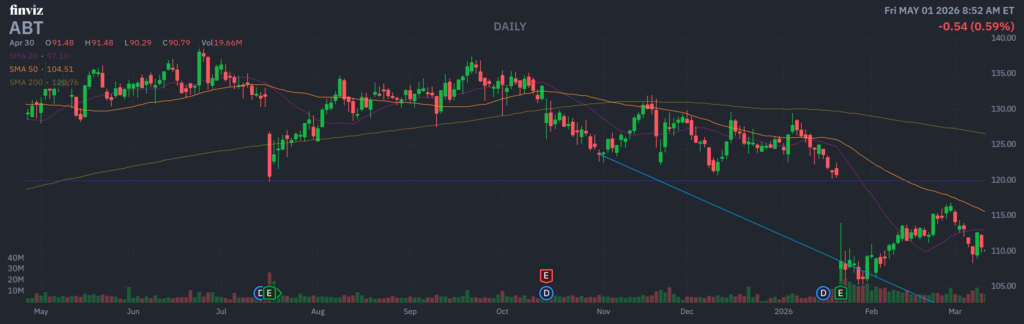
Transaction Date: 04-23-2026 Shares Bought: 2,200 shares an average price paid of $91.50 for a cost of $201,300
Company: Abbott Laboratories (ABT)
Abbott Laboratories and its subsidiaries discover, develop, manufacture, and sell health-care products around the world. It operates in four business segments: established pharmaceutical products, diagnostic products, nutritional products, and medical devices. The company provides generic pharmaceuticals for the treatment of pancreatic exocrine insufficiency, irritable bowel syndrome or biliary spasm, intrahepatic cholestasis or depressive symptoms, gynecological disorder, hormone replacement therapy, dyslipidemia, hypertension, hypothyroidism, hypertriglyceridemia, Ménière’s disease and vestibular vertigo, pain, fever, inflammation, and migraine, as well as anti-infective clarithromycin, influenza vaccine, and products. In addition, the company offers nutritious items for children and adults, as well as infant formula. Abbott Laboratories was founded in 1888 and is headquartered in Abbott Park, Illinois.
Philip P. Boudreau has served as Abbott Laboratories’ Executive Vice President, Finance, and Chief Financial Officer since July 2024. He joined Abbott in 1997 and has spent the past two decades in increasingly senior finance roles spanning divisions such as medical devices, diagnostics, and nutrition. He was named Chief Financial Officer in September 2023 and promoted to Executive Vice President and CFO in 2024. Philip P. Boudreau earned a management degree from Purdue University and also attended the University of Illinois.
Insomniac Hedge Fund Guy Opinion: Abbott is a diversified healthcare machine hiding in plain sight. The company operates across four segments—medical devices, diagnostics, nutrition, and established pharmaceuticals—giving it exposure to everything from glucose monitors to infant formula. Medical devices (especially diabetes care and cardiovascular) are now the primary growth engine, while nutrition and pharma provide steady, emerging-market-driven cash flow.
The moat is diversification plus product entrenchment. Abbott isn’t dependent on a single drug cycle like big pharma. Instead, it owns durable franchises—most notably FreeStyle Libre in diabetes care—embedded in patient workflows. Switching costs are meaningful, especially in devices and diagnostics, and global distribution (particularly in emerging markets) adds another layer of defensibility.
Revenue growth over the past five years has been ~5% CAGR, with 2025 revenue reaching ~$44.3B (+5.7% YoY). The headline numbers are messy because COVID testing revenues surged and then collapsed, masking the underlying business. Strip that out, and the core business is growing mid- to high-single digits, driven by medical devices.
Recurring revenue is solid but less explicit than pure-play medtech peers—likely 50%+ when factoring consumables, diagnostics, and repeat-use devices. Retention is high due to ongoing patient usage (e.g., continuous glucose monitoring).
Management, led by CEO Robert Ford, has handled the post-COVID reset reasonably well, reallocating focus toward higher-growth device segments.
Margins are strong but not elite: ~18% operating margin and mid-20s EBITDA margins. Free cash flow remains healthy and consistent.
Name: Peter J. Arduini
Position: President and CEO
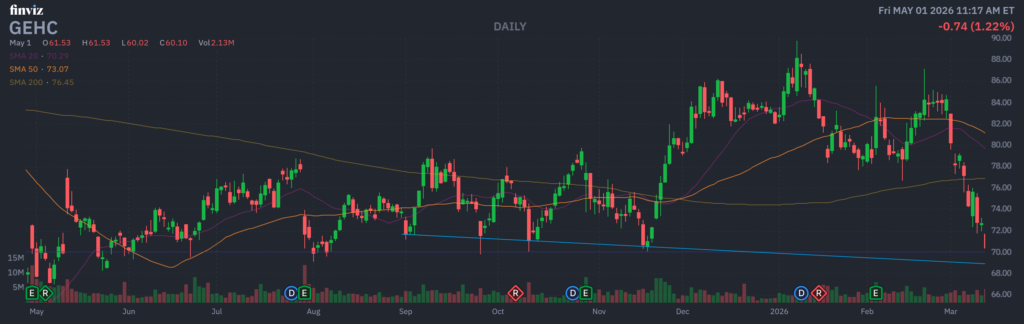
Transaction Date: 04-30-2026 Shares Bought: 4,169 shares an average price paid of $59.92 for a cost of $249,827
Company: GE HealthCare Technologies Inc. (GEHC)
GE HealthCare Technologies Inc. creates technologies, medications, and solutions for providers worldwide. It works in four segments: Imaging, Advanced Visualization Solutions, Patient Care Solutions, and Pharmaceutical Diagnostics, providing CT, MRI, ultrasound, X-ray, patient monitoring, anesthetic, cardiology, and molecular imaging solutions. The company also provides contrast media medicines and radiopharmaceuticals for diagnostic scans and nuclear medicine treatments. The company has a strategic partnership with DeepHealth. GE HealthCare Technologies Inc. was previously known as GE Healthcare Holding LLC before changing its name to GE HealthCare Technologies Inc. in December 2022. The corporation was established in 2022 and is based in Chicago, Illinois.
Peter J. Arduini has served as President and CEO of GE HealthCare Technologies Inc. since January 3, 2022, when he rejoined the company after previously spending 15 years at GE Healthcare in various leadership roles earlier in his career. Before returning to GE HealthCare, he was President and CEO of Integra LifeSciences from 2012 to 2022. Arduini also led GE HealthCare through its historic spin-off from General Electric in January 2023. He earned a bachelor’s degree from Susquehanna University and a master’s degree from the Kellogg School of Management.
Insomniac Hedge Fund Guy Opinion: GE HealthCare is a classic “good business, not quite great economics” situation. Spun out of General Electric in 2023, the company sells medical imaging equipment (MRI, CT, ultrasound), patient monitoring systems, and pharmaceutical diagnostics. It’s deeply embedded in hospital infrastructure globally, which gives it scale and relevance across healthcare systems.
The moat is decent but not elite. Imaging is an oligopoly with players like Siemens Healthineers and Philips, but switching costs are real—hospitals don’t casually rip out MRI machines. That said, this is still a capital equipment business at its core. Roughly ~50% of revenue is recurring (services, consumables, diagnostics), which helps stabilize the model, but the other half remains cyclical equipment sales.
Growth is steady but uninspiring. Over the last five years, revenue has grown roughly ~3–5% annually, with 2025 revenue at about $20.6B (+4.8% YoY). The backlog is strong, but this is not a high-growth story—it’s tied to hospital capex cycles and emerging market demand.
Management, led by CEO Peter Arduini, is focused on “precision care” and software/digital integration, trying to push the mix toward higher-margin, recurring revenue streams. The strategy makes sense—but execution will take time.
Profitability is where the debate lives. Operating margins sit around ~13–14%, solid but well below best-in-class life science tools peers. And recently, margins have been under pressure from inflation and tariffs, forcing the company to cut guidance.
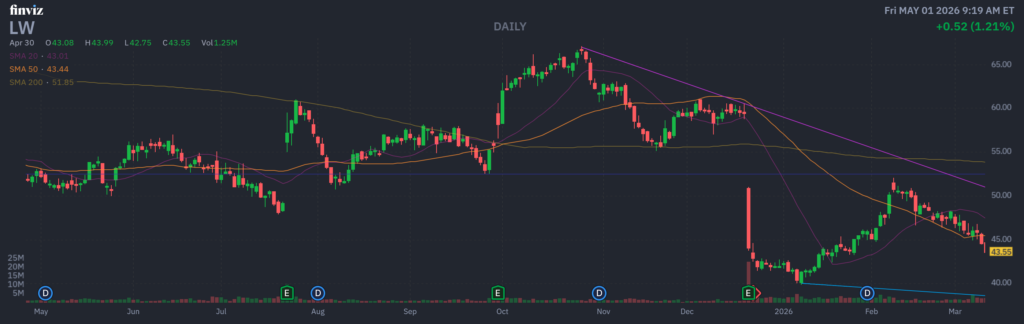
Name: James D. Gray
Position: Chief Financial Officer
Transaction Date: 04-27-2026 Shares Bought: 4,556 shares an average price paid of $43.85 for a cost of $199,781
Company: Lamb Weston Holdings Inc. (LW)
Lamb Weston Holdings, Inc. produces, distributes, and markets frozen potato products in the United States, Canada, Mexico, and abroad. It sells frozen potatoes, commercial ingredients, and appetizers under the Lamb Weston brand, as well as under several customer brands. It sells its products to quick service and full-service restaurants and chains, wholesale, grocery, mass merchants, club retailers, and specialty retailers, as well as foodservice distributors and institutions such as businesses, educational institutions, independent restaurants, regional chain restaurants, and convenience stores, via a network of internal sales personnel and independent brokers, agents, and distributors. Lamb Weston Holdings, Inc. was established in 1950 and is based in Eagle, Idaho.
James D. Gray became Lamb Weston’s chief financial officer in April 2026, overseeing the company’s global financial strategy and activities. Jim formerly worked as executive vice president and chief financial officer at Ingredion, a major global ingredients solutions company, where he supervised worldwide accounting, finance, internal audit, treasury, investor relations, and tax responsibilities. Jim holds a bachelor’s degree in business administration from the University of California, Berkeley, and a master’s degree with distinction from Northwestern University’s Kellogg School of Management.
Insomniac Hedge Fund Guy Opinion: Lamb Weston is a pure-play frozen potato company—basically a leveraged bet on global french fry consumption. It supplies fries and potato products to major QSR chains and foodservice operators worldwide. Think McDonald’s, not Michelin. It’s a scale-driven, commodity-adjacent business dressed up as branded food.
The “moat” is decent but not exceptional. Scale matters—procurement, processing, and distribution are hard to replicate globally—but pricing power is limited. Customers are large, sophisticated buyers, and potatoes themselves are a volatile input. This isn’t a software lock-in story; it’s an execution and cost-control story.
Revenue growth over the last five years looks strong on paper (~13% CAGR), but that’s skewed by post-COVID recovery and pricing. Recently, growth has slowed materially to ~2% YoY with ~$6.5B revenue, signaling normalization. There’s effectively no real recurring revenue—this is volume + price every quarter. Net retention isn’t a meaningful metric here.
Management (CEO Mike Smith) is currently in turnaround mode—cutting costs, optimizing capacity, and using price discounts to defend volume. That’s not a position of strength. Recent commentary suggests weaker restaurant traffic and share loss in some markets.
Profitability is where things get messy. Historically solid margins are now under pressure from input costs (potatoes, energy, logistics) and pricing actions. The company has already guided to flat-to-declining margins and lower EBITDA expectations, with discounting hurting mix.
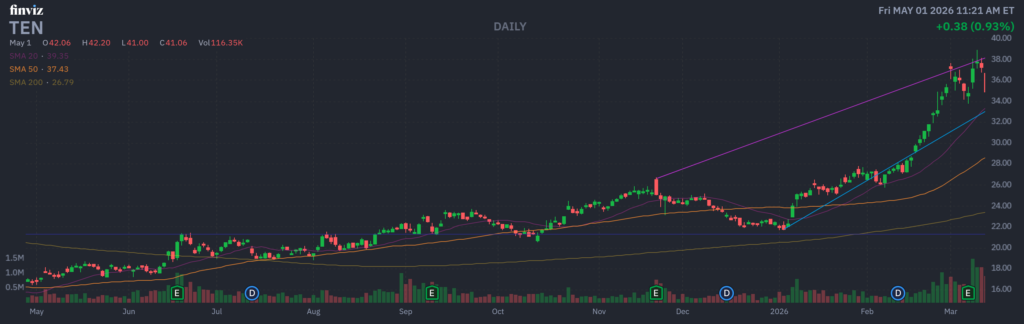
Name: Nikolaos Tsakos
Position: Chief Executive Officer
Transaction Date: 04-28-2026 Shares Bought: 25,000 shares an average price paid of $39.93 for a cost of $998,341
Company: Tsakos Energy Navigation Ltd. (TEN)
Tsakos Energy Navigation Limited, along with its subsidiaries, provides seaborne crude oil and petroleum product transportation services in Greece and abroad. The firm owns and operates a variety of ships, including VLCC, Suezmax, Aframax, Panamax, Handysize, MR, LNG carrier, and shuttle DP2 tankers. It also offers marine transportation services to national, major, and individual oil firms and refiners. The corporation was previously known as MIF Limited until changing its name to Tsakos Energy Navigation Limited in July 2001. Tsakos Energy Navigation Limited was established in 1993 and is headquartered in Athens, Greece.
Nikolaos Tsakos has been Chief Executive Officer of Tsakos Energy Navigation Ltd. from its foundation in 1993, making him one of the longest-serving CEOs in the worldwide shipping sector. He started the company and oversaw its growth into a large publicly traded tanker operator listed on the NYSE. Tsakos comes from a well-known Greek shipping family in Chios and has substantial nautical experience, including service as an officer in the Greek Navy. He graduated from Columbia University with degrees in Economics and Political Science, followed by a Master’s degree in Shipping, Trade, and Finance from City University Business School in London.
Insomniac Hedge Fund Guy Opinion: Tsakos Energy Navigation is a classic shipping name—global tanker operator moving crude oil and refined products via a diversified fleet of tankers and LNG vessels. The business is straightforward: charter ships to oil majors and traders under a mix of long-term contracts and spot exposure.
There’s no real “moat” here in the traditional sense. This is a capital-heavy, commoditized industry. The edge, if any, comes from fleet quality, customer relationships, and contract structure. TEN has leaned into long-term charters, which smooths earnings versus pure spot players. Still, this is ultimately a bet on tanker rates.
Revenue over the past five years has been volatile, not compounding—roughly flat to slightly down overall, with 2024 revenue around $804M and declining ~9% YoY, and recent TTM revenue near $765–800M . That tells you everything: this isn’t a steady grower, it’s a cycle.
Recurring revenue is not really a thing here in the SaaS sense. You do get partial visibility via time charters, but a meaningful portion of the fleet remains exposed to spot rates. Net retention is irrelevant—this is asset utilization, not subscription economics.
Management has focused on long-term contracts and fleet modernization, which helps reduce volatility but doesn’t eliminate it.
Profitability is highly cyclical. The company swung from losses in 2021 to strong profits in 2023–2024 (net income ~$148M in 2024), before cooling again . Margins expand and compress with tanker rates—nothing structural.
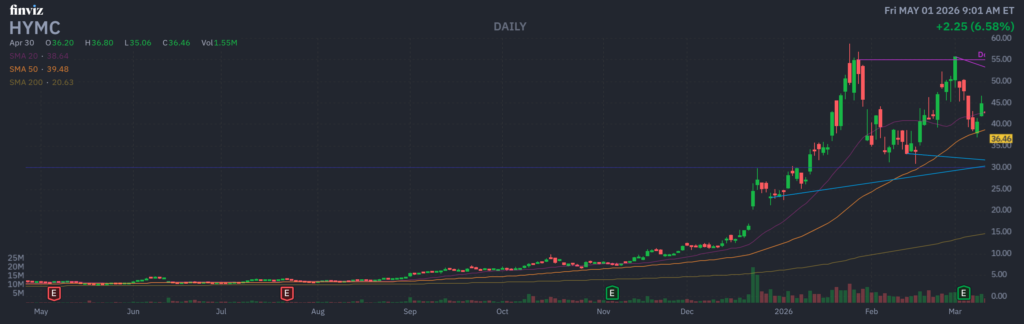
Name: Eric Sprott
Position: 10% Owner
Transaction Date: 04-24-2026 Shares Bought: 100,000shares an average price paid of $37.84 for a cost of $3,784,000
Company: Hycroft Mining Holding Corp. (HYMC)
Hycroft Mining Holding Corp. is a gold and silver exploration and development business established in the United States. Its primary focus is on expanding the Hycroft Mine, one of the world’s largest precious metals resources, located in northern Nevada’s Tier-1 mining jurisdiction. The company’s current strategy focuses on technical research, exploration drilling, and converting the asset to eventual commercial operations while maximizing high-grade gold and silver potential throughout its vast land holdings. Hycroft is publicly traded on the NASDAQ under the symbol HYMC and employs a team to drive research and development initiatives at the site. Hycroft Mining Holding Corp. was founded through its company combination and incorporation in 2017 and took on the name Hycroft Mining Holding Corporation on May 29, 2020.
Eric Sprott has been an owner of Hycroft Mining Holding Corp., since March 2022, when he made a significant equity investment that established him as one of the company’s largest shareholders. He became associated with Hycroft at that time as a strategic investor, supporting the company during a critical phase of its development, and has since increased his ownership through additional share purchases disclosed in regulatory filings. Sprott is not involved in day-to-day operations but is recognized for his long-standing influence as a prominent resource-sector investor. He holds a Bachelor of Commerce degree from Carleton University.
Insomniac Hedge Fund Guy Opinion: Hycroft Mining is not really a “business” in the traditional sense—it’s an option on a large gold and silver deposit in Nevada. The company owns the Hycroft Mine, which hosts massive mineral resources (tens of millions of ounces of gold and hundreds of millions of ounces of silver), but crucially, it is currently not producing meaningful revenue after halting active mining in 2021.
That distinction matters. This is a development-stage mining story, not an operating company. There is effectively no recurring revenue, no stable growth profile, and no real net retention concept—because there are no customers yet. Historically, revenue has collapsed from ~$111M in 2021 to near zero as operations stopped.
The “moat,” if you want to call it that, is the asset itself. Hycroft controls a very large, long-life ore body in a Tier-1 mining jurisdiction. But size doesn’t equal profitability. The ore is complex (oxide + sulfide), and the economics depend heavily on future processing decisions and commodity prices.
Management, led by CEO Diane Garrett, has shifted the strategy toward exploration, metallurgical testing, and rethinking the processing approach. The company has cleaned up its balance sheet and is now essentially debt-free, which buys time—but not certainty.
Profitability is deeply negative. The company continues to post consistent net losses (~$40–60M annually) with negative free cash flow.
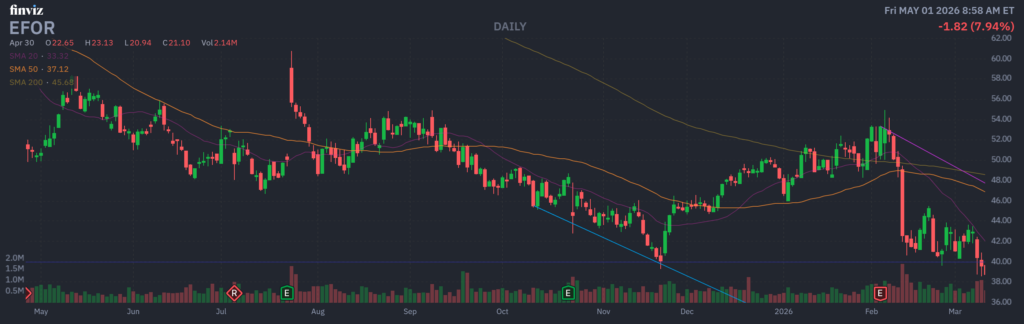
Name: Arshad Matin
Position: Director
Transaction Date: 04-24-2026 Shares Bought: 10,000 shares an average price paid of $19.35 for a cost of $193,462
Name: Theodore S. Hanson
Position: Chief Executive Officer
Transaction Date: 04-24-2026 Shares Bought: 51,965 shares an average price paid of $19.24 for a cost of $999,786
Company: Everforth Inc. (EFOR)
Everforth, Inc. offers information technology solutions to the business and government sectors in the United States, Canada, and Europe. It operates in two segments: commercial and federal government. The Commercial Segment offers consultancy, creative digital marketing, and permanent placement services primarily to Fortune 1000 and mid-market firms across standardized solution areas. The Federal Government Segment offers sophisticated IT solutions in data and AI, cybersecurity, and enterprise platforms for defence and intelligence. It sells its products under the Apex Systems, Creative Circle, CyberCoders, ECS, GlideFast, and TopBloc brands. The corporation was previously known as ASGN Incorporated before changing its name to Everforth, Inc. in April 2026. The company was created in 1985 and is based in Glen Allen, Virginia.
Arshad Matin has served as a director at Everforth Inc since June 2014, bringing extensive leadership experience in the technology and software sector. He joined the company in 2014 when he became a member of its Board of Directors and has continued in that role since. In June 2021, he was elevated to Chairman of the Board, strengthening his influence on the company’s strategic direction and governance. He holds a Bachelor of Engineering in Electrical Engineering from Regional Engineering College, an MBA from The Wharton School of the University of Pennsylvania, and a Master of Science in Computer Engineering from The University of Texas at Austin.
Theodore S. Hanson has served as Chief Executive Officer of Everforth, Inc. since May 2019, when he was appointed to lead the company’s strategic direction and operations. He joined the organization earlier in May 2012 following the acquisition of Apex Systems, where he initially held leadership roles, including President, before rising to CEO. Hanson also became a member of the Board of Directors in June 2019, effectively taking on his CEO-level board position at that time. He has over 25 years of industry experience and has been closely involved in the company’s evolution, including its recent rebranding to Everforth. He holds a bachelor of Science in Psychology from Virginia Polytechnic Institute and State University.
Insomniac Hedge Fund Guy Opinion: Everforth (formerly ASGN) is a mid-tier IT services and staffing hybrid that just rebranded in 2026 to signal a shift toward higher-end digital engineering. The company provides consulting, staffing, and project-based IT services across cloud, AI, cybersecurity, and software engineering, serving both Fortune 1000 clients and U.S. federal agencies.
The “moat” is… decent, not great. This is still fundamentally a people-based services business. There’s some stickiness in federal contracts and enterprise relationships, but switching costs are nowhere near software-level. The rebrand is an attempt to move up the value chain—from staffing toward higher-margin consulting and digital transformation—but that’s a crowded battlefield.
Financials are where things get interesting—and messy. Revenue is about $4B but slightly declining (~-1% YoY), and earnings have dropped sharply (~-35%), suggesting margin pressure and weak demand. Over a 5-year view, growth has been inconsistent, with a post-COVID spike followed by contraction. This is not a clean compounding story.
Recurring revenue isn’t formally disclosed, but given the mix (staffing + project work), it’s likely low-to-moderate versus true SaaS or services annuity models. Net retention is also unclear—another sign this isn’t a classic sticky platform business.
CEO Ted Hanson is leaning into the transformation narrative, and insider buying post-rebrand is a positive signal.
Profitability is mediocre: operating margins are mid-single digits, and returns on capital are underwhelming.
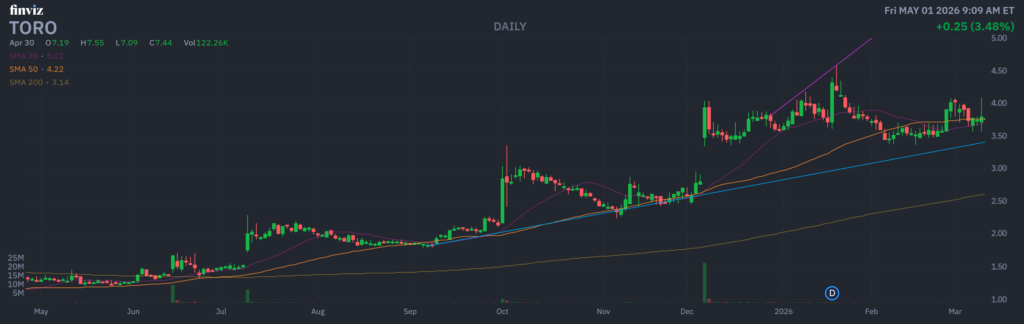
Name: Petros Panagiotis Panagiotidis
Position: Chief Executive Officer
Transaction Date: 04-22-2026 Shares Bought: 2,315,971shares an average price paid of $6.15 for a cost of $14,254,646
Company: Toro Corp. (TORO)
Toro Corp. is a shipping firm that acquires, owns, charters, and manages oceangoing LPG carrier vessels and MR tankers globally. It operates in three segments: eco tankers, non-eco tankers, and LPG carriers. The company offers energy-borne transport services for LPG. It also operates and maintains a fleet of two LPG carrier vessels and two MR tankers, having a total cargo-carrying capacity of 0.1 million deadweight tons. The company was previously known as Tankco Shipping Inc. before changing its name to Toro Corp. in September 2022. Toro Corporation was founded in 2022 and is headquartered in Limassol, Cyprus. Toro Corp. is a subsidiary of Castor Maritime Inc.
Petros Panagiotis Panagiotidis became Chief Executive Officer of Toro Corp. in March 2023, coinciding with the company’s establishment as an independent publicly listed entity following its spin-off from Castor Maritime. He has been associated with the company since its formation in 2022 and is its founder, also serving as chairman while leading its strategic direction, fleet expansion, and capital markets activities. Mr. Panagiotidis holds a bachelor’s degree in International Studies and Mathematics from Fordham University and a Master’s degree in Management and Systems from New York University.
Insomniac Hedge Fund Guy Opinion: Toro Corp is not the lawnmower company—this is a tiny, niche energy shipping play. The company owns and operates a small fleet of LPG carriers and a tanker, generating revenue by chartering vessels to move liquefied petroleum gas globally. It’s essentially a micro-cap shipping vehicle with exposure to volatile freight rates and asset values.
There’s no real moat here. Shipping is commoditized—rates are set by global supply/demand for vessels, not by brand or technology. Toro’s “edge,” if any, is opportunistic capital allocation: buying and selling ships, occasionally realizing gains. But that’s trading assets, not building a durable franchise.
The numbers reflect that volatility. Revenue has been inconsistent, swinging from ~$29M in 2021 to ~$21M in 2025, with declines in recent years. Growth is lumpy and largely dependent on fleet size and charter rates rather than underlying demand expansion. Recurring revenue is effectively 100% (charter income), but it’s not “sticky” in the SaaS sense—contracts roll, and pricing resets with the market.
Management appears focused on shareholder returns (special dividends, asset sales), which can boost short-term returns but also signals limited reinvestment opportunities. This is a capital recycling story more than a growth story.
Profitability is equally inconsistent. The company has posted profits in certain periods, often driven by one-time gains from vessel sales, rather than stable operating income.
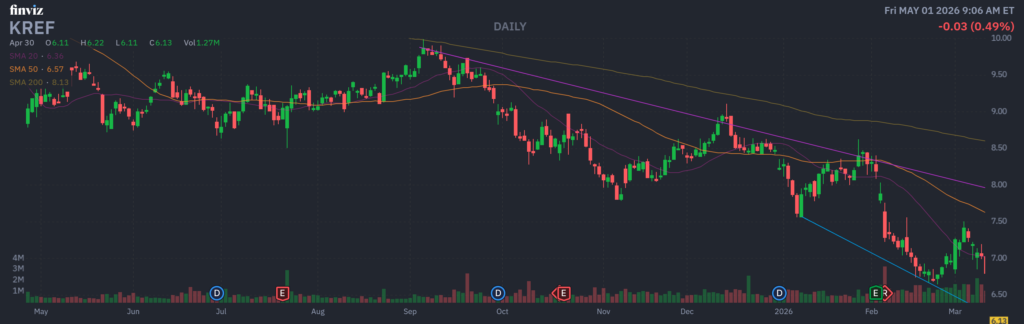
Name: Matthew A. Salem
Position: Chief Executive Officer
Transaction Date: 04-24-2026 Shares Bought: 60,000shares an average price paid of $6.04for a cost of $362,472
Name: Patrick W. Mattson
Position: President, COO, and Secretary
Transaction Date: 04-24-2026 Shares Bought: 40,000 shares an average price paid of $6.03for a cost of $241,072
Company: KKR Real Estate Finance Trust Inc. (KREF)
KKR Real Estate Finance Trust Inc., a mortgage real estate investment trust, specializes in originating and acquiring transitional senior loans secured by commercial real estate assets in the United States. It originates and purchases CRE-related credit investments, such as leveraged and unleveraged commercial real estate loans. The company has also decided to be treated as a real estate investment trust, which means it will not be subject to federal corporate income taxes if it distributes at least 90% of its taxable profits to stockholders. KKR Real Estate Finance Trust Inc. was established in 2014 and is headquartered in New York, NY.
Matthew A. Salem has served as Chief Executive Officer of KKR Real Estate Finance Trust Inc. since March 2020 and was appointed to the company’s Board of Directors in February 2022. He originally joined KKR & Co. Inc. in 2015 and previously held roles as Co-Chief Executive Officer and Co-President of KREF from October 2015 to March 2020 before becoming the sole CEO. In addition to leading KREF, he is a Partner and Head of Real Estate Credit at KKR, with prior experience at firms such as Rialto Capital Management, Goldman Sachs, Morgan Stanley, and Citigroup Alternative Investments. He holds a B.A. in Economics from Bates College.
W. Patrick Mattson became Chief Operating Officer of KKR Real Estate Finance Trust Inc. in October 2015, when he joined the company, initially serving as COO and Secretary. He was later promoted to President and Chief Operating Officer in March 2020, and reassumed the role of Secretary in January 2026. In addition to his executive roles at KREF, he serves as a Managing Director and COO of KKR’s Real Estate Credit group, contributing to investment and portfolio management decisions. Before joining KKR, he held senior positions at Rialto Capital Management, Morgan Stanley, and Deloitte & Touche. He holds a B.A. from the University of Virginia and is also a CFA charterholder.
Insomniac Hedge Fund Guy Opinion: KKR Real Estate Finance Trust is not a traditional operating company—it’s a mortgage REIT that originates and holds senior loans backed by commercial real estate (CRE). Think office buildings, multifamily, and life science properties. The model is simple: borrow capital, lend it out at higher rates, and earn the spread. It’s effectively a leveraged credit vehicle tied to the health of commercial real estate and interest rates.
The “moat” is limited. Yes, KREF benefits from its affiliation with KKR & Co. Inc., which helps with deal sourcing and capital access. But structurally, mortgage REITs are commoditized lenders—there’s little differentiation beyond underwriting discipline and funding costs.
Growth has been volatile to put it mildly. Revenue has swung dramatically over the past five years, and in 2025 it collapsed ~80% year-over-year due to heavy credit loss provisions and portfolio stress. This isn’t a steady compounder—it’s a cyclical, balance-sheet-driven story.
Recurring revenue doesn’t really apply here. Income is primarily net interest income, which fluctuates with loan performance, rates, and credit losses. Net retention is irrelevant in the traditional SaaS sense—this is about asset quality, not customer stickiness.
Management operates within the broader KKR ecosystem, which is a plus, but ultimately they’re exposed to the same macro forces hitting CRE lenders: higher rates, refinancing risk, and declining office valuations.
Profitability has deteriorated sharply. KREF posted a net loss of ~$70M in 2025, driven by rising credit provisions and weaker loan performance.
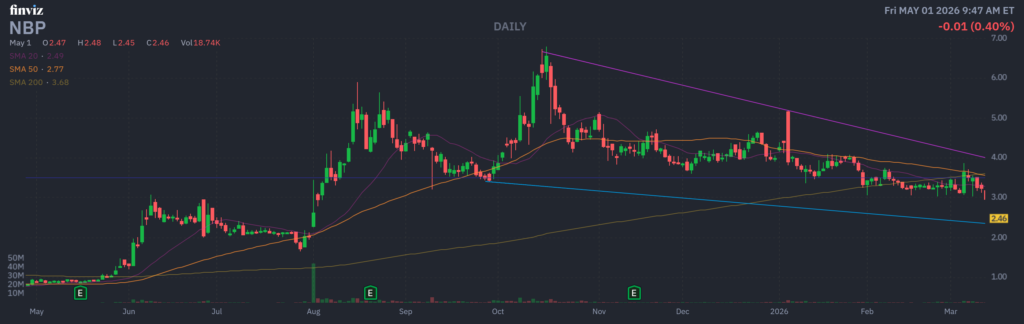
Name: Mark Arnold Hagler
Position: See Remarks
Transaction Date: 04-24-2026 Shares Bought: 230,000shares an average price paid of $2.51 for a cost of $577,300
Company: NovaBridge Biosciences (NBP)
NovaBridge Biosciences is a biotechnology business that develops immuno-oncology medicines for cancer treatment in the United States. The business is working on givastomig, a bispecific antibody in Phase 1b clinical trials for the treatment of gastric cancer; uliledlimab, a CD73 neutralizing antibody; and ragistomig, a bispecific antibody in Phase 1 clinical trials for the treatment of solid tumors. It has signed a strategic licensing deal with Ferring International Center SA to study, develop, manufacture, import, utilize, market, and offer to sell FE301, an interleukin-6 inhibitor. The company was previously known as I-Mab and will change its name to NovaBridge Biosciences in October 2025. NovaBridge Biosciences was created in 2014 and is based in Rockville, Maryland.
Mark Arnold Hagler became President and Chief Commercial Officer of NovaBridge Biosciences on April 17, 2026, when he was appointed to lead the company’s global commercial strategy. He joined the company at that time, bringing over 25 years of experience in the biopharmaceutical industry, including senior leadership roles at major firms such as Sun Pharmaceutical Industries, Novartis, and Sanofi, where he focused on oncology and specialty therapeutics commercialization. In his role, he is responsible for shaping commercial readiness, business development, and maximizing the value of NovaBridge’s pipeline. He holds an MBA in Corporate Finance from Johns Hopkins University and is a graduate of the United States Naval Academy.
Insomniac Hedge Fund Guy Opinion: NovaBridge Biosciences is a classic early-stage biotech wrapped in a “platform” narrative. The company develops immuno-oncology drugs—primarily bispecific antibodies targeting cancer pathways—and is still firmly in the clinical-stage bucket, with no meaningful commercial revenue today. Its lead assets include givastomig (gastric cancer) and VIS-101 (ophthalmology), both still in mid-stage trials.
The “moat” here is theoretical, not realized. Management pitches a hub-and-spoke biotech platform that sources, develops, and partners assets globally. That sounds good on a slide deck, but in practice, this is a pipeline bet. If givastomig or VIS-101 hits, you have something. If not, the platform doesn’t matter. Partnerships with larger pharma players help validate science, but they don’t eliminate binary clinical risk.
There’s no real revenue base to analyze—so forget recurring revenue, retention, or growth rates. This is a cash-burning R&D story. The company reported ~$88M net loss and relies on its ~$200M cash pile to fund operations into the next few years.
Management, led by CEO Xi-Yong Fu, recently rebranded the company from I-Mab and is repositioning it as a global biotech platform with dual-market ambitions. The strategy is ambitious, but execution will come down to clinical data—not branding.
Profitability is nonexistent, as expected for this stage.
____________________________________________________________________________________________________________________
This blog is solely for educational purposes and the author’s own amusement. IT IS NOT INVESTMENT ADVICE. Think of the blog as part of my personal investment journal that I am willing to share with the DIY investor. We could be long, short, or have no position at all in any of the stocks mentioned and express no written or implied obligation to disclose any of that. Nothing contained here constitutes a recommendation to buy or sell any security. Investing involves risk, including the possible loss of principal, and past performance is not indicative of future results.
“The insomniac hedge fund guy” is a moniker Harvey Sax, the portfolio manager for The Insiders Fund” has used from time to time on email, blog ,and social media posts. While Mr. Sax is the portfolio manager of The Insiders Fund, these posts are not communications from, nor endorsed by, Alpha Wealth Funds, LLC or any of its managed funds. References to Alpha Wealth Funds or its affiliates are for identification only and do not imply sponsorship or approval.
All company names, logos, and trademarks belong to their respective owners. The use of company logos is solely for descriptive and illustrative purposes under fair use. Any information provided is based on publicly available data and should not be considered financial, investment, or legal advice. Readers should conduct their own research or consult with a professional before making any investment decisions. Insiders sell the stock for many reasons, but they generally buy for just one – to make money. You’ve always heard the best information is inside information. Everyone with any stock market experience pays close attention to what insiders are doing. After all, who knows a business better than the people running it? Officers, directors, and 10% owners are required to inform the public through a Form 4 Filing of any transaction, buy, sell, exercise, or any other within 48 hours of doing so.
This info is available for free from the SEC’s Web site, Edgar, although we subscribe to SECForm4 as they provide a way to manage and make sense of the vast realms of data. I’ve tried a lot of vendors. SECForm4 is one of the smaller ones, but I like supporting Frank. He is not arrogant. He’s helpful and has great prices. He also trades on his own data, so I like people that eat what they kill. The bar is different from selling because the natural state of management is to be a seller. This is because most companies provide significant amounts of management compensation packages as stock and options. Therefore, we analyze unusual patterns with selling, such as insiders selling 25 percent or more of their holdings or multiple insiders selling near 52-week lows. Another red flag is large planned sale programs that start without warning. Unfortunately, the public information disclosure requirements about these programs, referred to as Rule 10b5-1, are horrendously poor. Also, planned sales that pop up out of nowhere are basically sales and are seeking cover under this corporate welfare loophole.
I also generally ignore 10 percent shareholders as they tend to be OPM (other people’s money) and perhaps not the smart money on which we are trying to read the tea leaves. I say generally because some 10% shareholders are great investor, think Warren Buffett and others. Of course, insiders can also be wrong about their Company’s prospects. Don’t let anyone fool you into believing they never make mistakes. Do your own analysis. They can easily be wrong, and in many cases, maybe most cases, have no more idea what the future may hold than you or me. In short, you can lose money following them. We have, and we curse aloud; what were they thinking!
We like Fly on the Wall for keeping up with what events might be happening, analysts’ comments, and whatever else could be moving the stock. Dow Jones news service is an essential tool, but many services pick up their feed like they do Bloomberg. My assistant probes the 10k for a reasonable description of the business. I’ve found that to be the most accurate and succinct place to find out what a business actually does.