
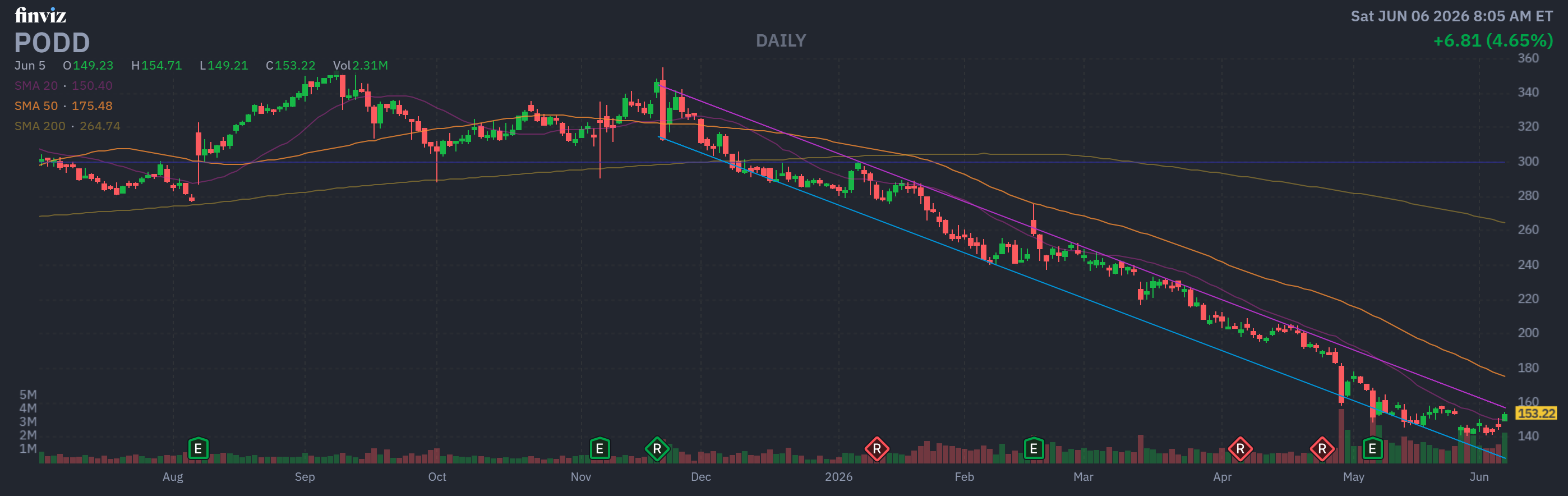
Name: Timothy C. Stonesifer
Position: Director
Transaction Date: 06-03-2026 Shares Bought: 2,790 shares an average price paid of $143.51 for Cost: $400,393
Company: Insulet Corp (PODD)
Insulet Corporation develops and manufactures insulin delivery systems for individuals with insulin-dependent diabetes in the United States and worldwide, including the Omnipod 5 automated insulin delivery system and the Omnipod DASH platform, both of which utilize Bluetooth technology for insulin management and are integrated with continuous glucose monitoring. The company also produces delivery pods for Amgen’s Neulasta Onpro kit, designed to reduce the risk of infection after chemotherapy. Insulet sells its products to pharmacies and independent distributors. The company was founded in 2000 and has its headquarters in Acton, Massachusetts.
Timothy C. Stonesifer has been a Director of Insulet Corporation since January 2024, when he was named to the Board of Directors. Stonesifer has served as Alcon Inc.’s Chief Financial Officer since April 2019, bringing substantial experience in finance, operations, and global business leadership. Prior to joining Alcon, he was Executive Vice President and Chief Financial Officer of Hewlett Packard Enterprise, and he previously held senior finance positions at HP, General Motors, and GE. He holds a Bachelor of Arts degree in Economics from the University of Michigan.
Insomniac Hedge Fund Guy Opinion: Insulet is one of the more compelling medical device growth stories in the market. The company’s flagship product, the Omnipod, is a tubeless insulin delivery system used by people with diabetes. Unlike traditional insulin pumps, Omnipod is disposable, wearable, and easier to use, giving Insulet a differentiated position in a large and growing market.
The moat comes from its ecosystem, patient adoption, and recurring revenue model. Once a patient starts using Omnipod and integrates it into daily diabetes management, switching becomes less attractive. Every new customer generates recurring pod purchases, creating a razor-and-blade business model. More than 80% of revenue is recurring, and recurring revenue has grown rapidly alongside expanding user adoption.
Over the past five years, revenue has compounded at roughly 20% annually, driven by market share gains, international expansion, and adoption of the latest Omnipod platforms. Management, led by Jim Hollingshead, has executed well, scaling manufacturing while continuing to invest in innovation and commercial expansion.
The most impressive development is profitability. For years, Insulet was viewed primarily as a growth company. Today, it is demonstrating that growth and profitability can coexist. Gross margins have expanded, operating leverage is emerging, and earnings growth is accelerating. This director’s insider buying at Insulet adds a data point of confidence from someone with deep medical-device finance experience via his role at Alcon.
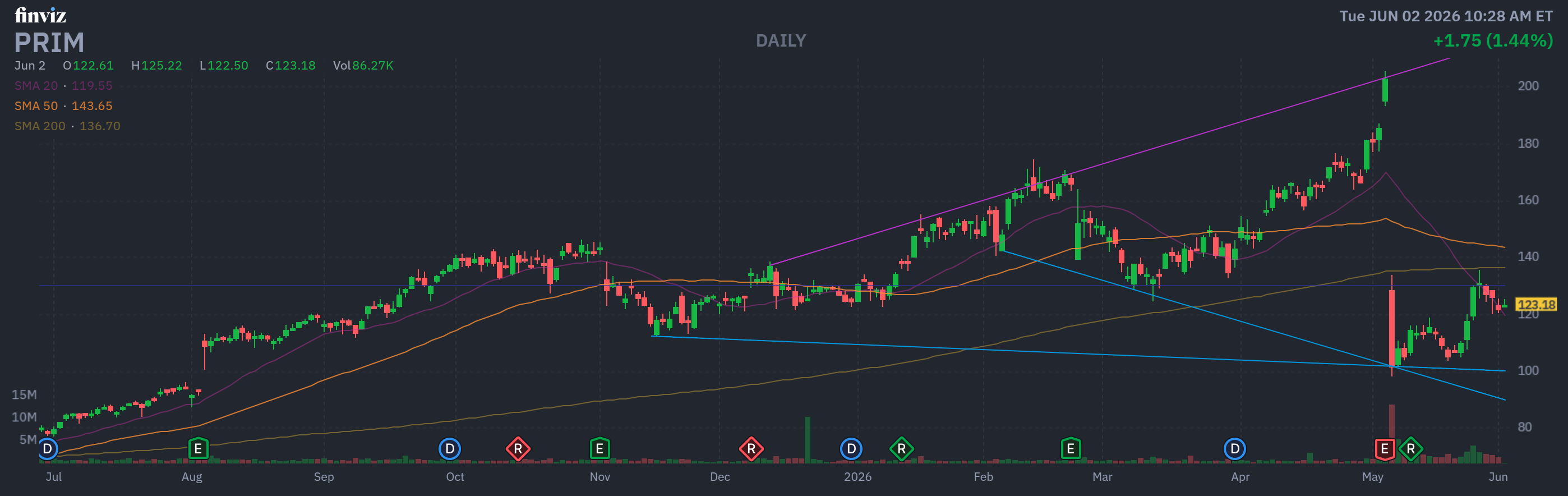
Name: Koti Vadlamudi
Position: President & CEO
Transaction Date: 05-27-2026 Shares Bought: 7,815 shares an average price paid of $127.96 for Cost: $1,000,004
Company: Primoris Services Corp (PRIM)
Primoris Services Corporation offers infrastructure services mostly in the United States and Canada. The corporation is divided into two business segments: utilities and energy. The Utilities section provides installation and maintenance services for new and existing natural gas and electric utility distribution and transmission systems, as well as communications systems. The Energy division offers engineering, procurement, construction, and maintenance services to clients in the energy, renewable energy and energy storage, renewable fuels, petroleum and petrochemical industries, and state transportation departments. The company also offers replacement services. Primoris Services Corporation was founded in 1960 and is based in Dallas, Texas.
Koti Vadlamudi has been President and CEO of Primoris Services Corp. since November 2025 and was nominated to the company’s Board of Directors in April 2026. He joined Primoris in November 2025 after more than 30 years at Jacobs Solutions, where he held several top leadership positions, most recently as Executive Vice President in charge of major infrastructure, energy, life sciences, and advanced manufacturing. Vadlamudi is a recognized expert in operational leadership, strategic expansion, acquisition integration, and large-scale project execution. He holds a Bachelor of Engineering from Osmania University and a Master of Engineering degree from Cornell University.
Insomniac Hedge Fund Guy Opinion: Primoris Services is an infrastructure contractor focused on utility, energy, communications, and civil construction projects across North America. The company builds and maintains power transmission lines, renewable energy facilities, pipelines, and telecommunications infrastructure. Unlike many traditional construction firms, Primoris has steadily shifted toward markets benefiting from long-term infrastructure and electrification spending.
The moat is not particularly strong in the traditional sense. Construction is a competitive business, and contracts are generally awarded through bidding processes. However, Primoris has developed specialized expertise in utility-scale renewable energy, power delivery, and large infrastructure projects, creating relationships and capabilities that are not easily replicated by smaller competitors.
Over the past five years, revenue has grown at a healthy pace, supported by acquisitions and strong demand from utilities and renewable energy customers. The company does not have meaningful recurring revenue in the software sense, but maintenance and utility-service contracts provide some revenue stability. Backlog remains the key indicator of future growth and has generally trended upward.
Management has done a solid job improving project selection and focusing on higher-quality end markets after some uneven years earlier in the decade. Execution has become more disciplined, helping margins and returns improve.
Profitability has strengthened significantly in recent years. While construction will never enjoy software-like margins, Primoris has demonstrated better operating performance and cash generation than many peers. The balance sheet is also in good shape relative to its industry. Insider buying from Primoris’s new CEO, just months into the role, is a strong early signal of confidence in the company’s direction.
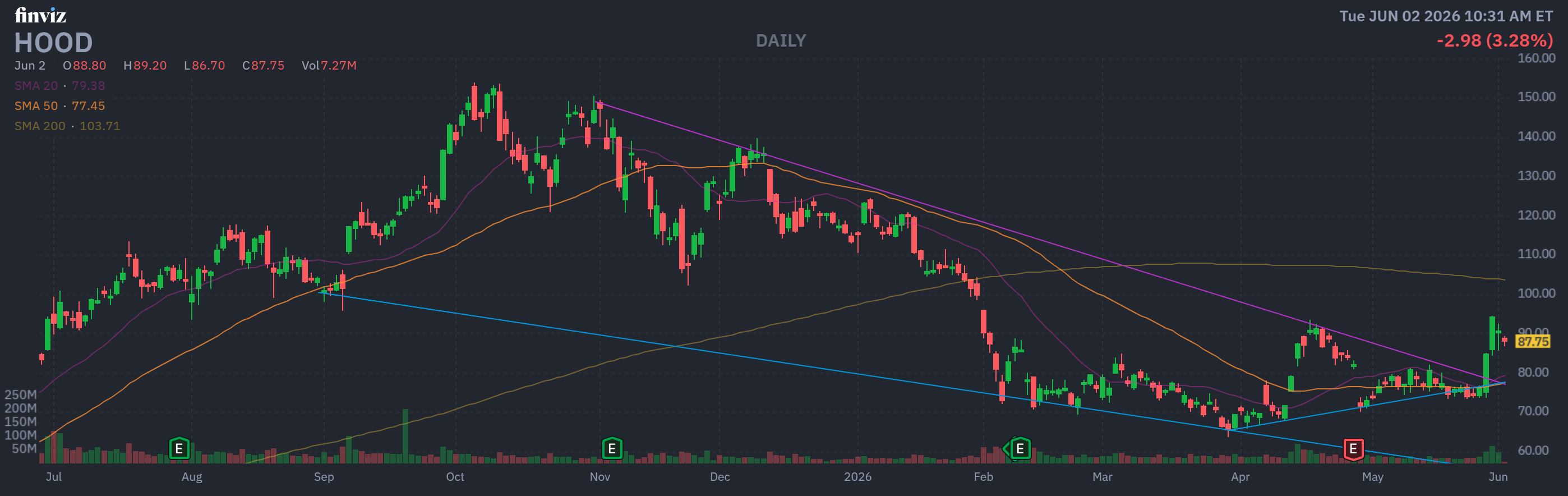
Name: Meyer Malka
Position: Director
Transaction Date: 06-03-2026 Shares Bought: 181,000 shares an average price paid of $83.45 for Cost: $15,103,853
Transaction Date: 05-28-2026 Shares Bought: 249,000 shares an average price paid of $80.39 for Cost: $20,018,206
Company: Robinhood Markets Inc. (HOOD)
Robinhood Markets, Inc. runs a financial services platform in the United States. The company’s platform enables customers to invest in equities, exchange-traded funds, and American depository receipts. It provides fractional trading, recurring investments, margin investing, fully-paid securities loans, cash sweep, instant withdrawals, retirement plans, 24-hour trading, joint investing accounts, event contracts, future contract services, and short selling. The company also offers a variety of learning and education solutions, including Snacks, an accessible digest of business news stories for a new generation of investors; Learn, an online collection of guides, feature tutorials, and a financial dictionary; and premium news from sites such as Barron’s, Reuters, and Dow Jones. Robinhood Markets, Inc. was incorporated in 2013 and is headquartered in Menlo Park, California.
Meyer Malka has been a Director at Robinhood Markets, Inc. since March 2022, when he was appointed to the Board of Directors. Malka is the founder and managing partner of Ribbit Capital, a venture capital firm specializing in financial technology investments. He has over 25 years of experience creating and investing in technology and financial services firms in the United States, Europe, and Latin America. He was also an early investor and advisor to Robinhood, contributing to the company’s growth before joining the board. Malka graduated from Caracas, Venezuela’s Universidad Católica Andrés Bello with an economics degree.
Insomniac Hedge Fund Guy Opinion: Robinhood is no longer just a meme-stock trading app. The company has evolved into a broader financial platform offering stocks, options, crypto, retirement accounts, credit products, and wealth-management services aimed at younger investors.
The moat is its brand, user experience, and customer acquisition engine. Robinhood has become the default investing app for many first-time investors. While brokerage services are largely commoditized, Robinhood’s simple interface and strong customer engagement create a meaningful competitive advantage.
Over the past five years, revenue growth has been exceptional despite significant volatility. The business has benefited from growth in trading activity, net interest income, subscriptions, and crypto transactions. Recurring and subscription-related revenue, including Robinhood Gold and other platform services, has become an increasingly important part of the mix, though transaction-based revenue still remains significant. Customer assets and funded accounts continue to expand, providing a larger base for future monetization.
CEO Vladimir Tenev has shown resilience after navigating the meme-stock controversy, crypto downturn, and rising-rate environment. Management’s focus has shifted from pure growth toward profitability and product expansion.
Profitability has improved dramatically. After years of inconsistent earnings, Robinhood has demonstrated that its business model can generate substantial profits when customer engagement and asset balances rise simultaneously. Margins and cash generation are trending in the right direction. This is the standout insider buying of the week — a $35 million combined purchase from a director who was an early investor in the company, spread across two transactions within days of each other.
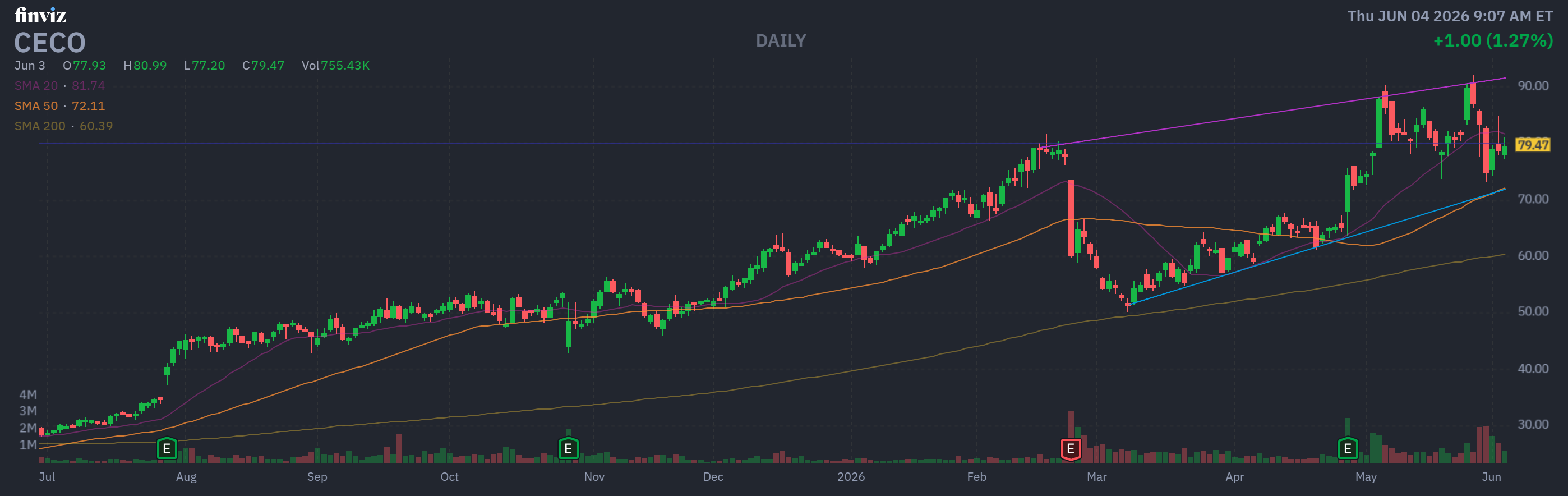
Name: Richard F. Wallman
Position: Director
Transaction Date: 06-01-2026 Shares Bought: 20,000 shares an average price paid of $76.85 for Cost: $1,536,938
Company: Ceco Environmental Corp (CECO)
CECO Environmental Corp. delivers vital solutions for industrial air quality, industrial water treatment, and energy transition in the United States, the United Kingdom, the Netherlands, China, and across the world. It operates in two segments: Engineered Systems and Industrial Process Solutions. The company provides emissions management, fluid bed cyclones, thermal acoustics, and separation and filtration solutions, as well as technical services and environmental systems. It also offers engineered and customized goods and solutions, such as dampers and diverters, expansion joints, water treatment packages, metallic and non-metallic pumps, industrial silencers, and fluid handling equipment. CECO Environmental Corporation was founded in 1869 and is based in Addison, Texas.
Richard F. Wallman has been an independent director of CECO Environmental Corp. since November 2021, when he joined the board of directors. He has more than three decades of executive leadership experience, including positions as Senior Vice President and Chief Financial Officer at Honeywell and AlliedSignal, as well as membership on several public company boards. He brings financial and strategic knowledge to CECO, serving on critical board committees such as audit supervision. Wallman has a Bachelor of Engineering from Vanderbilt University and an MBA from the University of Chicago’s Booth School of Business.
Insomniac Hedge Fund Guy Opinion: CECO Environmental is a niche industrial company focused on air pollution control, water treatment, and industrial filtration solutions. The company helps customers in sectors such as energy, industrial manufacturing, semiconductor, and infrastructure meet environmental and operational requirements. It is essentially selling mission-critical equipment that keeps industrial facilities compliant and running efficiently.
The investment case revolves around the ongoing trend toward cleaner industrial processes and stricter environmental standards. CECO has spent the last several years transforming itself from a lower-growth environmental equipment supplier into a higher-value engineered solutions provider. Recent acquisitions have expanded its exposure to attractive end markets such as semiconductor manufacturing, industrial water treatment, and energy transition projects.
The moat is moderate rather than overwhelming. CECO does not have the dominant market position of a large industrial conglomerate, but it benefits from engineering expertise, customer relationships, and specialized products that are difficult to replace once installed. Recurring aftermarket service and replacement parts revenue provide additional stability, though the business remains more project-driven than a true subscription model.
Management has executed well, improving margins, strengthening the balance sheet, and making disciplined acquisitions. Revenue growth over the past five years has accelerated, driven by both acquisitions and organic expansion. Profitability has improved meaningfully compared with historical levels, with management focused on higher-margin opportunities rather than simply chasing volume. Insider buying at CECO from a veteran industrial CFO adds weight to the company’s ongoing transformation story.
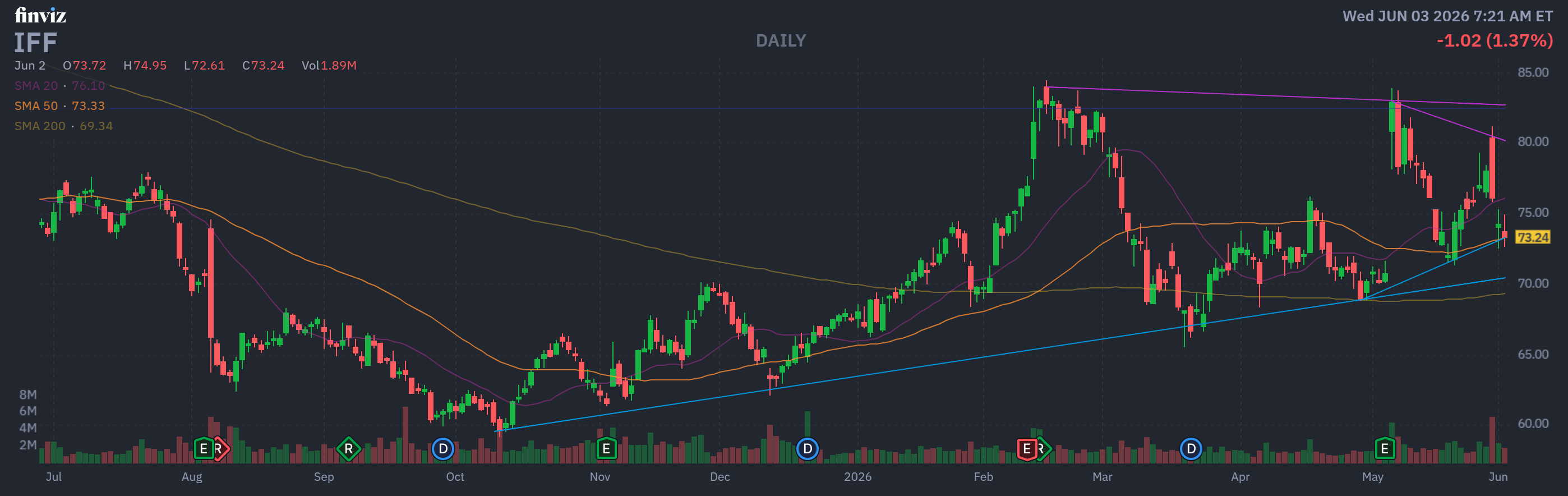
Name: Paul J. Fribourg
Position: Director
Transaction Date: 06-01-2026 Shares Bought: 273,500 shares an average price paid of $74.29 for Cost: $20,317,855
Company: International Flavors & Fragrances Inc. (IFF)
International Flavors & Fragrances Inc., along with its subsidiaries, manufactures and markets food, beverage, health, biosciences, smell, and related goods in the United States and abroad. It operates in four segments: taste, food ingredients, health and biosciences, and scent. The Taste category sells savory products such as soups, sauces, meat, fish, poultry, and snacks; beverages include juice drinks and dairy products such as yogurt, ice cream, cheese, and other items. The Food Ingredients segment offers natural, artificial, and plant-based specialty food ingredients. The Health & Biosciences division provides enzymes, food cultures, probiotics, and specialty food ingredients, while the Scent segment develops fragrance compounds and fragrance ingredients. International Flavors & Fragrances Inc. was founded in 1909 and is located in New York, NY.
Paul J. Fribourg was appointed as a director of International Flavors & Fragrances Inc., joining the company in July 2025 and taking up the director post concurrently. He has more than four decades of global leadership experience in agriculture, food, and investment, and has been Chairman and CEO of Continental Grain Company since 1997. In addition to his executive leadership, he has served on multiple boards of big international corporations, providing strategic and operational insight. He received a Bachelor of Arts from Amherst College and finished the Advanced Management Program at Harvard Business School.
Insomniac Hedge Fund Guy Opinion: IFF is one of the world’s largest specialty ingredient companies, supplying flavors, fragrances, food ingredients, enzymes, cultures, and health-related ingredients used in everything from soft drinks and snacks to perfumes and household products. Its products are embedded in customer formulations, making it a critical supplier to many consumer goods companies.
The moat comes from deep customer relationships, formulation expertise, regulatory know-how, and a vast portfolio of intellectual property. Once a flavor or ingredient is designed into a product, switching suppliers can be costly and risky, creating meaningful customer stickiness.
Over the last five years, reported revenue growth has been heavily influenced by the large acquisition of DuPont Nutrition & Biosciences and subsequent portfolio reshaping. Organic growth has generally been in the low- to mid-single digits. A significant portion of revenue is recurring because customers reorder ingredients tied to ongoing production, although IFF does not formally report recurring revenue or net revenue retention metrics.
Management has spent the last several years reducing debt, simplifying the portfolio, and improving profitability following the DuPont transaction. The investment case increasingly depends on execution rather than acquisition-driven growth.
Profitability has been pressured by integration costs, inflation, and weaker end-market demand in recent years, but margins have begun to stabilize as cost-saving initiatives take hold and leverage declines. At over $20 million, this director’s insider buying is among the largest purchases we’ve tracked at IFF in recent memory.
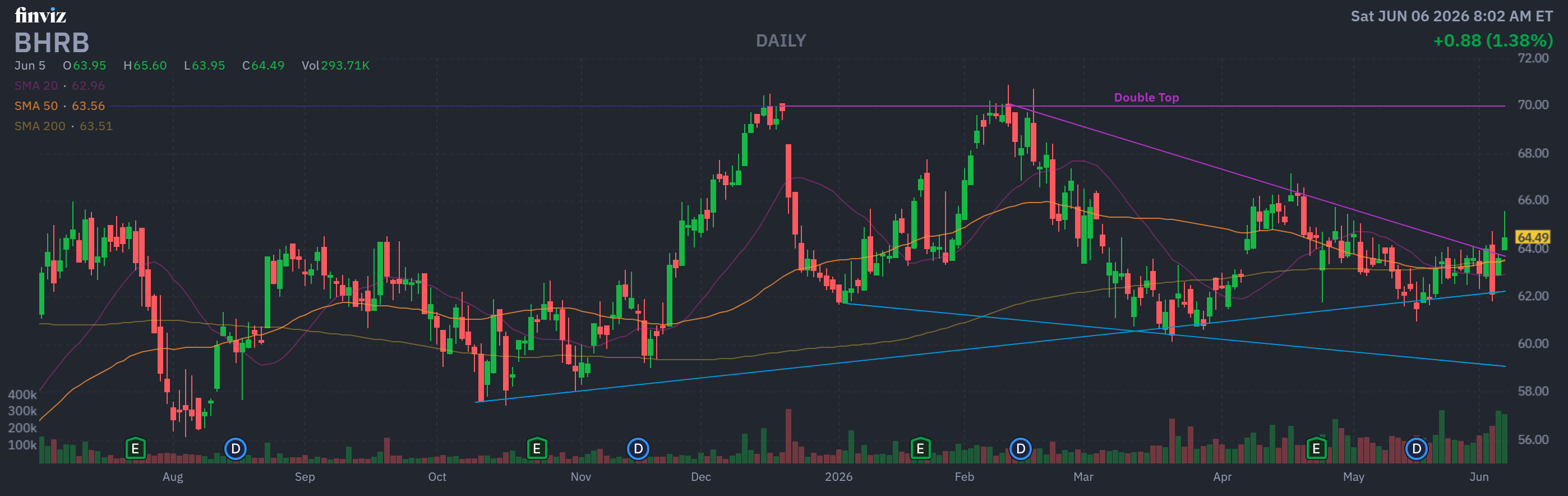
Name: Julian Forrest Barnwell Jr.
Position: Director
Transaction Date: 06-03-2026 Shares Bought: 5,000 shares an average price paid of $62.76 for Cost: $313,796
Company: Burke & Herbert Financial Services Corp. (BHRB)
Burke & Herbert Financial Services Corp. serves as the bank holding company for Burke & Herbert Bank & Trust Company, which provides a variety of community banking products and services throughout the United States. The company provides consumer and commercial deposit products such as digital banking, demand, negotiable order of withdrawal, money market and savings accounts, and certificates of deposit. It also offers loans for commercial real estate, single-family residential, owner-occupied commercial real estate, commercial and industrial, residential mortgage, consumer non-real estate, and other purposes, as well as acquisition, construction, and development loans. In addition, it provides cash management services, online and mobile banking, and wealth and trust services. Burke & Herbert Financial Services Corporation was formed in 1852 and is based in Alexandria, Virginia.
Julian F. Barnwell Jr. has been a Director of Burke & Herbert Financial Services Corp. since 2001, when he joined the Board of Directors. Since 1991, he has been the President and CEO of Design & Production, Inc., an exhibit project management, production, and technology systems company that serves museums, educational institutions, tourist centers, and large expositions in the United States and across the world. Barnwell joins the board with substantial experience in executive leadership, strategic development, and corporate governance. He holds a Bachelor of Science degree in Business Administration from the University of Richmond.
Insomniac Hedge Fund Guy Opinion: Burke & Herbert is a community bank headquartered in Alexandria, Virginia, focused on traditional banking, commercial lending, wealth management, and deposit gathering. The story today is less about organic growth and more about smart acquisitions. Recent mergers, particularly Summit Financial and LINKBANCORP, have transformed the bank from a small regional player into a much larger institution.
The moat is modest. Like most regional banks, BHRB doesn’t have a unique product, but it does have deep local relationships, a stable deposit franchise, and a growing presence in attractive Mid-Atlantic markets. Banking remains a scale business, and management is clearly pursuing consolidation to improve efficiency and earnings power.
Management deserves credit for integrating acquisitions and improving profitability. Return metrics, margins, and efficiency have all improved significantly since the Summit acquisition. However, investors should watch credit quality closely. Commercial real estate represents a large portion of the loan portfolio, and non-performing loans have risen following recent acquisitions. This long-tenured director’s insider buying reflects continued confidence following the bank’s recent acquisitions.
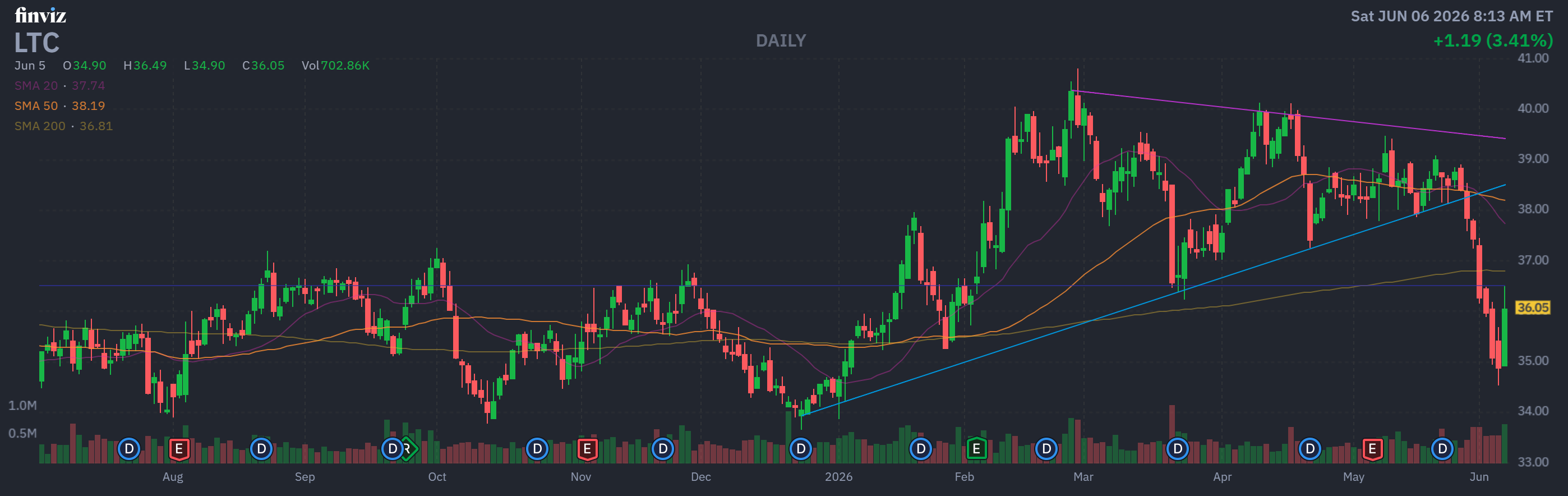
Name: David M. Boitano
Position: Evp & Cio
Transaction Date: 06-04-2026 Shares Bought: 10,000 shares an average price paid of $34.77 for Cost: $347,700
Company: Ltc Properties Inc. (LTC)
LTC buildings, Inc. is a real estate investment trust that invests in senior housing and healthcare buildings around the United States. The corporation earns money from SHOP investments, triple-net leases, mortgages, and joint ventures. Its portfolio is mostly made up of senior housing communities and skilled nursing facilities, which provide exposure to the increasing healthcare and aging population sectors. LTC works with skilled operators to manage and maintain its properties, with the goal of generating steady cash flows and long-term value for shareholders. LTC Properties, Inc. was established in 1992 and is headquartered in Westlake Village, California.
David M. Boitano has been the Executive Vice President and Chief Investment Officer of LTC Properties, Inc. since January 2024. He joined the firm in 2021 as Senior Vice President of transactions and was responsible for sourcing, underwriting, and managing healthcare real estate transactions. Prior to joining LTC, Boitano worked in senior investment and acquisitions roles in the healthcare real estate industry, gaining substantial knowledge in seniors housing, skilled nursing, and long-term care facilities. He holds a Bachelor of Science degree in Business Administration from the University of Southern California and an MBA from the University of California, Irvine.
Insomniac Hedge Fund Guy Opinion: LTC Properties is a healthcare REIT focused on senior housing and skilled nursing facilities across the United States. The investment thesis is straightforward: America is aging, demand for senior care is expected to rise over time, and LTC collects rent from operators that run these facilities.
The moat is modest. Unlike premier healthcare REITs with massive scale, LTC’s advantage comes primarily from long-term relationships with operators, real estate expertise, and access to capital. The business is not difficult to replicate, but quality healthcare properties and experienced operators do create some barriers to entry.
Revenue growth over the past five years has been relatively slow, reflecting challenges that hit the senior housing and skilled nursing sectors after COVID. Occupancy rates have gradually recovered, but growth has been more dependent on acquisitions and rent restructuring than organic expansion. Revenue is effectively recurring because most income comes from long-term leases and mortgage investments. Net retention is not a commonly reported metric for REITs, but tenant retention and rent collections remain key indicators.
Management has generally taken a conservative approach to balance sheet management and dividend coverage. That conservatism helped the company navigate a difficult operating environment when many healthcare operators struggled financially.
Profitability is stable rather than spectacular. The appeal here is income generation, not rapid growth. Investors are primarily buying a dividend-supported real estate cash-flow stream tied to long-term demographic trends. Insider buying from LTC’s Chief Investment Officer is a smaller but notable signal given his direct role in underwriting the company’s real estate deals.
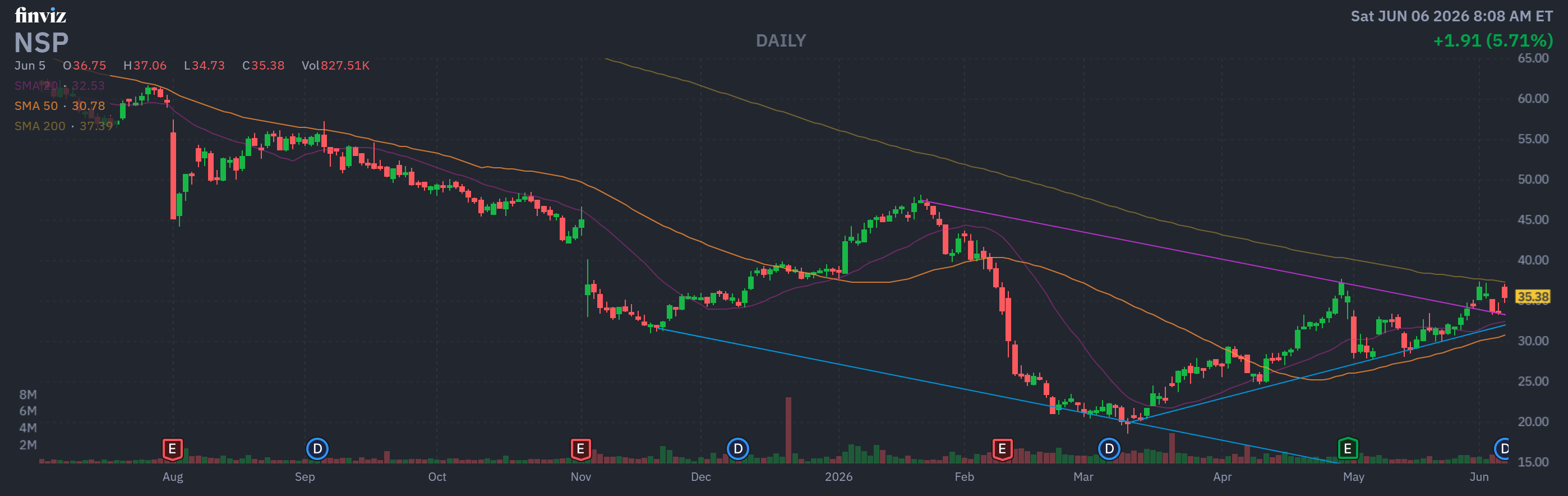
Name: Paul J. Sarvadi
Position: Chairman Of The Board & CEO
Transaction Date: 06-03-2026 Shares Bought: 233,000 shares an average price paid of $34.05 for Cost: $7,933,650
Company: Insperity Inc. (NSP)
Insperity, Inc. provides human resources (HR) and business solutions to small and medium-sized organizations, especially in the United States. It provides the Insperity HR360 solution, a full-service PEO solution that delivers HR technology, compliance, and strategic support to small and medium organizations; Insperity HRCore is a streamlined HR platform for payroll, compliance, and workforce management, while Insperity HRScale is a scalable HR solution that combines Insperity knowledge with Workday technology for organizations. The company also offers performance solutions such as personnel recruiting, retirement and insurance services, contractor management, and Perks+ services. The company was previously known as Administaff, Inc., but changed its name to Insperity, Inc. in March 2011. Insperity, Inc. was founded in 1986 and is based in Kingwood, Texas.
Paul J. Sarvadi has served as Insperity, Inc.’s Chairman of the Board and CEO since 1997. He co-founded the company, which was previously known as Administaff, in 1986 and has overseen its expansion into one of the leading providers of human resources and business performance solutions for small and medium-sized organizations. Sarvadi has also been a member of the Board of Directors since the company’s inception, providing strategic leadership during its public market development and rebranding as Insperity in 2011. He holds a Bachelor of Business Administration degree in Accounting from the University of Texas at Austin.
Insomniac Hedge Fund Guy Opinion: Insperity is a professional employer organization (PEO) that helps small and mid-sized businesses outsource HR functions, including payroll, benefits administration, compliance, recruiting, and workforce management. The company’s value proposition is simple: give smaller companies access to enterprise-grade HR capabilities without building them internally.
The moat comes from customer relationships, payroll integration, compliance expertise, and the hassle involved in switching providers. Once a business entrusts employee records, payroll processing, benefits administration, and regulatory compliance to Insperity, changing providers becomes disruptive and risky.
Over the last five years, revenue growth has generally tracked employment trends and wage inflation, producing a low- to mid-single-digit growth profile. The business benefits from highly recurring revenue since clients pay ongoing service fees tied to employee headcount. Retention is historically strong, although hiring slowdowns and economic uncertainty can pressure growth.
Management has built a reputation for disciplined execution and conservative capital allocation. The company focuses on maintaining service quality and client retention rather than chasing growth at any cost. That approach has helped Insperity navigate multiple economic cycles.
Profitability is solid but not spectacular. Unlike software companies, Insperity operates in a people-intensive business with lower margins, yet it consistently generates healthy cash flow and returns capital through dividends and share repurchases. Results can fluctuate with employment levels, healthcare costs, and labor market conditions. This founder-CEO’s insider buying — nearly $8 million — is a particularly strong signal given his three-decade tenure running the company.
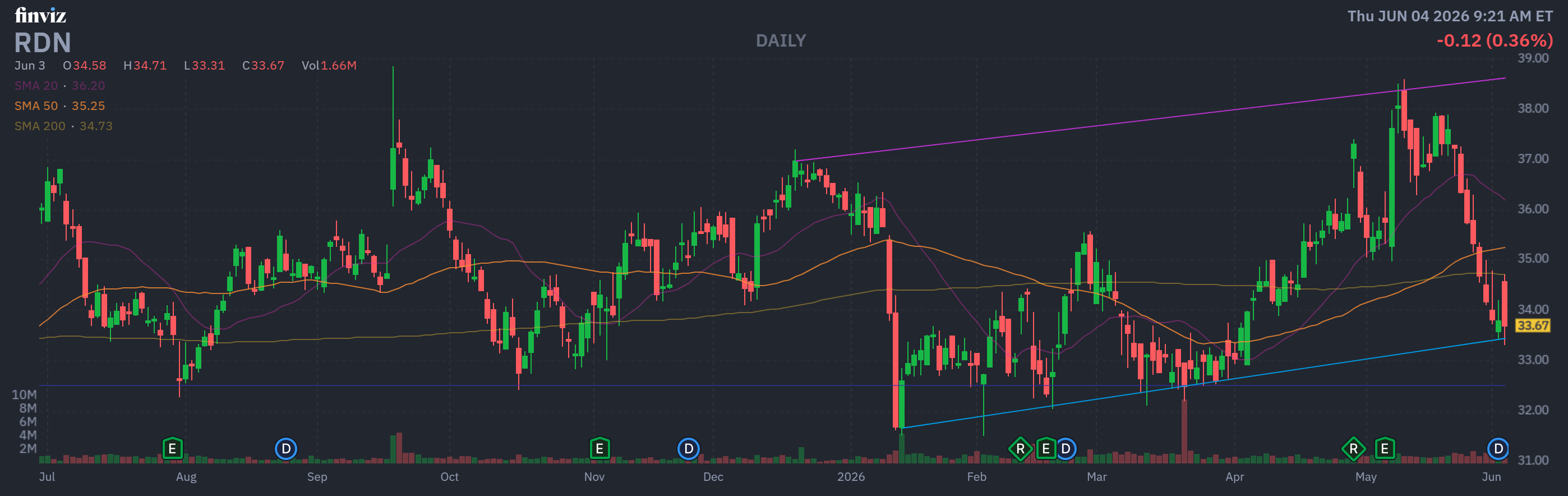
Name: Michael S. Weinbach
Position: Chief Executive Officer-Elect
Transaction Date: 06-01-2026 Shares Bought: 170,000 shares an average price paid of $33.93 for Cost: $5,768,292
Company: Radian Group Inc. (RDN)
Radian Group Inc., along with its subsidiaries, offers mortgage insurance in the United States. It uses private mortgage insurance on residential first-lien mortgage loans to aggregate, manage, and distribute mortgage credit risk for the benefit of mortgage lenders and investors. The company also provides private mortgage insurance, specialty insurance, and reinsurance coverage. It caters to mortgage banks, commercial banks, savings institutions, credit unions, and community banks. The company was previously known as CMAC Investment Corp. before changing its name to Radian Group Inc. in June 1999. Radian Group, Inc. was founded in 1977 and is headquartered in Wayne, Pennsylvania.
Since June 2026, Michael S. Weinbach has served as Radian Group Inc.’s Chief Executive Officer-Elect, and he is anticipated to take over as CEO and director on August 13, 2026. He joined Radian in June 2026 following a lengthy career in mortgage, banking, and financial services, most recently as President of Mr. Cooper Group and previously in key leadership roles at Wells Fargo and JPMorgan Chase. Weinbach has substantial experience with mortgage origination, servicing, consumer lending, and financial technology. He has a Bachelor of Science in Economics from the Wharton School of the University of Pennsylvania and an MBA from Harvard Business School.
Insomniac Hedge Fund Guy Opinion: Radian Group is primarily a private mortgage insurance company. When homebuyers make a small down payment, lenders often require mortgage insurance, and Radian steps in to absorb part of the credit risk. The company also operates smaller real estate and mortgage-related service businesses, but mortgage insurance drives the vast majority of earnings.
The moat comes from industry structure. Mortgage insurance is a heavily regulated business that requires significant capital, sophisticated underwriting, and long-term lender relationships. New entrants face meaningful barriers, while established players benefit from scale and data accumulated across multiple housing cycles.
Over the last five years, revenue growth has been modest, reflecting the cyclical nature of the housing market. This is not a high-growth company. Instead, Radian’s appeal comes from disciplined underwriting, strong cash generation, and shareholder returns through dividends and share repurchases. Unlike software businesses, recurring revenue and net revenue retention are not particularly relevant metrics for the mortgage insurance industry.
Management has generally been conservative, focusing on risk-adjusted returns rather than aggressive growth. That approach has served shareholders well, especially given the volatility that can emerge during housing downturns.
Profitability remains strong. Credit performance has benefited from relatively healthy borrower profiles and significant home-price appreciation over recent years. The balance sheet is solid, and capital levels remain comfortably above regulatory requirements. Insider buying from an incoming CEO before he’s even officially taken the role is a notable vote of confidence ahead of his August start date.
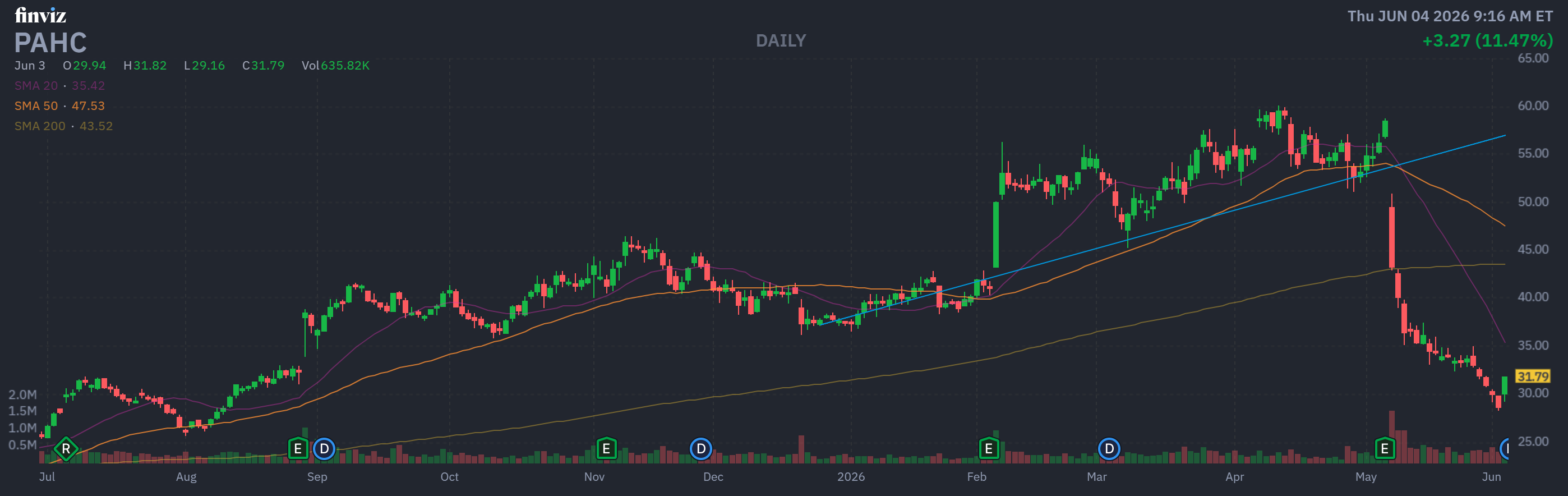
Name: E. Thomas Corcoran
Position: Director
Transaction Date: 05-29-2026 Shares Bought: 10,000 shares an average price paid of $31.77 for Cost: $317,700
Company: Phibro Animal Health Corp (PAHC)
Phibro Animal Health Corporation is a global animal health and mineral nutrition firm that serves customers in the Americas, Europe, the Middle East, Africa, and Asia Pacific. The company’s segments include Animal Health, Mineral Nutrition, and Performance Products. It creates, manufactures, and sells goods for poultry, swine, cattle, aquaculture, and companion animals, such as vaccinations, antibiotics, nutritional supplements, and feed additives. Phibro also provides trace mineral formulations and unique additives for industrial and personal care products. Formerly known as Philipp Brothers Chemicals, the company changed its name in 2003. Phibro Animal Health Corporation was established in 1946 and is based in Teaneck, New Jersey.
E. Thomas Corcoran has been a director of Phibro Animal Health Corp. since May 2008, and he now chairs the Audit Committee. Corcoran is a highly renowned animal health industry executive who became President of Fort Dodge Animal Health, a Wyeth company, in 1985 and served on Wyeth’s senior management team until his retirement in March 2008. He has also served as Chairman of the Animal Health Institute and a trustee at the University of South Alabama. Corcoran earned a bachelor’s degree from the University of South Alabama and later received the university’s Distinguished Alumni Award.
Insomniac Hedge Fund Guy Opinion: Phibro Animal Health is a niche animal-health company focused on livestock nutrition, vaccines, and medicated feed additives for poultry, cattle, and swine producers. Unlike larger animal-health players that focus heavily on companion animals, Phibro is primarily tied to global protein production and farm economics.
The company’s moat is modest but real. Its long-standing relationships with livestock producers, feed manufacturers, and veterinarians create customer stickiness, while regulatory approvals and product expertise provide barriers to entry. However, it lacks the scale, brand power, and innovation engine of industry leaders.
Over the past five years, revenue growth has been relatively slow, generally in the low-single-digit range, reflecting fluctuations in agricultural markets and livestock cycles. A meaningful portion of revenue is recurring because customers regularly purchase feed additives, nutritional products, and vaccines, but the company does not disclose a formal recurring revenue percentage or net revenue retention metric.
Management has focused on improving profitability, optimizing operations, and expanding higher-margin product categories such as vaccines and specialty nutrition products. The strategy appears sensible, though execution remains dependent on commodity prices and livestock production trends.
Profitability has historically been inconsistent, with margins affected by raw-material costs, disease outbreaks, and changing agricultural conditions. Recent results suggest improvement as cost pressures ease and operational efficiency initiatives take hold. This veteran director’s insider buying reflects decades of experience in the animal health sector.
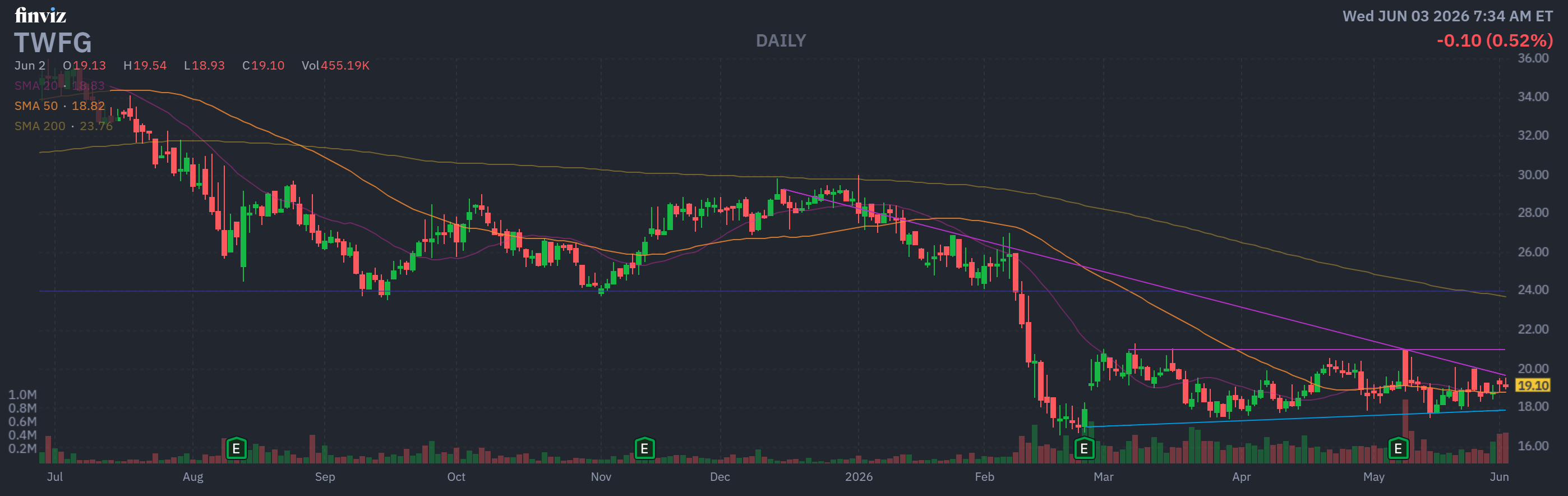
Name: Michael Doak
Position: Director
Transaction Date: 06-01-2026 Shares Bought: 33,000 shares an average price paid of $19.29 for Cost: $636,570
Transaction Date: 06-03-2026 Shares Bought: 33,994 shares an average price paid of $18.77 for Cost: $638,138
Company: TWFG Inc. (TWFG)
TWFG, Inc. runs an independent distribution platform for personal and business insurance products in the United States. The company’s insurance products include auto, home, renters, life, health, motorcycle, umbrella, boat, recreational vehicle, flood, wind, event, luxury item, general liability, property, business auto, workers’ compensation, business owner policy, and professional liability, as well as commercial bonds and group benefits. TWFG, Inc. was created in 2001 and is headquartered in The Woodlands, Texas.
Michael Doak has been a Director of TWFG Inc. since July 2024, when he joined the company’s Board of Directors in conjunction with its initial public offering. Doak has substantial insurance sector experience, having held senior leadership roles in brokerage operations, agency management, and strategic expansion projects throughout his career. His expertise includes property and liability insurance, distribution strategy, mergers and acquisitions, and corporate governance. Doak received his Bachelor of Business Administration degree from Texas Tech University, where he studied insurance and risk management.
Insomniac Hedge Fund Guy Opinion: TWFG is an independent insurance distribution platform that helps agents sell personal and commercial insurance through a network of over 300 carrier relationships. Think of it as a toll collector on insurance premiums rather than an insurer taking underwriting risk. That distinction matters because the business earns commissions while avoiding most of the balance-sheet risk that traditional insurers face.
The moat is its agent network, carrier relationships, and distribution platform. Independent agents join TWFG for market access, technology, and support services, creating a network effect that becomes more valuable as the platform expands. While not an unassailable moat, it is stronger than many small insurance brokers.
Growth has been impressive. Revenue increased from approximately $154 million in 2022 to $249 million in 2025, representing a roughly 17% annualized growth rate. Organic growth has remained above 10%, which is strong for an insurance distributor.
Most revenue is effectively recurring because commissions renew when customers renew policies. Retention trends have improved as insurance markets have stabilized, although the company does not disclose a SaaS-style net revenue retention metric.
Founder and CEO Gordy Bunch still runs the company, which is usually a positive signal in small-cap financials. Execution since the IPO has been strong, with acquisitions supplementing organic growth.
Profitability is moving in the right direction. Revenue grew 22% in 2025 while operating income and EBITDA margins expanded, showing that scale is beginning to matter. Insider buying from this director, spread across two transactions in the same week, adds to a growing pattern of confidence in the company’s post-IPO growth.
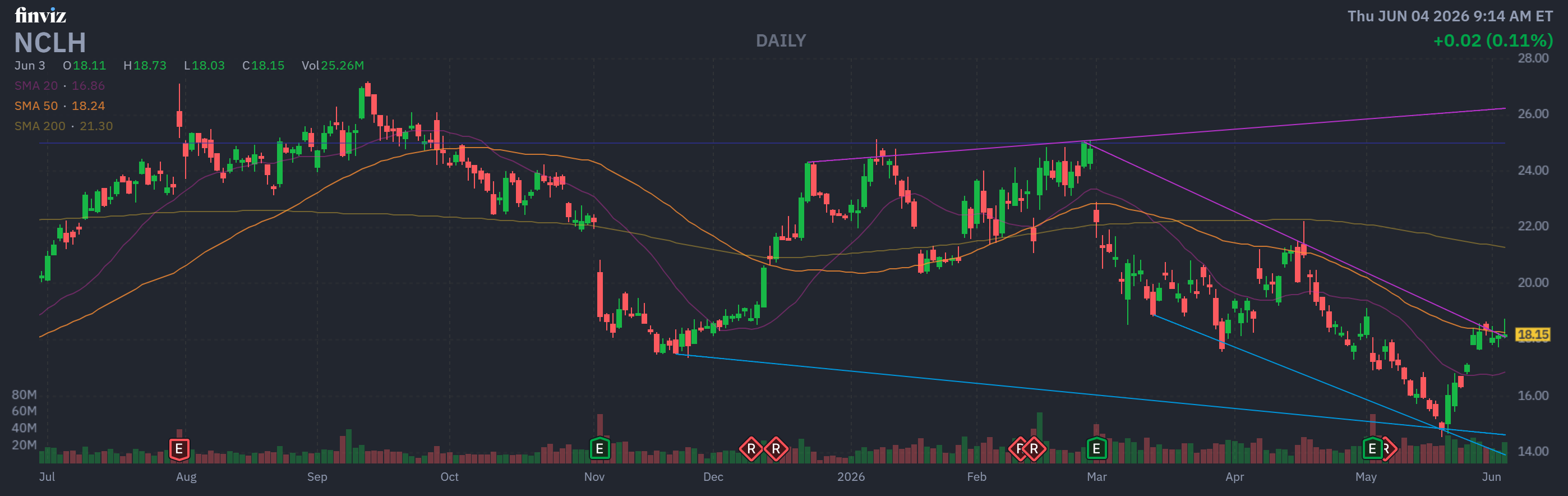
Name: Stephen G. Pagliuca
Position: Director
Transaction Date: 06-01-2026 Shares Bought: 1,380,000 shares an average price paid of $18.11 for Cost: $24,992,300
Company: Norwegian Cruise Line Holdings Ltd. (NCLH)
Norwegian Cruise Line Holdings Ltd. and its subsidiaries operate cruise ships in North America, Europe, Asia-Pacific, and across the world. It offers itineraries to Europe, Asia, Australia, New Zealand, South America, Africa, Canada, Bermuda, the Caribbean, and Alaska, as well as an inter-island tour in Hawaii. The company also offers features, amenities, and activities such as various accommodations, dining venues, bars and lounges, spas, casino and retail shopping areas, and entertainment options; shore excursions at each port of call; and air transportation and hotel packages for stays prior to or following a voyage. It offers its products and services under the Norwegian Cruise Line, Oceania Cruises, and Regent Seven Seas Cruises brands. The company was created in 1966 and is headquartered in Miami, Florida.
Stephen G. Pagliuca has been a Director at Norwegian Cruise Line Holdings Ltd. since March 2026, when he was appointed to the Board of Directors as part of a board refresh program. Pagliuca is the Founder and CEO of PagsGroup. He was previously a Managing Partner and Co-Chair of Bain Capital, where he spent over three decades helping to establish one of the world’s premier private investment organizations. He is also the Principal Owner and Co-Chairman of Atlanta B.C. and a former co-owner of the Boston Celtics. Pagliuca holds a Bachelor of Arts degree from Duke University and an MBA from Harvard Business School.
Insomniac Hedge Fund Guy Opinion: Norwegian Cruise Line is the smallest of the three major publicly traded cruise operators, behind Carnival Corporation and Royal Caribbean Group. The company operates the Norwegian, Oceania, and Regent brands, serving customers from mass-market to ultra-luxury segments.
The investment case is straightforward: cruising remains one of the fastest-growing categories in leisure travel, and demand has remained surprisingly resilient despite economic uncertainty. Occupancy rates have largely recovered, pricing remains healthy, and onboard spending continues to grow. Revenue growth over the past five years has been distorted by the pandemic, but the business has rebounded strongly and is now generating record revenue.
The moat is moderate rather than exceptional. Cruise lines benefit from brand recognition, loyalty programs, distribution networks, and the enormous capital required to build and operate ships. However, customers can switch between cruise brands relatively easily, making pricing and customer experience critical.
Management, led by Harry Sommer, has focused on improving margins, reducing costs, and strengthening the balance sheet after the heavy debt burden accumulated during COVID. That debt remains the key risk. While profitability has improved significantly, leverage is still higher than investors would ideally like.
Unlike software companies, Norwegian has virtually no recurring revenue model and no meaningful net revenue retention metric. This is ultimately a discretionary consumer travel business. At nearly $25 million, this director’s insider buying — from a former Bain Capital co-chair now serving on the board — is one of the largest purchases of the week.
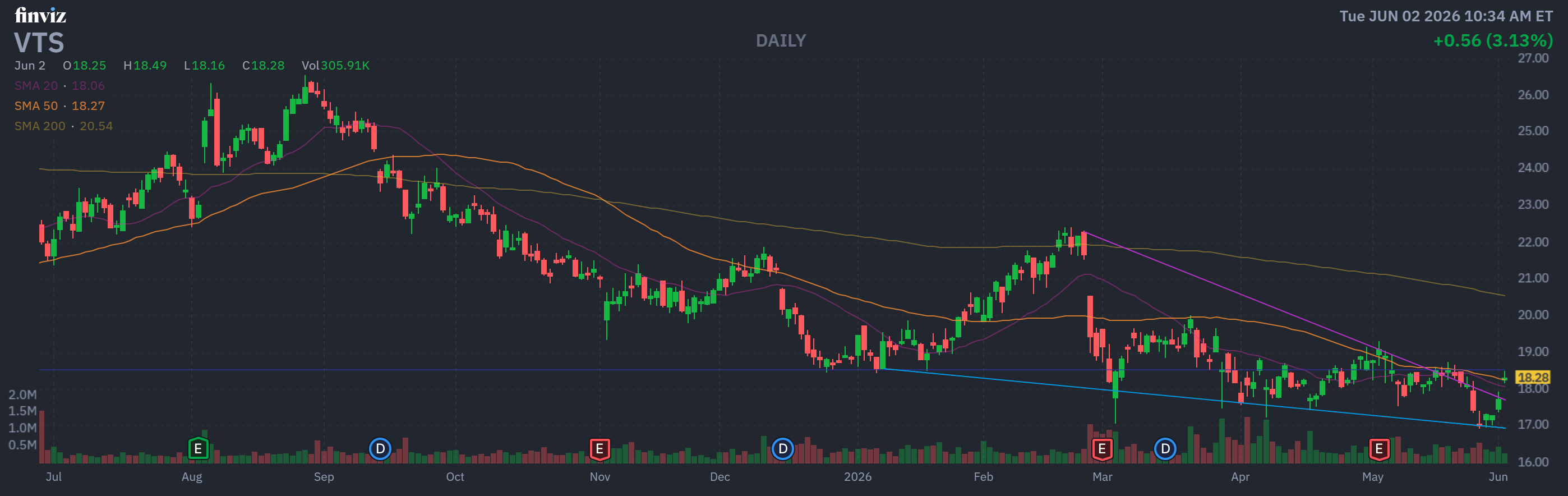
Name: Joseph S. Steinberg
Position: Director
Transaction Date: 05-28-2026 Shares Bought: 59,118 shares an average price paid of $17.00 for Cost: $1,005,006
Company: Vitesse Energy Inc. (VTS)
Vitesse Energy, Inc. is an independent energy company that focuses on the purchase, development, and production of non-operated oil and natural gas properties in the United States. The company’s primary investments are in working and royalty interests, which allow it to participate in energy production without actually operating wells. Its portfolio includes stakes in the Williston Basin of North Dakota and Montana, as well as sites in Colorado and Wyoming’s Central Rockies. Vitesse’s rigorous investing strategy aims to generate cash flow and long-term value from high-quality energy assets. The company was created in 2014 and is headquartered in Greenwood Village, Colorado.
Joseph S. Steinberg has been a director of Vitesse Energy, Inc. since 2023, when the firm went public following its spin-off from Jefferies Financial Group. Steinberg has been the Chairman of Jefferies Financial Group since March 2013, and a member of the Jefferies Board since December 1978. With over 40 years of experience in investment banking, capital markets, and corporate governance, he has contributed significantly to the growth and strategic development of numerous public and private organizations. Steinberg received an A.B. in Government from New York University and an M.B.A. from Harvard Business School.
Insomniac Hedge Fund Guy Opinion: Vitesse Energy is a different kind of oil company. Rather than operating wells itself, Vitesse owns non-operated interests in oil and gas properties, primarily in the Bakken. The model allows the company to participate in drilling economics without carrying the full operational burden, reducing overhead and capital intensity.
The moat is limited. Oil and gas production is largely a commodity business, and Vitesse lacks the scale or proprietary advantages of major E&Ps. Its edge comes from disciplined capital allocation, a diversified portfolio of non-operated interests, and management’s ability to acquire attractive acreage at reasonable prices.
Revenue growth has been volatile, reflecting both commodity prices and acquisition activity. As an energy producer, recurring revenue is effectively tied to ongoing production volumes rather than contractual subscriptions, so traditional recurring-revenue metrics and net revenue retention are not particularly meaningful.
Management has emphasized shareholder returns through dividends while maintaining a relatively conservative balance sheet. The team’s background in mineral and royalty investing has helped shape a disciplined approach to acquisitions and portfolio management.
Profitability is highly dependent on oil prices. During favorable commodity environments, Vitesse can generate strong cash flow and attractive returns. During weaker pricing periods, earnings and cash flow can decline significantly, which is the nature of the business. This director’s insider buying comes from someone with deep ties to the company’s former parent, Jefferies Financial Group.
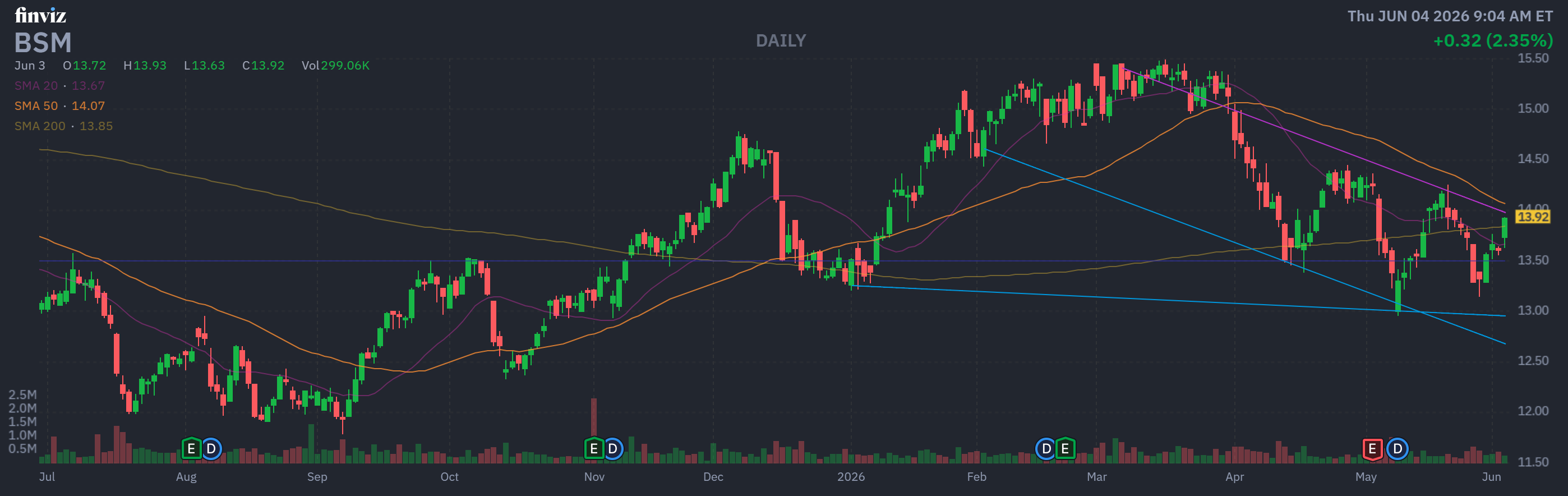
Name: D. Mark DeWalch
Position: Director
Transaction Date: 05-29-2026 Shares Bought: 72,726 shares an average price paid of $13.55 for Cost: $985,354
Company: Black Stone Minerals L.P. (BSM)
Black Stone Minerals, L.P. owns and manages oil and natural gas mineral and royalty interests in the United States. The corporation holds mineral, nonparticipating, and overriding royalty interests in many energy-producing locations around the country. Its business consists on leasing mineral rights and collecting royalties from oil and gas production activities carried out by exploration and production companies. Black Stone Minerals has a wide portfolio of assets spread throughout several states in the United States, providing it with extensive exposure to the domestic energy sector. operates as a leading mineral and royalty holding firm in the area. Black Stone Minerals, L.P., was created in 1876, with its headquarters in Houston, Texas.
D. Mark DeWalch has been a Director of Black Stone Minerals, L.P.’s general partner since March 2015, after previously serving as a director of Black Stone Natural Resources, the partnership’s predecessor general partner, from 2009 to 2015. DeWalch is the President of DeWalch Holdings LLC, DeWalch Investments LLC, and DeWalch Diversified LP. He formerly served as Executive Vice President and Chief Financial Officer at DeWalch Technologies, Inc. from 1993 to 2022. He began his commercial banking career with Irving Trust Company in New York and has substantial knowledge in finance, operations, and corporate governance. He received both a B.B.A. and an M.B.A. from the University of Texas in Austin.
Insomniac Hedge Fund Guy Opinion: Black Stone Minerals is not a traditional oil and gas producer. Instead, it owns one of the largest portfolios of mineral and royalty interests in the United States. The company collects royalty income from operators that drill on its acreage, allowing it to benefit from energy production without bearing most of the capital spending and operating risks associated with drilling wells.
The moat is the asset base itself. Mineral rights are finite, difficult to replicate, and concentrated in attractive basins such as the Permian, Haynesville, Eagle Ford, and Bakken. Unlike producers that must continually reinvest to maintain production, Black Stone can generate cash flow from third-party development activity.
Revenue and distributable cash flow are heavily influenced by commodity prices and drilling activity, making results more cyclical than those of traditional recurring-revenue businesses. Revenue growth over the past five years has been uneven, reflecting swings in oil and natural gas markets rather than steady operational expansion. Net revenue retention is not a meaningful metric for the business model.
Management’s primary focus has been maintaining a strong balance sheet, preserving mineral acreage, and returning cash to unitholders through distributions. The partnership has generally avoided excessive leverage and has remained disciplined through energy cycles.
Profitability can be exceptionally strong during favorable commodity environments because royalty income carries very high margins. However, investors should expect earnings and cash flow to fluctuate with energy prices. Insider buying from a long-tenured director adds to the case for Black Stone’s royalty-based, low-capital-intensity model.
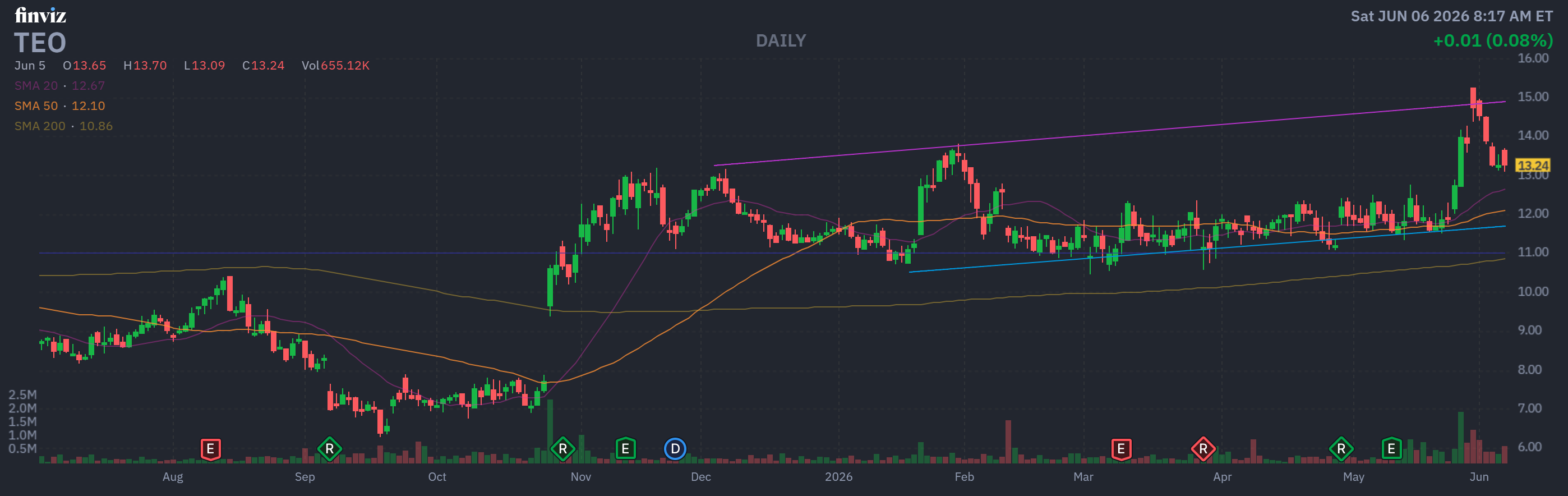
Name: Alejandro Alberto Urricelqui
Position: Director
Transaction Date: 06-02-2026 Shares Bought: 38,890 shares an average price paid of $13.43 for Cost: $522,293
Company: Telecom Argentina Sa (TEO)
Telecom Argentina S.A., through its subsidiaries, provides telecommunications services in Argentina, Paraguay, Uruguay, Chile, and the United States. The company provides mobile telecommunications services such as voice communications, high-speed mobile internet content and application download, online streaming, and other services. It also sells mobile communication devices such as smartphones, modems, MiFi and wingles, and smartwatches. It also provides internet connectivity items such as virtual private network services, classic internet protocol lines, and other products, as well as programming and other cable television services. The corporation was previously known as Cablevisión S.A., but it changed its name to Telecom Argentina S.A. in January 2018. Telecom Argentina S.A. was founded in 1979 and is headquartered in Buenos Aires, Argentina.
Alejandro Alberto Urricelqui has been a Director of Telecom Argentina S.A. since shareholders elected him to the company’s Board of Directors in April 2024. Urricelqui is an accomplished telecommunications and technology executive with vast experience in business strategy, operations, and digital transformation throughout Latin America. Throughout his career, he has held top leadership positions in the telecommunications industry, bringing knowledge in network infrastructure, business development, and governance. He holds a degree in industrial engineering from the University of Buenos Aires and has attended advanced executive education programs in company management and leadership.
Insomniac Hedge Fund Guy Opinion: Telecom Argentina S.A. is one of Argentina’s largest telecommunications providers, offering mobile, broadband, pay TV, and enterprise connectivity services. Through its Personal and Flow brands, the company serves millions of customers across a country where reliable digital infrastructure remains essential.
The moat is largely based on network infrastructure, spectrum licenses, and bundled services. Building a nationwide telecom network requires significant capital, making it difficult for new entrants to compete. The company benefits from customer relationships spanning mobile, internet, and entertainment products, which helps reduce churn.
Revenue growth over the last five years has been difficult to evaluate because Argentina’s high inflation and currency volatility distort reported results. Operationally, however, demand for mobile data and broadband services has remained resilient. A large portion of revenue is recurring, coming from monthly subscriptions for wireless and broadband services. Net retention metrics are not typically disclosed in the same manner as software companies.
Management’s primary challenge is navigating Argentina’s macroeconomic environment. Pricing regulation, inflation, currency fluctuations, and economic instability have often mattered more to shareholder returns than operational execution. Despite these headwinds, management has continued investing in network upgrades and fiber deployment.
Profitability can swing significantly due to inflation accounting, foreign-exchange movements, and regulatory changes. Looking through those distortions, the underlying telecom business is generally cash-generative and supported by recurring customer revenue. This director’s insider buying is a smaller but still notable signal, given Argentina’s uniquely volatile macro backdrop.
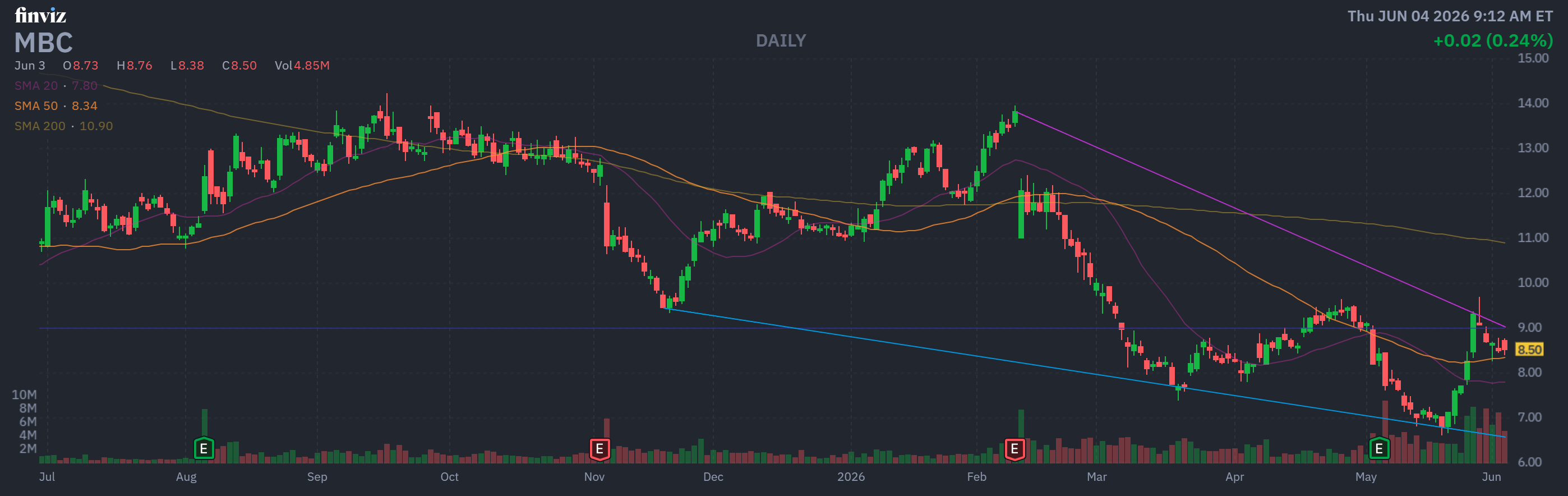
Name: R. David Banyard
Position: CEO & President
Transaction Date: 06-01-2026 Shares Bought: 60,000 shares an average price paid of $8.43 for Cost: $505,800
Company: MasterBrand Inc. (MBC)
MasterBrand, Inc. is a leading manufacturer of residential cabinetry products, with customers in the United States, Canada, and Mexico. The company provides a diverse selection of stock, semi-custom, and premium cabinets for kitchens, baths, and other parts of the home. Its goods are offered under well-known brands and serve the remodeling and new construction markets. MasterBrand’s cabinets is distributed through a network of dealers, merchants, and homebuilders, offering solutions for a diverse variety of design tastes and budgets. The company was started in 1954 and is based in Beachwood, Ohio.
R. David Banyard has been the President and CEO of MasterBrand, Inc. since December 2022, when the firm separated from Fortune Brands and became an independent public company. He joined the company in November 2019 as President of Fortune Brands’ MasterBrand Cabinets segment and was appointed to the MasterBrand Board of Directors in December 2022. Banyard was President and CEO of Myers Industries before joining MasterBrand, and he had held key positions at Roper Technologies and Danaher Corporation. He received a B.A. in Economics from Princeton University and an M.B.A. from the University of Virginia’s Darden School of Business.
Insomniac Hedge Fund Guy Opinion: MasterBrand is one of the largest residential cabinet manufacturers in North America, selling kitchen, bathroom, and storage cabinetry through dealers, retailers, builders, and distributors. Brands include MasterBrand offerings across stock, semi-custom, and premium price points.
The investment case is straightforward: housing eventually recovers. The problem is timing. Cabinet demand is heavily tied to new home construction and remodeling activity, both of which have been pressured by elevated interest rates and cautious consumers.
MasterBrand’s moat is modest. Scale, manufacturing footprint, distribution relationships, and brand recognition provide advantages, but cabinetry is not a business with significant technological barriers. Competition remains intense, and pricing power is limited compared with higher-quality industrial businesses.
Revenue growth over the last five years has been inconsistent, reflecting housing market cycles. Following its spin-off from Fortune Brands Innovations, management has focused on operational efficiency, acquisitions, and margin improvement rather than chasing growth at any cost. Recurring revenue is minimal since cabinets are largely one-time purchases rather than subscription-like products. Net retention is therefore not a meaningful metric for the business.
Management deserves credit for cost control in a difficult environment. Despite weak housing demand, the company has remained profitable and generated solid cash flow. The balance sheet is reasonable, giving it flexibility to weather a prolonged housing slowdown. Insider buying from MasterBrand’s CEO comes as the company waits for a housing market recovery to materialize.
Name: Steven Yu-Tsung Pei
Position: Director
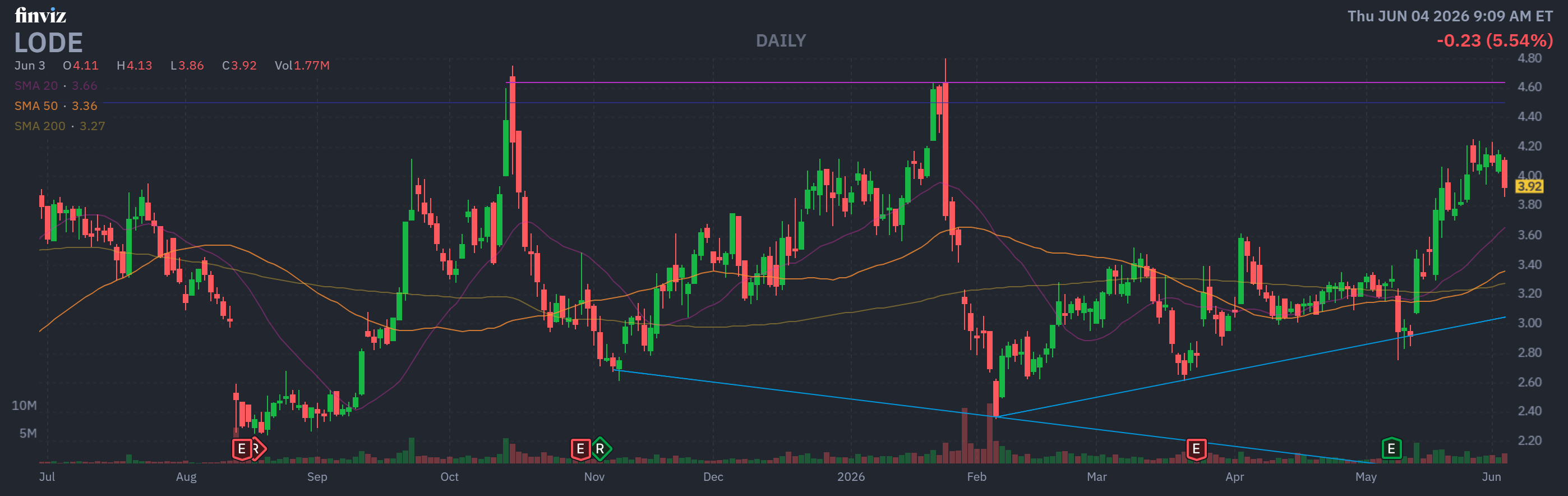
Transaction Date: 06-01-2026 Shares Bought: 360,000 shares an average price paid of $4.02 for Cost: $1,446,677
Name: Robert Spence
Position: Director
Transaction Date: 06-03-2026 Shares Bought: 24,410 shares an average price paid of $3.97 for Cost: $96,908
Company: Comstock Inc. (LODE)
In the United States, Comstock Inc. commercializes technologies, methods, and supply chains for extracting, processing, and converting underutilized waste and natural resources into clean energy and clean energy-related products. It operates in four segments: fuels, metals, mining, and strategic investments. The firm creates and commercializes technology for extracting and converting waste and underused lignocellulosic biomass into intermediates that can be refined into advanced renewable fuels. It also owns 100 percent of the Lucerne Project in Storey County, Nevada, and the Spring Valley Project in Lyon County, Nevada. Comstock Inc. was established in 1999 and is headquartered in Virginia City, Nevada.
Steven Yu-Tsung Pei has been an Independent Director at Comstock Inc. since March 2026, when he was named to the company’s Board of Directors as part of a governance expansion to support Comstock’s solar recycling and essential metals recovery growth strategy. Pei is the Founder and Chief Investment Officer of Gratia Capital, a Los Angeles-based investment business he founded in 2012. He has over 25 years of experience in capital allocation, restructuring, and strategic investing in both public and private markets. Pei holds a BS from the University of Pennsylvania’s Wharton School, as well as an MA and BA from the university’s College of Arts and Sciences.
Robert M. Spence has been a Director of Comstock Inc. since March 2026, when he was appointed as an independent member of the company’s Board of Directors and Chair of the Audit, Finance, and Compensation Committees. Spence is an experienced legal and corporate governance executive with a background in public company leadership, mergers and acquisitions, and industrial manufacturing enterprises. Before joining Comstock, he was high Vice President, General Counsel, and Secretary of Skyline Champion Corporation, and he had previously held high leadership positions at Neenah Enterprises and SPX Corporation. He holds a Bachelor of Business Administration from the University of Michigan and a Juris Doctorate from Wayne State University Law School.
Insomniac Hedge Fund Guy Opinion: Comstock is one of those companies that constantly looks more interesting in a presentation deck than in its financial statements. Historically known for its Nevada mining assets, the company has spent recent years reinventing itself around renewable fuels, metals recycling, and resource recovery technologies. The vision is ambitious: use proprietary processes to convert waste into valuable fuels and recover critical minerals needed for the energy transition.
The potential moat lies in its technology platforms, particularly if management can prove they work at commercial scale. The problem is that investors have heard similar stories from many clean-tech companies over the years. Until large-scale deployments generate meaningful cash flow, the moat remains more theoretical than proven.
Revenue has been volatile and relatively small, with the company still in the development and commercialization phase rather than operating as a mature business. Recurring revenue is limited, and traditional SaaS-style metrics such as net revenue retention are not particularly relevant to the current business model.
Management deserves credit for aggressively pursuing new opportunities and partnerships, but execution risk remains high. The investment case depends heavily on turning promising technologies into profitable commercial operations.
Profitability is the biggest challenge. Comstock has historically generated operating losses and negative cash flow while investing in growth initiatives. Investors are effectively betting on future commercialization rather than current earnings power. This cluster of insider buying from two newly appointed directors is worth watching, though the company’s underlying business remains largely speculative.
Name: Bernardo Hees
Position: Director
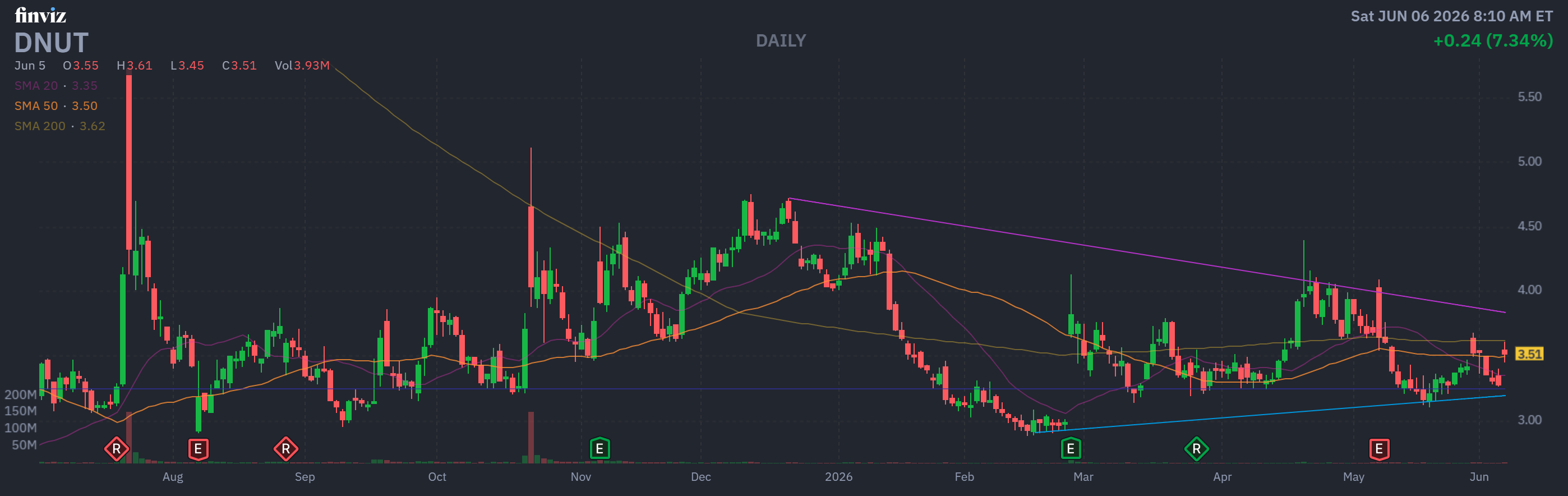
Transaction Date: 06-01-2026 Shares Bought: 630,111 shares an average price paid of $3.36 for Cost: $2,116,727
Company: Krispy Kreme Inc. (DNUT)
Krispy Kreme, Inc. and its subsidiaries create doughnuts in the United States, the United Kingdom, Ireland, Australia, New Zealand, Mexico, Canada, Japan, and other countries. It operates in three segments: the United States, International, and Market Development. The company provides doughnut experiences through hot light theaters and fresh shops, as well as fresh daily branded cabinets and merchandising units in supermarket and convenience stores, quick service restaurants, club memberships, drugstores, and digital channels like as delivery apps. It also operates Krispy Kreme company-owned and franchise locations. The company was previously known as Krispy Kreme Doughnuts, Inc., but changed its name to Krispy Kreme, Inc. in May 2021. Krispy Kreme, Inc. was founded in 1937 and is headquartered in Charlotte, North Carolina.
Bernardo Hees has been a Director at Krispy Kreme, Inc. since July 2021, when he joined the company’s Board of Directors following its reintroduction to the public markets. Hees is a seasoned consumer products and restaurant industry executive who previously served as CEO of Kraft Heinz, Burger King, and H.J. Heinz. He is known for his expertise in global brand management, operational efficiency, and corporate transformation, and he brings significant leadership experience to the Krispy Kreme board. Hees holds a bachelor’s degree in economics from the Pontifical Catholic University of Rio de Janeiro and an MBA from the University of Warwick in the United Kingdom.
Insomniac Hedge Fund Guy Opinion: Krispy Kreme, Inc. is a globally recognized doughnut brand best known for its Original Glazed doughnuts and growing distribution network. The company operates through retail shops, delivered-fresh-daily partnerships, and e-commerce channels. Its strategy has increasingly focused on expanding points of access through grocery stores, convenience stores, and restaurant partners rather than building large numbers of new stores.
The moat is the brand. Krispy Kreme enjoys strong consumer recognition and a differentiated product, but it does not possess the deep competitive advantages of dominant restaurant franchises. Doughnuts are a highly competitive category with relatively low switching costs for consumers.
Over the past five years, revenue growth has been modest, helped by international expansion and increased distribution. The company generates recurring revenue through repeat consumer purchases, but unlike software or subscription businesses, revenue depends on continued customer traffic and demand. Net revenue retention is not a meaningful metric for this business.
Management has focused on expanding distribution while improving operational efficiency. The challenge has been balancing growth ambitions with profitability and debt levels. While the brand remains popular, execution has been inconsistent, and earnings have been pressured by inflation, labor costs, and changing consumer spending patterns.
Profitability remains the key concern. Revenue has grown faster than profits, and margins have been volatile. Investors have been waiting for evidence that the distribution-led strategy can translate into stronger and more consistent earnings growth. Insider buying from a veteran consumer-products executive adds a note of confidence to an otherwise uneven turnaround story.
Name: Todd C. Brady
Position: President and CEO
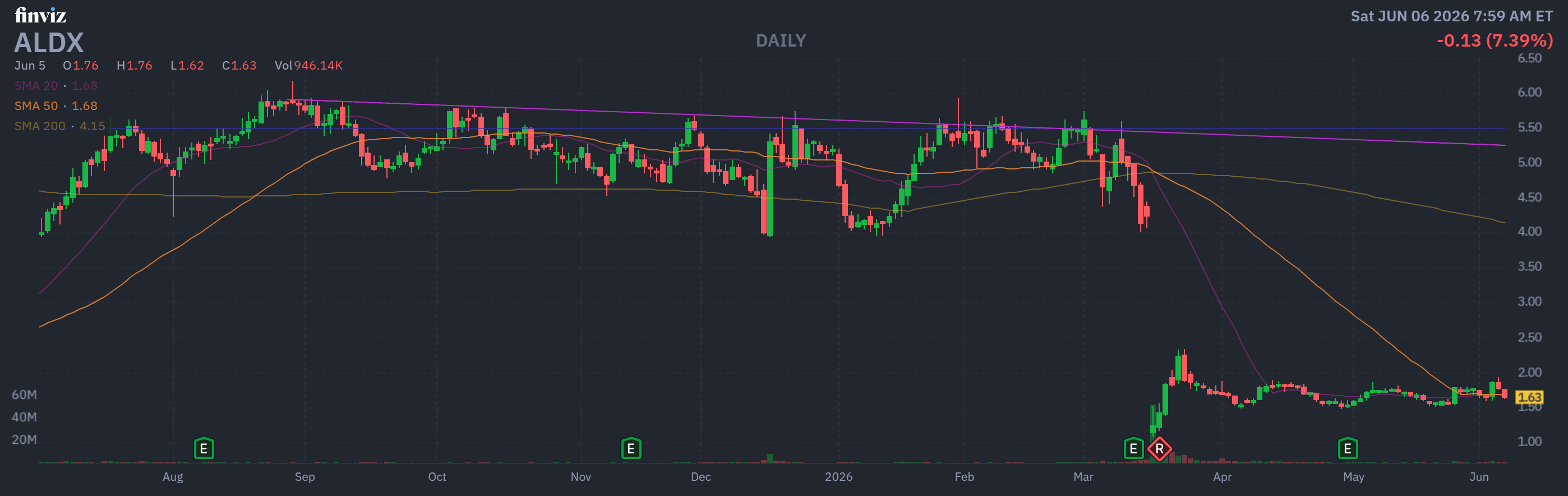
Transaction Date: 06-03-2026 Shares Bought: 250,000 shares an average price paid of $1.67 for Cost: $418,450
Company: Aldeyra Therapeutics Inc. (ALDX)
Aldeyra Therapeutics, Inc., a biotechnology business, discovers and develops medicines for immune-mediated disorders. The company’s lead product candidate is reproxalap, a reactive aldehyde species (RASP) modulator in Phase III clinical trials for the treatment of dry eye disease and allergic conjunctivitis, and ADX-2191, a dihydrofolate reductase inhibitor for the treatment of primary vitreoretinal lymphoma and retinitis pigmentosa. The company is also working on ADX-629, an orally administered RASP modulator that is in Phase 2 clinical trials to treat COVID-19, atopic asthma, psoriasis, and alcohol intoxication. The company was previously known as Aldexa Therapeutics, Inc., but changed its name to Aldeyra Therapeutics, Inc. in March 2014. Aldeyra Therapeutics, Inc. was founded in 2004 and is headquartered in Lexington, Mass.
Todd C. Brady, M.D., Ph.D., has served as President and Chief Executive Officer of Aldeyra Therapeutics, Inc. since 2012 and has been a member of the company’s Board of Directors since 2005. He has played a key role in leading Aldeyra’s development as a biotechnology company focused on immune-mediated and ocular diseases, including guiding its clinical and regulatory strategy. Prior to Aldeyra, Brady was a Principal at Domain Associates, a healthcare venture capital firm, and previously co-founded and led several biotechnology ventures. He earned a Ph.D. in Pathology and an M.D. from Duke University and an A.B. from Dartmouth College.
Insomniac Hedge Fund Guy Opinion: Aldeyra is a classic binary biotech. The company develops therapies for immune-mediated diseases, with its investment case centered almost entirely on reproxalap, an eye-drop treatment for dry eye disease and allergic conjunctivitis. Unlike mature biotech companies, Aldeyra has no approved products and virtually no recurring revenue, making it dependent on clinical and regulatory success.
There is currently no meaningful moat. The value lies in the intellectual property surrounding its RASP (Reactive Aldehyde Species) platform and whether reproxalap can eventually reach the market. If approved, the company could gain access to a large dry-eye market and potentially benefit from its partnership with AbbVie.
Financially, this is not a growth story today. Revenue is minimal and primarily derived from collaboration agreements rather than product sales. The company remains unprofitable, reporting a 2025 net loss of approximately $34 million, although losses improved from the prior year as R&D spending declined.
Management is led by Todd Brady, who has spent years advancing reproxalap through multiple regulatory reviews. The challenge is that the FDA has repeatedly questioned the drug’s efficacy. Most recently, the agency declined approval again in 2026, marking another major setback. This CEO’s insider buying comes despite a recent FDA setback, underscoring the binary, high-risk nature of this biotech name.
This blog is solely for educational purposes and the author’s own amusement. IT IS NOT INVESTMENT ADVICE. Think of the blog as part of my personal investment journal that I am willing to share with the DIY investor. We could be long, short, or have no position at all in any of the stocks mentioned and express no written or implied obligation to disclose any of that. Nothing contained here constitutes a recommendation to buy or sell any security. Investing involves risk, including the possible loss of principal, and past performance is not indicative of future results.
“The insomniac hedge fund guy” is a moniker Harvey Sax, the portfolio manager for The Insiders Fund” has used from time to time on email, blog ,and social media posts. While Mr. Sax is the portfolio manager of The Insiders Fund, these posts are not communications from, nor endorsed by, Alpha Wealth Funds, LLC or any of its managed funds. References to Alpha Wealth Funds or its affiliates are for identification only and do not imply sponsorship or approval.
All company names, logos, and trademarks belong to their respective owners. The use of company logos is solely for descriptive and illustrative purposes under fair use. Any information provided is based on publicly available data and should not be considered financial, investment, or legal advice. Readers should conduct their own research or consult with a professional before making any investment decisions. Insiders sell the stock for many reasons, but they generally buy for just one – to make money. You’ve always heard the best information is inside information. Everyone with any stock market experience pays close attention to what insiders are doing. After all, who knows a business better than the people running it? Officers, directors, and 10% owners are required to inform the public through a Form 4 Filing of any transaction, buy, sell, exercise, or any other within 48 hours of doing so.
This info is available for free from the SEC’s Web site, Edgar, although we subscribe to SECForm4 as they provide a way to manage and make sense of the vast realms of data. I’ve tried a lot of vendors. SECForm4 is one of the smaller ones, but I like supporting Frank. He is not arrogant. He’s helpful and has great prices. He also trades on his own data, so I like people that eat what they kill. The bar is different from selling because the natural state of management is to be a seller. This is because most companies provide significant amounts of management compensation packages as stock and options. Therefore, we analyze unusual patterns with selling, such as insiders selling 25 percent or more of their holdings or multiple insiders selling near 52-week lows. Another red flag is large planned sale programs that start without warning. Unfortunately, the public information disclosure requirements about these programs, referred to as Rule 10b5-1, are horrendously poor. Also, planned sales that pop up out of nowhere are basically sales and are seeking cover under this corporate welfare loophole.
I also generally ignore 10 percent shareholders as they tend to be OPM (other people’s money) and perhaps not the smart money on which we are trying to read the tea leaves. I say generally because some 10% shareholders are great investor, think Warren Buffett and others. Of course, insiders can also be wrong about their Company’s prospects. Don’t let anyone fool you into believing they never make mistakes. Do your own analysis. They can easily be wrong, and in many cases, maybe most cases, have no more idea what the future may hold than you or me. In short, you can lose money following them. We have, and we curse aloud; what were they thinking!
We like Fly on the Wall for keeping up with what events might be happening, analysts’ comments, and whatever else could be moving the stock. Dow Jones news service is an essential tool, but many services pick up their feed like they do Bloomberg. My assistant probes the 10k for a reasonable description of the business. I’ve found that to be the most accurate and succinct place to find out what a business actually does.