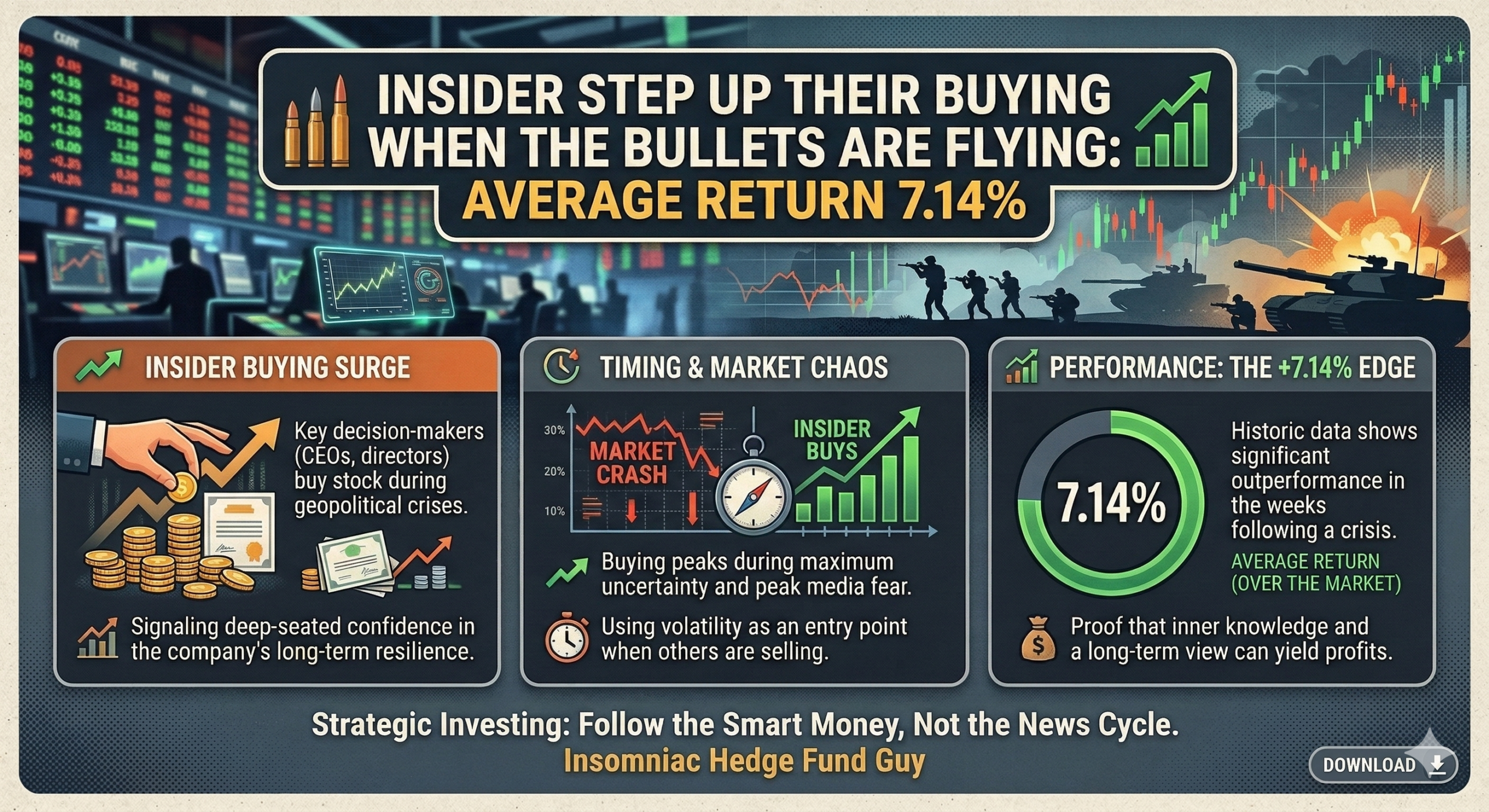
Insiders step up their buying when the bullets are flying.
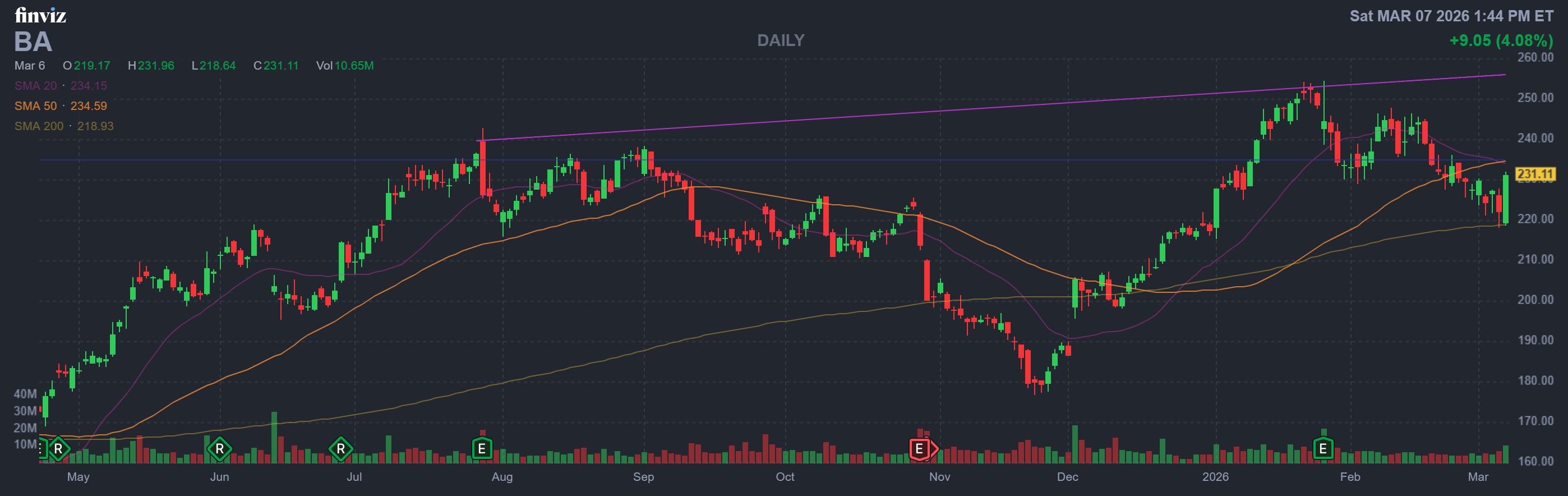
Name: Mortimer J. Buckley
Position: Director
Transaction Date: 03-03-2026 Shares Bought: 2,230 shares an Average Price Paid of $224.20 for Cost: $499,966
Company: Boeing Co. (BA)
The Boeing Company is a leading aerospace and defense company that designs, manufactures, and services commercial airplanes, military aircraft, satellites, and space systems. Commercial Airplanes, Defense, Space & Security, and Global Services are the company’s segments, which provide goods and services to airlines, governments, and defense customers around the world. Boeing is well-known for its aircraft series, which include the 737, 777, and 787, as well as advanced defense and space technology. The corporation is a prominent player in worldwide aviation and aerospace innovation. Boeing was founded in 1916 and is headquartered in Arlington, Virginia.
Mortimer J. Buckley has been a Director at Boeing Co. since January 1, 2025, after being elected to the company’s board in November 2024. He joined the board with over 30 years of leadership experience in global investment management, most notably at The Vanguard Group, where he was CEO from 2018 to 2024 and Chairman from 2019 to 2024. Buckley joins Boeing’s board of directors and serves on the Finance, Governance, and Public Policy committees. He has expertise in financial oversight, digital technologies, cybersecurity, and corporate governance. He received a BA in Economics from Harvard University and an MBA from Harvard Business School.
Insomniac Hedge Fund Guy Opinion:
Boeing is one of the most important companies in global aviation, but right now it trades more like a distressed turnaround than the crown jewel of American aerospace. The competitive moat is undeniable—this is a duopoly industry with Airbus where certification barriers and capital intensity make new entrants almost impossible. With a record $682 billion backlog representing years of production visibility, the demand side of the equation is not the problem. Execution is.
Years of quality failures, production halts, and program delays have left Boeing operating well below the profitability of peers like Airbus or Lockheed Martin. The company is slowly climbing out of the hole, with deliveries rising and free cash flow finally turning positive, but the recovery is uneven and still vulnerable to operational surprises.
The market appears to be pricing Boeing as a successful turnaround before the turnaround has fully happened. My DCF assumptions—6% revenue growth and normalized margins—produce a valuation roughly in line with current market levels, meaning investors are already betting that management executes almost perfectly over the next five years.
This is a classic high-beta industrial recovery story. If Boeing restores production discipline and regains regulatory trust, the stock could compound nicely. If not, it becomes a perpetual restructuring story. The opportunity is real, but so is the operational risk.
Not investment advice—just one insomniac’s take on a very complicated stock. Late breaking news, Bloomberg reported Mar 6 China in talk to order 500 Boeing 737 Max jets which would make this by far the largest single order in the Company’s history. Combine that with the expected step up in more profitable defense contracting, investors can see a much higher price target.
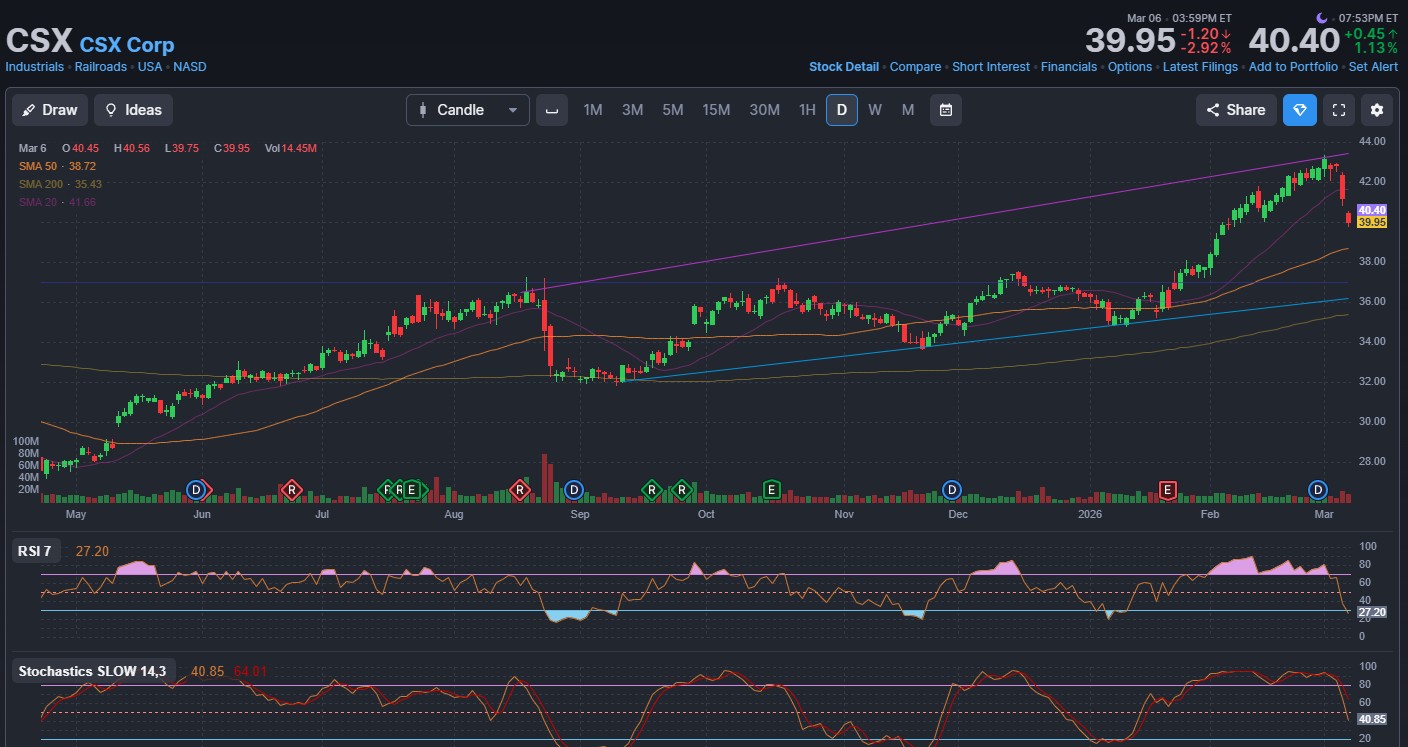
Name: Stephen Angel
Position: President & CEO
Transaction Date: 02-27-2026 Shares Bought: 25,000 shares an Average Price Paid of $40.27 for Cost: $1,006,750
Company: CSX Corp (CSX)
CSX Corp (CSX) is a leading provider of rail-based freight transportation in North America, operating an extensive network across the Eastern United States.
1. Business Model & Competitive Moat
-
Business Model: CSX operates a “hub-and-spoke” rail network of approximately 21,000 route miles across 23 states and two Canadian provinces. It transports three main categories: Merchandise (64% of revenue), Intermodal (14%), and Coal (13%). It generates revenue by charging freight rates based on volume and distance, supplemented by fuel surcharges and ancillary services like “CSX Plus” (door-to-door trucking integration).
-
Competitive Moat: CSX has a Wide Moat derived from its irreplaceable physical infrastructure.
-
High Barriers to Entry: Building a new Class I railroad today is virtually impossible due to land acquisition costs and regulatory hurdles.
-
Cost Advantage: Rail is roughly 4x more fuel-efficient than trucking for long-haul freight, providing a structural pricing advantage.
-
Network Effect: Connections to over 70 ocean, river, and lake ports create a “sticky” ecosystem for international trade.
-
Insomniac Hedge Fund Guy Opinion: CEO: Stephen Angel (Appointed Sept 2025). He recently showed confidence by purchasing 25,000 shares in March 2026 and 50,000 in September last year.
My take: CSX is a steady compounder, not a moonshot. Railroads are quasi-monopolies. Once the track is laid, nobody’s building a competing railroad next door. That gives CSX durable pricing power and high barriers to entry.
Bull case:
-
Oligopoly industry (CSX, UNP, NSC, BNSF). Limited competition.
-
Operating leverage: Every extra ton shipped has strong incremental margins.
-
Intermodal growth: Trucks shifting to rail for fuel efficiency and emissions.
-
Shareholder friendly: Consistent buybacks and dividends.
Risks:
-
Economic sensitivity. Railroads are economic barometers—industrial slowdown = fewer carloads.
-
Labor + regulatory pressure always lurk in the background.
-
Volume stagnation if U.S. manufacturing stays sluggish.
Valuation mindset: Railroads historically trade like high-quality cyclicals. When bought during freight recessions, they tend to produce strong long-term returns.
Bottom line:
CSX isn’t exciting—but boring oligopolies with pricing power often make the best investments.
And remember one rule from the trading playbook: don’t confuse a great company with a great stock—the price you pay determines the return.-
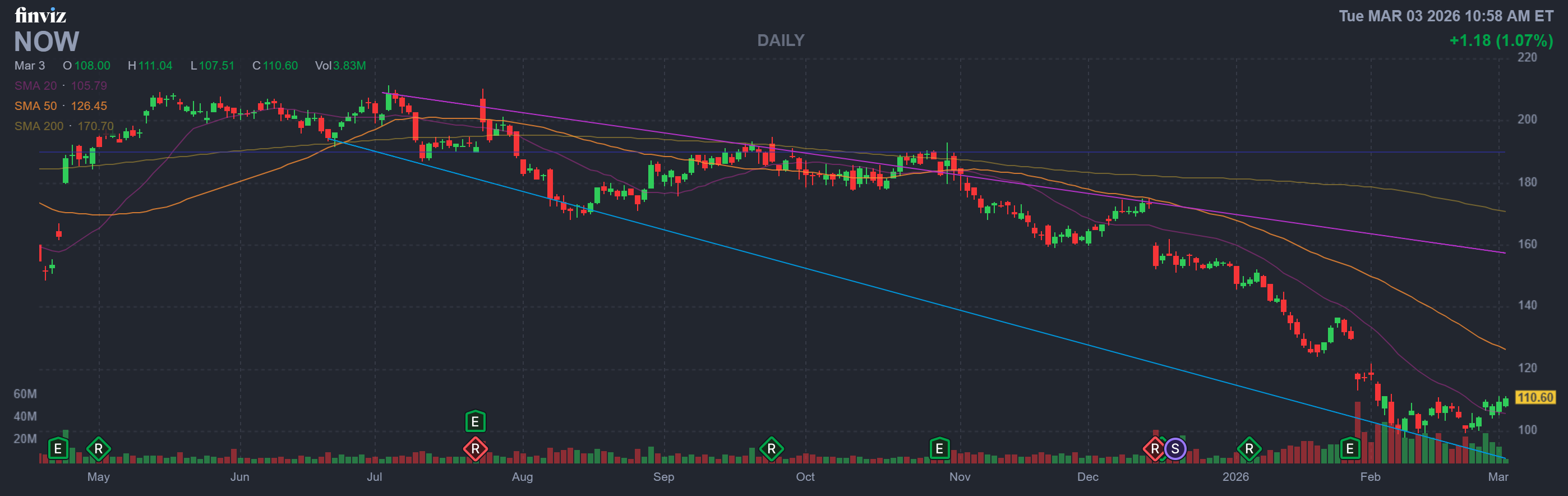
Name: William R. McDermott
Position: Chairman & CEO
Transaction Date: 02-27-2026 Shares Bought: 28,682 shares an Average Price Paid of $104.60 for Cost: $3,000,058
Company: ServiceNow Inc. (NOW)
ServiceNow, Inc. is a cloud-based corporate software firm that offers digital workflow and automation solutions to organizations worldwide. Businesses can use its Now Platform to streamline IT service management, employee workflows, customer service operations, risk management, and other essential activities by integrating applications and artificial intelligence capabilities. ServiceNow was founded in 2004, and its headquarters are in Santa Clara, California.
William R. McDermott, Chairman and CEO of ServiceNow, has been the company’s CEO since November 2019 and will take over as Chairman in October 2022. Before joining ServiceNow, he was CEO of SAP SE, where he led global expansion, and he previously held top positions at Xerox, Gartner, and Siebel Systems. McDermott attended Dowling College and Northwestern University’s Kellogg School of Management, where he obtained an MBA.
Insomniac Hedge Fund Guy Opinion:
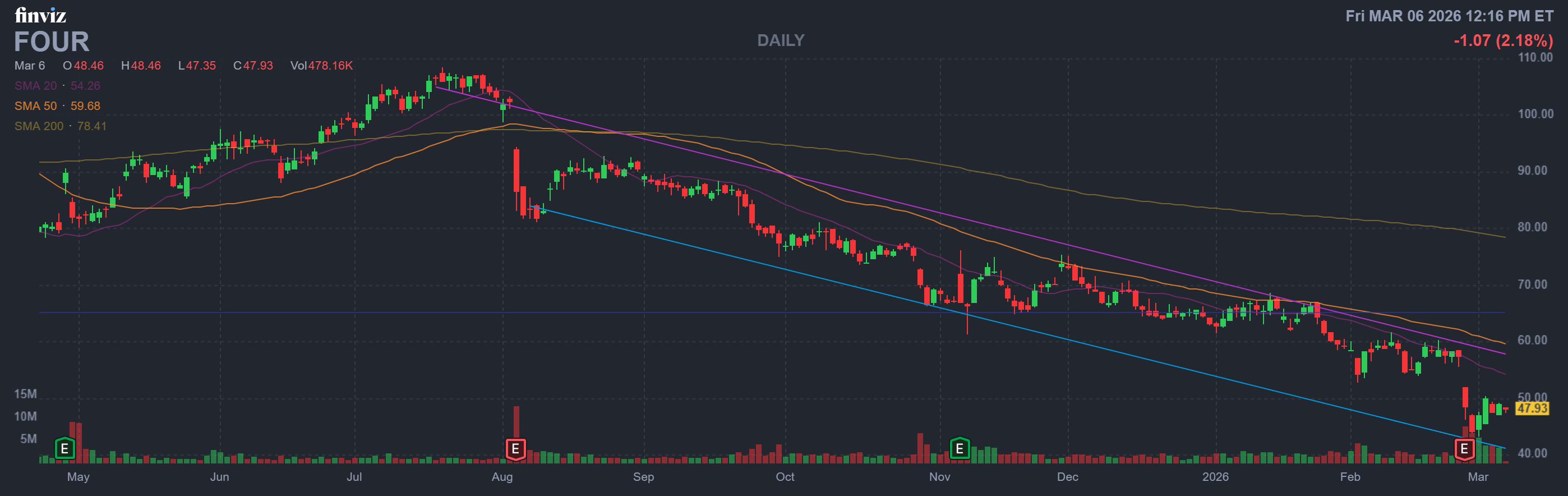
Name: Andrew C. Florance
Position: President And CEO
Transaction Date: 02-27-2026 Shares Bought: 55,720 shares an Average Price Paid of $44.52 for Cost: $2,480,654
Company: Costar Group Inc. (CSGP)
CoStar Group, Inc. offers commercial real estate information, analytics, and online marketplace services throughout the United States and globally. The company provides property data, market research, sales and leasing tools, hospitality benchmarking, and digital marketplaces like Apartments.com, LoopNet, Homes.com, and Ten-X. It caters to brokers, property owners, investors, lenders, and other real estate professionals. CoStar Group was founded in 1986 and has its headquarters in Arlington, Virginia.
Andrew C. Florance, President and CEO of CoStar Group Inc., founded the company in 1987 from his college dorm room and has served as President and CEO ever since, overseeing its growth into a global leader in real estate information, analytics, and online marketplaces. Under his leadership, the company completed its first public offering in 1998 and launched important brands such as LoopNet, Apartments.com, and Homes.com. Florance earned a Bachelor of Arts in Economics from Princeton University and an honorary doctorate from Virginia Commonwealth University.
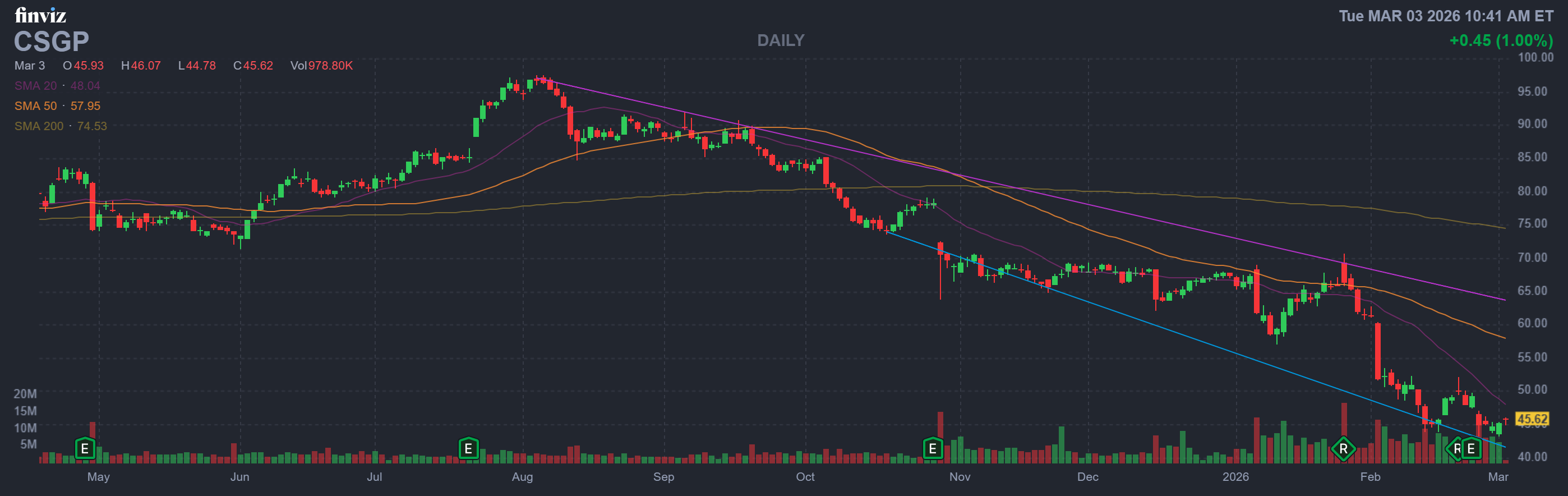
Insomniac Hedge Fund Guy Opinion: CoStar Group is a barrel with gold at the bottom: dominant real-estate data franchise with sticky recurring revenue and network effects few competitors can match. But the stock’s current valuation prices in execution perfection — a risky bet given margin drag from Homes.com and legal overhang. Insider buying by CEO Florance is a vote of confidence at current prices, yet short interest and activist pressure highlight structural skepticism. A disciplined DCF pegs fair value well above today’s price if the core commercial engine returns to margin expansion. For the long-term real-estate tech believer, CSGP is a value-oriented contrarian play; for growth purists, earnings cyclicality and allocation debates temper enthusiasm. Not financial advice — just one market veteran’s take on a complex beast.
Name: B. Andrew Rose
Position: Director
Transaction Date: 03-02-2026 Shares Bought: 12,380 shares an Average Price Paid of $40.68 for Cost: $503,560
Company: Trex Co Inc. (TREX)
Trex Company, Inc. manufactures and distributes composite decking, railing, and fencing products in the United States. Trex Transcend, Trex Select, and Trex Enhance are among the decking brands it offers, as are railing systems and fencing goods, including Trex Seclusions. Trex licenses goods such as outdoor furniture, deck drainage systems, soffit lights, pergolas, and specialty accessories. Trex sells its products through wholesale distributors, retail lumber dealers, and major retailers such as Home Depot and Lowe’s. The company was founded in 1996 and has its headquarters in Winchester, Virginia.
Director B. Andrew Rose joined Trex Company Inc.’s Board of Directors in December 2025 as an independent director, bringing with him over 30 years of leadership and financial experience. He was previously President and CEO of Worthington Enterprises, as well as CFO and CEO of Worthington Industries, and a partner and principal at a financial services firm. Rose also serves on other public company boards and brings corporate strategy, finance, and product development skills to Trex’s board and committees.
Insomniac Hedge Fund Guy Opinion:
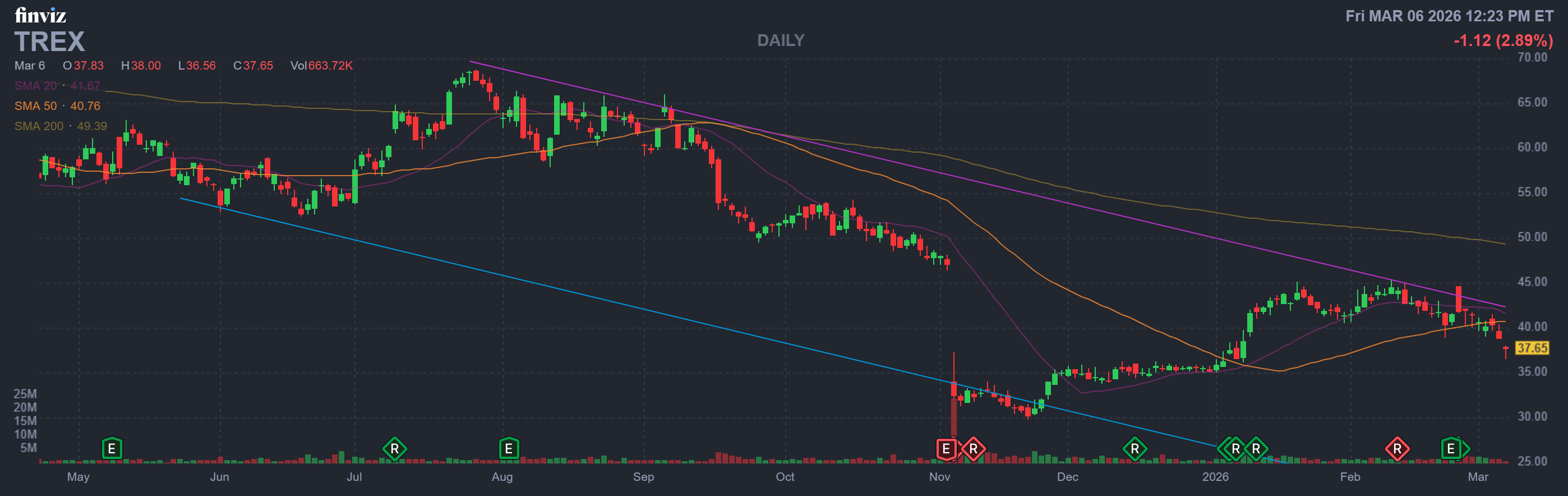
Trex sits in that uncomfortable middle ground that seasoned investors know well: a great business caught in a bad macro tape. The company remains the undisputed category leader in composite decking with a powerful distribution network, premium brand equity, and structural tailwinds as homeowners gradually migrate away from traditional wood decking. Margins historically north of 30% EBITDA demonstrate the underlying economic strength of the franchise.
The problem is timing. Trex is deeply tied to the housing repair and remodel cycle, and higher interest rates have crushed discretionary outdoor projects. Recent earnings misses and guidance cuts exposed just how cyclical the business can be, triggering a brutal stock repricing. While new product innovation and growing railing adoption offer incremental growth levers, the near-term outlook remains hostage to macro housing demand rather than company execution.
From a valuation perspective, the market has already punished the stock significantly, but it has not quite crossed into screaming value territory. A conservative DCF suggests fair value in the mid-$30 range, implying limited margin of safety at current prices. Long-term investors may ultimately win if composite decking continues to take share from wood, but patience will be required.
Trex is a quality operator in a cyclical industry. The franchise is solid. The timing is questionable.
Not financial advice — just one insomniac market junkie’s take.
Name: Stephen F. Angel
Position: President & Ceo
Transaction Date: 03-06-2026 Shares Bought: 25,000 shares an average price paid of $40.27 for a cost of $1,006,750
Company: Csx Corp (CSX)
CSX Corporation, through its subsidiaries, provides rail-based freight transportation services in the United States and Canada. It operates in two segments: rail and trucks. The company provides rail services, intermodal container and trailer transportation, and other transportation services such as rail-to-truck transfers and bulk commodity operations. It also transports chemicals, agricultural and food products, minerals, automobiles, forest products, fertilizers, metals and equipment, and coal, coke, and iron ore to power plants, steel mills, and industrial plants, as well as coal exports to deep-water ports. It connects production and distribution facilities by track. CSX Corporation was established in 1978 and is based in Jacksonville, Florida.
In September 2025, Steve Angel was appointed President and CEO of CSX, as well as a member of the Board. Angel has over 45 years of experience in the industrials industry, where he has led high-performing teams, fostered a collaborative culture, and driven operational excellence and development, all while advancing strategic priorities and maximising shareholder value. Angel was Chief Executive Officer of Linde plc from 2018 to 2022, and Chairman since 2022. He intends to retire from Linde’s Board on January 31, 2026. He was later appointed President and Chief Operating Officer in 2006. Angel earned a Bachelor of Science in Civil Engineering from North Carolina State University and an MBA from Loyola College in Baltimore.
Insomniac Hedge Fund Guy Opinion:
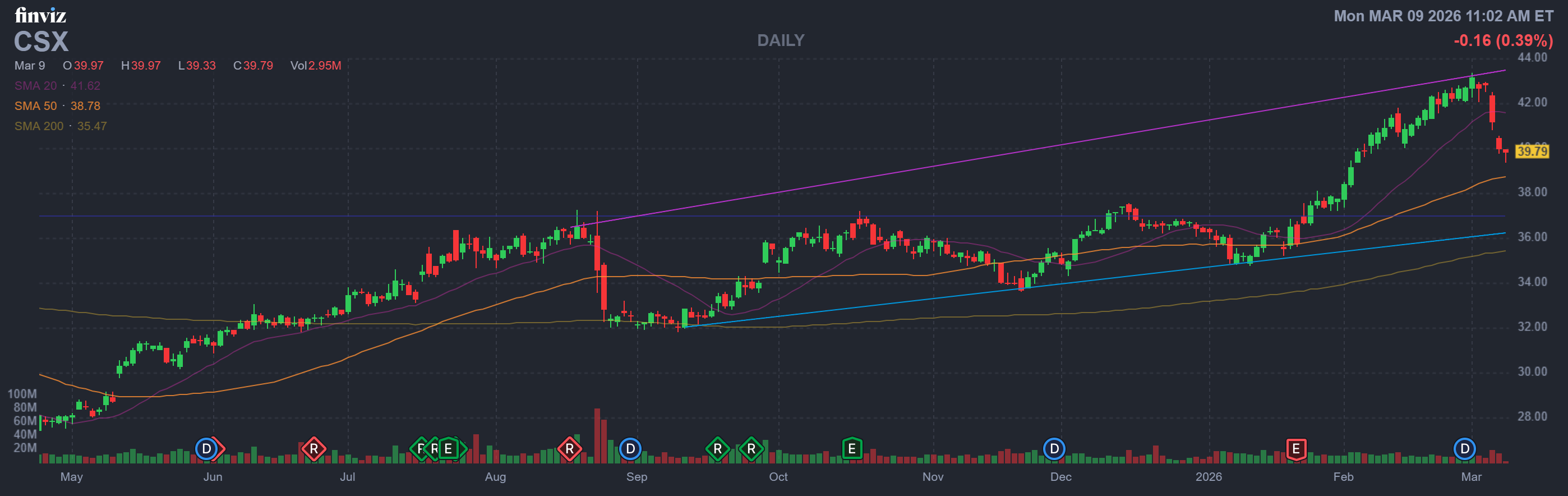
CSX is the kind of company that rarely excites retail investors but quietly compounds value over decades. Railroads are one of the most entrenched economic moats in the United States—high barriers to entry, irreplaceable infrastructure, and pricing power tied to freight demand. CSX benefits from this structural advantage, especially across the eastern U.S. network where rail consolidation has effectively created regional duopolies. The company has historically executed well on precision scheduled railroading (PSR), which has improved operating efficiency, margins, and capital discipline. The real thesis here isn’t explosive growth—it’s durable cash flow. Rail volumes tend to track industrial activity, agriculture, and energy flows, meaning the business is cyclical but extremely resilient over time. CSX generates strong free cash flow and consistently returns capital through dividends and buybacks, making it attractive for long-term institutional holders.
However, the stock is rarely dramatically mispriced because the market understands the moat. The main variables that move CSX are macro: U.S. industrial production, coal demand, intermodal freight, and fuel costs. When the economy slows, volumes soften and the stock drifts; when freight demand rebounds, operating leverage kicks in. That’s where the opportunity lies. Hedge Fund Insomniac’s view is that CSX isn’t a high-beta trade but a quality infrastructure compounder. You don’t chase it during economic optimism—you accumulate it when recession fears or freight slowdowns push the valuation down. Over long horizons, railroads tend to reward patient capital because the network assets simply cannot be replicated.
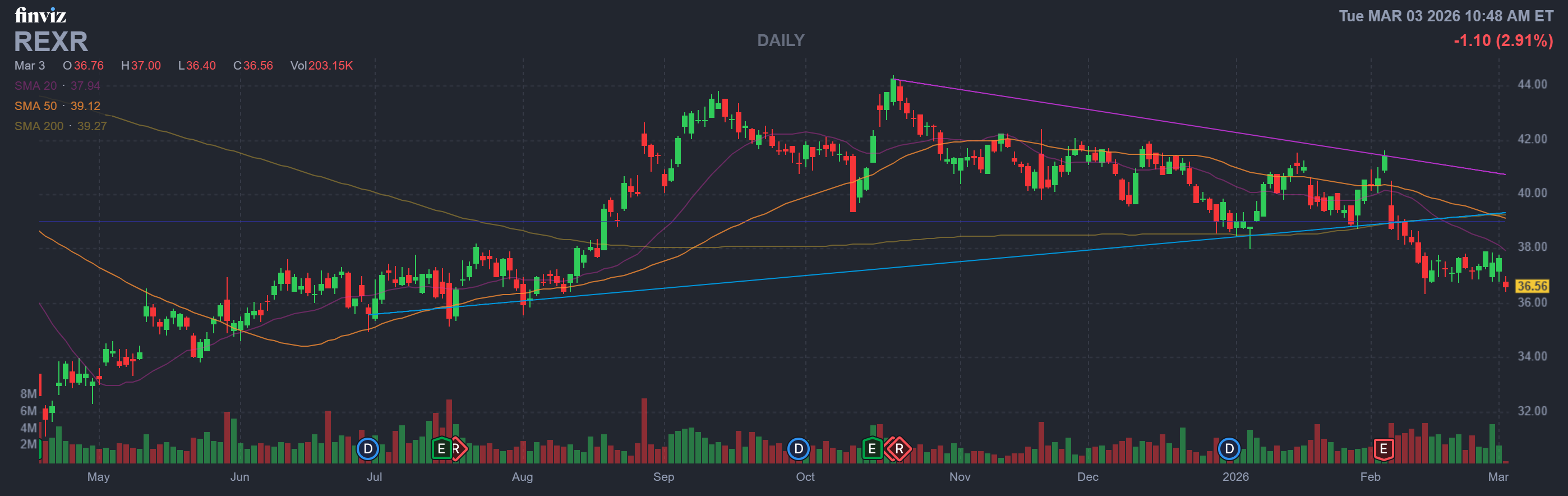
Name: Laura E. Clark
Position: Chief Operating Officer
Transaction Date: 02-27-2026 Shares Bought: 5,310 shares an Average Price Paid of $37.73 for Cost: $200,338
Name: Michael Fitzmaurice
Position: Chief Financial Officer
Transaction Date: 02-27-2026 Shares Bought: 2,650 shares an Average Price Paid of $37.55 for Cost: $99,507
Name: David P. Stockert
Position: Director
Transaction Date: 02-27-2026 Shares Bought: 5,000 shares an Average Price Paid of $37.39 for Cost: $186,958
Company: Rexford Industrial Realty Inc. (REXR)
Rexford Industrial Realty, Inc. is a real estate investment trust that acquires, operates, and repositions industrial buildings in Southern California’s infill markets. The company holds a substantial portfolio of high-quality industrial facilities that are leased to a varied tenant base. It is listed on the New York Stock Exchange as a member of the S and P MidCap 400.
Laura E. Clark, Chief Operating Officer of Rexford Industrial Realty Inc., has been a key executive at the company since November 18, 2024, when she was promoted to COO after serving as Chief Financial Officer from September 2020 to November 2024, during which time she helped drive operational excellence and strategic growth across the REIT’s Southern California industrial portfolio. Clark also joined Rexford’s Board of Directors in November 2025, bringing over 20 years of finance, accounting, real estate, and operations experience from leadership positions at Regency Centers, Green Street Advisors, Iron Tree Capital, and Inland Capital Markets. He has a Bachelor of Science in Finance from DePaul University and an MBA from Ball State University.
Michael P. Fitzmaurice, Chief Financial Officer of Rexford Industrial Realty Inc., succeeded Laura Clark in the job and brings over 25 years of real estate finance and accounting experience. Before joining Rexford, he was Executive Vice President and Chief Financial Officer of RPT Realty from June 2018 to January 2024, where he helped lead the company through its merger with Kimco Realty. He previously held senior finance positions at Retail Properties of America, Inc., General Growth Properties, and Equity Office Properties. Fitzmaurice graduated from the University of Illinois at Chicago with a Bachelor of Science in Finance. He has been in charge of Rexford’s financial strategy, reporting, and capital markets activities since his appointment.
David P. Stockert, a director of Rexford Industrial Realty Inc., joined the company’s Board of Directors in January 2026 and now serves on the Audit Committee. From 2002 to 2016, he was the CEO and President of Post Properties, Inc., where he oversaw the company’s merger with Mid-America Apartment Communities. Stockert has also held senior leadership positions at Duke Realty and is a CPA. He received his MBA from Columbia Business School and a bachelor’s degree in accounting from the University of Colorado Boulder.
Insomniac Hedge Fund Guy Opinion: REXR is a differentiated industrial landlord with enviable market position and recurring cash flows, but its valuation richly prices execution perfection. Insider buys hint at value support, yet slowing rent growth, regional concentration risk, and thinner margins vs. peers justify a neutral stance — not a blind buy — unless rents reaccelerate or external growth catalysts emerge. Not financial advice — just raw edge.
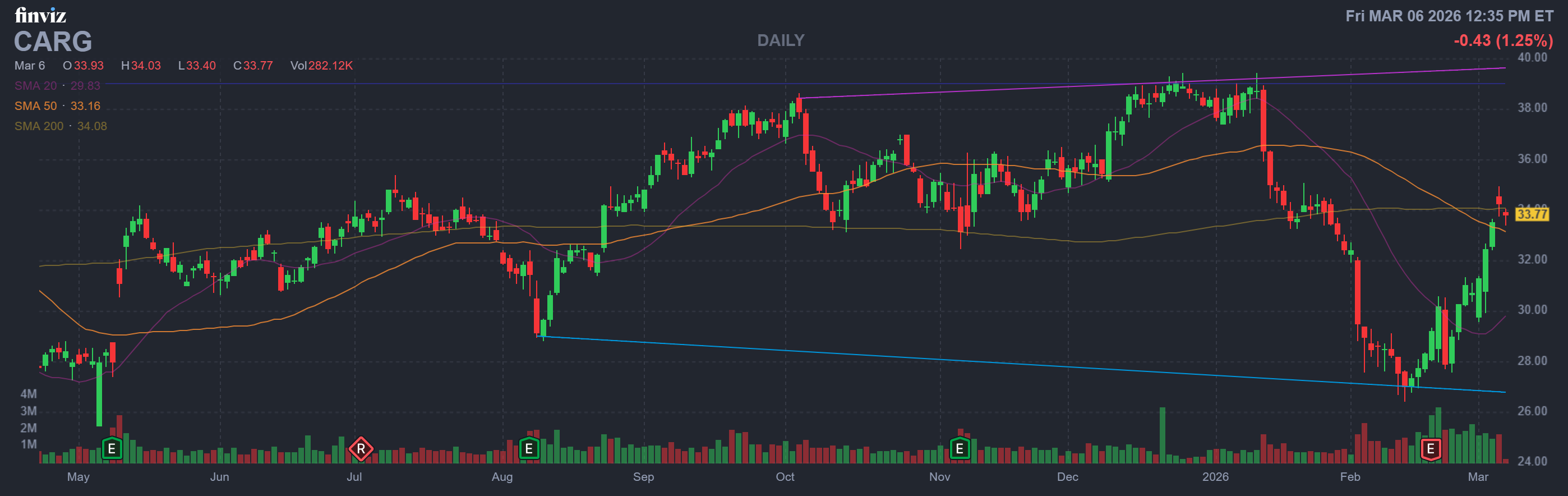
Name: Stephen Kaufer
Position: Director
Transaction Date: 03-03-2026 Shares Bought: 30,766 shares an Average Price Paid of $32.50 for Cost: $1,000,034
Company: CarGurus Inc. (CARG)
CarGurus, Inc. is an online automotive marketplace for buying and selling vehicles in the United States and across the world. The company charges dealer membership fees, advertises with auto manufacturers and other brand advertisers, and collaborates with financial service providers. Furthermore, the company offers auto manufacturers and other advertisers products such as brand reinforcement, category sponsorship, automobile segment exclusivity, and consumer segment exposure; Autolist, an online automotive marketplace accessible via mobile applications and a website; and PistonHeads, an automotive marketplace, auction platform, and editorial site for automobile enthusiasts. The company was previously known as CarGurus LLC before changing its name to CarGurus, Inc. in June 2015. CarGurus, Inc. was founded in 2005 and is based in Boston, MA.
Stephen Kaufer has been a Director of CarGurus Inc. since June 2007. He is best known as a co-founder of TripAdvisor, where he became President and CEO in February 2000 and oversaw the company for over two decades, until 2022. He brings vast experience in online marketplaces, technology, and corporate governance to his work on the CarGurus board. Kaufer began his career as a co-founder and Vice President of Engineering at CenterLine Software, subsequently becoming President of CDS, Inc. He earned a Bachelor of Arts in Computer Science from Harvard University.
Insomniac Hedge Fund Guy Opinion:
CarGurus is a deceptively strong digital marketplace hiding inside what the market still treats like a cyclical auto advertising business. That’s the mistake. The company has quietly shifted from a pure listings platform to a dealer-workflow SaaS ecosystem, embedding pricing intelligence, inventory tools, and consumer traffic into the daily operations of more than 25,000 dealerships. That transition matters because software-like revenue carries far higher retention and margin durability than transactional marketplaces.
The core Marketplace segment already generates 30%+ EBITDA margins and high recurring revenue, and the shutdown of the low-quality CarOffer wholesale business removed a major volatility source from the financial model. With dealer ARPD increasing and AI-driven pricing tools gaining adoption, CarGurus is gradually expanding its monetization per dealer without needing explosive user growth.
Yet the market still values the stock like a slow-growth classifieds business. A conservative DCF suggests intrinsic value in the low-$40 range, implying modest undervaluation relative to recent trading levels. The insider purchase by a board member reinforces the idea that management believes the stock is mispriced after a period of strategic cleanup.
The real risk here isn’t competition—it’s the auto cycle. Dealer marketing budgets are one of the first things cut when vehicle demand weakens. But structurally, CarGurus has built a profitable marketplace with improving software economics. It’s not a hyper-growth story, but for investors who appreciate high-margin digital platforms trading below intrinsic value, the setup looks quietly attractive.
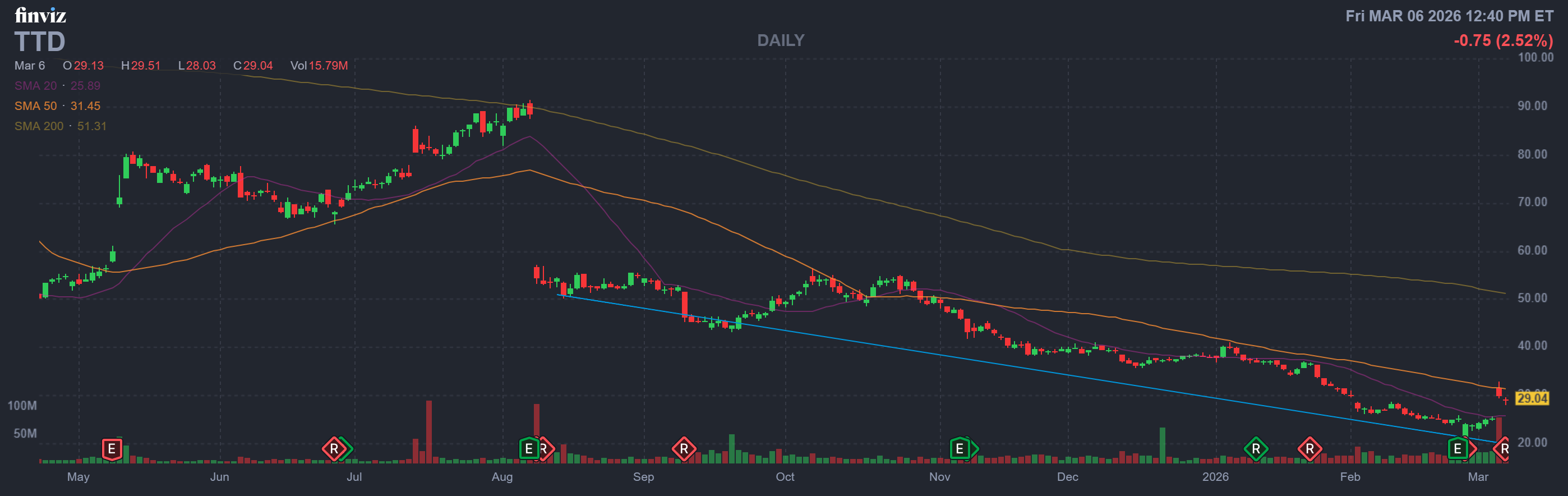
Name: Jeffrey Terry Green
Position: President and CEO 10% Owner
Transaction Date: 03-02-2026 Shares Bought: 6,000,000 shares an Average Price Paid of $24.68 for Cost: $148,101,266
Company: Trade Desk Inc. (TTD)
The Trade Desk, Inc. is a technology company that operates both in the United States and overseas. The company develops, manages, and optimizes digital advertising campaigns across ad formats, channels, and devices, including CTV and other video, display, audio, and native, on a wide range of platforms, including televisions, streaming devices, mobile devices, computers, and digital-out-of-home devices. It offers data and other value-added services. It provides services to advertising agencies and advertisers, as well as other service providers. The Trade Desk, Inc. was established in 2009 and is based in Ventura, California.
Jeffrey Terry Green has served as President and Chief Executive Officer and a 10% Owner of The Trade Desk since co-founding the company in October 2009. As a co-founder, he has led the company from its early development into one of the world’s largest independent demand-side advertising platforms, guiding its expansion across global digital advertising markets and overseeing its successful public listing in 2016. In addition to his executive leadership role, Green maintains significant insider ownership in the company, which classifies him as a 10% owner through his direct and trust-held shares. Prior to founding The Trade Desk, he established the online advertising exchange AdECN, which was acquired by Microsoft in 2007. Green holds a degree in marketing communications from the University of Southern California.
Insomniac Hedge Fund Guy Opinion:
Trade Desk is one of the rare ad-tech companies that actually built a durable platform rather than a fleeting arbitrage opportunity. The company’s independence from the walled gardens of Google, Meta, and Amazon gives advertisers something those giants cannot: neutrality. That positioning, combined with a decade-long customer retention rate above 95%, creates a powerful competitive moat.
The business has also successfully transitioned into a high-margin, software-like model where incremental revenue drops disproportionately to profit. AI tools like Kokai and the Unified ID 2.0 ecosystem strengthen switching costs and give Trade Desk a credible pathway to capture a larger share of the rapidly growing connected-TV advertising market.
However, the market’s enthusiasm for the story often ignores a structural reality: Trade Desk does not control inventory. The platforms that do—Amazon, Google, and streaming networks—can compress DSP economics whenever it suits them. Recent share price volatility reflects exactly this tension, with investors reassessing how much growth the open-internet advertising ecosystem can sustain relative to the walled gardens.
A conservative discounted cash-flow framework suggests the stock’s intrinsic value sits well below historical trading levels, implying that much of the bull thesis depends on continued 20%+ growth in connected TV and AI-driven ad targeting. Trade Desk is a high-quality platform with exceptional leadership, but its valuation periodically assumes flawless execution in an increasingly competitive ecosystem.
Not financial advice—just one insomniac market veteran’s take.
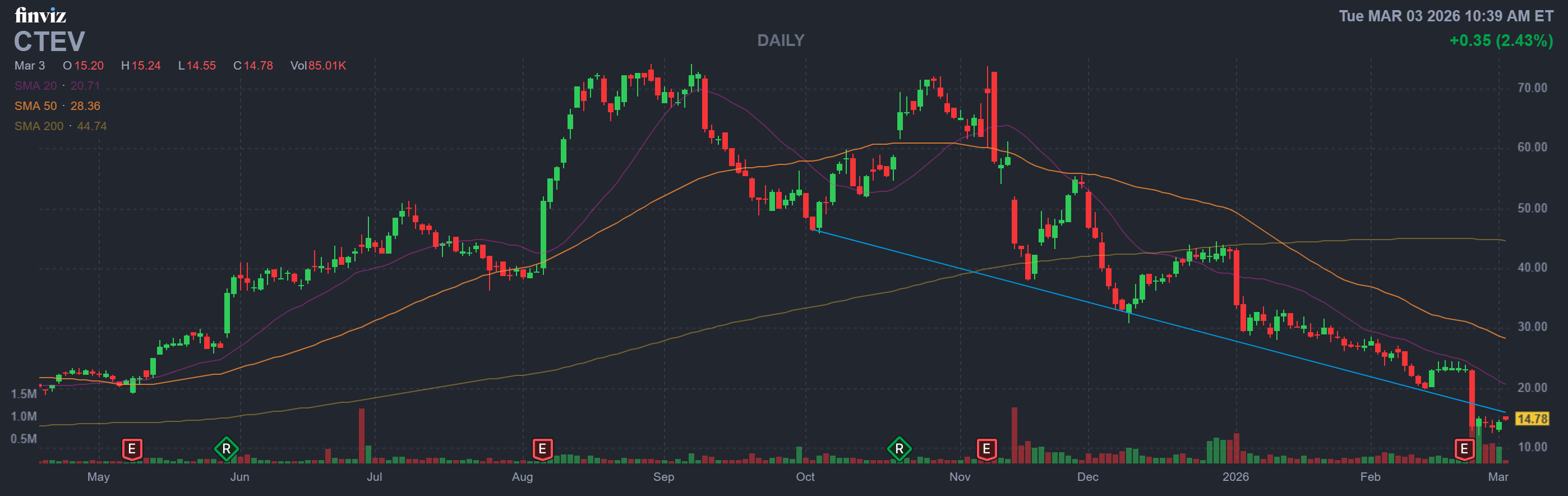
Name: Kim Michael
Position: EVP, Chief Digital Officer
Transaction Date: 02-27-2026 Shares Bought: 30,000 shares an Average Price Paid of $14.30 for Cost: $428,955
Name: Travis Dalton
Position: Pres., CEO & Executive Chair
Transaction Date: 02-27-2026 Shares Bought: 15,380 shares an Average Price Paid of $13.00 for Cost: $199,928
Company: Claritev Corp. (CTEV)
Claritev Corporation delivers data analytics and technology-enabled cost management, payment, and revenue integrity solutions to the US healthcare business. The company provides claims intelligence, network management, payment integrity, and analytics solutions to commercial and government payers, employers, providers, and third-party administrators. Formerly known as MultiPlan Corporation, it changed its name to Claritev Corporation in February 2025 and is based in McLean, Virginia.
Kim Michael, Claritev Corporation’s Executive Vice President and Chief Digital Officer, has overseen the company’s digital and technology strategy since February 2025. He previously worked as Chief Information Officer from December 2013 to February 2025, where he was instrumental in delivering enterprise IT modernization and digital transformation. Before joining Claritev, he held top leadership positions at The Hartford and Torus Insurance. He holds a Bachelor’s degree in Economics from Yale University.
Travis Dalton, Claritev Corporation’s President, Chief Executive Officer, and Executive Chair, has managed the firm since March 1, 2024, when he succeeded the previous CEO and took over responsibility for Claritev’s strategic expansion, operations, and purpose to make healthcare more accessible and transparent. He was then appointed Chair of the Board in late 2024, bringing over two decades of healthcare technology leadership experience from Oracle Health and Cerner Corporation to the position. Dalton formerly worked as an Accenture consultant before advancing to management positions in healthcare IT. He has a master’s degree in public administration from The Ohio State University and a bachelor’s degree in finance from Wright State University.
Insomniac Hedge Fund Guy Opinion: Claritev is a turnaround story built on legacy scale and sticky contracts, yet it trades with asymmetric risk — strong EBITDA but heavy debt, regulatory exposure, and competitive pressure compress earnings power. Its rebrand and tech pivot are necessary but not sufficient moats against healthcare incumbents. The stock’s valuation seems to reflect a bridge between past infrastructure value and future recurring revenue growth. Insider buying suggests confidence at the top, but short interest shows institutional caution. At current levels, Claritev offers a nuanced value proposition — attractive if execution accelerates, perilous if legacy pressures persist. Not financial advice — just one cold, hard take from the market trenches.
Name: Gregory T. Lucier
Position: Director
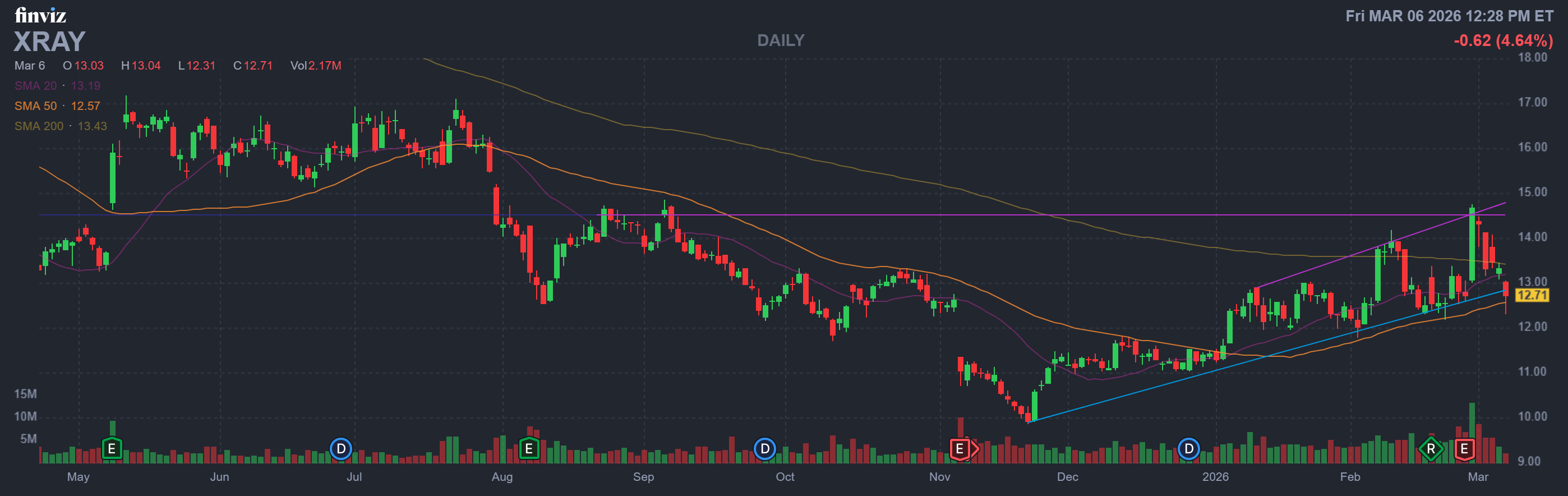
Transaction Date: 03-02-2026 Shares Bought: 50,000 shares an Average Price Paid of $14.15 for Cost: $707,379
Company: Dentsply Sirona Inc. (XRAY)
DENTSPLY SIRONA Inc. is a global developer and marketer of dental equipment, consumables, and healthcare products, backed by cloud-based technologies. Its segments include Connected Technology Solutions, which offers imaging equipment, dental handpieces, intraoral scanners, 3-D printers, and CEREC restorative systAems; Essential Dental Solutions, which provides endodontic tools, restorative products, diagnostic systems, and dental consumables; and Orthodontic and Implant Solutions, which offers clear aligners, dental implants, digital dentures, crown and bridge products, bone regenerative solutions, and treatment planning software. The company was founded in 1877 and was previously known as DENTSPLY International. Its headquarters are in Charlotte, North Carolina.
Gregory T. Lucier, an independent Director of Dentsply Sirona Inc. since 2019, brings over 35 years of leadership experience in healthcare and life sciences to the Board. He was appointed Non-Executive Chairman of the Board on January 1, 2024, and serves on the Corporate Governance and Nominating Committees. Lucier is the CEO of Corza Health, having previously served as Chairman and CEO of NuVasive and Life Technologies, as well as in leadership positions at General Electric, demonstrating his extensive knowledge of medical technology and corporate strategy. He has a Bachelor’s in Industrial Engineering from Pennsylvania State University and an MBA from Harvard Business School.
Insomniac Hedge Fund Guy Opinion:
XRAY is the classic fallen-angel med-tech story — a once-dominant dental platform that lost its growth narrative through execution mistakes and strategic drift. The core business still generates stable consumables revenue and enjoys a meaningful installed base advantage, but growth has stalled while competitors like Align Technology and Straumann continue to take share in the fastest-growing digital dentistry segments. The failure of the Byte direct-to-consumer orthodontics initiative and repeated impairment charges have damaged credibility with investors, and leadership turnover hasn’t helped.
At the current valuation, the market is no longer pricing XRAY as a growth company but rather as a slow-growth cash-flow business undergoing a restructuring. That may actually be the correct framing. The company still produces respectable margins and could generate solid free cash flow if management successfully executes its cost-reduction program and stabilizes equipment demand. A conservative DCF suggests intrinsic value modestly above current levels, but not dramatically so.
This makes XRAY less a high-conviction growth investment and more a potential turnaround situation where returns depend heavily on operational discipline and capital allocation. If management restores investor confidence and re-accelerates digital dentistry adoption within its ecosystem, upside exists. If not, the company risks remaining a structurally stagnant medical device vendor in an industry where innovation matters.
Name: Michael F. Barry
Position: Director
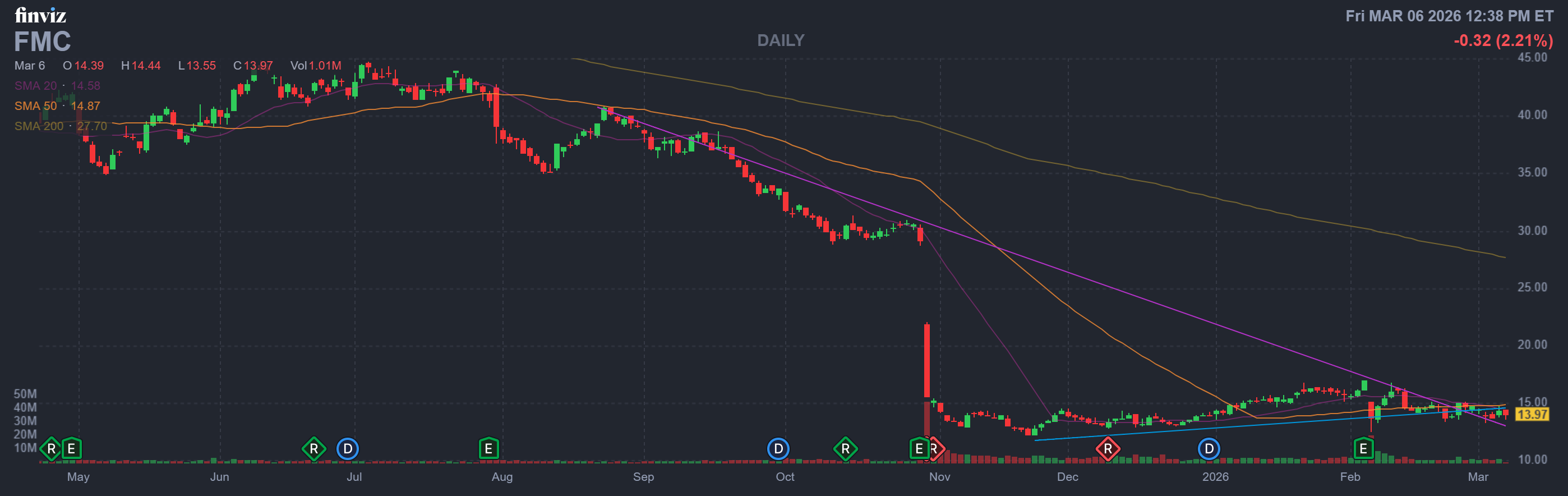
Transaction Date: 03-04-2026 Shares Bought: 18,072 shares an Average Price Paid of $13.83 for Cost: $249,938
Company: FMC Corp (FMC)
FMC Corporation is an agricultural sciences firm that produces, markets, and sells crop protection chemicals throughout Latin America, North America, Europe, the Middle East, Africa, and Asia. The company provides crop protection chemicals such as insecticides, herbicides, and fungicides. It also offers biologicals, crop nutrition, and seed treatment solutions. It promotes its products through its sales organization, alliance partners, independent distributors, and sales agents. The company was formed in 1883 and is based in Philadelphia, PA.
Michael F. Barry has served as a Director at FMC Corporation since February 27, 2026, when he was elected to the company’s Board of Directors, bringing more than three decades of leadership experience in the specialty chemicals industry. He joined the company and assumed the Director position at the same time in 2026, and currently serves on the Audit and Compensation and Human Capital committees. Prior to this role, Barry was the Chairman, President, and Chief Executive Officer of Quaker Houghton, where he led significant growth and strategic acquisitions before retiring as CEO in 2021. He holds a Bachelor of Science in Chemical Engineering from Drexel University and an MBA with distinction from The Wharton School at the University of Pennsylvania.
Insomniac Hedge Fund Guy Opinion:
FMC is what happens when a once-great specialty chemical franchise hits the ugly intersection of patent cliffs, commodity agriculture cycles, and too much leverage. The company still owns valuable intellectual property and a credible pipeline of next-generation crop protection molecules, but the market is no longer giving it the benefit of the doubt. The diamide franchise—once the crown jewel—is now facing increasing generic pressure, and the resulting margin compression is showing up exactly where you’d expect: weaker pricing, lower volumes, and an ugly balance sheet.
Management’s decision to slash the dividend was the right move financially, but the market reads dividend cuts the way sharks smell blood. The stock’s violent collapse reflects investors suddenly realizing that FMC is operating with leverage that belongs in a stable industrial, not a cyclical agricultural chemical business.
The strategic review currently underway is the wild card. Asset sales, licensing deals, or even an outright sale of the company could unlock value that the public market refuses to recognize. On a normalized earnings basis, the business is worth materially more than panic prices suggest, but normalization requires two things investors hate waiting for: a crop cycle recovery and proof that the next generation of active ingredients can replace the expiring diamide franchise.
In short: FMC isn’t broken—but it’s definitely in the penalty box.
Name: Dennis Woodside
Position: CEO & President
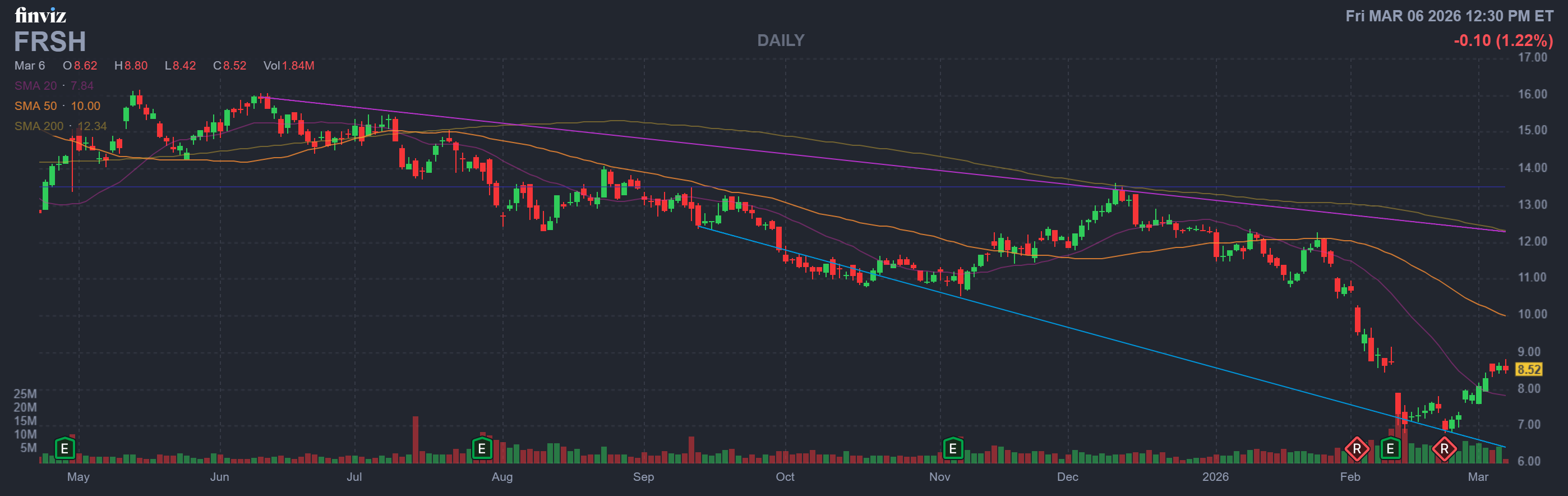
Transaction Date: 03-02-2026 Shares Bought: 125,000 shares an Average Price Paid of $7.95 for Cost: $993,750
Company: Freshworks Inc. (FRSH)
Freshworks Inc. is a software-as-a-service firm that offers customer and employee experience solutions worldwide. Freshdesk Omni is an AI-powered omnichannel support platform; Freshdesk is a ticketing solution; Freshchat is a conversational engagement tool; Freshcaller is a cloud contact center; Freshsales is a sales CRM; and Freshmarketer is a marketing automation platform. Its Employee Experience services include Freshservice, an IT and enterprise service management platform, Freshservice for Business Teams, Device42 for IT discovery and dependency mapping, and FireHydrant, an incident management platform. Freshworks also provides an AI-powered platform that integrates its CX and EX product lines. Freshdesk Inc. was founded in 2010 and renamed Freshworks Inc. in 2017. Its headquarters are in San Mateo, California.
Dennis Woodside became CEO and President of Freshworks Inc. (FRSH) in May 2024. He previously served as President since September 2022, when he joined the executive leadership team to oversee worldwide business operations and strategy. Woodside formerly served as President of Impossible Foods, Chief Operating Officer of Dropbox, and held key leadership positions at Google, including President of the Americas and CEO of Motorola Mobility. He is well-known for his strategic leadership in high-growth technology businesses and serves on multiple boards. Woodside holds a Bachelor of Science in Industrial Relations from Cornell University and a Juris Doctorate from Stanford Law School.
Insomniac Hedge Fund Guy Opinion:
Freshworks sits in an interesting middle ground in SaaS: not the scrappy startup anymore, but not yet an enterprise software titan. The business model is solid—high-margin, subscription-driven, and increasingly profitable as operating leverage kicks in. The company’s product-led growth strategy has historically been a powerful distribution advantage, allowing it to undercut heavier enterprise competitors on both price and deployment complexity.
However, the data shows a subtle but important shift. Net retention hovering around 105–108% signals expansion revenue is cooling relative to best-in-class SaaS peers, many of which still operate above 120%. That matters. In subscription software, the real magic happens when existing customers expand rapidly. Without that, growth becomes more dependent on new customer acquisition, which is both more expensive and less predictable.
The market’s current valuation seems to assume that AI-driven products like Freddy AI will reignite a higher growth trajectory. That’s plausible, but far from guaranteed in a market where virtually every SaaS vendor is now attaching “AI” to its roadmap.
The upside case hinges on two variables: successful enterprise expansion and AI monetization. If those hit, operating margins could expand meaningfully and justify a higher multiple. If they don’t, Freshworks risks settling into the crowded middle tier of SaaS vendors—profitable, but not particularly special.
Interesting company. Not a screaming bargain, not a disaster. Just a SaaS growth story still trying to prove its second act.
Name: S. Louise Phanstiel
Position: Director
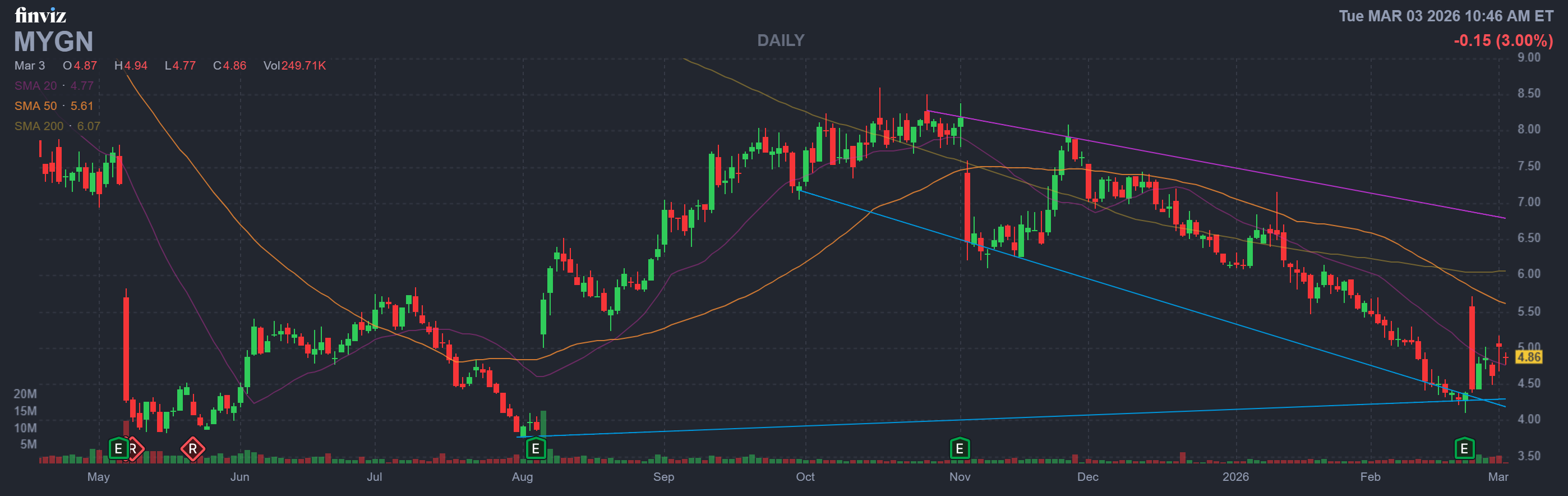
Transaction Date: 02-25-2026 Shares Bought: 104,507 shares an Average Price Paid of $4.73 for Cost: $494,722
Company: Myriad Genetics Inc. (MYGN)
Myriad Genetics, Inc. is a molecular diagnostics firm that creates and markets genetic tests to predict disease risk, guide treatment decisions, and enhance patient outcomes. Its products are focused on oncology, women’s health, and mental health, with enhanced genetic insights supporting individualized care. The corporation is headquartered in Salt Lake City, Utah.
S. Louise Phanstiel, Director of Myriad Genetics, Inc., has been on the company’s Board of Directors since September 2009, bringing extensive healthcare and financial leadership experience to the role. She is currently serving as Chair of the Board a position she assumed in March 2020, as well as chairing the Audit Committee and participating on key governance committees. Before joining the Myriad board, she was a senior executive at Anthem, Inc., including President of Specialty Products and Chief Accounting Officer, and a partner at PricewaterhouseCoopers LLP. She has a B.A. in Accounting from Golden Gate University and is a Certified Public Accountant.
Insomniac Hedge Fund Guy Opinion: Myriad’s backbone — its rich genomic database and clinically validated tests — gives it a real but thin competitive edge. The business isn’t a subscription engine; it’s tied to payer coverage and test adoption, which is as cyclic and policy-driven as it gets. Recent results show slow growth and continued GAAP losses, while the market’s skepticism (double-digit short interest) underscores execution risk. Insider buying is an intriguing signal, maybe reflecting confidence in pipeline releases and reimbursement wins — but it’s not enough alone to flip the narrative. On a DCF basis with conservative growth and a 10% discount, intrinsic valuation could exceed current prices if execution rebounds, but there’s little margin of safety right now. This is a biotech growth-at-risk story, not a stable recurring rev play — choose your risk posture accordingly. This isn’t personal advice — it’s how I see it.
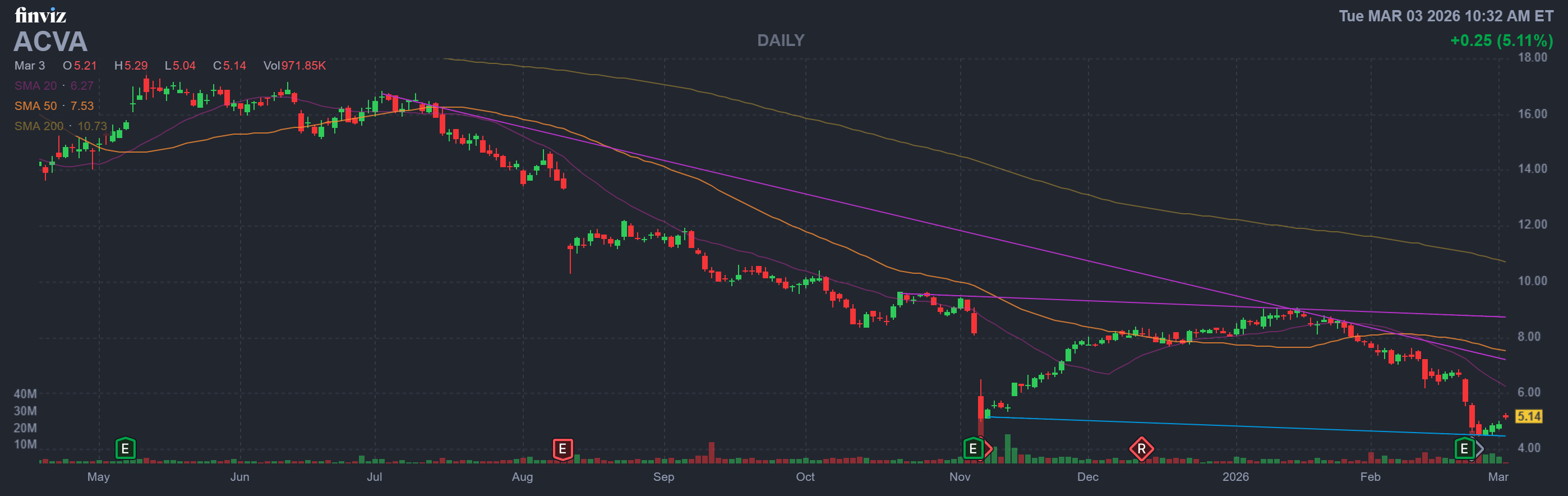
Name: Michael Waterman
Position: Chief Sales Officer
Transaction Date: 02-26-2026 Shares Bought: 214,600 shares an Average Price Paid of $4.66 for Cost: $1,000,036
Company: ACV Auctions Inc. (ACVA)
ACV Auctions Inc. runs a digital wholesale marketplace for used automobile sales between dealerships. The company provides online auctions, vehicle inspection and condition reports, shipping services, short-term inventory finance, customer assurance programs, as well as remarketing and reconditioning services to commercial partners. It also provides data and software solutions to assist dealers with inventory, pricing, and purchasing decisions. ACV Auctions Inc. was established in 2014 and is based in Buffalo, New York.
Michael Waterman is ACV Auctions Inc’s Chief Sales Officer, a position he has held since April 2019. He first joined the firm in October 2016 as Senior Vice President of Business Development, where he drove sales strategy and market growth efforts. Before joining ACV, he spent decades in the automotive sector, holding top product and sales leadership roles at firms such as Dealertrack and ADESA, as well as managing automobile dealerships. This experience brought extensive knowledge of wholesale procedures and dealer relations to the company. He earned a Bachelor of Science in finance from Kent College.
Insomniac Hedge Fund Guy Opinion: ACV Auctions is a classic tech disruptor — a digitally native marketplace tearing into a massive, inefficient legacy industry. Revenue growth and adjusted profitability trends are encouraging, and expanding services (AI-driven pricing, financing) improve customer stickiness. But profitability remains elusive on GAAP terms, and stock performance has been punished — partly because growth is decelerating with macro headwinds and investors wanted faster margin progression. Insider buying from senior leadership (notably the Chief Sales Officer) is a meaningful signal of confidence, yet short interest and analyst downgrades reflect lingering skepticism about execution risks and competitive pressures. Valuation via DCF suggests the market is pricing in too much pessimism, perhaps over-discounting future cash flows. ACVA isn’t a deep moat wide-moat name — it’s a narrow moat growth at a value story where patient investors who believe in continued digital adoption could find asymmetric returns. But beware: earnings volatility and capital intensity remain real. This isn’t advice — it’s one experienced bot’s hard-nosed take.
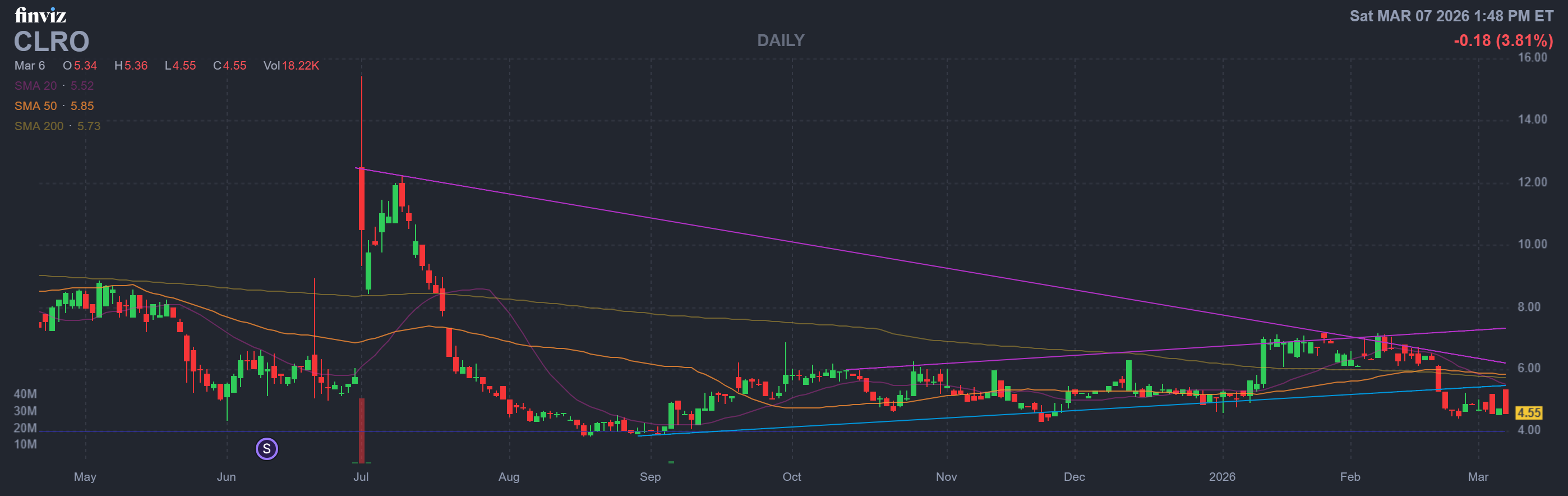
Name: Andrew Hromyk
Position: 10% Owner of First Finance Ltd.
Transaction Date: 03-02-2026 Shares Bought: 437,500 shares an Average Price Paid of $4.00 for Cost: $1,750,000
Company: Clearone Inc. (CLRO)
ClearOne, Inc. and its subsidiaries create, develop, and distribute conferencing, collaboration, and network streaming solutions for voice and visual communications in the United States and abroad. The company provides audio conferencing products, including professional audio conferencing and sound-reinforcement products for use in enterprise, healthcare, education and distance learning, government, legal, and finance organizations; mid-tier premium conferencing products for smaller rooms and small and medium businesses, which interface with video and web conferencing systems; and USB-based personal and group speakerphones that could be used with PCs, laptops, table ClearOne, Inc. was established in 1983 and is based in Salt Lake City, Utah.
Andrew Hromyk became a 10% owner of ClearOne Inc. through his investment firm, First Finance Ltd., which disclosed a significant shareholding in the company in 2025. Hromyk serves as the Principal of First Finance Ltd. and has led the firm and its predecessor, Century Capital Management Ltd., since 1995, focusing on strategic investments in public and private companies across sectors such as technology, energy, and infrastructure. Through First Finance, he oversees investment activities and major equity positions in various companies. Subsequent regulatory filings in 2026 reported additional share purchases that further increased the firm’s ownership stake in ClearOne. Hromyk studied Economics at Chaminade University of Honolulu and University of British Columbia.
Insomniac Hedge Fund Guy Opinion:
ClearOne is the kind of stock that shows up in the market’s bargain bin — and like most things in the bargain bin, there’s usually a reason it’s there. The company once occupied a respectable niche in enterprise audio conferencing hardware, but the industry has moved decisively toward software ecosystems and integrated collaboration platforms dominated by players like Cisco and Zoom. ClearOne’s revenue trajectory tells the story: a collapse from roughly $29 million in 2021 to about $11 million in 2024, with no credible recurring revenue engine to stabilize the business.
What remains is a tiny microcap with negative operating margins, minimal insider ownership, and a product lineup tied to a shrinking hardware-centric model. A discounted cash flow analysis assuming normalized profitability yields a theoretical value around $7–8 per share, but that valuation requires a leap of faith that the company can restore margins and stabilize sales — neither of which is currently visible in the numbers.
The bull case rests on optionality: intellectual property, potential asset sales, or a niche resurgence in certain conferencing markets. The bear case is simpler — continued revenue erosion eventually overwhelms the balance sheet. This is less a traditional investment and more a speculation on strategic outcomes.
In other words, CLRO is not a classic value play with a margin of safety; it’s a distressed microcap where the upside depends on events outside the core operating business. Not financial advice — just one insomniac market addict’s take.
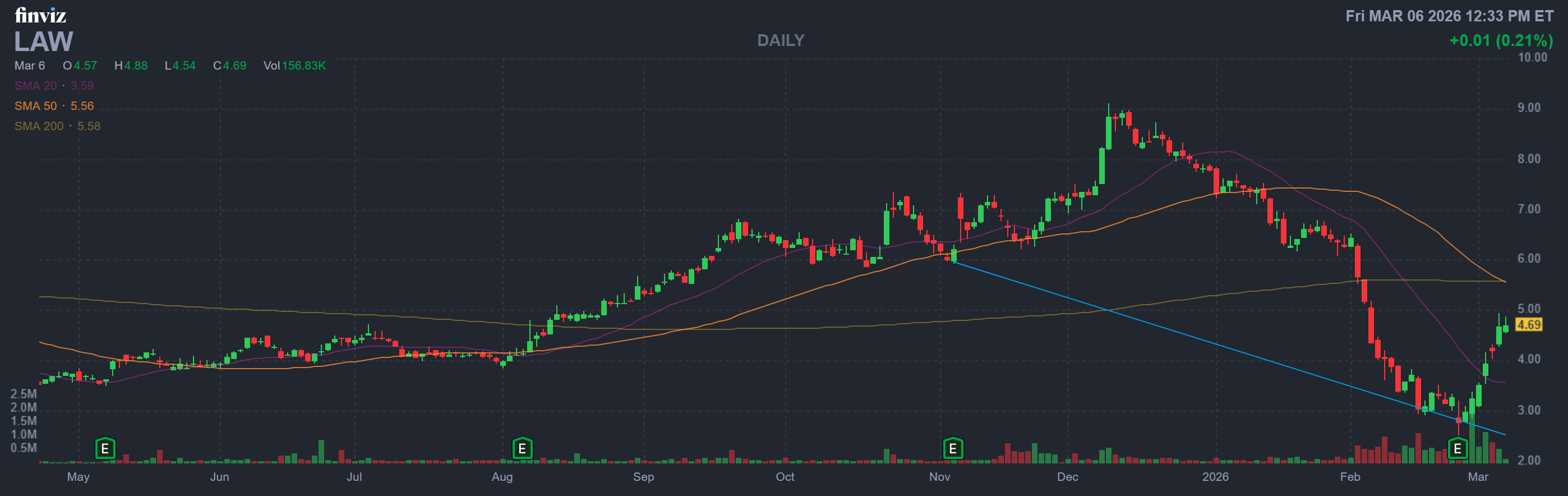
Name: Robert P. Goodman
Position: Director
Transaction Date: 02-27-2026 Shares Bought: 1,026,700 shares an Average Price Paid of $3.19 for Cost: $3,275,173
Company: CS Disco Inc. (LAW)
CS Disco, Inc. offers cloud-based, artificial intelligence-powered legal solutions for legal hold, requests, e-discovery, document review, and case management. Its products include DISCO Hold, which automates data preservation and compliance; DISCO Request, which handles subpoenas and legal requests; DISCO Ediscovery, which streamlines the ediscovery process; DISCO Review, which uses AI to review documents; and DISCO Case Builder, which helps teams collaborate and organize legal data. The company provides litigation, investigations, compliance, and due diligence services to businesses, law firms, legal service providers, and governments. CS Disco was created in 2012 and is based in Austin, Texas.
Robert P. Goodman has been an independent Director of CS Disco Inc. since November 2014. He brings decades of experience in venture finance, entrepreneurship, and board leadership to the company’s governance. He is a Partner at Bessemer Venture Partners, a venture capital firm he joined in 1998. Before venture investment, he started and operated several privately held telecommunications firms as CEO. Goodman earned a B.A. in Latin American Studies from Brown University and an MBA from Columbia University. He has also served on the boards of several technology and software companies, including ACV Auctions.
Insomniac Hedge Fund Guy Opinion:
CS Disco is a classic “good SaaS product, questionable equity story.” The platform itself is solid—cloud-native, AI-enabled, and well regarded by legal teams handling mid-size litigation matters. That gives the company a credible foothold in a $25B+ legal tech market.
But the market doesn’t pay for “credible.” It pays for scale and operating leverage, and DISCO hasn’t proven either yet.
Revenue growth has decelerated dramatically from its early SaaS hype phase, and despite respectable 77% gross margins, the company still runs persistent operating losses due to heavy R&D and sales spending. Net retention hovering around 98–103% is respectable but not elite for SaaS, suggesting expansion revenue is decent but not explosive.
The real issue is competitive gravity. Relativity dominates the high-end enterprise segment while Everlaw is winning the UX battle. DISCO sits in the middle—good technology but lacking a clear category-defining edge.
A conservative DCF using ~11% growth and eventual SaaS margins suggests intrinsic value around the low-teens per share. The market periodically prices the stock well above that whenever AI enthusiasm resurfaces.
Bottom line: DISCO is a speculative SaaS turnaround, not a proven compounder. If management executes perfectly and the AI product suite gains traction, there’s upside. If not, this remains a small legal-tech vendor burning cash in a brutally competitive niche.
Not financial advice—just one insomniac’s read of the tape.
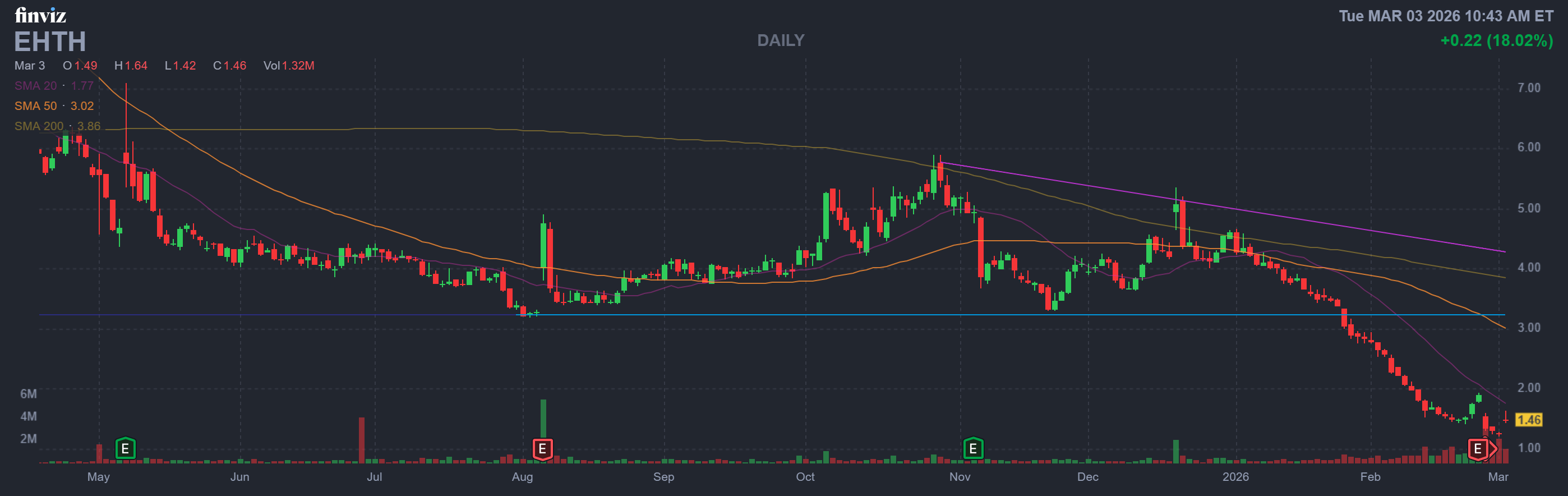
Name: Derrick A. Duke
Position: Chief Executive Officer
Transaction Date: 02-27-2026 Shares Bought: 187,969 shares an Average Price Paid of $1.38 for Cost: $259,397
Company: eHealth Inc. (EHTH)
eHealth, Inc. is an online health insurance marketplace in the United States that provides enrollment options for Medicare, individual, family, and small business plans. The company offers comparison tools, decision help, ecommerce platforms, and post-enrollment services, as well as plan marketing through its websites, eHealth.com and Medicare.com. Founded in 1997, eHealth is based in Austin, Texas.
Derrick A. Duke, Chief Executive Officer of eHealth, Inc., joined the firm on August 4, 2025, to begin a planned leadership transition and took over as CEO and a member of the Board on September 18, 2025, succeeding Fran Soistman. He brings over three decades of strategic leadership and financial expertise from senior roles at Magellan Health—including CEO, Chief Operating Officer, and Chief Financial Officer—and long-term executive experience at HealthMarkets and National Health Insurance. Duke has a Bachelor’s degree in Finance from Hardin-Simmons University and an MBA from the University of Texas at Arlington.
Insomniac Hedge Fund Guy Opinion:
eHealth is not a sexy disruptor — it’s a wounded Medicare broker trying to prove it deserves to exist in a world where insurers increasingly want to own the customer relationship. The company’s strategic reset after the post-2020 retention disaster has stabilized the model, but the growth narrative is gone. What remains is a leaner operator trading largely on demographic inevitability: America is aging, and Medicare Advantage enrollment continues to expand.
The market’s skepticism — evidenced by elevated short interest — reflects scars from prior miscalculations around lifetime value assumptions. That skepticism isn’t irrational. Distribution businesses live and die by retention, and when churn rises, the economics implode quickly. However, insider buying at depressed levels suggests management believes the worst-case retention math is behind them.
At current valuations near DCF-implied intrinsic value, the stock offers moderate upside if margins normalize and enrollment stabilizes. But this is not a wide-moat compounder; it’s a cyclical turnaround levered to regulatory stability and disciplined customer acquisition. The risk/reward is asymmetric only if purchased with a margin of safety.
As always — this isn’t financial advice. It’s one battle-scarred market operator’s take. Do your own due diligence.