War adds a new calculus. Predictable trends crumble in the face of the unpredictable nature of war. I can’t imagine it leading to anything significant enough to disrupt the market. If this war is over in days or a few weeks, expect a rally. If it lingers on for months, then this is a different game board.
Gold Up, Oil up, Dollar stable or up, defense stocks strong. Insiders don’t play these kind of macro events as their crystal ball is no better than anyone else. We focus on reading the tea leaves left by these insiders. Average weekly return was ~5.75%.
Name: Abigail Marshall Diaz-Pedrosa
Position: Chief Administrative Officer
Transaction Date: 02-20-2026 Shares Bought: 610 shares an Average Price Paid of $325.08 for Cost: $198,296
Name: Andrew D. Teed
Position: Director
Transaction Date: 02-23-2026 Shares Bought: 1,600 shares an Average Price Paid of $309.91 for Cost: $495,856
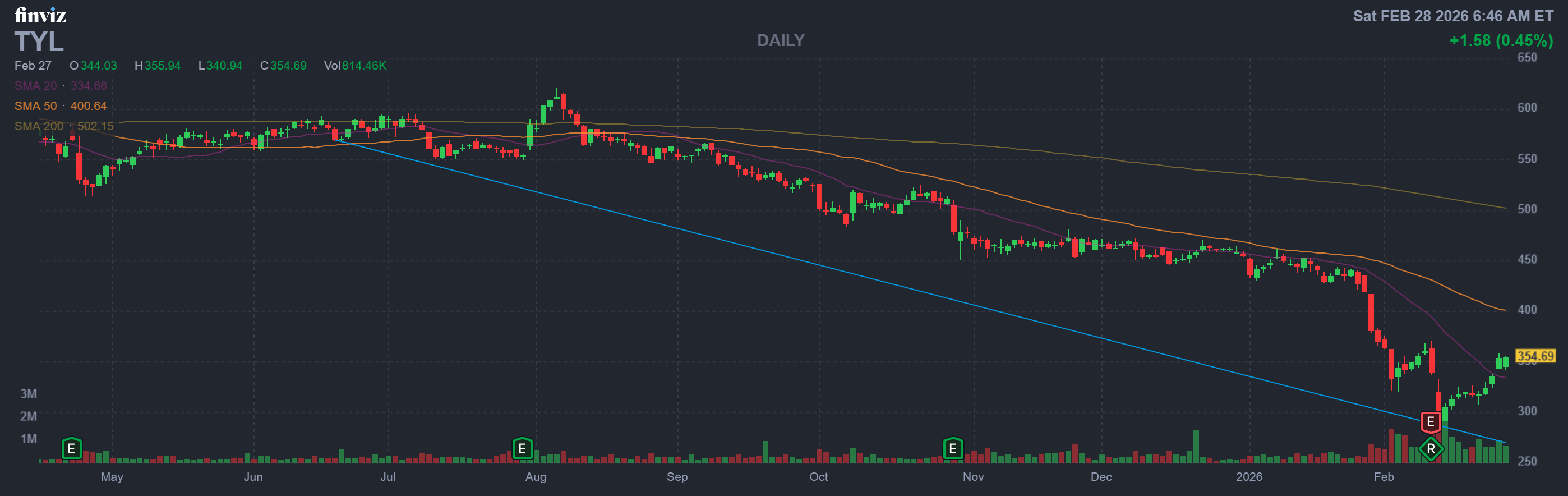
Company: Tyler Technologies Inc. (TYL)
Tyler Technologies, Inc. offers comprehensive software and technology management solutions to the public sector in the United States. It operates in two segments: Enterprise Software and Platform Technologies. The company designs, develops, distributes, and maintains a variety of software solutions for mission-critical back-office operations. It also provides platform and transformative technology solutions, such as cybersecurity, data and insights, digital solutions, payments, platform technologies, and outdoor recreation; public administration solutions, such as civic services, ERP, property and recording, and regulatory; and corrections, courts, justice, and public safety solutions. Tyler Corporation was the company’s previous name before being renamed Tyler Technologies, Inc. in June 1999. Tyler Technologies, Inc. was founded in 1966 and is headquartered in Plano, Texas.
Tyler Technologies Inc. appointed Abigail Marshall Diaz-Pedrosa as Chief Administrative Officer in January 2025. She joined the firm in 2012 and has previously worked as associate general counsel, vice president, and chief legal officer for eight years. In her present capacity, she leads Tyler’s legal team while also overseeing Internal Audit, Data Privacy, Corporate Governance and Responsibility, and Corporate Communications. Diaz-Pedrosa received her Juris Doctor from Cornell Law School and her undergraduate degree from Georgetown University.
Andrew D. Teed has been a Tyler Technologies director since 2024, and he was designated as an independent director in 2025. Before joining the board, he worked at Tyler for nearly 20 years in several senior leadership positions, including senior financial manager and later president of the Enterprise Group, before retiring in February 2020 and consulting with the firm until August 2021. Following his service at Tyler, he became CEO of ECO Parking Technologies and participates on several boards. Teed has an undergraduate degree from Indiana University.
Insomniac Hedge Fund Guy Opinion: Tyler Technologies is a dominant provider of mission-critical software to state and local governments, operating with a durable moat built on high switching costs and deep workflow integration. Roughly 80%+ of revenue is recurring, with net retention around 110%, driven by SaaS expansion within agencies. Five-year revenue growth has averaged around 10–12%, and margins continue improving as the company shifts toward cloud-based solutions. Gross margins sit near 45–50%, with operating margins in the low-to-mid 20s. Unlike flashy enterprise SaaS firms, Tyler benefits from stable government budgets and diversified municipal customers, reducing credit and concentration risk. Management is conservative and execution-oriented, focusing on long-term compounding rather than aggressive expansion. Short interest remains low, reflecting institutional confidence. A DCF using 9% discount rate and 3% terminal growth yields a fair value range of $420–$480 per share. The stock often trades at a premium due to its stability and predictable cash flow profile. Risks include slower government IT spending and competition from larger software vendors entering the public sector vertical. Overall, Tyler represents a steady compounder rather than a hypergrowth story.
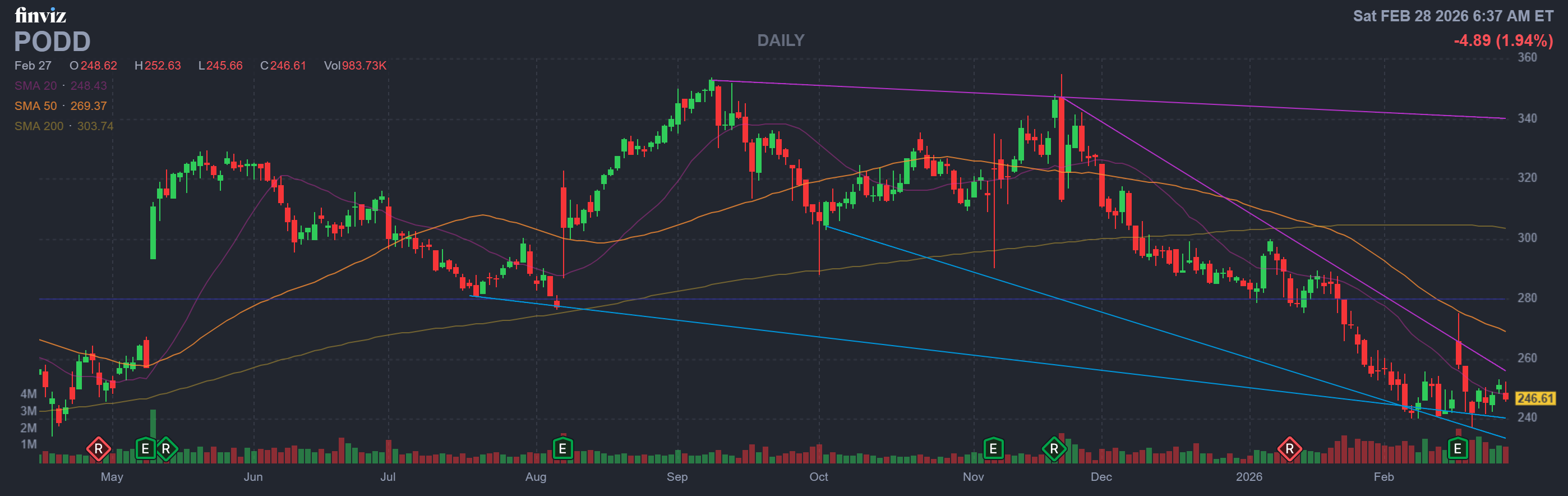
Name: Michael R. Minogue
Position: Director
Transaction Date: 02-25-2026 Shares Bought: 2,030 shares an Average Price Paid of $246.23 for Cost: $499,847
Name: Ashley McEvoy
Position: President and CEO
Transaction Date: 02-20-2026 Shares Bought: 4,300 shares an Average Price Paid of $239.35 for Cost: $1,029,205
Company: Insulet Corp (PODD)
Insulet Corporation develops and manufactures insulin delivery systems for individuals with insulin-dependent diabetes in the United States and worldwide, including the Omnipod 5 automated insulin delivery system and the Omnipod DASH platform, both of which utilize Bluetooth technology for insulin management and are integrated with continuous glucose monitoring. The company also produces delivery pods for Amgen’s Neulasta Onpro kit, designed to reduce the risk of infection after chemotherapy. Insulet sells its products to pharmacies and independent distributors. The company was founded in 2000 and has its headquarters in Acton, Massachusetts.
Michael R. Minogue has been an Independent Director on Insulet Corporation’s board since August 2017, and he also serves on the Audit Committee, adding considerable healthcare leadership experience to the company’s governance. Prior to and concurrently with his directorship at Insulet, he was Chairman, President, and CEO of Abiomed, Inc. from 2004 until its sale in December 2022, and he previously spent 11 years in key capacities at GE Healthcare, where he holds three patents. Minogue has also served as a decorated United States Army officer. He received a Bachelor of Science in Engineering Management from the United States Military Academy at West Point and an MBA from the University of Chicago.
Ashley McEvoy has served as President and CEO of Insulet Corporation since April 28, 2025, when she was appointed by the Company’s Board of Directors and became a director. She joined Insulet that same month, following a long career with Johnson & Johnson, where she progressed through the ranks from 1996 to 2023, most recently as Executive Vice President and Worldwide Chairman of MedTech. McEvoy had previously held top positions in J&J’s consumer and medical businesses before joining the corporation. She received her Bachelor of Arts in Communications and Business from the University of Pennsylvania.
Insomniac Hedge Fund Guy Opinion: Insulet (PODD) is a high-quality compounder hiding inside a medical device wrapper. The Omnipod platform creates real switching costs, and the recurring pod revenue makes this far more durable than a typical hardware story. The expansion into Type 2 diabetes is the swing factor — if adoption scales there, the TAM meaningfully widens and growth can stay elevated longer than skeptics expect. Management has executed well, margins are steadily improving, and the reimbursement backdrop remains supportive for now. That said, this is a premium multiple stock pricing in sustained mid-to-high-teens growth and continued operating leverage. If growth dips into the low teens, the multiple won’t be so kind. This isn’t a deep value play — it’s a “pay for quality and execution” story. I’m bullish on the business, but disciplined on entry. You buy PODD on pullbacks when the market gives you fear, not when enthusiasm is peaking.
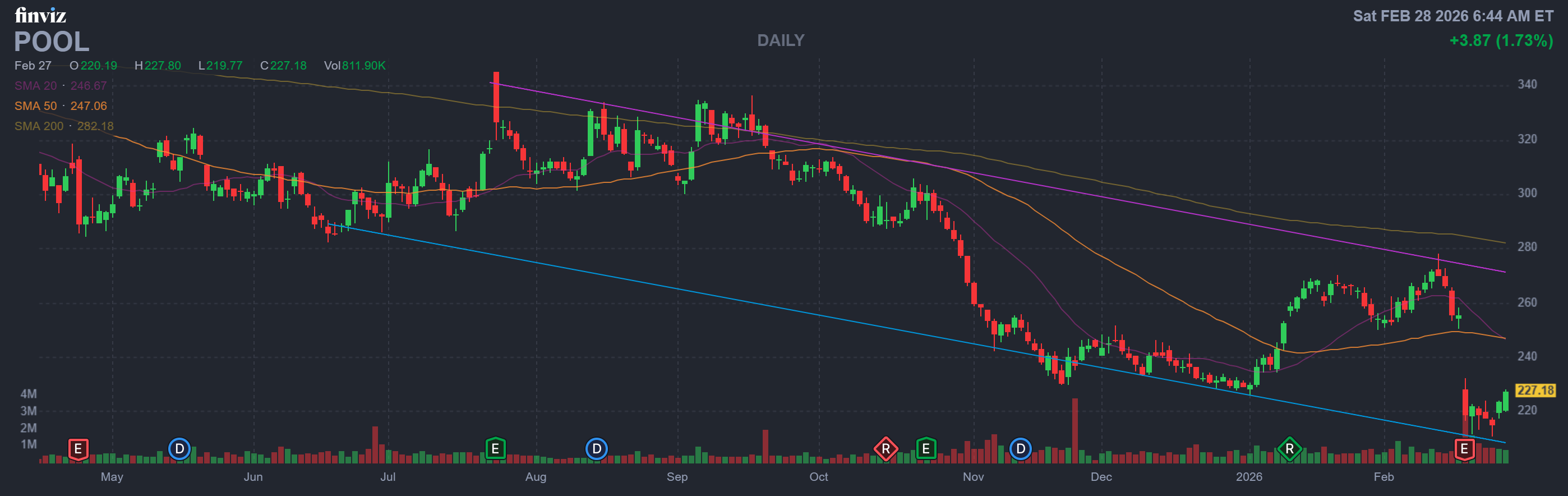
Name: Kenneth G. St Romain
Position: Senior Vice President
Transaction Date: 02-23-2026 Shares Bought: 5,560 shares an Average Price Paid of $218.67 for Cost: $1,215,810
Name: James D. Hope
Position: Director
Transaction Date: 02-25-2026 Shares Bought: 1,405 shares an Average Price Paid of $213.64 for Cost: $300,162
Company: Pool Corp (POOL)
Pool Corporation provides swimming pool supplies, equipment, related recreational, irrigation, and landscape care items in the United States as well as around the world. The company provides maintenance products such as chemicals, supplies, and pool accessories; repair and replacement parts for pool equipment such as cleaners, filters, heaters, pumps, and lights; and building materials such as concrete, plumbing, and electrical components, functional and decorative pool surfaces, decking materials, tiles, hardscapes, and natural stones for pool installations and remodeling. It also offers pool equipment and components for new and renovated pools, as well as irrigation and related items. Pool Corporation was established in 1993 and is based in Covington, Louisiana.
Kenneth G. St. Romain is Senior Vice President of Pool Corporation, a position he took in September 2022 after nearly 30 years with the company. He joined Pool Corporation in 1993 and worked his way up the ranks to several senior positions. Before he was appointed Senior Vice President, he was Group Vice President from 2007 to 2022. He previously held significant operational positions at SCP Distributors, LLC, including General Manager of the Central Division. Pool Corporation revealed in 2026 that Mr. St. Romain will retire later this year, and a leadership transfer process is already underway.
James D. Hope has served as an Independent Director of Pool Corp. since October 10, 2022, when he was appointed by the Board of Directors to fill a newly created board seat and later stood for election by shareholders. He joined the company’s board after a long executive career in financial and operational leadership roles across major distribution companies, bringing deep expertise in finance, strategic planning and operations to Pool Corp’s governance. He holds a Bachelor of Business Administration from the University of Texas at Austin, reflecting his strong foundation in business and finance.
Insomniac Hedge Fund Guy Opinion: Pool Corp (POOL) is one of those quietly dominant businesses that makes Wall Street look smarter than it actually is. They’re not building pools — they’re supplying the entire ecosystem: maintenance products, equipment, chemicals, renovation parts. That’s recurring, non-discretionary revenue once the pool is in the ground. The real genius of POOL is distribution scale and logistics — it’s boring, operational excellence that throws off serious cash. The problem? It’s cyclical whether management admits it or not. New pool construction is tied to housing strength, consumer confidence, and discretionary spending. When housing booms, POOL prints money. When rates spike and backyard upgrades slow, growth compresses fast. Historically it’s been an incredible compounder because of disciplined capital allocation and margin expansion, but you don’t pay peak-cycle multiples for a housing-adjacent name. This is a high-quality operator in a cyclical wrapper — buy it when sentiment is washed out, not when everyone’s throwing pool parties. Not financial advice — just one sleep-deprived market operator’s take.
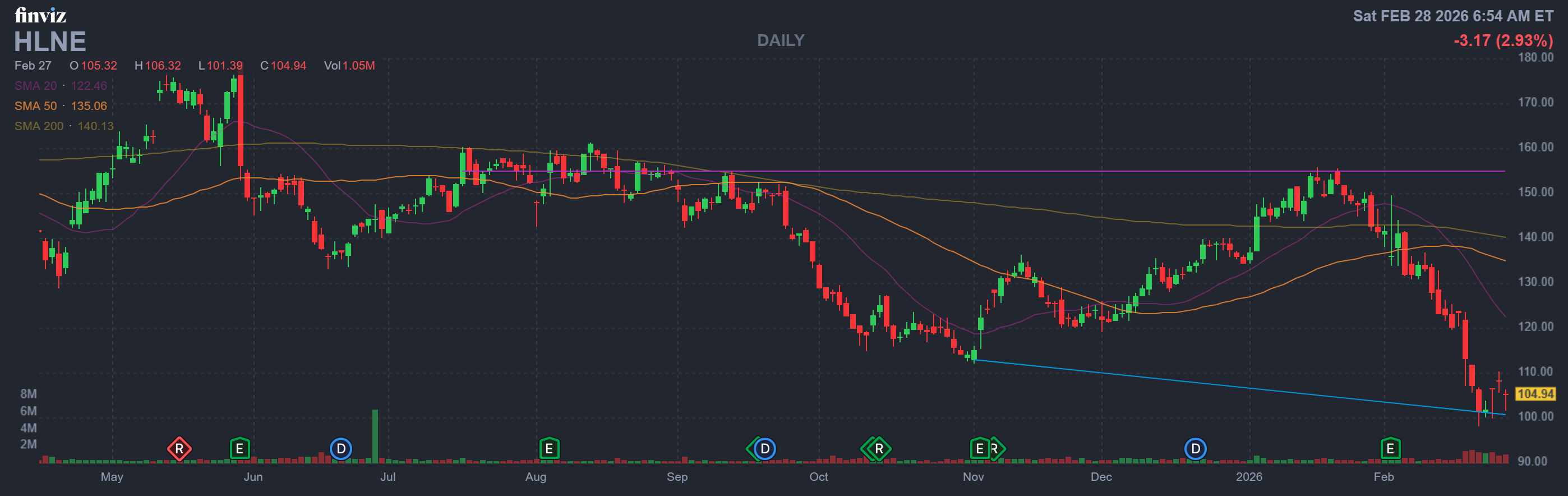
Name: Erik R. Hirsch
Position: Co-Chief Executive Officer, 10% Owner
Transaction Date: 02-20-2026 Shares Bought: 9,225 shares an Average Price Paid of $107.13 for Cost: $988,260
Name: David J. Berkman
Position: Director
Transaction Date: 02-24-2026 Shares Bought: 10,000 shares an Average Price Paid of $101.00 for Cost: $1,010,000
Company: Hamilton Lane Inc. (HLNE)
Hamilton Lane Incorporated is a private equity and venture capital business that invests in a variety of strategies, including buyouts, venture capital, growth equity, debt, and real estate. The business invests in North America, Europe, Asia Pacific, and emerging economies, with an emphasis on innovative and disruptive industries such as technology, healthcare, energy, and consumer services. Founded in 1991 and located in Philadelphia, Pennsylvania, it offers a wide range of alternative investment options for small and medium-sized businesses.
Erik R. Hirsch joined Hamilton Lane in 1999 and has held several prominent positions at the business, including Managing Director, Chief Investment Officer (2003-2016), and Vice Chairman & Head of Strategic Initiatives (2016-2023). He has been Co-Chief Executive Officer since January 1, 2024, where he oversees the company’s strategic direction and operations. He also serves on the Board of Directors. Erik R. Hirsch earned a Bachelor of Arts degree from the University of Virginia, in addition to a Juris Doctor from Boston College and a Master of Laws from the same institution.
David J. Berkman has been an independent director of Hamilton Lane Inc. since May 2017, when he was initially elected to the company’s board of directors; he continues in that position while also serving on the audit and pay committees. Berkman had a lengthy private equity and governance experience prior to joining Hamilton Lane’s board, including serving as Managing Partner of Associated Partners, LP. Since joining, he has served on the board of directors and the audit committee, completing his director responsibilities through yearly elections and committee assignments. Berkman earned a Bachelor of Science in Economics from the University of Pennsylvania’s Wharton School.
Insomniac Hedge Fund Guy Opinion:
Hamilton Lane Inc. is a toll collector in the private markets boom — and toll collectors are beautiful businesses when traffic is flowing. They sit in the middle of private equity, secondaries, co-investments, and private credit, clipping fees on assets under management while institutions and high-net-worth investors chase alternatives for yield. It’s asset-light, high-margin, and structurally levered to the growth of private markets — which have been vacuuming capital from traditional public equities for years. The beauty of HLNE is that it doesn’t need to swing for home runs; it just needs AUM to grow and markets to function.
Now the catch: private markets aren’t immune to gravity. When deal activity slows, exits freeze, or LPs get liquidity-constrained, fundraising gets tougher and performance fees dry up. HLNE isn’t as cyclical as a PE fund itself, but it’s absolutely tied to sentiment in alternatives. When private equity is in favor, this stock trades like a premium compounder. When liquidity tightens, multiples compress fast.
Bottom line — this is a high-quality alternative asset manager riding a long-term secular shift toward private markets. It’s not cheap for a reason. You’re buying durability and fee streams, not fireworks. Just remember: when capital markets seize up, even toll roads see less traffic. This isn’t financial advice — just one sleep-deprived market veteran’s take.
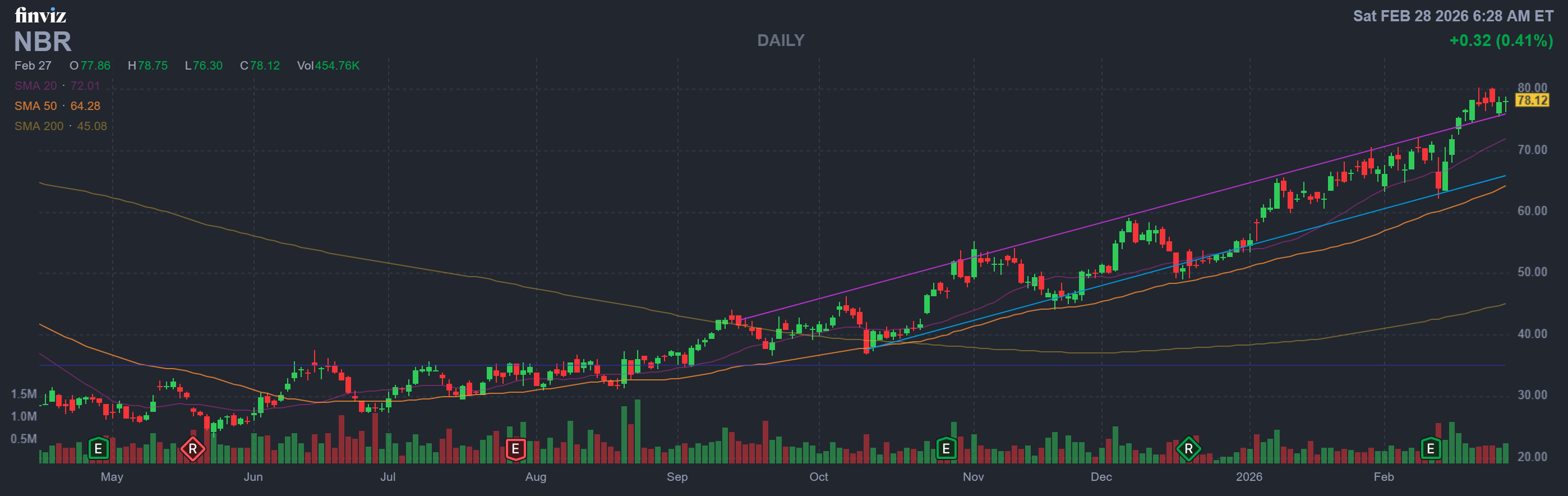
Name: John Yearwood
Position: Director
Transaction Date: 02-20-2026 Shares Bought: 6,410 shares an Average Price Paid of $78.12 for Cost: $500,747
Company: Nabors Industries Ltd (NBR)
Nabors Industries Ltd. offers drilling and related services for land-based and offshore oil and gas wells in the United States and abroad. The company operates in four segments: U.S. Drilling, International Drilling, Drilling Solutions, and Rig Technologies, providing services such as tube running, controlled pressure drilling, and sophisticated digital drilling systems. It also manufactures drilling equipment and offers after-market assistance. Founded in 1952, the corporation is headquartered in Hamilton, Bermuda.
John Yearwood joined Nabors Industries Ltd.’s Board of Directors in October 2010, filling a newly constituted board position. He has been a Director since 2010, and was designated Lead Director in 2011. He continues to play an important role in board supervision and governance, including membership on significant board committees. He has substantial industry experience, having previously served as Smith International’s CEO, President, and Chief Operating Officer until its sale in 2010, as well as almost 27 years with Schlumberger in key leadership roles throughout global operations. John Yearwood earned a Bachelor of Science in Geology and the Environment from Oxford Brookes University in England.
Insomniac Hedge Fund Guy Opinion: is not an investment — it’s a macro bet wearing steel-toed boots. This is a high-beta oilfield services name that lives and dies by rig counts, day rates, and the global appetite for drilling. When oil is strong and E&Ps are spending, NBR can rip higher like a coiled spring because operating leverage in this business is enormous. But when crude softens or capex budgets tighten, the downside comes fast and unforgiving. The balance sheet has historically been the weak spot — leverage in a cyclical industry is like juggling chainsaws. Yes, management has worked to streamline and modernize the fleet, and international exposure gives it some diversification, but make no mistake: this is a torque trade on energy, not a steady compounder. You don’t buy NBR for safety; you buy it when you believe oil fundamentals are tightening and drilling activity is about to accelerate. Timing matters here more than valuation. This isn’t financial advice — just one sleep-deprived market veteran’s take.
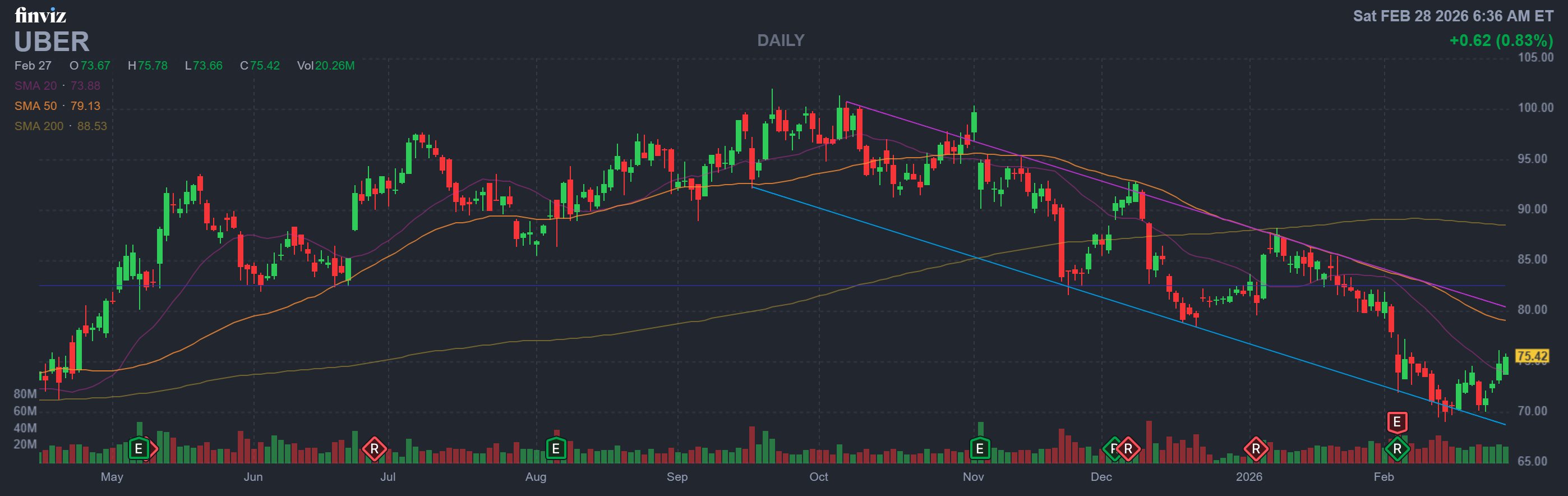
Name: Balaji A. Krishnamurthy
Position: Chief Financial Officer
Transaction Date: 02-24-2026 Shares Bought: 22,453 shares an Average Price Paid of $71.25 for Cost: $1,599,780
Company: Uber Technologies Inc. (UBER)
Uber Technologies, Inc. creates and manages proprietary technological applications in the United States, Canada, Latin America, Europe, the Middle East, Africa, and Asia Pacific. The Mobility category connects users to a variety of mobility options, including ridesharing, carsharing, financial partnerships, and advertising services. The Delivery section enables customers to search for and discover grocery restaurants, as well as white-label delivery-as-a-service for shops and restaurant services. The Freight segment manages transportation and logistics networks, connecting shippers and carriers in a digital marketplace, including carrier upfronts, pricing, and shipment booking, as well as providing an on-demand platform to automate logistics end-to-end transactions for small and medium-sized businesses to global enterprises. Uber Technologies, Inc. was founded in 2009 and is based in San Francisco, CA.
Balaji A. Krishnamurthy is the Chief Financial Officer of Uber Technologies Inc., having joined Uber in 2019, where he initially served in roles including senior leader of investor relations and later vice president of strategic finance. He was appointed CFO effective February 16, 2026, taking on responsibility for Uber’s global financial strategy, capital allocation, accounting, tax, treasury and investor relations functions as part of the senior leadership team. He holds a Bachelor of Engineering in Electronics and Communications from the Manipal Institute of Technology and an MBA from the Management Development Institute in Gurugram and is also a Chartered Financial Analyst, combining strong technical and financial education in his executive background.
Insomniac Hedge Fund Guy Opinion:
Uber Technologies Inc. (UBER) is no longer the cash-burning, “growth at any cost” poster child of the zero-rate era. It’s evolved into a scaled mobility and logistics platform with real operating leverage, real free cash flow, and real network effects. The genius of Uber isn’t just rides — it’s density. The same driver base powers mobility, delivery, and increasingly advertising and ancillary services. That ecosystem creates a flywheel: more users attract more drivers, which improves service levels, which attracts more users. That’s platform economics 101, and Uber is finally monetizing it properly.
The bull case is straightforward: expanding margins, improving take rates, disciplined cost structure, and global dominance outside of China. Delivery is no longer a pandemic sugar high — it’s embedded consumer behavior. Add in ads as a high-margin revenue stream and you’ve got a company transitioning from scrappy disruptor to cash-generating machine.
The risk? Regulation, labor classification battles, and the fact that this is still a cyclical consumer-facing business. If the economy slows, discretionary ride volume softens. And don’t forget — competition never fully dies in this space. But unlike five years ago, Uber now has scale and balance sheet strength on its side.
This isn’t a speculative tech lottery ticket anymore. It’s a maturing platform with improving fundamentals. If margins keep expanding, the multiple can hold. If growth slows materially, it won’t get treated kindly. Quality improving story — but price still matters.
Not financial advice. Just one sleep-deprived market veteran calling it like he sees it.
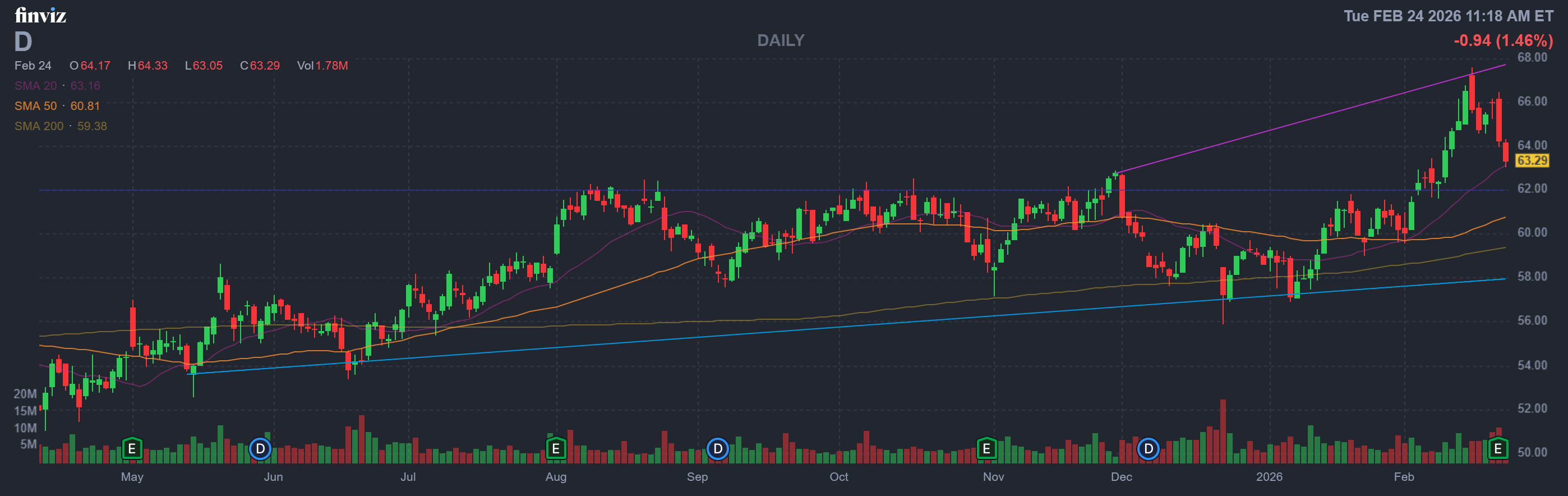
Name: Robert M. Blue
Position: Chair, President, and CEO
Transaction Date: 08-27-2025 Shares Bought: 4,152 shares an Average Price Paid of $60.35 for Cost: $250,557
Company: Dominion Energy Inc. (D)
Dominion Energy, Inc. offers regulated electricity and natural gas services in the United States. It operates through three segments: Dominion Energy Virginia, Dominion Energy South Carolina, and Contracted Energy. The Dominion Energy South Carolina segment generates, transmits, and distributes electricity to clients in central, southern, and southwestern South Carolina, as well as natural gas to residential, commercial, and industrial customers in the state. Dominion Energy, Inc. was founded in 1983 and has its headquarters in Richmond, Virginia. It was previously known as Dominion Resources, Inc.
Robert M. Blue became Chair, President, and Chief Executive Officer of Dominion Energy Inc. in October 2020 as President and CEO and then added the role of Chair in April 2021. He originally joined Dominion Energy in 2005 and held a succession of executive roles before his executive appointments, including executive vice president and co-chief operating officer. Before Dominion, he worked in public policy and law. He earned a BA from the University of Virginia, a JD from Yale Law School, and an MBA from the University of Virginia’s Darden School of Business.
Insomniac Hedge Fund Guy Opinion: Dominion Energy is no longer the bloated, midstream-tangled utility it once was. It’s now a cleaner, regulated rate-base growth story trying to win back investor trust after a painful dividend reset. The business model is inherently stable — a government-approved monopoly with predictable earnings — but utilities are bond proxies, and bonds haven’t exactly had a picnic over the last few years.
The market punished Dominion for leverage and strategic drift, and management responded by selling assets and simplifying the story. That was necessary. The problem is that utilities are valued on credibility, and once you cut a dividend, income investors don’t forget.
At current levels, the stock looks reasonably aligned with a conservative DCF assuming mid-single-digit growth and an 8% discount rate. There’s no screaming margin of safety, but there’s also no obvious disaster brewing unless offshore wind costs spiral or regulators get stingy.
This isn’t a moonshot. It’s a repaired toll road with a 4–5% yield and modest rate-base growth. If rates stabilize and execution improves, the stock can grind higher. But you’re buying steady cash flow — not alpha fireworks.
As always, this isn’t financial advice — just one battle-tested market addict’s view. Do your own work.
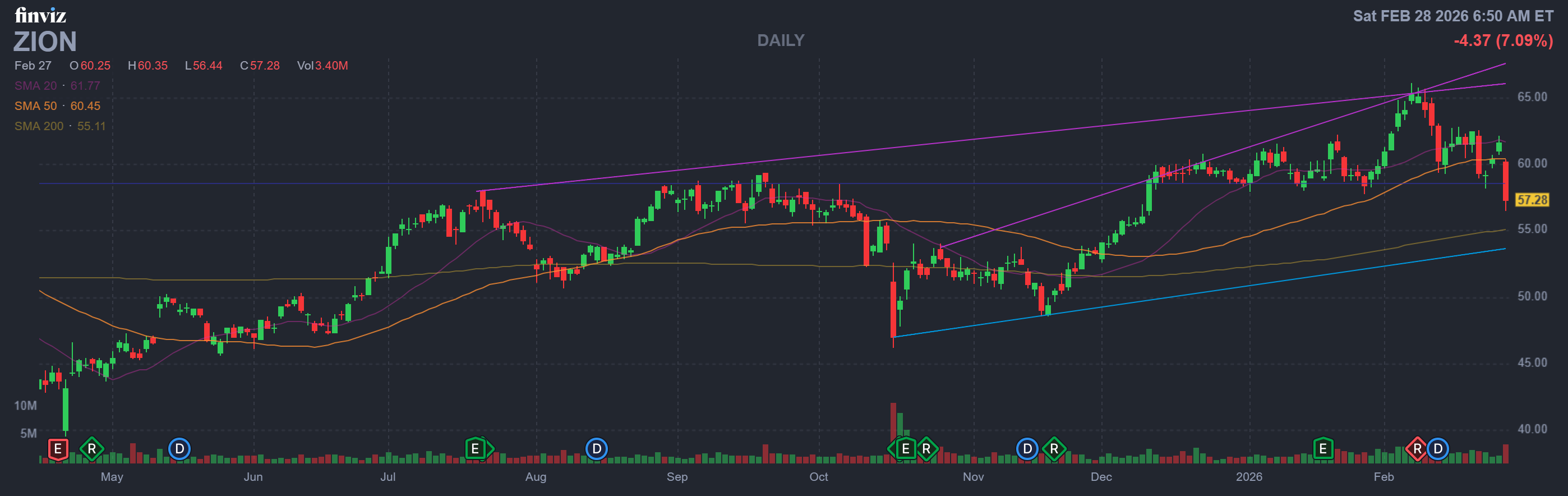
Name: Harris H. Simmons
Position: Chairman & CEO
Transaction Date: 02-24-2026 Shares Bought: 4,500 shares an Average Price Paid of $59.03 for Cost: $265,635
Company: Zions Bancorporation National Association (ZION)
Zions Bancorporation, National Association offers a variety of banking and financial services in Arizona, California, Colorado, Idaho, Nevada, New Mexico, Oregon, Texas, Utah, Washington, and Wyoming. It serves commercial, small business, and retail customers under many brands, including Zions Bank, California Bank & Trust, Amegy Bank, and others. Commercial and real estate loans, capital markets and investment banking, treasury and cash management, wealth management, and consumer banking are among the services offered. The corporation was founded in 1873 and changed its name in 2018. Its headquarters is in Salt Lake City.
Harris H. Simmons has been Chairman and Chief Executive Officer of Zions Bancorporation National Association since 2002, when he added the chairman title to his previous CEO post. He first became CEO in 1990. He joined Zions in 1970 and rose through the ranks to become chief financial officer and president before taking over as CEO. Simmons’s extended stay has seen him oversee the company’s expansion throughout the western United States. He holds a bachelor’s degree in economics from the University of Utah and an MBA from Harvard Business School.
Insomniac Hedge Fund Guy Opinion: Zions Bancorporation is a classic regional bank — plain vanilla on the surface, but heavily leveraged to interest rate cycles and credit quality underneath. This isn’t a flashy fintech disruptor. It’s a spread business. They borrow short, lend long, and live or die on net interest margin. When rates rise in an orderly way and deposit costs stay sticky, ZION mints money. When the yield curve inverts, funding costs spike, and depositors start shopping around for 5% money market yields, margins compress fast. The market doesn’t forgive regional banks after what we saw in 2023 — confidence matters more than earnings in this sector. ZION’s balance sheet is solid relative to weaker peers, but it still carries the structural risk every regional bank carries: commercial real estate exposure and deposit competition. If rates stabilize and the economy avoids a hard landing, the stock can re-rate nicely off depressed sentiment. But this isn’t a growth story — it’s a cyclical rate trade wrapped in a dividend. Own it when fear is high and spreads are improving, not when everyone suddenly remembers banks exist. This isn’t financial advice — just one sleep-deprived market lifer’s view.
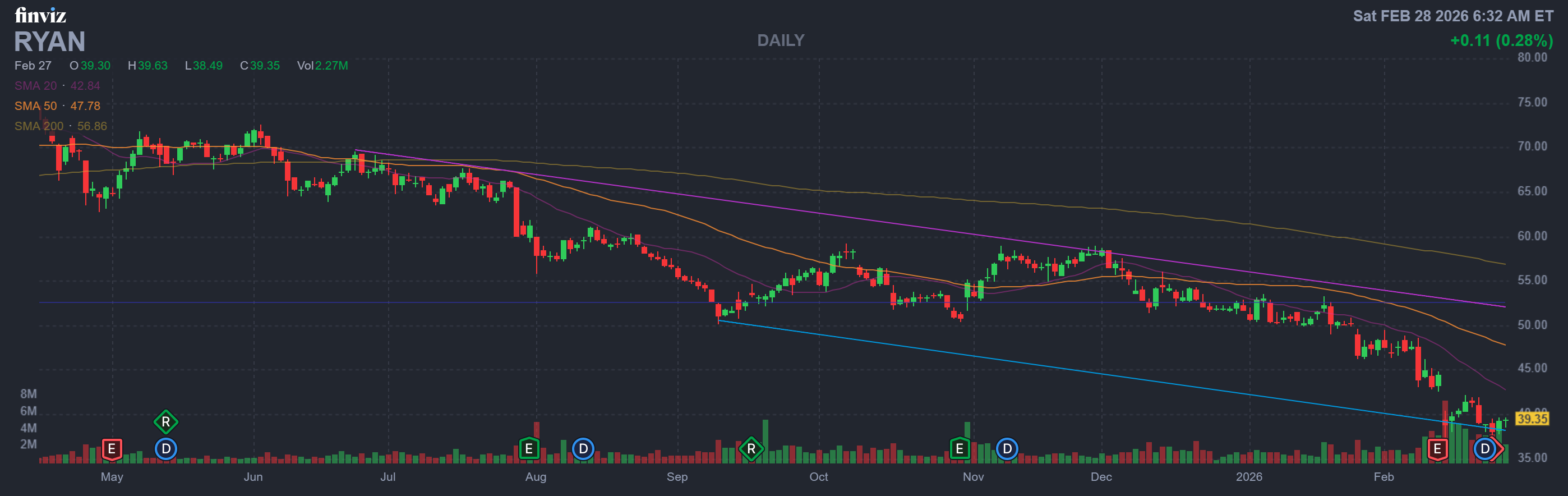
Name: Patrick G. Ryan Jr.
Position: Director
Transaction Date: 02-20-2026 Shares Bought: 25,865 shares an Average Price Paid of $39.98 for Cost: $1,033,975
Company: Ryan Specialty Holdings Inc. (RYAN)
Ryan specialist Holdings, Inc. provides specialist products and solutions to insurance brokers, agents, and carriers in the United States, Canada, the United Kingdom, the rest of Europe, India, Singapore, and internationally. The organization provides distribution, underwriting, product development, administration, and risk management services through its roles as a wholesale broker, managing underwriter, or program administrator with delegated power from insurance carriers. It serves the commercial, industrial, institutional, individual, and governmental sectors. The company was founded in 2010, and its headquarters is in Chicago, Illinois.
Patrick G. Ryan Jr. has served as a Director of Ryan Specialty Holdings Inc. since January 1, 2024, when he was appointed to the company’s Board of Directors following the retirement of a long-serving board member and began contributing to strategic oversight for the specialty insurance firm. He joined Ryan Specialty’s board in 2024 bringing deep leadership experience as a technology entrepreneur and CEO of Incisent Labs Group, along with prior board service at Penske Corporation. Ryan Jr. holds a Bachelor of Arts from Georgetown University, an MBA from Northwestern University’s Kellogg School, and a Juris Doctorate cum laude from Northwestern School of Law.
Insomniac Hedge Fund Guy Opinion:
Ryan Specialty Holdings (RYAN) is a quiet compounder hiding in plain sight. This isn’t some flashy AI rocket ship — it’s a specialty insurance brokerage riding structural tailwinds in excess & surplus lines, where pricing power actually exists. When standard insurers pull back or risks get weird, Ryan steps in and brokers the complex stuff. That’s a beautiful business model in a world where risk keeps getting more complicated — cyber, climate, litigation, you name it.
The magic here is capital-light economics. They don’t carry underwriting risk like insurers; they clip fees. High margins, recurring relationships, and steady organic growth. Add in smart bolt-on acquisitions and you’ve got a classic roll-up story in a fragmented market. The kind of boring-on-the-surface business institutions quietly accumulate.
But let’s not romanticize it. Insurance pricing cycles matter. If the hard market softens aggressively, growth moderates. And it doesn’t trade like a bargain-bin value stock — you’re paying for quality and consistency. The upside isn’t explosive; it’s grind-it-out compounding.
My take? RYAN is the kind of name that wins over time, not overnight. It’s not going to double in six months, but it can quietly beat the market if execution stays sharp and specialty pricing remains rational. You don’t chase it during euphoric runs — you accumulate it when the market gets bored.
Not financial advice — just one sleep-deprived market veteran calling it how he sees it.
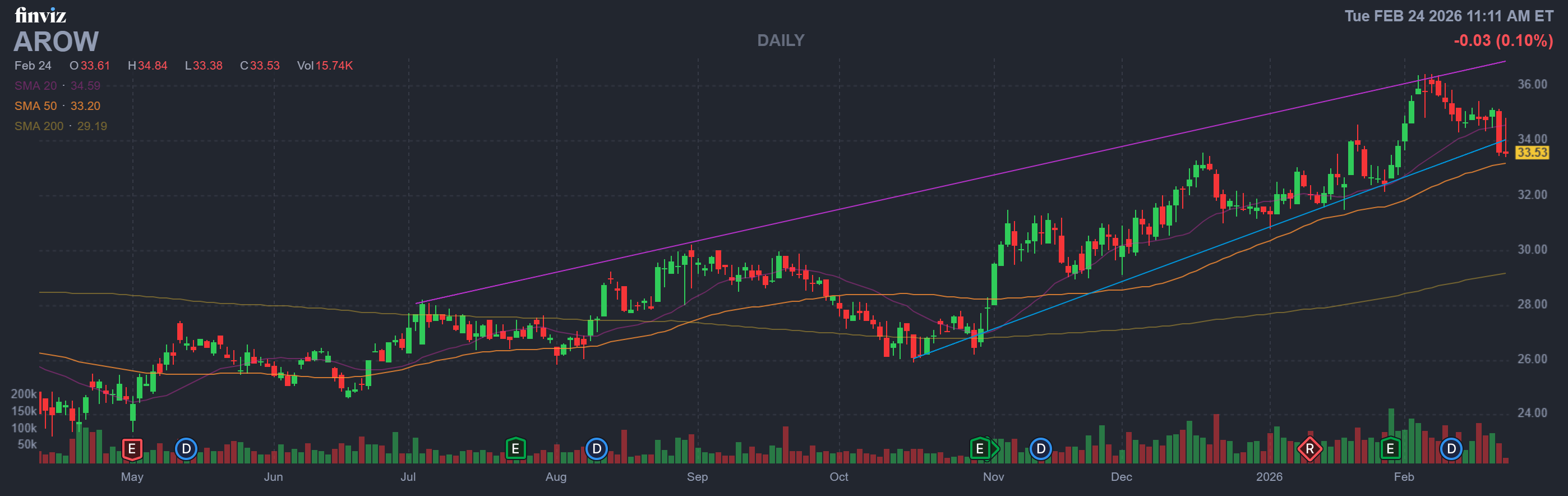
Name: David S. DeMarco
Position: President & CEO
Transaction Date: 12-24-2025 Shares Bought: 3,035 shares an Average Price Paid of $31.78 for Cost: $96,452
Company: Arrow Financial Corp (AROW)
Arrow Financial Corporation, a bank holding company, offers a variety of commercial and consumer banking products and services in the United States. The company’s deposit options include demand deposits, interest-bearing checking accounts, savings deposits, time deposits, and other time deposits. The company’s lending activities also include consumer installment loans to finance personal expenses, personal lines of credit, overdraft protection, and automobile loans; residential real estate loans, fixed home equity loans, and home equity lines of credit for consumers to finance home improvements, debt consolidation, education, and other purposes; and an indirect lending program. Arrow Financial Corporation was founded in 1851 and is based in Glens Falls, New York.
David S. DeMarco is the President and CEO of Arrow Financial Corp, a position he has held since May 2023, when he was nominated by the Board following a lengthy employment with the company. He joined Arrow Financial Corporation in 1987 as a commercial lender and worked his way up through the organization, eventually becoming President and CEO of its Saratoga National Bank subsidiary in 2012 before taking over the entire company’s leadership in 2023. He holds a bachelor’s degree in finance from the University of Texas at Austin and has completed executive development programs at the Adirondack Regional Chamber of Commerce’s Leadership Program and the Stonier Graduate School of Banking.
Insomniac Hedge Fund Guy Opinion: Arrow Financial is not sexy. It’s not disruptive. It’s not going to 10x. But it might quietly double while no one’s watching. This is a conservatively run community bank with a sticky deposit base, disciplined underwriting, and a dividend culture that predates most fintech CEOs’ birth certificates.