When the CEO-to-Seller ratio hits a 20-month high, the message is clear: Preservation is currently more important than participation. We are seeing “distribution” from institutional players to retail, and until the inflation data cools or we see a broader base of insider buying across sectors like financials and industrials, we are content to watch from the fence. The outliers are always worth a look, but for the most part, the best trade this week was no trade at all.
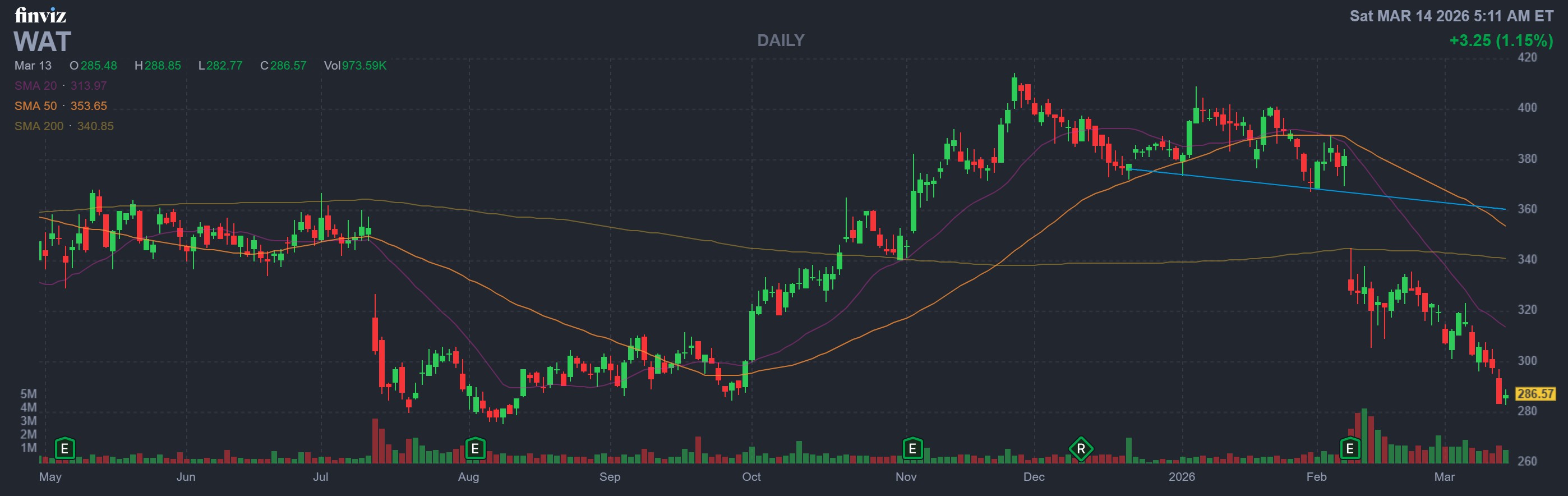
Name: Richard H. Fearon
Position: Director
Transaction Date: 03-06-2026 Shares Bought: 1,000 shares an Average Price Paid of $306.34 for Cost: $306,340
Company: WATERS CORP (WAT)
Waters Corporation offers analytical workflow solutions across Asia, the Americas, and Europe. The company develops, manufactures, sells, and services liquid chromatography and mass spectrometry technology systems, as well as supporting goods such as chromatography columns and other consumables. It also designs, manufactures, sells, and services thermal analysis, rheometry, and calorimetry instruments used to predict the suitability and stability of fine chemicals, pharmaceuticals, water, polymers, metals, and viscous liquids for various industrial, consumer goods, and healthcare products, as well as for life science research; and it develops and supplies software-based products that interface with its instruments and those of other manufacturers. The company was founded in 1958 and is based in Milford, Massachusetts.
Richard H. Fearon has served as a Director of Waters Corporation since March 27, 2023, when he was appointed to the company’s Board of Directors and joined its Audit & Finance Committee. In this role, he contributes extensive expertise in corporate finance, strategic planning, mergers and acquisitions, and global operations, gained from decades of leadership in large multinational companies. Prior to joining Waters’ board, Fearon spent many years at Eaton Corporation, where he served as Vice Chairman and Chief Financial and Planning Officer, helping guide the company through major acquisitions and strategic growth initiatives. His experience also includes senior corporate development roles at Transamerica and other global organizations. He earned an AB in Economics from Stanford University and both a JD and an MBA from Harvard University.
Insomniac Hedge Fund Guy Opinion:
Waters Corp is a high-quality but somewhat under-the-radar life sciences tools company. The firm sells analytical instruments—primarily liquid chromatography and mass spectrometry systems—used by pharmaceutical companies, biotech labs, and industrial customers to analyze chemical and biological compounds. Pharma and biopharma are the largest end markets, making the business closely tied to global drug development and quality-control testing.
The competitive moat comes from its installed base and regulatory switching costs. Once a Waters instrument is validated inside a pharmaceutical production or testing workflow, customers are reluctant to switch vendors. This drives a steady stream of consumables (columns and chemicals) and service contracts tied to the installed instruments. These recurring components account for roughly 60%+ of revenue, giving the company a stable and predictable revenue base.
Over the past five years, Waters has delivered mid-single-digit revenue growth, roughly in the 5–7% range. Consumables and services have generally grown faster than instrument sales, which helps smooth the cyclicality typical of capital equipment companies. Net revenue retention isn’t formally disclosed, but customer stickiness appears strong due to workflow integration and regulatory requirements.
Management is led by CEO Udit Batra, who has focused on expanding recurring revenue, improving operating efficiency, and investing in higher-growth analytical technologies. The strategy has largely worked.
Profitability is a major strength. Waters consistently produces operating margins around 30%, among the highest in the life-science tools sector, along with strong free cash flow generation.
Bottom line: Waters isn’t a hyper-growth story. It’s a durable, high-margin compounder built on recurring revenue and entrenched lab workflows—exactly the kind of steady operator long-term investors tend to appreciate.
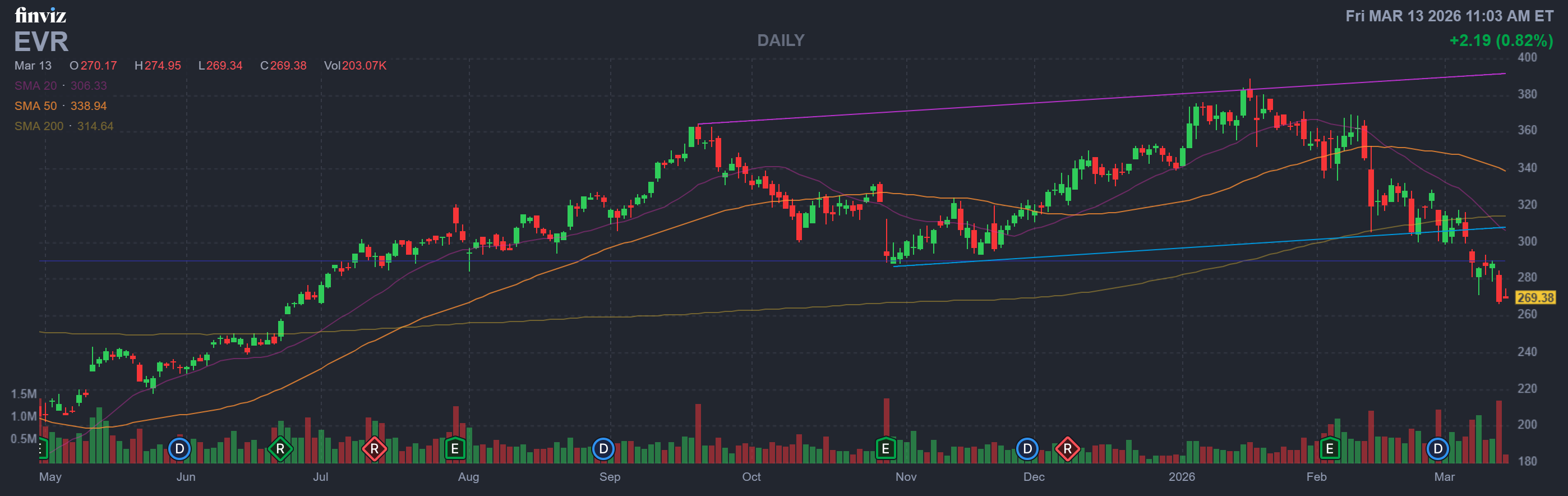
Name: Sarah K. Williamson
Position: Director
Transaction Date: 03-06-2026 Shares Bought: 2,000 shares an Average Price Paid of $290.43 for Cost: $580,860
Company: Evercore Inc. (EVR)
Evercore Inc. and its subsidiaries operate as independent investment banking firms across the Americas, Europe, the Middle East, Africa, and Asia-Pacific. The organization is divided into two segments: investment banking and equities, and investment management. The Investment Banking & Equities segment provides strategic advisory services, including mergers and acquisitions, strategic, defense, and shareholder advisory, special committee assignments, and real estate strategic advisory; private capital advisory and fundraising; and market risk management and hedging. Investment Management offers wealth management services to high-net-worth individuals, foundations, and endowments. The company was previously known as Evercore Partners Inc., but it changed its name to Evercore Inc. in August 2017. Evercore Inc. was founded in 1995 and is based in New York, NY.
Sarah K. Williamson has been an independent director of Evercore Inc. since April 24, 2018. She joined the company’s board of directors in 2018 and brings substantial experience in investment management and long-term capital planning. Williamson is also the Chief Executive Officer of FCLTGlobal, a non-profit organization dedicated to supporting long-term business and investment decision-making, which she has led since July 2016. She previously worked for Wellington Management Company LLP for nearly 21 years, where she served as a Partner and Director of Alternative Investments, as well as a member of several leadership committees. Williamson holds a BA in Economics with honors from Williams College and an MBA with distinction from Harvard Business School.
Insomniac Hedge Fund Guy Opinion:
Evercore is one of the leading independent investment banks, focused primarily on strategic advisory—mergers, acquisitions, restructurings, and capital structure advice. Unlike bulge-bracket banks, Evercore doesn’t run a big balance sheet or trading operation. It sells pure advice. That “conflict-free” model has helped the firm become one of the top global M&A advisors over the past decade.
The moat is talent and reputation. Senior bankers drive relationships, and Evercore has aggressively recruited high-profile dealmakers across industries and geographies. If the firm stays near the top of league tables, the flywheel continues: top bankers bring big deals, which attract more clients and talent. Lose the rainmakers and the moat weakens quickly.
Revenue growth over the past five years has averaged roughly ~8% annually, although results can swing depending on the M&A cycle. In 2025 the firm posted record revenue of about $3.9B, up nearly 29% year-over-year, driven by a rebound in advisory activity.
Recurring revenue is limited compared with other financial firms. Around 70% of revenue comes from advisory fees, which are transaction-driven rather than recurring. Asset and wealth management provide some steadier income, but they remain a relatively small part of the business. Net retention isn’t a meaningful metric here because revenue depends heavily on deal flow.
Management has focused on expanding the advisory franchise globally while hiring aggressively to gain share in large M&A transactions. Banker headcount has steadily increased as the firm positions itself for the next deal cycle.
Profitability is solid but cyclical. Operating margins recently climbed to the mid-20% range as deal activity recovered.
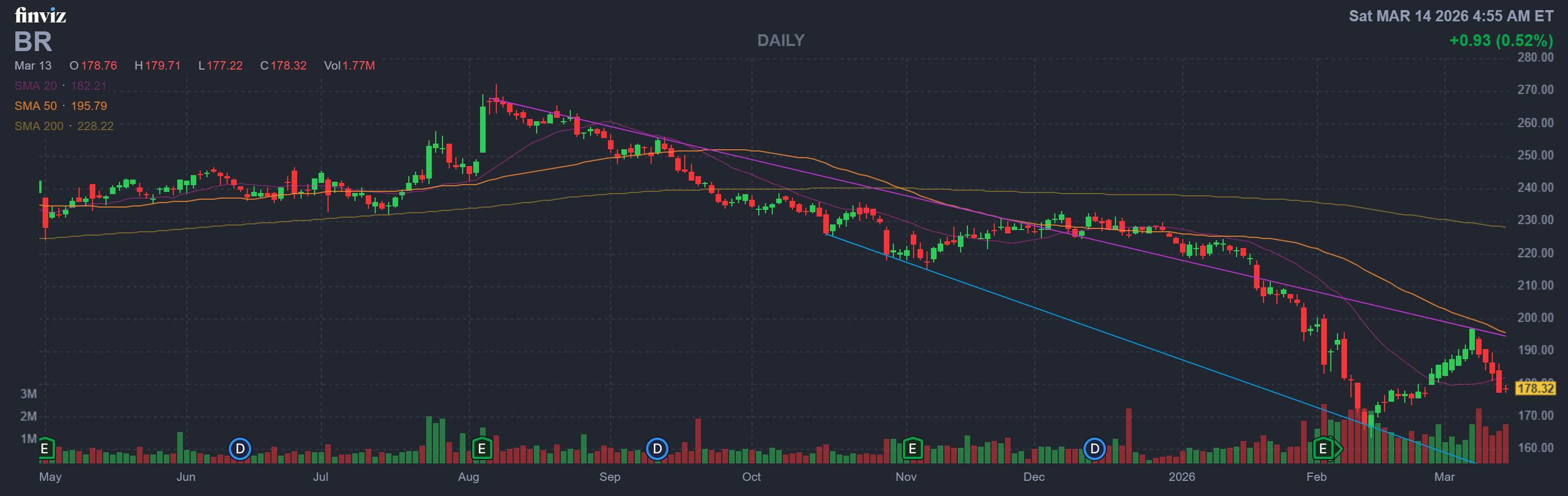
Name: Timothy C. Gokey
Position: CEO
Transaction Date: 03-06-2026 Shares Bought: 5,300 shares an Average Price Paid of $194.49 for Cost: $1,030,794
Company: Broadridge Financial Solutions Inc. (BR)
Broadridge Financial Solutions, Inc. offers investor communications and technology-driven solutions to the financial services industry in the United States and abroad. The Investor Communication Solutions business manages the distribution and voting of proxy materials for bank, broker-dealer, corporate issuer, and fund clients, as well as fund manager and other regulatory communication services. The Global Technology and Operations segment offers solutions that automate the front-to-back transaction lifecycle of equity, mutual fund, fixed income, foreign exchange, and exchange-traded derivatives, including order capture and execution, reference data management, reconciliations, securities financing and collateral management, asset servicing, compliance and regulatory reporting, portfolio accounting, and custody-related services. The company was founded in 1962 and is based in Lake Success, New York.
Mr. Timothy C. Gokey is the Chief Executive Officer of Broadridge, having been appointed to this role in January 2019. He joined the board of directors in 2019. Mr. Gokey formerly served as Broadridge’s president, chief operating officer, and chief corporate development officer. Mr. Gokey is also on the board of directors of C.H. Robinson Worldwide, Inc. Mr. Gokey has a thorough understanding of the company’s operations, strategy, and growth goals, and his previous expertise demonstrates his significant experience in finance, technology, product and marketing, and international business. As CEO of the company, he brings valuable insights to the board. He earned his BA/MA, Politics, Philosophy, Doctorate, Finance, and Economics degrees from the University of Oxford.
Insomniac Hedge Fund Guy Opinion:
Broadridge Financial Solutions is one of those quietly essential financial infrastructure companies. The firm provides technology and communications services for broker-dealers, asset managers, and public companies—handling everything from proxy voting and investor communications to post-trade processing and wealth-management software. If you’ve ever received a proxy statement or fund report in the mail, there’s a decent chance Broadridge was behind it.
The moat is mostly regulatory and network-driven. Broadridge sits deeply embedded in the plumbing of the financial system. It processes billions of investor communications and supports many of the largest broker-dealers and wealth platforms globally. Once integrated into trading, reporting, and regulatory workflows, switching providers is expensive and operationally risky. The result is a sticky client base and extremely high retention.
Financially, the company grows steadily rather than spectacularly. Revenue has been increasing around mid-single digits, with fiscal 2025 revenue reaching about $6.9B, up roughly 6% year-over-year. Recurring revenue is a major component—about two-thirds of total revenue—and grew about 7% in fiscal 2025. Revenue retention is exceptionally strong at roughly 98%, highlighting the stability of the customer base.
CEO Tim Gokey has focused on expanding the firm’s technology platforms in capital markets and wealth management while continuing to dominate investor communications.
Profitability is solid but not software-level. Operating margins are typically in the high-teens, and the company generates consistent free cash flow while steadily raising its dividend.
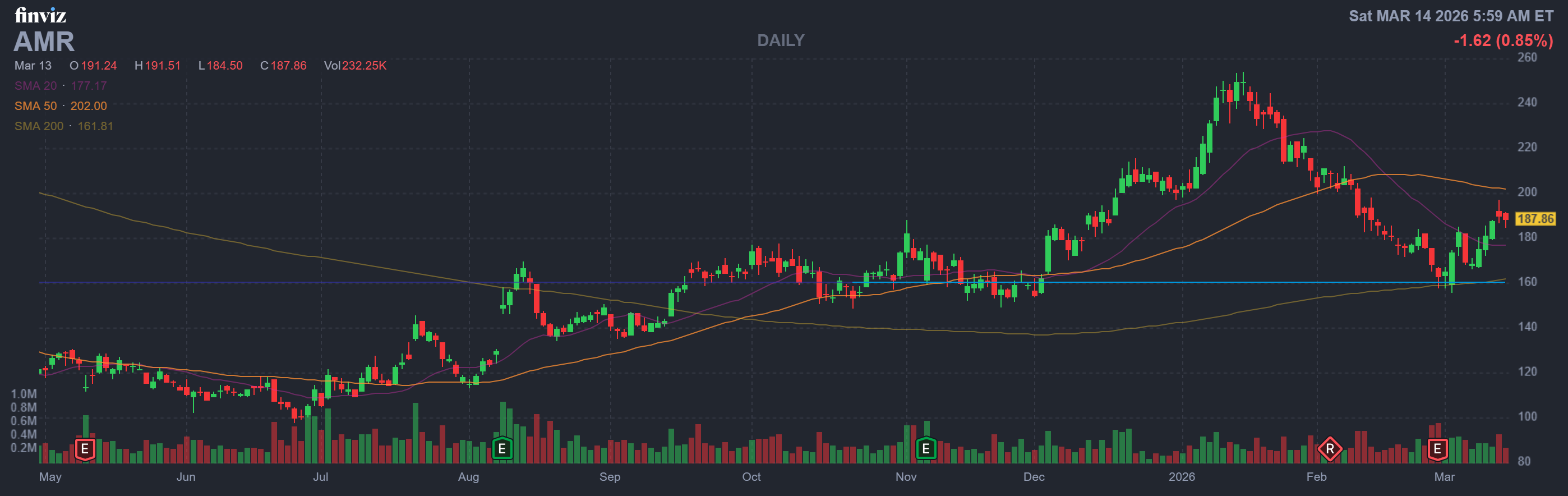
Name: Kenneth S. Courtis
Position: Director
Transaction Date: 03-11-2026 Shares Bought: 10,000 shares an average price paid of $186.87 for a cost of $1,868,707
Transaction Date: 03-09-2026 Shares Bought: 25,000 shares an Average Price Paid of $176.23 for Cost: $4,405,651
Company: Alpha Metallurgical Resources Inc. (AMR)
Alpha Metallurgical Resources, Inc. is a mining firm that produces, processes, and sells met and thermal coal in Virginia and West Virginia. The company offers metallurgical coal products. It runs nineteen operating mines and eight active coal processing and loading facilities. The company was formerly known as Contura Energy, Inc. before changing its name to Alpha Metallurgical Resources, Inc. in April 2017. Alpha Metallurgical Resources, Inc. was established in 2016 and is based in Bristol, Tennessee.
Kenneth S. Courtis has been serving as director of Alpha Metallurgical Resources Inc. since February 2021. He has also been chairman of Starfort Investment Holdings since 2009. Mr. Courtis has more than 30 years of experience in corporate finance, investments, and nearly every facet of the commodity sector. Throughout his career, he has served on the boards or advisory councils of several significant worldwide corporations. Mr. Courtis holds an undergraduate degree from Glendon College in Toronto and a master’s degree in international relations from Sussex University in the UK. He holds a master’s degree in business administration from the European Institute of Business Administration as well as a doctorate with highest distinction from Sciences Po in Paris.
Insomniac Hedge Fund Guy Opinion:
Alpha Metallurgical Resources is a pure-play metallurgical coal producer, supplying the coal used in steelmaking rather than power generation. Roughly 96% of its revenue comes from metallurgical coal, and about 70%+ of sales are exported, making the business heavily tied to global steel demand, particularly in Asia and Europe.
There isn’t much of a traditional moat here. Coal is fundamentally a commodity business. AMR’s edge comes from the quality of its reserves and its focus on premium low-vol metallurgical coal, which tends to command better pricing in steel markets. Still, pricing power ultimately depends on the global steel cycle rather than company-specific advantages.
Financial performance reflects that cyclicality. Revenue exploded during the 2021–2022 commodity boom when met coal prices surged, but has cooled since. The company generated roughly $2.96B in revenue in 2024, down from the peak levels seen during the coal price spike. Profitability swings with coal prices as well; net profit margins recently sit around 6%, far below the extraordinary margins seen during the commodity boom.
Recurring revenue is essentially zero—this is a spot-driven commodity business—so net revenue retention isn’t a meaningful metric here. What management can control is capital discipline. The company has kept a strong balance sheet with minimal debt and substantial cash, which is rare in the coal sector.
Management has aggressively repurchased shares, buying back over $1B of stock since 2022, dramatically shrinking the share count and increasing leverage to any recovery in coal prices.
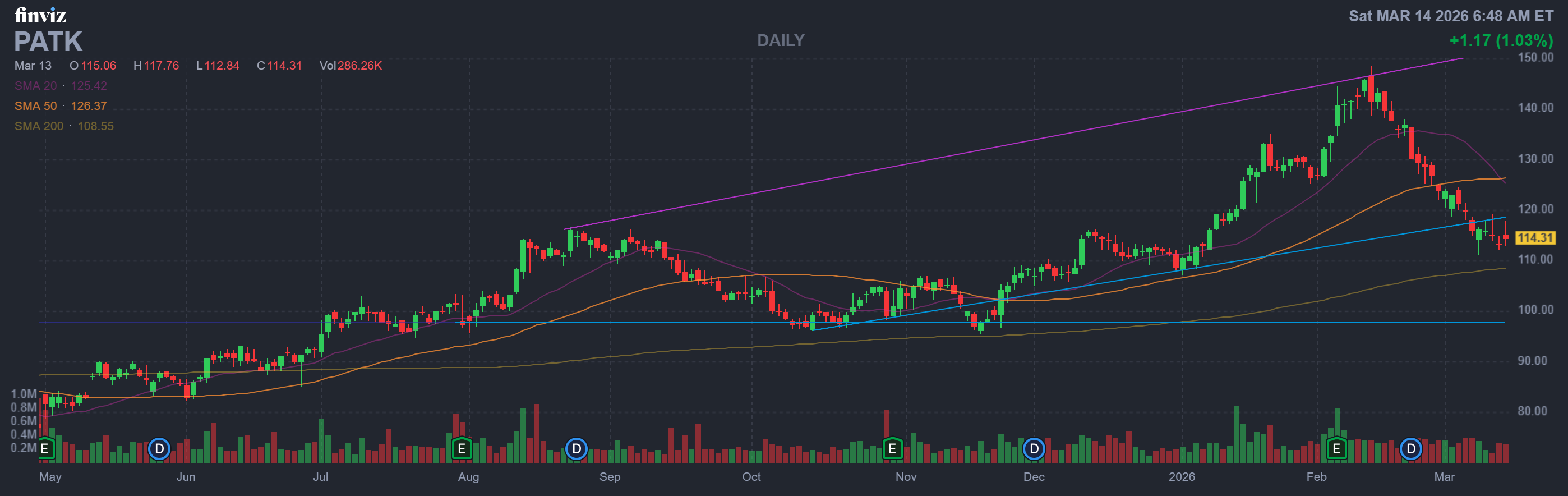
Name: M. Scott Welch
Position: Director
Transaction Date: 03-12-2026 Shares Bought: 10,000 shares an average price paid of $114 for a cost of $1,136,821
Company: Patrick Industries Inc. (PATK)
Patrick Industries, Inc. produces and distributes components and supplies for the recreational vehicle, marine, powersports, prefabricated housing, and industrial markets in the United States, Mexico, China, and Canada. The company operates in two segments: manufacturing and distribution. The Manufacturing division produces and sells laminated goods for furniture, shelving, walls, countertops, and cabinets. This category also offers wrapped vinyl, paper, and wooden profile mouldings; interior passage doors; air handling equipment; and fiberglass and plastic helm systems and components. The Distribution part of the corporation distributes pre-finished wall and ceiling panels, drywall and finishing goods, electronic and audio system components, appliances, and marine accessories, as well as wiring, electrical, and plumbing equipment. Patrick Industries, Inc. was established in 1959 and is headquartered in Elkhart, Indiana.
M. Scott Welch has been a director of Patrick Industries Inc. since April 2015, when he was appointed to the company’s Board of Directors. He has substantial leadership and business experience, having served as President and CEO of Welch Packaging Group since 1985, one of the largest independently held corrugated packaging companies in the United States. Welch has almost 40 years of expertise in the packaging sector, specializing in sales, marketing, acquisitions, strategic planning, and finance. In addition to his position at Patrick Industries, he has served as a director of Lakeland Financial Corporation and a trustee of DePauw University. He has a bachelor’s degree from DePauw University.
Insomniac Hedge Fund Guy Opinion:
Patrick Industries is a component supplier to cyclical consumer markets—primarily RVs, marine, powersports, and manufactured housing. Instead of selling finished vehicles or homes, Patrick sells the parts inside them: cabinetry, electronics, flooring, wiring systems, and structural components. The company acts as a behind-the-scenes supplier to OEMs across the outdoor recreation and housing industries.
The moat is mostly operational scale and customer integration rather than technology. Patrick has built a network of specialized manufacturing businesses through acquisitions and embedded itself into OEM supply chains. Its strategy is to increase “content per unit”—selling more components into each RV, boat, or manufactured home produced. The downside is obvious: the company is highly exposed to cyclical industries like RV and marine manufacturing.
Revenue growth has been volatile but generally positive over the long term. The company generated about $4.0B in revenue in 2025, growing roughly 6% year-over-year, driven by acquisitions and market share gains. Unlike software or service businesses, recurring revenue is limited since most sales are tied directly to new vehicle or housing production volumes.
Management is led by CEO Andy Nemeth, who has focused heavily on acquisitions and expanding the company’s portfolio of component brands. Patrick regularly deploys capital to acquire niche suppliers that deepen relationships with OEM customers and increase product content per vehicle.
Profitability is decent but not spectacular. Operating margins typically sit in the 6–7% range, reflecting the competitive, manufacturing-heavy nature of the business.
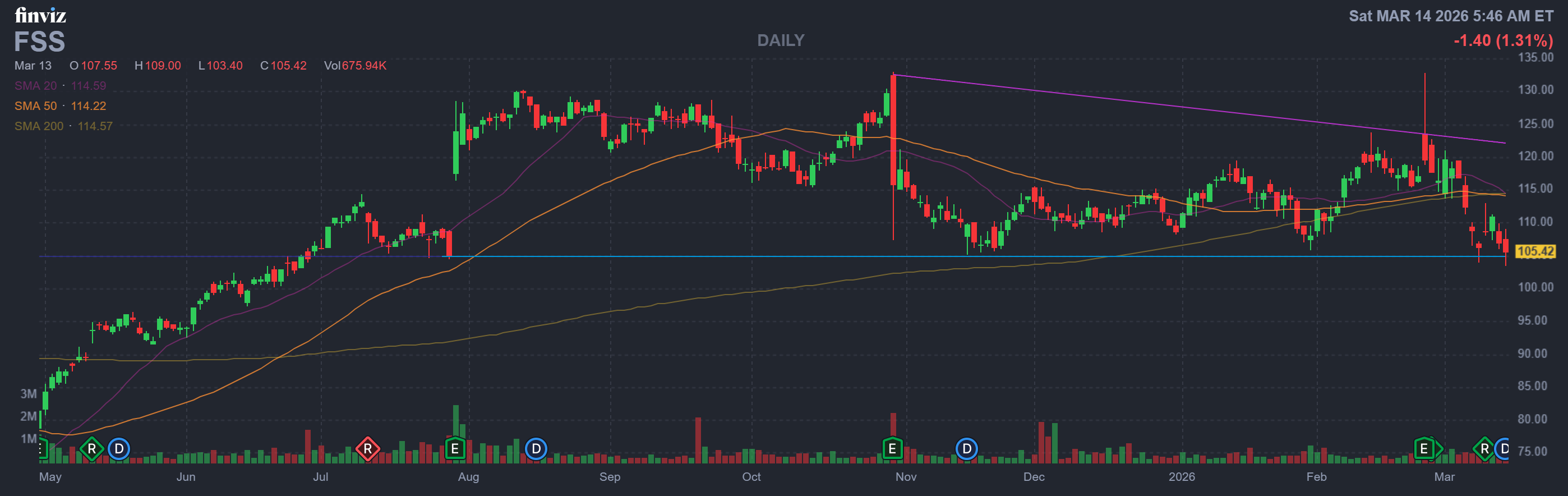
Name: Richard A. Maue
Position: Director
Transaction Date: 03-10-2026 Shares Bought: 2,000 shares an Average Price Paid of $110.77 for Cost: $221,532
Company: Federal Signal Corp. (FSS)
Federal Signal Corporation develops, manufactures, and distributes a range of products and integrated solutions for municipal, governmental, industrial, and commercial customers in the United States, Canada, Europe, and across the world. The company sells street sweepers, sewer cleaners, industrial vacuum loaders, safe-digging trucks, dump truck bodies, trailers, waterblasting equipment, and multi-purpose maintenance vehicles. The company also offers systems for community alerting, emergency vehicles, first responder interoperable communications, and industrial communications; public safety equipment, such as vehicle lightbars and sirens; and general alarm/public address systems under the Federal Signal, Federal Signal VAMA, and Victor brand names through wholesalers, distributors, and direct sales force, as well as independent foreign distributors. Federal Signal Corporation was formed in 1901 and is headquartered in Downers Grove, Illinois.
Richard A. Maue has served as a Director of Federal Signal Corp since February 26, 2026, when he was appointed to the company’s Board of Directors and joined its Audit Committee. In this role, he contributes extensive expertise in financial leadership, corporate governance, and strategic planning gained through decades in the industrial and manufacturing sectors. Maue currently serves as Chief Financial Officer of Crane Company, a position he has held since January 2013, and he joined Crane in August 2007 as Vice President, Controller and Chief Accounting Officer before advancing to senior executive roles. Earlier in his career, he held finance leadership positions at Paxar Corporation and Protiviti. Maue earned a Bachelor of Science in Accounting from Villanova University and is a Certified Public Accountant.
Insomniac Hedge Fund Guy Opinion:
Patrick Industries is a component supplier to the “outdoor enthusiast” economy. The company manufactures and distributes components used in RVs, marine boats, powersports vehicles, and manufactured housing. Instead of selling finished products, Patrick sells the parts that go inside them—things like cabinets, electronics, flooring, wiring systems, and structural materials. Revenue reached roughly $4.0B in 2025, growing about 6% year-over-year as the company continued expanding through acquisitions and higher content per vehicle.
The business model is less about brand power and more about scale and integration. Patrick has built a broad portfolio of niche suppliers and integrated them into OEM production lines. As RV or marine manufacturers increase features per vehicle, Patrick captures more “content per unit.” In the RV segment alone—its largest market at roughly 43% of revenue—content per unit continues to increase even when industry shipments fluctuate.
Five-year revenue growth has been strong but volatile, reflecting the cyclicality of RVs and housing. Unlike SaaS companies, Patrick has little true recurring revenue; sales depend heavily on OEM production volumes. Customer concentration is meaningful, with a few large manufacturers accounting for a significant portion of sales.
Management, led by CEO Andy Nemeth, has focused on acquisitions and expanding into adjacent markets like marine electronics and powersports components. The strategy has increased scale but also ties results to consumer discretionary cycles.
Profitability is decent but not exceptional. Operating margins sit around 7%, and adjusted EBITDA margins around 11–12%, typical for a manufacturing supplier but far below asset-light businesses.
Bottom line: Patrick is essentially a leveraged bet on RVs and outdoor recreation. When those industries boom, PATK compounds quickly through acquisitions and higher content per unit. When the cycle turns, the operating leverage works in the opposite direction.
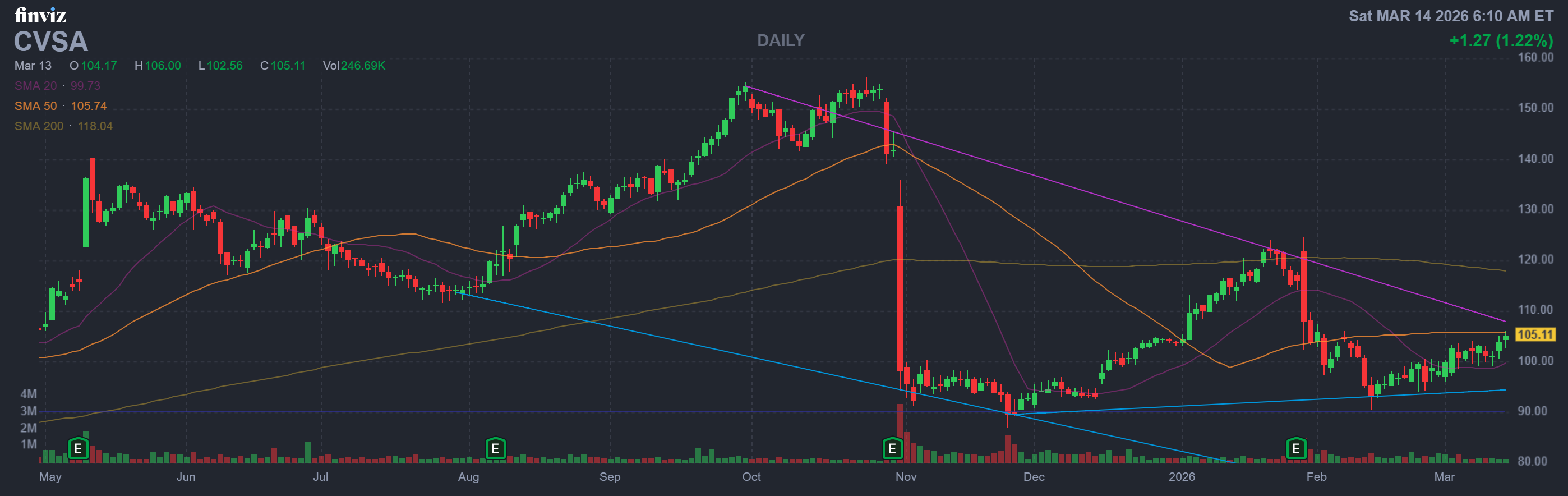
Name: Michael W. Malafronte
Position: Lead Independent Director and Director
Transaction Date: 03-10-2026 Shares Bought: 36,036 shares an average price paid of $100.88 for a cost of $3,635,414
Transaction Date: 03-03-2026 Shares Bought: 1,200 shares an average price paid of $97.97 for a cost of $117,564
Company: Covista Inc. (CVSA)
Covista Inc., through its companies, provides healthcare education in the United States, Barbados, Saint Kitts, and St. Maarten. It works in three divisions: Chamberlain, Walden, and Medical and Veterinary. The company provides degree and non-degree programs such as bachelor’s, master’s, and doctoral degrees, as well as online certificate programs in nursing, health professions, medical and veterinary postsecondary education, counseling, business, information technology, psychology, public health, social work and human services, public administration and public policy, and criminal justice. The corporation was previously known as Adtalem Global Education Inc., but it changed its name to Covista Inc. in February 2026. Covista Inc. was established in 1987 and is based in Chicago, Illinois.
Michael W. Malafronte has been the Lead Independent Director and Director of Covista Inc. since November 2024, and he has been on the company’s board since June 2016. In this capacity, he oversees corporate governance and serves as a bridge between independent directors, the chairman, and management. Malafronte has substantial experience in investment management, having founded and managed International Value Advisers, LLC, where he oversaw the firm’s strategy and operations for over a decade. He formerly worked as a senior analyst at Arnhold & S. Bleichroeder Advisers and as a portfolio manager at Oppenheimer & Close. He earned a bachelor’s degree in finance from Babson College.
Insomniac Hedge Fund Guy Opinion:
Covista Inc., formerly Adtalem Global Education, is essentially a healthcare education platform focused on training nurses, doctors, and other healthcare professionals. The company operates several institutions including Chamberlain University, Walden University, and Ross University’s medical and veterinary schools. Its model is simple: educate healthcare workers at scale and monetize through tuition and professional degree programs.
The investment thesis revolves around a structural shortage of healthcare professionals in the U.S. Covista has positioned itself as infrastructure for the healthcare workforce pipeline, graduating tens of thousands of healthcare professionals each year and serving nearly 100,000 students across its programs.
Revenue growth has been solid. The company generated roughly $1.79B in fiscal 2025 revenue, up about 13% year over year, and about $1.89B on a trailing basis. Over the last five years, revenue has expanded from roughly $1.38B in 2022 to nearly $1.9B today, implying high-single-digit to low-double-digit growth.
The business is inherently recurring since tuition revenue comes from multi-year degree programs and continuing enrollment cycles, though the company does not report a formal recurring revenue metric. Student enrollment growth and program expansion are the key drivers.
CEO Stephen Beard has led a strategic shift away from a broad education portfolio toward a pure-play healthcare workforce training platform, culminating in the 2026 rebrand to Covista.
Profitability has improved materially. Net income recently exceeded $250M, with strong free cash flow generation and improving margins.
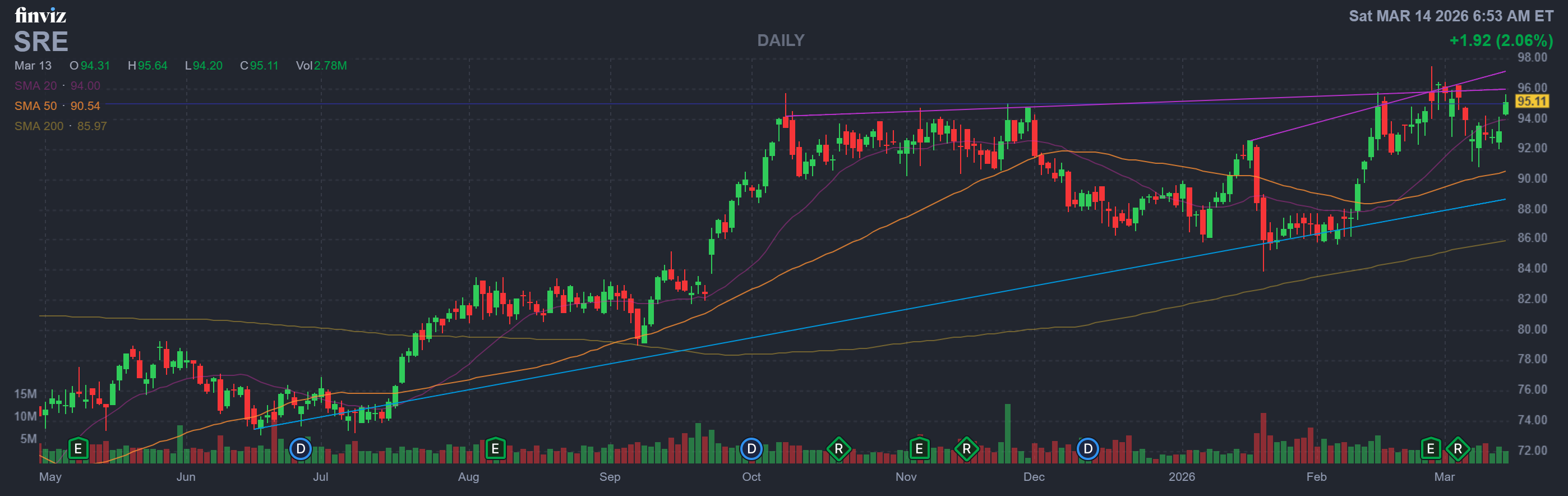
Name: Richard J. Mark
Position: Director
Transaction Date: 03-11-2026 Shares Bought: 2,692 shares an average price paid of $93.30 for a cost of $251,164
Name: Cynthia J. Warner
Position: Director
Transaction Date: 03-11-2026 Shares Bought: 2,500 shares an average price paid of $92.95 for a cost of $232,375
Company: Sempra (SRE)
Sempra operates in the regulated utility business in the United States and Mexico. Sempra operates in three segments: Sempra California, Sempra Texas Utilities, and Sempra Infrastructure. Sempra California provides natural gas and power service to Southern California and a portion of Central California. The Sempra Texas Utilities segment operates in the regulated energy transmission and distribution utility business. The Sempra Infrastructure sector designs, builds, runs, and invests in energy infrastructure to assist people get access to cleaner energy in markets across the United States, Mexico, and the world. The corporation was previously known as Sempra Energy but changed its name to Sempra in May 2023. Sempra was established in 1996 and is based in San Diego, California.
Richard J. Mark has been a director of Sempra since August 2023, when he was appointed to the board of directors. Mark has decades of leadership expertise in the regulated energy and utility sectors. He formerly served as chairman and president of Ameren Illinois Company from 2012 until his retirement in August 2022, where he oversaw electric and natural gas distribution operations as well as strategic projects. Prior to that, he held many top management positions at Ameren after joining the business in 2002 as vice president of customer service. Mark has a bachelor’s degree from Iowa State University and a master’s in management from National Louis University.
Cynthia J. Warner has been a director of Sempra since June 2019. She joined the company’s board at the time and ultimately rose to the position of lead independent director. Warner is a seasoned energy business executive with over three decades of expertise in both traditional and renewable energy sectors. She was previously President and CEO of Renewable Energy Group and held key leadership positions at Andeavor (formerly Tesoro Corporation), including executive vice president of operations and executive vice president of Strategy and business development. She formerly worked for BP and Amoco for approximately 25 years in various worldwide leadership roles. Warner earned a Bachelor of Engineering in Chemical Engineering from Vanderbilt University and an MBA from the Illinois Institute of Technology.
Insomniac Hedge Fund Guy Opinion:
Sempra is a large North American energy infrastructure company focused on regulated utilities and LNG export infrastructure. Its main assets include California utilities (San Diego Gas & Electric and Southern California Gas) along with growing LNG and energy infrastructure projects in Texas and Mexico. The business model is straightforward: regulated utility earnings plus long-duration infrastructure assets tied to global energy demand.
The moat comes from regulation and infrastructure scale. Utility operations operate under regulated frameworks that provide predictable returns on invested capital. Meanwhile, LNG projects such as those connected to the Port Arthur LNG terminal create long-term contracted cash flows with global buyers. Once pipelines, LNG terminals, and transmission networks are built, competition is extremely limited.
Revenue growth over the past five years has been modest, generally in the 3–6% range, typical of regulated utilities. Recurring revenue is extremely high—roughly 90%+ of earnings are tied to regulated or contracted infrastructure assets. Net revenue retention is effectively strong because customers remain connected to the utility grid or locked into long-term infrastructure contracts.
Management, led by CEO Jeffrey Martin, has focused on simplifying the company by selling non-core assets and concentrating capital on regulated utilities and LNG export infrastructure. The strategy is aimed at producing steady earnings growth and lower risk.
Profitability is solid but utility-like. Returns are stable rather than explosive, with regulated allowed returns driving predictable earnings growth.
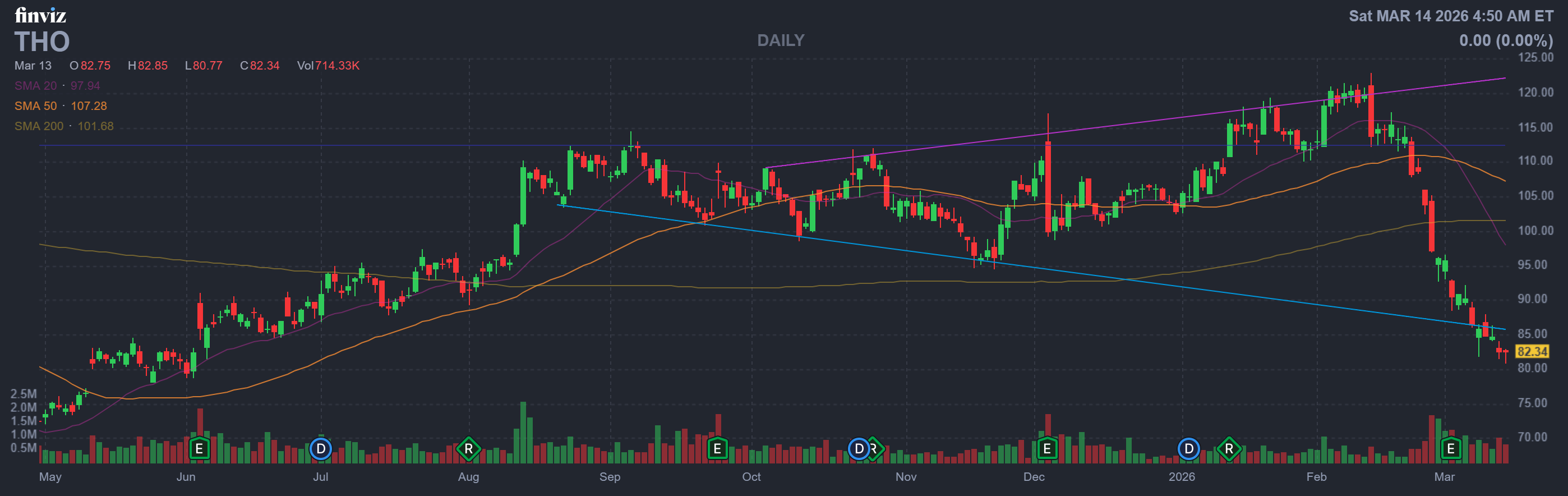
Name: Peter Busch Orthwein
Position: Director
Transaction Date: 03-06-2026 Shares Bought: 2,600 shares an Average Price Paid of $88.25 for Cost: $229,450
Company: Thor Industries Inc. (THO)
THOR Industries, Inc. designs, manufactures, and sells recreational vehicles and related parts and accessories in the United States, Germany, the rest of Europe, Canada, and around the world. The company provides travel trailers, gasoline and diesel Class A, B, and C motorhomes, conventional travel trailers and fifth wheels, conventional motorhomes, luxury fifth wheels, motorcaravans, campervans, urban vehicles, and caravans, as well as other RV-related products and services. It also provides aluminum extrusion and specialized component products to RV and other manufacturers. The company sells its products to both independent and non-franchise dealers. Thor Industries, Inc. was founded in 1980 and is headquartered in Elkhart, Indiana.
Peter Busch Orthwein has been a director of Thor Industries Inc. since August 1980. As a co-founder, he has contributed significantly to the company’s development and governance, and he has served on the board from its creation. He has held a number of senior positions, including Chairman, Vice Chairman, and Chairman and CEO. He later served as Executive Chairman until his retirement in August 2019, after which he was designated Chairman Emeritus while remaining on the board. Orthwein began his work with Bankers Trust and Gould Electronics before co-founding Thor Industries. He earned his Bachelor of Science and MBA degree from Cornell University.
Insomniac Hedge Fund Guy Opinion:
Thor Industries is the largest recreational vehicle (RV) manufacturer in the world, producing travel trailers, fifth-wheel towables, and motorhomes through brands like Airstream, Jayco, and Keystone. The company sells primarily through independent dealers across North America and Europe. After acquiring the European RV giant Erwin Hymer in 2019, Thor became the global scale leader in the industry.
The business is straightforward: build RVs and ship them to dealers. Towable RVs make up the majority of revenue, with motorized RVs and European operations filling out the rest. Fiscal 2025 revenue was roughly $9.6B, reflecting the normalization of demand after the pandemic RV boom.
The moat here is limited. Thor’s advantages are scale, dealer relationships, and a broad brand portfolio. But RV manufacturing is ultimately a consumer cyclical business, heavily tied to interest rates and discretionary spending. When consumers feel good, RV sales surge. When financing tightens, sales fall quickly.
Recurring revenue is modest. The company generates some aftermarket sales through parts, accessories, and component businesses like Airxcel, but this still represents less than 10% of total revenue, meaning most of the business is one-time vehicle sales. Net revenue retention isn’t a meaningful metric in this industry.
Management is led by CEO Bob Martin, who has focused on cost discipline, dealer inventory management, and maintaining market share during the current RV downturn.
Profitability reflects the cyclicality. Gross margins typically land in the low- to mid-teens, and earnings can swing significantly with RV demand cycles.
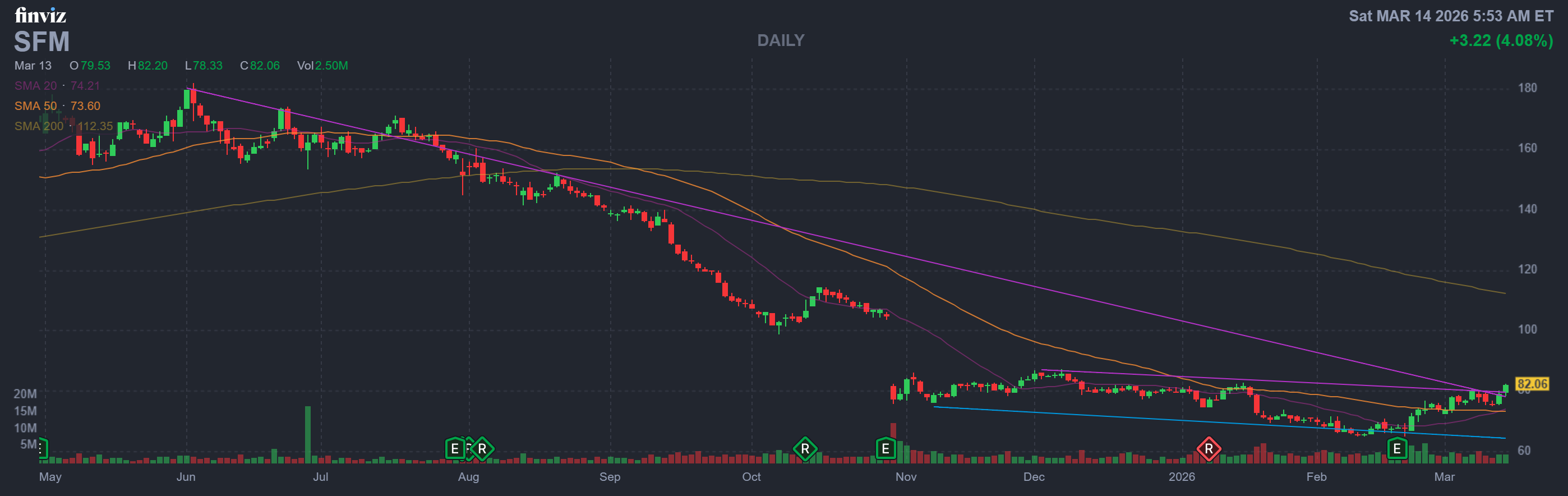
Name: Joel D. Anderson
Position: Director
Transaction Date: 03-09-2026 Shares Bought: 4,400 shares an Average Price Paid of $77.17 for Cost: $339,548
Company: Sprouts Farmers Market Inc. (SFM)
Sprouts Farmers Market, Inc. and its subsidiaries retail fresh, natural, and organic food products in the United States. The company provides healthy grocery stores as well as lifestyle-friendly ingredients including organic, plant-based, keto, paleo, non-GMO, and gluten-free. The company also sells perishable products such as produce, meat and meat alternatives, seafood, deli, bakery, floral, and dairy alternatives, as well as non-perishable products like groceries, vitamins and supplements, bulk items, frozen foods, beer and wine, and natural health and body care. It sells its products under the Sprouts label. The company was founded in 1943 and is based in Phoenix, Arizona.
Joel D. Anderson has served as a Director of Sprouts Farmers Market Inc. since November 2019, when he was appointed to the company’s Board of Directors. He contributes extensive retail and e-commerce leadership experience and currently serves as Chair of the Compensation Committee and a member of the Audit Committee, helping oversee executive compensation, financial governance, and strategic oversight. Anderson has built a distinguished career in the retail industry, including serving as Chief Executive Officer and Director of Petco Health and Wellness Company since 2024. Previously, he was President and CEO of Five Below, Inc. from 2015 to 2024, and earlier held senior leadership roles at Walmart, including President and CEO of Walmart.com. He earned an MBA from Harvard Business School and a BA in Political Science and Speech Communications from Saint Olaf College.
Insomniac Hedge Fund Guy Opinion:
Sprouts Farmers Market is a specialty grocery chain focused on fresh, natural, and organic foods. The company operates roughly 480 stores across the U.S., positioning itself somewhere between a traditional supermarket and a health-focused retailer. The concept is simple: smaller stores, heavy emphasis on fresh produce, and a curated assortment aimed at health-conscious consumers.
The moat is niche positioning. Sprouts isn’t trying to compete directly with mass grocery chains on price or scale. Instead, it targets customers willing to pay a bit more for organic, natural, and specialty products. Private-label products and fresh produce help differentiate the offering and support margins, which are typically better than conventional grocers.
Growth has been solid. Revenue reached about $8.8B in 2025, up 14% year-over-year, driven by new store openings and strong comparable-store sales. Over the past five years, revenue has generally grown in the mid-to-high single digits, with acceleration recently as the company expanded its footprint and benefited from consumer interest in healthier food options.
Recurring revenue in grocery retail isn’t contractual, but Sprouts benefits from repeat customer traffic and loyalty programs that encourage frequent shopping. Store expansion remains a key driver, with dozens of new locations added each year.
Management is led by CEO Jack Sinclair, who has focused on tightening the store format, improving private-label offerings, and expanding geographically. The strategy has boosted sales productivity and profitability.
Profitability is relatively strong for a grocer. Earnings have grown rapidly in recent years as operating efficiency improved and same-store sales strengthened.
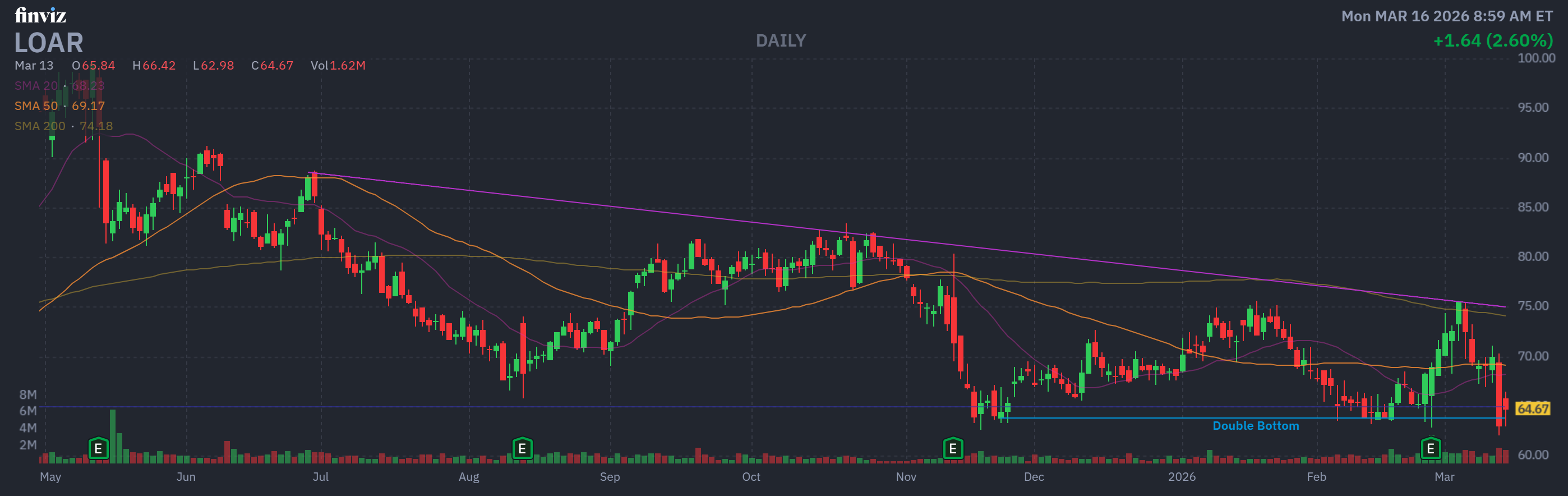
Name: Dirkson R. Charles
Position: See Remarks
Transaction Date: 03-10-2026 Shares Bought: 44,000 shares an average price paid of $67.45 for a cost of $2,967,831
Name: Anthony Carpenito
Position: Director and 10% Owner
Transaction Date: 03-12-2026 Shares Bought: 4,800 shares an average price paid of $64.97 for a cost of $311,857
Name: Raja Bobbili
Position: Director and 10% Owner
Transaction Date: 03-12-2026 Shares Bought: 50,000 shares an average price paid of $63.61 for a cost of $3,180,486
Company: Loar Holdings Inc. (LOAR)
Loar Holdings Inc. and its subsidiaries create, manufacture, and distribute aerospace and defense components for airplanes, as well as aerospace and defense systems in the United States and around the world. It provides airframe and structural components, avionics, composites, brake system components, de-ice and ice protection, electro-mechanical, engineered materials, flight controls, fluid and motion controls, environmental, metal forming, molded components, and restraints and safety devices. The company also offers auto throttles, lap-belt airbags, two- and three-point seat belts, water purification systems, fire barriers, polyimide washers and bushings, latches, interior securing devices, hold-open and tie rods, and other products. It primarily serves the commercial, business jet, general aviation, and defense markets. Loar Holdings Inc. was established in 2017 and is based in White Plains, New York.
Dirkson R. Charles has been Chief Executive Officer and Executive Chairman of Loar Holdings Inc. since the company’s creation in 2017. He started Loar Group in January 2012 and has served as CEO since then, driving the company’s expansion as a maker of specialist aerospace and defense components. Before founding Loar, Charles was Executive Vice President of McKechnie Aerospace, where he oversaw financial operations and contributed to operational improvements. He formerly worked as Executive Vice President and Chief Financial Officer at K&F Industries for 17 years, and he began his career with Arthur Andersen. He has an undergraduate degree in public accounting and an MBA in finance from Pace University, and he is a certified public accountant.
Anthony M. Carpenito has been a director and 10% owner of Loar Holdings Inc. since April 2024, when the business completed its first public offering and adopted its present public company form. He joined the company in 2024 in connection with the IPO and took on the responsibilities of director and large shareholder. Carpenito is also the Head of Private Capital Markets at Abrams Capital Management, where he has been since 2015. He has vast experience in capital formation and investment management. Previously, he held prominent positions at Credit Suisse’s Private Fund Group, GAMCO Investors, and Goldman Sachs. He has a Bachelor of Arts in Economics and Political Science from Bucknell University and a Master of Business Administration from Columbia University.
Raja Bobbili became a director and 10% shareholder of Loar Holdings Inc. in April 2024, coinciding with the company’s public IPO. He joined the company’s board at the time and was identified as a substantial shareholder via insider ownership filings. Bobbili is a managing director and investment analyst at Abrams Capital Management, where he specializes on long-term equity investments and corporate strategy. He has vast knowledge in finance and private investments. He received his B.S. in Electrical Engineering & Computer Science and Economics from the Massachusetts Institute of Technology, as well as his M.B.A. and J.D. from Harvard University.
Insomniac Hedge Fund Guy Opinion:
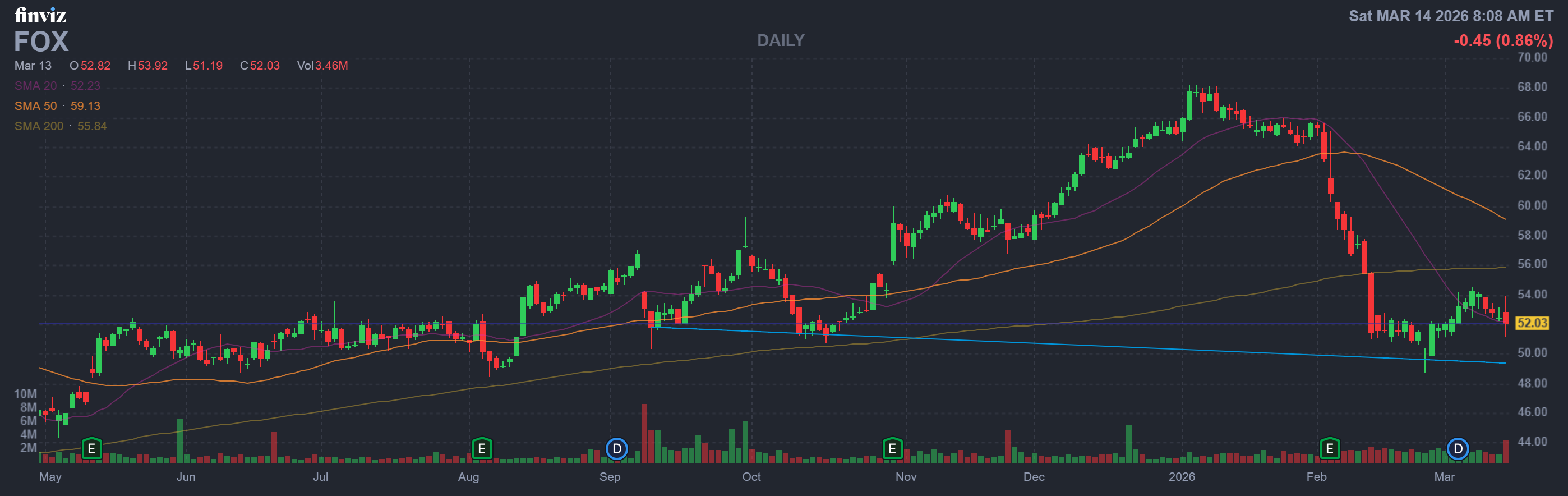
Name: Lachlan K. Murdoch
Position: Executive Chair, CEO
Transaction Date: 03-13-2026 Shares Bought: 175,372 shares an average price paid of $60.63 for a cost of $10,632,804
Company: Fox Corp (FOX)
Fox Corporation is a news, sports, and entertainment company in the United States. It works in four divisions: Cable Network Programming, Television, Credible, and The FOX Studio Lot. The Cable Network Programming division creates and licenses sports and news content for distribution via traditional cable television networks, direct broadcast satellite operators, telecommunications firms, virtual multi-channel video programming distributors, and other digital platforms. The Television division creates, acquires, markets, and distributes content via the FOX broadcast network, the advertising-supported video-on-demand service Tubi, and full-power broadcast television stations, including duopolies and other digital platforms. Fox Corporation was founded in 2018 and is headquartered in New York, NY.
Lachlan K. Murdoch has served as Executive Chair and Chief Executive Officer of Fox Corporation since October 2018, taking on the leadership role when the company was created following the restructuring of 21st Century Fox in 2019. In this position, he oversees Fox’s portfolio of major news, sports, and entertainment assets and guides the company’s overall strategy and operations. Murdoch has spent more than three decades in the global media industry, holding senior leadership roles across television, publishing, and digital media businesses. Prior to Fox Corp, he served as Executive Chairman of 21st Century Fox and co-chairman of both Fox and News Corp. He holds a bachelor’s degree in philosophy from Princeton University.
Insomniac Hedge Fund Guy Opinion:
Fox Corp is a focused media company built around live news, sports, and broadcast television. The core assets include Fox News, the Fox broadcast network, Fox Sports, and the ad-supported streaming platform Tubi. Unlike legacy media peers, Fox sold most of its entertainment studio assets to Disney in 2019 and now concentrates on live programming that still commands real-time audiences—especially news and sports.
The moat is content plus distribution leverage. Fox News remains the most-watched cable news network, while Fox Sports owns valuable rights to the NFL, MLB, and major college football. These live events still attract large audiences and premium advertising rates. The company also collects affiliate fees from cable and satellite providers for carrying its channels, creating a stable revenue base.
Revenue growth has been uneven but generally modest over the past five years due to the structural decline of cable subscribers. However, the business still generates strong cash flow. In fiscal 2025 revenue reached about $16.3B, up roughly 17% year over year, driven by political advertising, the Super Bowl broadcast, and strong growth at Tubi.
Recurring-style revenue mainly comes from affiliate fees, which account for a significant portion of sales and grew roughly 5–6% in recent periods as Fox renegotiated carriage contracts. Advertising remains cyclical but still a major revenue driver, especially during election years and major sports events.
Management is led by CEO Lachlan Murdoch, who has emphasized live sports, news dominance, and digital expansion through Tubi and the Fox One streaming service.
Profitability remains solid. Fox produces billions in EBITDA annually and continues to return capital through aggressive share buybacks and dividends.
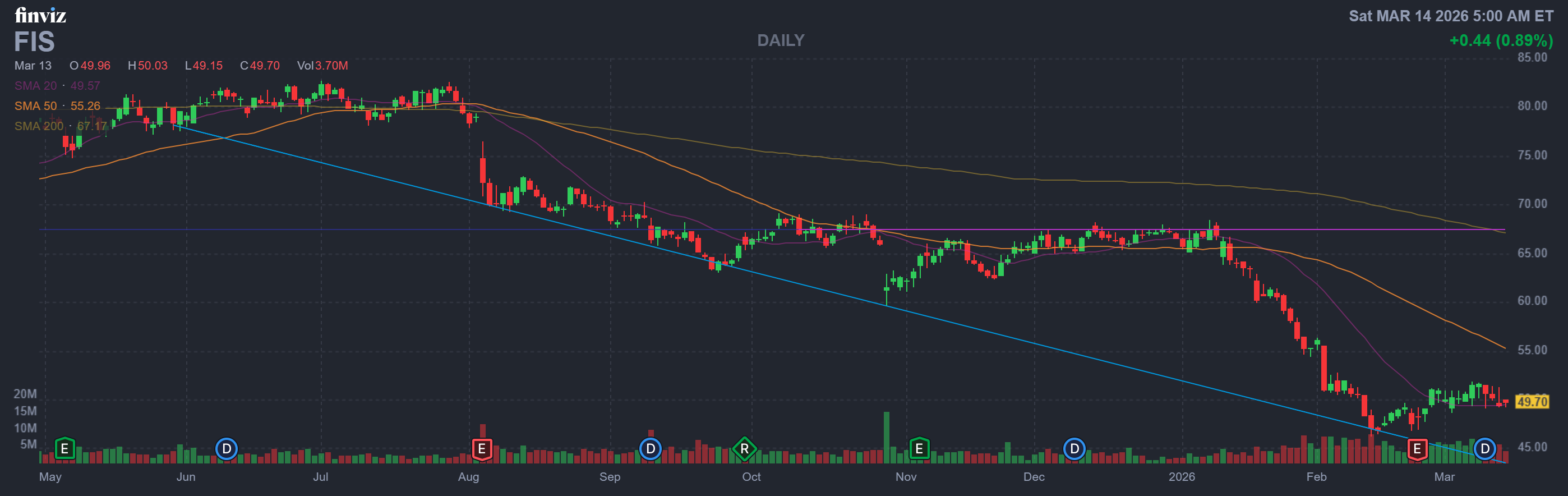
Name: Stephanie Ferris
Position: CEO and President
Transaction Date: 03-05-2026 Shares Bought: 19,846 shares an Average Price Paid of $50.39 for Cost: $1,000,040
Company: Fidelity National Information Services Inc. (FIS)
Fidelity National Information Services, Inc. offers solutions to financial institutions, enterprises, and developers globally. The company’s segments include Banking Solutions, Capital Market Solutions, and Corporate and Other. It offers core processing and ancillary applications; mobile and online banking; fraud, risk management, and compliance; card and retail payments; electronic funds transfer and network; wealth and retirement; and item processing and output solutions. The company also provides trading and asset management, lending, leveraged and syndicated loan markets, and treasury and risk solutions. Fidelity National Information Services, Inc. was founded in 1968 and is based in Jacksonville, Florida.
Stephanie Ferris has served as Chief Executive Officer and President of Fidelity National Information Services Inc. since December 16, 2022, when she was appointed to lead the global financial technology company and became the first woman to hold the role in its history. She joined FIS in 2019 through the company’s acquisition of Worldpay, where she had served as Chief Financial Officer, and later held key leadership roles at FIS including Chief Operating Officer and Chief Administrative Officer. In February 2022, she was promoted to President before assuming the combined CEO and President role later that year, overseeing the company’s global fintech strategy and transformation initiatives. She holds a Bachelor’s degree in Accountancy from Miami University and is a certified public accountant.
Insomniac Hedge Fund Guy Opinion:
Fidelity National Information Services is a large financial technology provider that sells software and transaction-processing infrastructure to banks, capital markets firms, and payment networks. Its core products run the plumbing of the financial system—core banking software, payment processing, fraud detection, and trading/clearing technology. In simple terms, FIS helps banks move money and manage accounts at scale.
The moat comes from switching costs and long-term contracts. Core banking systems are deeply embedded in financial institutions and replacing them is expensive and risky. Once a bank runs on FIS software, the relationship can last decades. This leads to a heavy recurring revenue mix from transaction processing, software maintenance, and service contracts. Recurring revenue accounts for the majority of the business and has grown steadily as transaction volumes expand.
Revenue growth has been modest. Over the past five years the company has largely delivered low-single-digit growth, with recent quarterly revenue increases around 4–6% year-over-year as banking and capital markets solutions expand. Recurring revenue growth tends to track in the mid-single digits as payment volumes and digital banking adoption rise. Net retention isn’t formally disclosed, but client relationships are typically sticky due to system integration and regulatory complexity.
Management has been focused on simplifying the business after years of acquisitions. The company sold a majority stake in Worldpay and is concentrating on banking technology and capital markets software.
Profitability is solid but less impressive than pure-play fintech peers. Adjusted EBITDA margins sit around 40%, though earnings have been volatile due to restructuring and portfolio changes.
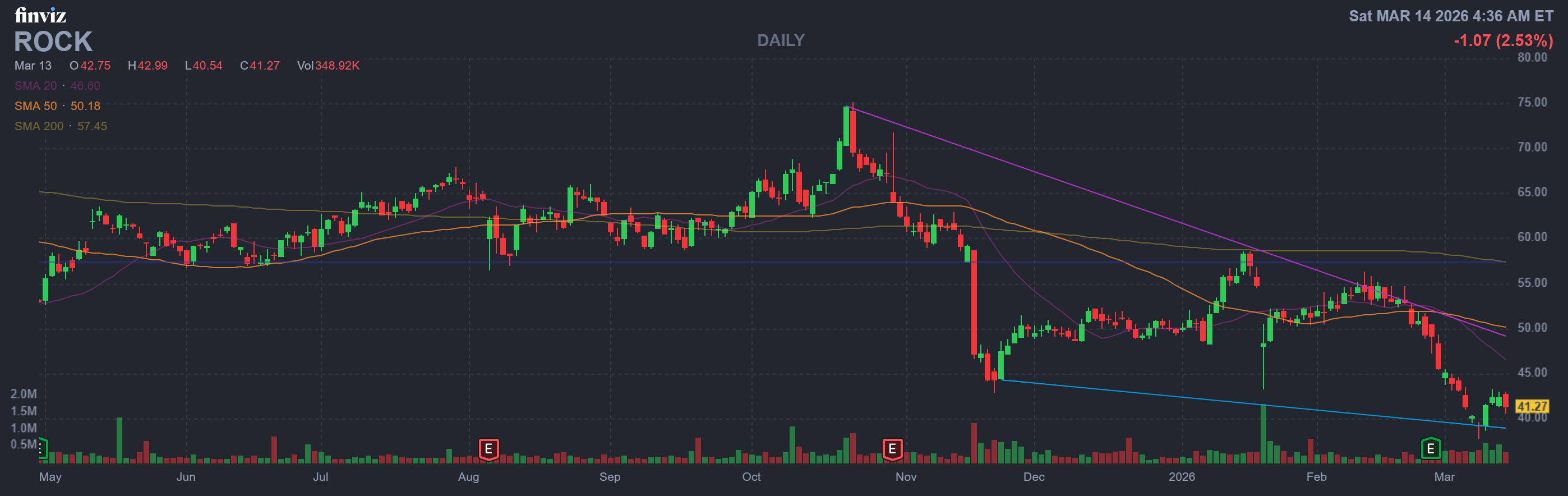
Name: William T. Bosway
Position: President and CEO
Transaction Date: 03-09-2026 Shares Bought: 6,000 shares an Average Price Paid of $38.60 for Cost: $231,593
Company: Gibraltar Industries Inc. (ROCK)
Gibraltar Industries, Inc. manufactures and sells goods and services to the residential, agtech, and infrastructure markets in the United States and abroad. The company is divided into three segments: residential, agricultural technology, and infrastructure. The Residential section provides ventilation items for the roof and foundation, as well as mail and package solutions. The Agtech section provides controlled environmental agriculture, specialized greenhouse solutions, and structural canopies. The Infrastructure segment provides expansion joints, structural bearings, rubber preformed seals and other sealants, elastomeric concrete, and bridge cable protection systems. The company’s customers include home improvement merchants, wholesalers, distributors, and contractors, as well as institutional and commercial farmers of fruits, vegetables, flowers, and plants. The company was created in 1972 and is based in Buffalo, New York.
William T. Bosway has been President and CEO of Gibraltar Industries Inc. since January 2019, when he also joined the company’s board of directors. He has over 29 years of leadership experience in multinational industrial organizations. Before joining Gibraltar, Bosway was President and CEO of Dover Corporation’s Refrigeration and Food Equipment division from 2016 to 2018, and he previously worked at Emerson Electric for over two decades, including as Group Vice President for Refrigeration and Solutions in Emerson Climate Technologies. He received a Bachelor of Science in Finance from Miami University and a Master of Science in Industrial Marketing and Strategy from Purdue University’s Krannert School of Management.
Insomniac Hedge Fund Guy Opinion:
Gibraltar Industries is a niche industrial manufacturer that sells products used in residential construction, controlled-environment agriculture (greenhouses), and infrastructure projects. The largest segment today is residential building products—particularly metal roofing accessories, ventilation systems, and other components tied to housing repair and remodeling. The company also sells greenhouse structures and infrastructure-related products used in commercial and agricultural applications.
The competitive moat is moderate. Gibraltar doesn’t have proprietary technology in the way software or medical device companies do, but it benefits from strong distribution relationships, scale manufacturing, and a portfolio of specialized building components that contractors rely on. Much of the business is tied to housing renovation cycles and construction activity, which makes demand cyclical.
Revenue growth has been steady but not spectacular. Over the last several years the company has generated roughly $1.1–$1.3B in annual revenue, with about ~10% growth in 2025 to $1.14B after a softer 2024. Much of the recent growth has come from acquisitions and expansion in residential metal roofing products. Recurring revenue is relatively limited compared with service-heavy companies—this is mostly a product business tied to project demand.
CEO Bill Bosway has been reshaping the portfolio—selling the renewables unit, acquiring roofing businesses, and focusing more heavily on residential products. By 2026, management expects the residential segment to represent roughly 80% of the company’s business following recent acquisitions.
Profitability is solid for an industrial manufacturer, with operating margins typically in the low-to-mid teens and strong cash flow generation in good housing markets.
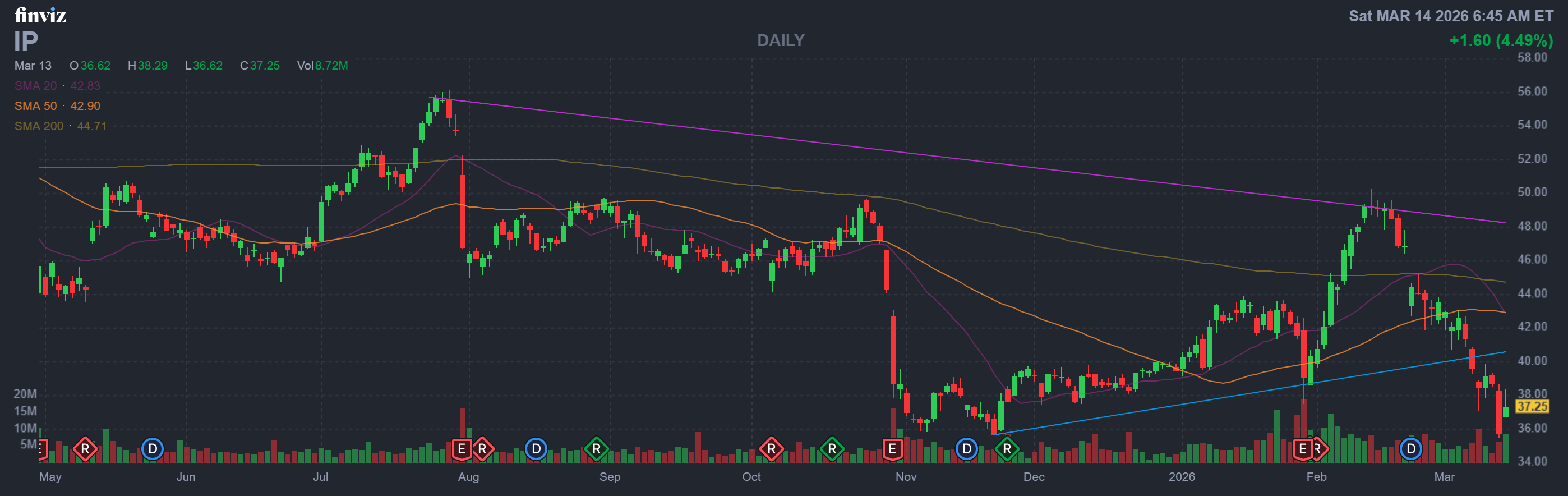
Name: Anders Gustafsson
Position: Director
Transaction Date: 03-11-2026 Shares Bought: 26,092 shares an average price paid of $38.33 for a cost of $1,000,036
Company: International Paper Co. (IP)
International Paper Company manufactures and sells renewable fiber-based packaging and pulp products throughout North America, Latin America, Europe, and North Africa. It operates in two segments: industrial packaging and global cellulose fibers. The company sells linerboard, medium, whitetop, recycled linerboard, recycled medium, and saturating kraft, as well as pulp for a variety of applications, including diapers, towel and tissue products, feminine care, incontinence, and other personal care products, as well as specialty pulps for use in textiles, construction materials, paints, coatings, and other industries. The company offers its products directly to consumers and converters, as well as through agents, resellers, and distributors. The company was founded in 1898 and is based in Memphis, Tennessee.
Anders Gustafsson has been a Director at International Paper Company since March 1, 2019, when he was elected to the company’s Board of Directors. He has substantial leadership experience in the technology sector, having served as Chief Executive Officer of Zebra Technologies Corporation from 2007 until 2023, during which time he helped build the company’s global corporate solutions division. He formerly served as CEO of Spirent Communications plc and held top leadership positions at Tellabs and Motorola. He earned a Master of Business Administration from Harvard Business School and a Master of Science in Electrical Engineering from Chalmers University of Technology in Gothenburg, Sweden.
Insomniac Hedge Fund Guy Opinion:
International Paper is one of the largest global producers of containerboard and corrugated packaging. The company primarily supplies boxes and packaging materials used across e-commerce, consumer goods, and industrial supply chains. Its business is tied closely to economic activity and shipping volumes, making it more cyclical than many packaging peers.
The company’s moat is modest but real. Scale in containerboard production, long-standing mill infrastructure, and integrated supply chains provide cost advantages that smaller competitors struggle to match. However, packaging is still a commodity business, and pricing power ultimately depends on industry capacity discipline. When supply exceeds demand, margins can compress quickly.
Over the past five years, revenue growth has been relatively flat, generally hovering around the low-single-digit range due to fluctuations in box demand and pulp pricing. The company does not have a traditional recurring revenue model; most revenue comes from selling containerboard and corrugated packaging products tied directly to customer volumes. As a result, recurring revenue as a percentage of business is minimal and net revenue retention metrics are not typically disclosed.
Management has focused on restructuring the portfolio, closing inefficient mills, and improving capital allocation. Leadership has emphasized operational efficiency and shareholder returns through dividends and share repurchases. Recently, the company has also pursued strategic consolidation within the packaging sector to improve scale and cost competitiveness.
Profitability has been volatile compared with higher-quality industrial businesses. Operating margins typically land in the mid-single to low-double-digit range, depending on packaging demand and raw material costs. Free cash flow tends to follow the same cyclical pattern.
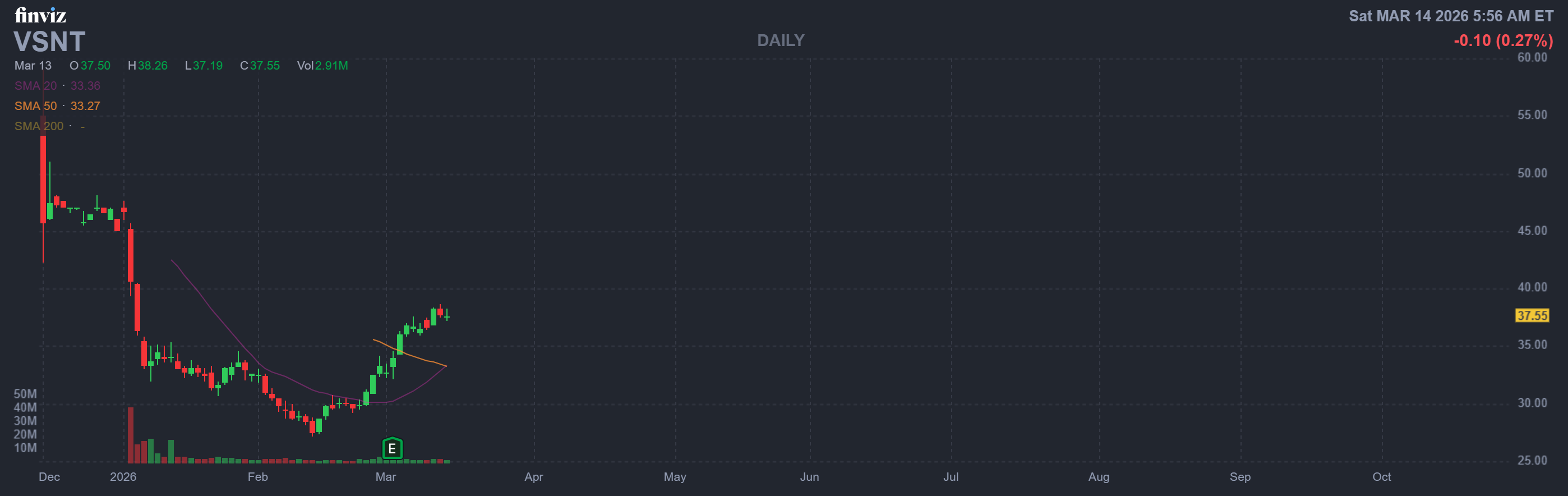
Name: Michael Aaron Conway
Position: Director
Transaction Date: 03-09-2026 Shares Bought: 1,350 shares an Average Price Paid of $36.14 for Cost: $48,789
Name: Gerald L. Hassell
Position: Director
Transaction Date: 03-09-2026 Shares Bought: 10,000 shares an Average Price Paid of $36.07 for Cost: $360,700
Company: Versant Media Group Inc. (VSNT)
Versant Media Group, Inc. operates in the media and entertainment sectors in the United States. It creates, licenses, and acquires content that is distributed across a variety of channels, including networks and digital platforms. The company provides news, sports, and entertainment content through its portfolio of brands, which includes MS NOW, CNBC, USA Network, Golf Channel, GolfNow, SportsEngine, E!, SYFY, Oxygen True Crime, Fandango, and Free TV Network. The corporation uses television networks and internet channels to serve the political news and opinion, business news and personal finance, golf and athletics participation, and sports and genre entertainment industries. The corporation was founded in 2025 and is headquartered in New York, NY.
Michael Aaron Conway has been a Director of Versant Media Group, Inc. since January 2, 2026, when he was appointed to the board following the company’s split from Comcast Corporation. He joined the board when he was appointed director and currently serves on the Compensation Committee. Conway is an accomplished consumer and retail leader who formerly worked as Starbucks Corporation’s Chief Operating Officer for North America. Earlier in his career, he held executive positions at Johnson & Johnson and Campbell Soup Company, focused on brand expansion and strategy. He has a bachelor’s degree from Duke University and an MBA from The Wharton School at the University of Pennsylvania.
Gerald L. Hassell has been a Director at Versant Media Group Inc. since 2026, joining the board shortly after the company’s spin-off from Comcast. As a director, he brings substantial experience in financial services and corporate governance. Hassell previously worked for decades at The Bank of New York Mellon Corporation, where he rose to the position of Chairman and CEO, supervising global banking, asset servicing, and investment activities. Earlier in his career, he held executive positions in BNY Mellon’s banking and capital markets businesses. He received his undergraduate degree from Duke University before pursuing his MBA at New York University’s Leonard N. Stern School of Business.
Insomniac Hedge Fund Guy Opinion:
Versant Media Group is a newly independent media company created from the spin-off of several cable networks from Comcast. The business owns a portfolio of well-known media brands including CNBC, MS NOW (formerly MSNBC), USA Network, SYFY, E!, and the Golf Channel, along with digital platforms like Fandango, Rotten Tomatoes, GolfNow, and GolfPass. The strategy is to combine traditional cable networks with digital distribution platforms and eventually expand direct-to-consumer offerings.
The competitive moat is mixed. On one hand, Versant owns recognizable media brands with strong audiences in news and sports—two categories that still attract live viewership and advertising dollars. On the other hand, the company remains heavily exposed to the declining pay-TV ecosystem, where cord-cutting continues to pressure subscriber and advertising revenue across the industry. Roughly 80% of revenue still comes from pay-TV distribution, highlighting the transition challenge.
Financially, the company is profitable but facing modest decline. 2025 revenue was about $6.69 billion, down roughly 5% year-over-year, while net income came in at $930 million with adjusted EBITDA of $2.4 billion. Advertising and traditional cable distribution revenues declined, though digital platform revenue showed modest growth.
Management is led by CEO Mark Lazarus, who is pushing a pivot toward digital platforms, streaming products, and broader distribution through acquisitions and partnerships. New direct-to-consumer services and ad-supported streaming initiatives are expected over the next few years.
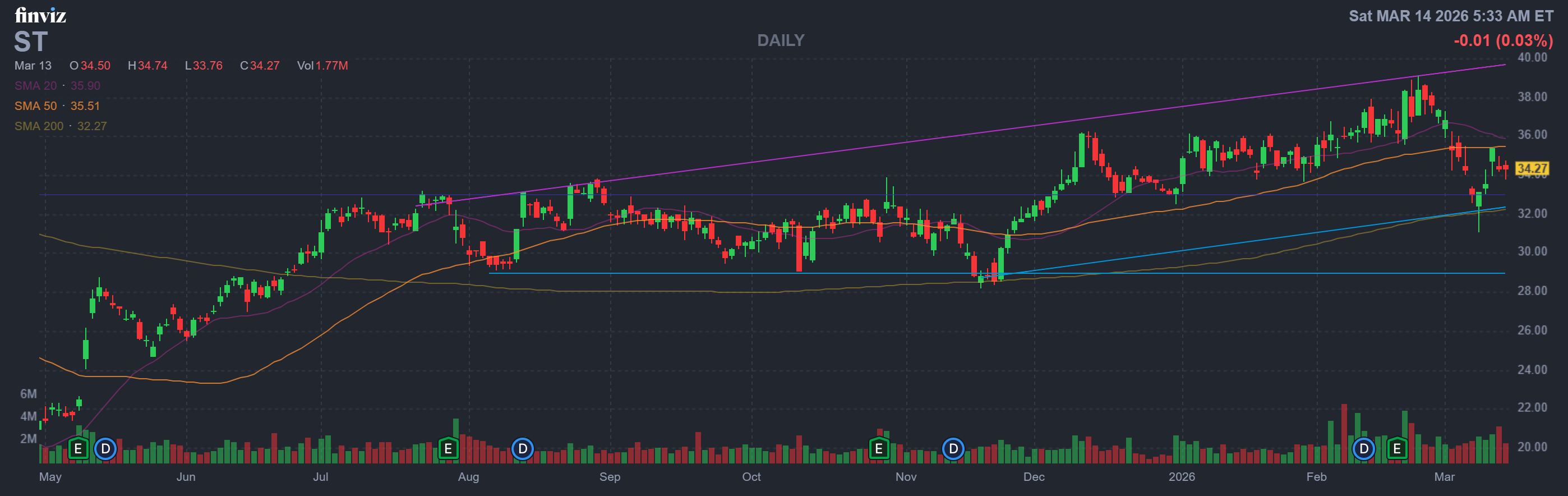
Name: Stephan von Schuckmann
Position: CEO
Transaction Date: 03-06-2026 Shares Bought: 15,150 shares an Average Price Paid of $33 for Cost: $501,671
Company: Sensata Technologies Holding PLC (ST)
Sensata Technologies Holding plc develops, manufactures, and distributes sensors and sensor-rich solutions, electrical protection components and systems, and other products for mission-critical systems and applications in the United States, Europe, Asia, and across the world. Sensors, contactors/fuses, switching and protection devices and solutions, distribution modules, bimetal electromechanical controllers, circuit breakers, switches and relays, energy storage systems, rectifiers and frequency converters, and power conversion systems are all available from the company. It serves the automotive, on-road truck, and construction industries, as well as original equipment manufacturers in agriculture, control, appliance, medical, energy and charging infrastructure, data/telecom, aerospace and defense, systems integrators, and motor and compressor distributors. Sensata Technologies Holdings plc was formed in 1916 and is headquartered in Attleboro, Massachusetts.
Stephan von Schuckmann has served as Chief Executive Officer of Sensata Technologies Holding plc since January 2025, when he was appointed by the company’s Board of Directors to lead the global industrial technology firm and also joined its board. Before joining Sensata, he built more than two decades of leadership experience in the automotive and industrial sectors, most recently serving as a member of the Management Board at ZF Friedrichshafen AG, where he led the company’s electric mobility division and oversaw global procurement and the Asia-Pacific region. Earlier in his career, he held senior operational and financial leadership roles at ZF and Robert Bosch Automotive Steering. He holds a master’s degree of commerce in accounting & finance from Macquarie University in Sydney, Australia, and completed undergraduate studies in economics at Ruprecht-Karls-University of Heidelberg and in engineering at the University of Paderborn.
Insomniac Hedge Fund Guy Opinion:
Sensata Technologies is a global industrial technology company focused on sensors and electrical protection components used in mission-critical systems. Its products measure pressure, temperature, position, and electrical current inside equipment ranging from automobiles and heavy trucks to aircraft and industrial machinery. The automotive market still dominates the business, accounting for roughly 56% of revenue, which makes Sensata heavily exposed to vehicle production cycles.
The company’s moat is based on engineering expertise and deep integration into customers’ systems. These sensors are typically designed directly into equipment platforms, and once qualified by OEMs they tend to remain for the life of that product cycle. That creates long product lifecycles and stable replacement demand, though not the kind of recurring revenue you see in software or consumables businesses.
Over the past five years, Sensata has delivered low-single-digit revenue growth, reflecting the cyclicality of its automotive exposure and recent industrial slowdowns. Management is trying to shift the story toward electrification—selling high-voltage contactors, battery management components, and power systems used in electric vehicles and energy infrastructure. Electrification revenue has been growing quickly and recently reached about $700M, with a larger pipeline of new program wins.
CEO Stephan von Schuckmann is focused on operational discipline, debt reduction, and repositioning the portfolio toward higher-growth electrification markets.
Profitability is solid but not spectacular. Adjusted operating margins generally sit in the high-teens to ~20% range, respectable for an industrial components company but below elite sensor peers.
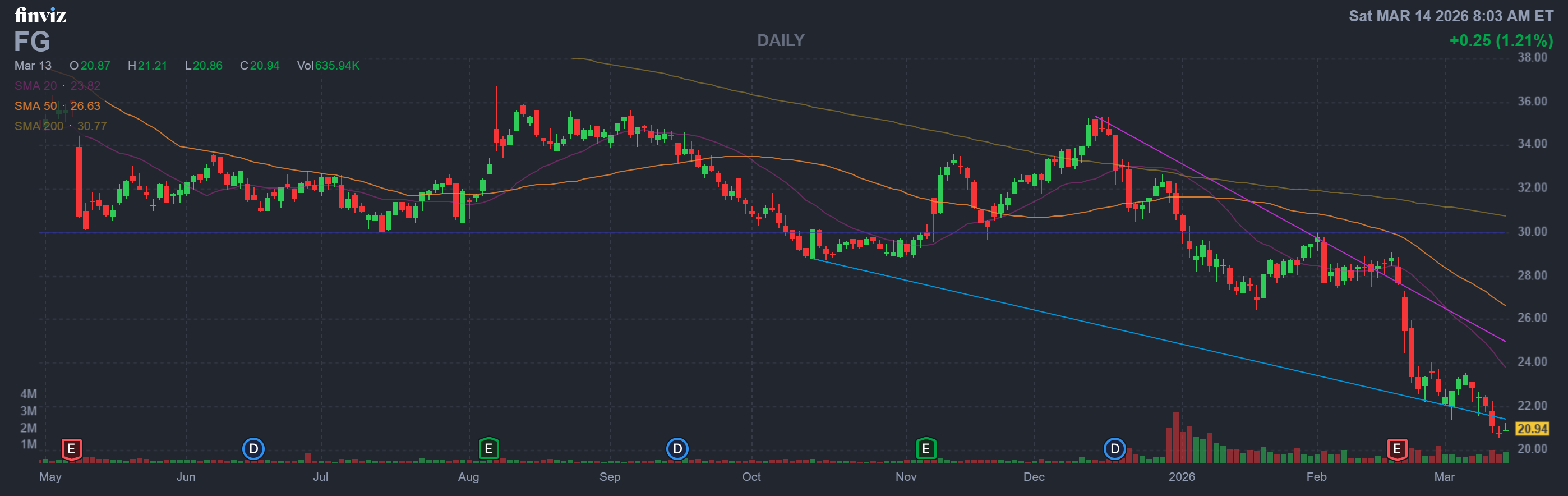
Name: Christopher O. Blunt
Position: Chief Executive Officer
Transaction Date: 03-13-2026 Shares Bought: 10,000 shares an average price paid of $20.99 for a cost of $209,900
Company: F&G Annuities & Life Inc. (FG)
F&G Annuities & Life, Inc., along with its subsidiaries, offers annuity and life insurance products in the US. It provides fixed indexed annuities, registered index-linked annuities, pension risk transfer, indexed universal life, and multi-year guarantee annuities; immediate annuities; indexed universal life insurance; pension risk transfer solutions; and institutional financing agreements. Independent agents, banks, and broker-dealers sell the company’s products to retail annuity and life consumers, as well as institutional clients. The company was created in 1959 and is based in Des Moines, Iowa. F&G Annuities and Life, Inc. is a subsidiary of Fidelity National Financial, Inc.
Christopher O. Blunt has served as Chief Executive Officer of F&G Annuities & Life Inc. since January 2, 2019, when he was appointed to lead the company’s strategy, operations, and growth initiatives. He joined F&G in 2019, bringing extensive experience from the insurance and asset management industries. Prior to this role, Blunt served as Chief Executive Officer of Blackstone Insurance Solutions and previously held several senior leadership positions at New York Life, including President of the company’s Investment Group and Co-President of the Insurance and Agency Group. Earlier in his career, he also worked in senior roles at Merrill Lynch Investment Managers and Goldman Sachs Asset Management. He earned a B.A. in History from the University of Michigan and an MBA from the Wharton School of the University of Pennsylvania.
Insomniac Hedge Fund Guy Opinion:
F&G Annuities & Life is a retirement insurance company focused on annuities, indexed life insurance, and pension risk transfer products. The business is straightforward: sell retirement products, collect policyholder funds, and invest that float into a large fixed-income and structured credit portfolio. Assets under management have grown rapidly, reaching about $73B in 2025, driven by strong annuity demand from an aging U.S. population.
The moat isn’t brand prestige—it’s distribution and investment management. F&G sells through independent agents, banks, and broker-dealers, and it benefits from a long-standing investment partnership with institutional asset managers that help generate higher yields on its portfolio. Like many modern annuity writers, the strategy is to originate liabilities (annuities) and earn a spread between investment returns and policyholder credits.
Revenue growth has been volatile but generally strong in recent years. Revenue reached about $5.8B in 2024, up roughly 27% year over year, though quarterly results can swing with market conditions and product mix. Gross annuity and life insurance sales remain robust, with over $14–15B in annual product sales recently.
Recurring revenue in the traditional SaaS sense doesn’t apply here, but annuity contracts create long-duration liabilities and predictable fee/spread income over time. Net retention isn’t disclosed, yet policyholder persistence tends to be high because annuities are long-term retirement products.
Management, led by CEO Chris Blunt, has emphasized a “capital-light” model using flow reinsurance and distribution expansion to grow assets while maintaining strong solvency ratios.
Profitability has improved alongside scale, with adjusted ROE around 12% and rising return on assets as the company grows its investment portfolio.
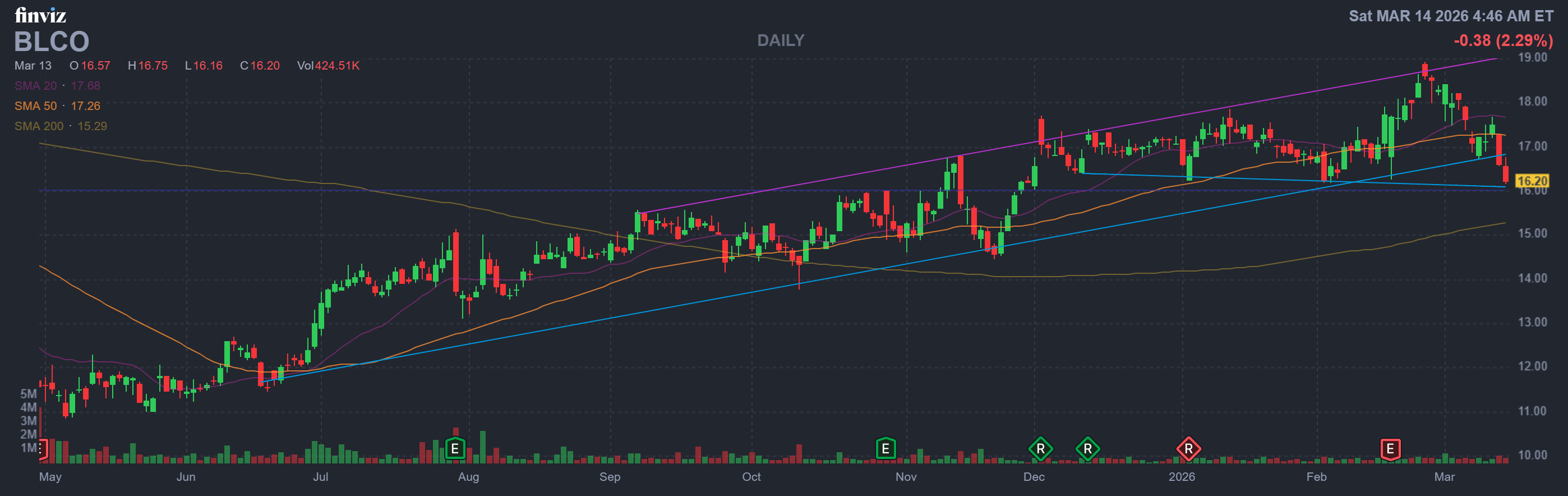
Name: John E. Noone
Position: Director
Transaction Date: 03-09-2026 Shares Bought: 2,000 shares an Average Price Paid of $30.84 for Cost: $61,673
Company: Mid Penn Bancorp Inc. (MPB)
Mid Penn Bancorp, Inc. serves as the bank holding company for Mid Penn Bank, which offers commercial banking services to individuals, partnerships, non-profit organizations, and companies. It provides a variety of time and demand deposit products, including checking accounts, savings accounts, clubs, money market deposit accounts, certificates of deposit, and individual retirement accounts. The company also offers a variety of lending products, including mortgages and home equity loans, secured and unsecured commercial and consumer loans, lines of credit, loans to non-profit organizations, and local government loans. In addition, it provides trust, retail investment, wealth management, and insurance services, as well as online banking, phone banking, cash management, automated teller services, and safe deposit boxes. The company was founded in 1868 and is based in Harrisburg, Pennsylvania.
John E. Noone has served as a Director of Mid Penn Bancorp, Inc. since August 29, 2012, when he was appointed to the company’s Board of Directors. He currently serves as Lead Independent Director and chair of the Audit Committee, providing financial oversight and governance guidance to the regional banking organization. Noone began his career as a Certified Public Accountant before moving into banking, where he served as Vice President and Regional Commercial Banking Manager at Pennsylvania National Bank. He later became an entrepreneur, acquiring McCann School of Business in 1993 and founding Higher Education Solutions, LLC in 2003, followed by the formation of Shamrock Investments, LLC in 2007. He holds a earned a Bachelor of Science degree in business with a concentration in accounting from Marywood University.
Insomniac Hedge Fund Guy Opinion:
Mid Penn Bancorp is a small regional bank headquartered in Pennsylvania with roughly $5–6B in assets. The bank focuses on traditional community banking—commercial real estate loans, small-business lending, residential mortgages, and retail deposits—primarily across central and southeastern Pennsylvania. Like most regional banks, the core business is simple: gather deposits cheaply and lend them out at higher yields.
There isn’t a huge structural moat here. The advantage is mainly local market relationships and scale within its footprint, which help the bank attract stable deposits and maintain lending relationships with small and mid-sized businesses. The strategy has also relied on acquisitions of smaller community banks to expand its geographic reach and loan book. The recent acquisition of William Penn Bancorporation is a good example of this roll-up approach.
Revenue growth has been respectable for a regional bank. Over the past several years the company has grown through a mix of organic lending and acquisitions, with revenue reaching roughly $300M+ annually and increasing double digits in strong years. The business model is inherently recurring since interest income from loans makes up the majority of revenue, though it is cyclical and tied to credit conditions and interest rates.
Profitability is solid but not exceptional. Net interest margin has recently improved to around 3.4–3.6% as loan yields increased and funding costs stabilized. Return on equity is moderate for the sector, and credit quality and expense control remain areas investors watch closely.
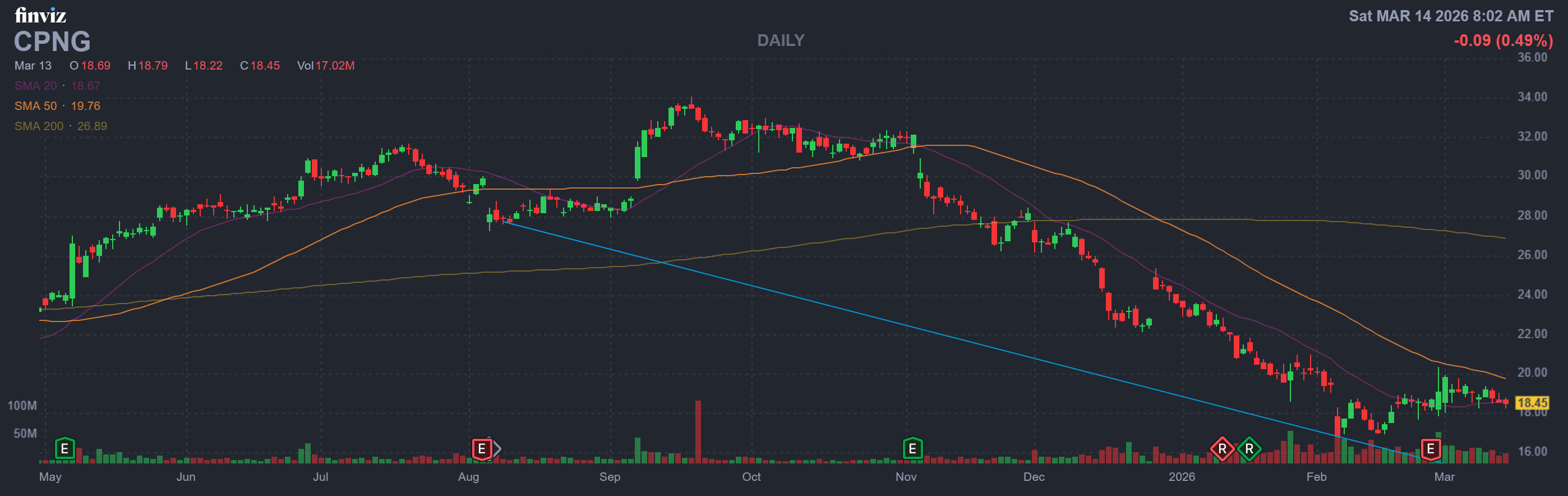
Name: Neil Mehta
Position: Director
Transaction Date: 03-11-2026 Shares Bought: 7,350,104 shares an average price paid of $18.58 for a cost of $136,562,971
Company: Coupang Inc. (CPNG)
Coupang, Inc., and its subsidiaries own and operate retail businesses in South Korea and around the world via mobile applications and internet websites. It operates in two segments: product commerce and developing offerings. The Product Commerce sector comprises Korean retail and marketplace offerings, Rocket Fresh, a fresh grocery offering, and advertising products. The Developing Offerings sector includes Eats, a restaurant ordering and delivery service, Play, an online video streaming service, financial activities, and Farfetch, a luxury apparel marketplace. It also operates and provides support services in the US, South Korea, Taiwan, Singapore, China, Japan, Europe, the United Kingdom, and India. Coupang, Inc. was established in 2010 and is based in Seattle, Washington.
Neil Mehta has served as a Director of Coupang Inc. since December 2010, when he joined the company’s Board of Directors and began contributing to its governance and long-term strategic oversight. He currently serves as Lead Independent Director and chairs the Compensation Committee, while also participating in the Nominating and Corporate Governance Committee. Mehta brings strong experience in technology investing and high-growth companies as the founder and managing partner of Greenoaks Capital Partners, an investment firm established in 2012 that focuses on global technology and consumer internet businesses. Earlier in his career, he held investment roles at Orient Property Group and Kayne Anderson Capital Advisors. He earned a BSc in Government from the London School of Economics and Political Science.
Insomniac Hedge Fund Guy Opinion:
Coupang is often called the “Amazon of South Korea,” but that shorthand misses the real story. The company built a vertically integrated logistics network that enables same-day or next-day delivery across most of Korea. That infrastructure—combined with its subscription program (WOW membership), grocery, food delivery, and fintech services—creates a powerful ecosystem around its core e-commerce platform.
The moat is logistics density. Coupang owns and operates much of its fulfillment and last-mile delivery network, allowing it to deliver faster and often cheaper than competitors. In Korea’s dense urban environment, that scale advantage becomes hard to replicate. As customer cohorts age on the platform, their spending tends to increase, reinforcing customer lifetime value.
Growth remains strong but is slowing as the company scales. Revenue reached $34.5B in 2025, up about 14% year over year, continuing a multi-year run of double-digit growth. Active customers climbed to roughly 24.6 million, still expanding around high-single digits annually.
Recurring revenue is less explicit than a SaaS company, but subscription fees, marketplace services, advertising, and repeat commerce create a quasi-recurring model driven by frequent customer purchases. Net retention isn’t formally disclosed, though cohort data suggests customers spend more over time.
Management is led by founder-CEO Bom Kim, who still controls the company and has consistently prioritized logistics infrastructure and long-term market dominance over short-term profits.
Profitability remains the debate. Coupang generated $1.5B of adjusted EBITDA in 2025, but margins remain thin because the company continues investing heavily in new services and international expansion.
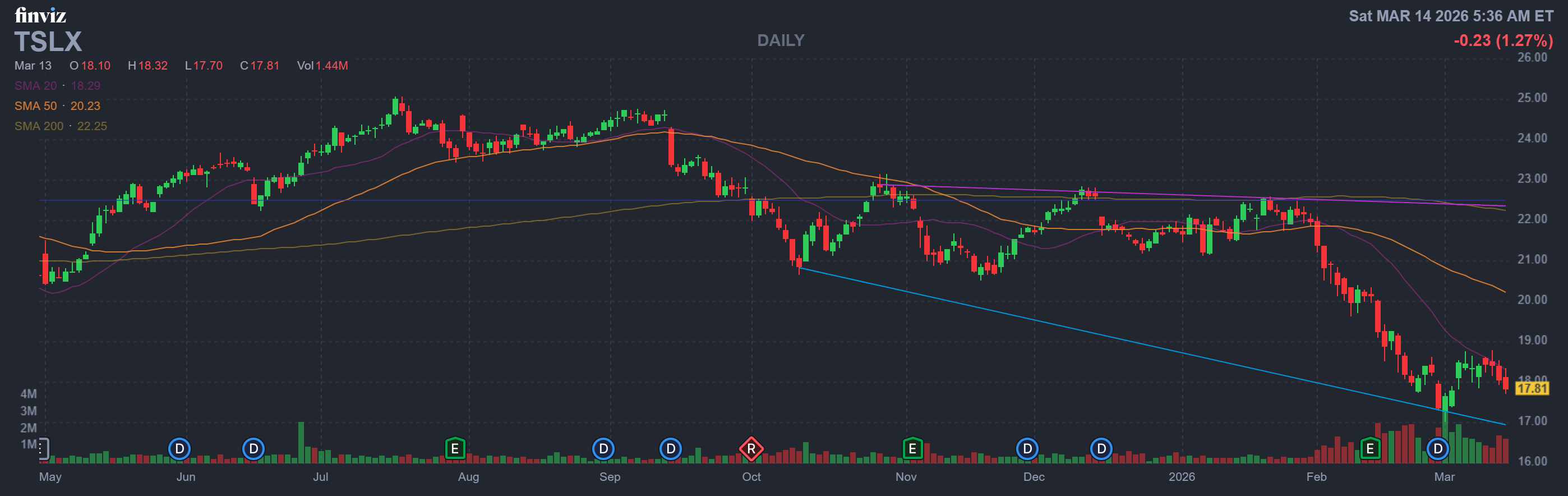
Name: P. Emery Covington
Position: Director
Transaction Date: 03-06-2026 Shares Bought: 7,500 shares an Average Price Paid of $18.35 for Cost: $137,625
Name: Alan Waxman
Position: Vice President
Transaction Date: 03-09-2026 Shares Bought: 245,000 shares an Average Price Paid of $18.23 for Cost: $4,467,150
Company: Sixth Street Specialty Lending Inc. (TSLX)
Sixth Street Specialty Lending Inc. is a US-based specialty finance company that provides direct lending and customized financing solutions primarily to middle-market companies. The firm focuses on generating current income by investing mainly in senior secured loans and, to a lesser extent, mezzanine loans, corporate bonds, and equity securities. Structured as a business development company, it is externally managed by Sixth Street Specialty Lending Advisers, an affiliate of global investment firm Sixth Street. The company seeks to deliver attractive risk-adjusted returns through disciplined underwriting and diversified credit investments across industries. Sixth Street Specialty Lending Inc. was founded in 2010 in the United States.
P. Emery Covington has served as a Director of Sixth Street Specialty Lending Inc. since July 10, 2023, when she was appointed to the company’s Board of Directors. She also joined the board’s audit, compensation, nomination, and corporate governance committees, contributing extensive expertise in credit risk management and financial services. Covington previously served as Executive Vice President and Head of Commercial Credit Risk at Truist Bank (formerly SunTrust Bank) from 2009 to 2020, where she led a major credit execution team and was a member of the bank’s Senior Credit Committee. Earlier in her career, she held leadership roles at NewStar Financial and FleetBoston Financial. She earned an AB in English with honors from Smith College.
Alan Waxman has served as Vice President of Sixth Street Specialty Lending Inc. since 2011, when the company began investment activities and he assumed an executive role supporting its credit and investment strategy. In this position, he helps oversee the company’s investment activities through the adviser’s investment team and participates in the Investment Review Committee that evaluates and approves portfolio investments. Waxman is also the Co-Founding Partner and Chief Executive Officer of Sixth Street, a global investment firm managing a broad range of credit, growth equity, and infrastructure strategies. Earlier in his career, he was a Partner at Goldman Sachs and Chief Investment Officer of the Americas Special Situations Group. He holds a BA in International Relations from the University of Pennsylvania.
Insomniac Hedge Fund Guy Opinion:
Sixth Street Specialty Lending is a business development company (BDC) that lends primarily to U.S. middle-market companies. The firm provides senior secured loans, mezzanine debt, and occasionally equity to businesses that are often too small for the traditional leveraged loan market but too large for banks to comfortably finance. In practice, it functions like a private credit fund wrapped in a public stock.
The moat is less about technology and more about platform and underwriting discipline. TSLX benefits from its affiliation with the broader Sixth Street investment platform, which provides deal flow, sector expertise, and structuring capabilities that smaller BDCs struggle to replicate. The portfolio is highly defensive: roughly 89% of investments are first-lien senior secured loans and over 96% are floating-rate, helping the company benefit from higher interest rates while limiting credit risk.
Growth is steady but not explosive. Revenue growth over the past five years has been essentially flat to low single digits, reflecting the cyclical nature of credit markets rather than operational weakness. The business is almost entirely recurring by design—roughly 90% of revenue comes from interest and dividend income on loans, with the remainder coming from fees and occasional capital gains.
Management has maintained a conservative balance sheet with leverage around 1.1x debt-to-equity and a diversified portfolio of over 100 companies. Non-accruals remain extremely low, around 0.6% of the portfolio, suggesting solid credit underwriting.
Profitability is strong for a lender. TSLX regularly generates 11–13% return on equity and covers its sizable dividend through net investment income, which totaled roughly $2.23 per share in 2025.
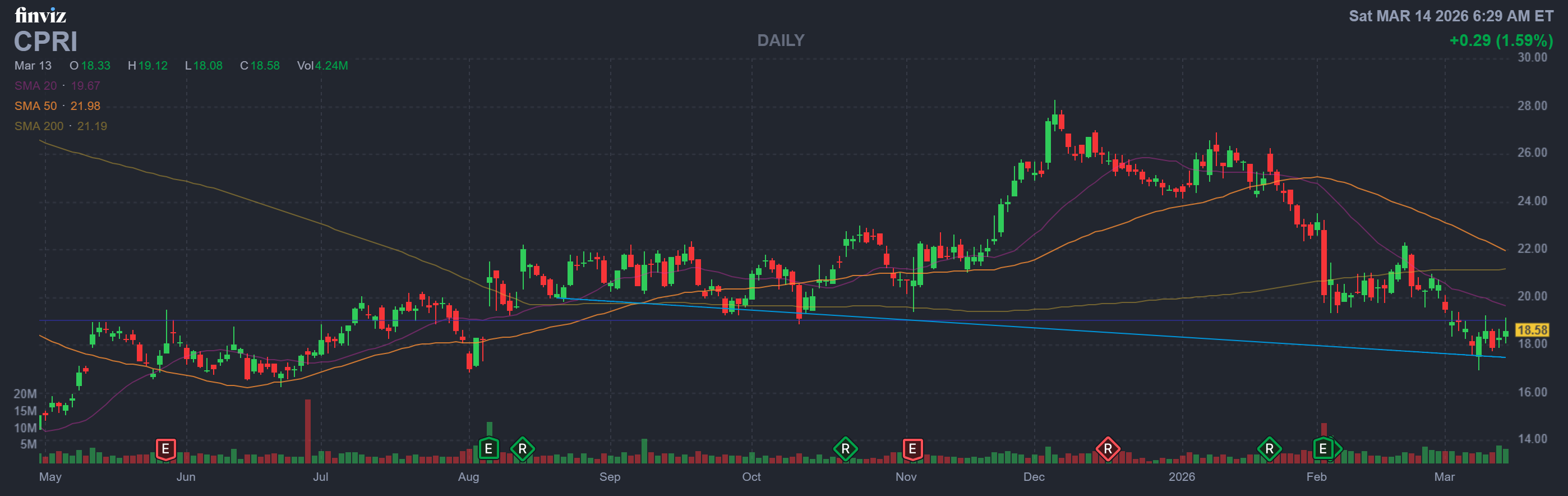
Name: John D. Idol
Position: Chairman & CEO
Transaction Date: 03-11-2026 Shares Bought: 55,000 shares an average price paid of $17.98 for a cost of $988,900
Company: Capri Holdings Ltd (CPRI)
Capri Holdings Limited designs, markets, distributes, and sells branded women’s and men’s clothing, footwear, and accessories in the United States, Canada, Latin America, Europe, the Middle East, Africa, Asia, and Oceania. The company sells ready-to-wear, eyewear, purses, small leather items, scarves and belts, shoes, and related accessories through a distribution network that includes boutiques, department and specialty stores, and e-commerce sites. It also enters into licensing arrangements for the manufacture and sale of timepieces, jewelry, eyewear, and fragrances. The company was previously known as Michael Kors Holdings Limited before changing its name to Capri Holdings Limited in December 2018. Capri Holdings Limited was founded in 1981 and is based in London, United Kingdom.
John D. Idol has been the Chairman and CEO of Capri Holdings Ltd since September 2011, and the company’s CEO and board member since December 2003. He was instrumental in acquiring the Michael Kors brand in 2003 and has overseen the company’s evolution into a global luxury fashion group that includes labels such as Michael Kors, Versace, and Jimmy Choo. Prior to joining the company, Idol was Chief Executive Officer of Donna Karan International from 1997 to 2001 and held key leadership positions at Ralph Lauren. He has a bachelor’s degree in business administration from the University of Houston.
Insomniac Hedge Fund Guy Opinion:
Capri Holdings Ltd is a global luxury fashion group that owns brands like Michael Kors and Jimmy Choo (and until recently Versace). The business is straightforward: design, market, and sell luxury handbags, footwear, and apparel through retail stores, wholesale partners, and e-commerce. Historically the company leaned heavily on Michael Kors, which still generates the majority of revenue.
The moat here is weaker than true luxury peers. Brands matter, but Kors has struggled with over-distribution and discounting, which diluted its “luxury” perception. Jimmy Choo has stronger brand equity in footwear, but it’s a smaller piece of the portfolio. The company recently agreed to sell Versace to Prada for about $1.37B, a move aimed at simplifying the portfolio and reducing debt.
Growth has been negative recently. Fiscal 2025 revenue was about $4.4B, down roughly 14% year-over-year, reflecting weaker luxury demand and brand challenges. Over the past five years revenue growth has been inconsistent and recently declining. Unlike SaaS or tools companies, Capri has very little recurring revenue—sales depend largely on fashion cycles and consumer demand.
Management is led by CEO John Idol, who previously built Michael Kors into a global brand. However, recent strategy—acquisitions, brand repositioning, and a failed merger with Tapestry—has drawn criticism from investors and insiders.
Profitability has deteriorated sharply. The company reported operating losses and declining margins in fiscal 2025, reflecting weaker sales and restructuring costs.
Name: Brent L. Saunders
Position: CEO and Chairman of the Board
Transaction Date: 03-06-2026 Shares Bought: 14,700 shares an Average Price Paid of $17.14 for Cost: $251,958
Name: Sam Eldessouky
Position: EVP and CFO
Transaction Date: 03-06-2026 Shares Bought: 4,000 shares an Average Price Paid of $17.13 for Cost: $68,520
Company: Bausch & Lomb Corp (BLCO)
Bausch & Lomb Corporation is a multinational eye health corporation that operates in the Americas, Europe, and Asia. It operates in three segments: Vision Care, Pharmaceuticals, and Surgical and offers items such as contact lenses, eye drops, vitamins, and treatments for glaucoma and dry eye. The company also offers medical instruments and technologies for eye surgeries, such as cataract and retinal procedures. It is a subsidiary of Bausch Health Companies Inc. and was founded in 1853. Its headquarters is in Vaughan, Canada.
Brent L. Saunders has been the Chief Executive Officer and Chairman of the Board of Bausch & Lomb Corporation since March 6, 2023, after rejoining the firm earlier that year. He joined Bausch + Lomb as President and CEO in 2010 and stayed until 2013, guiding the company through a period of restructuring before being acquired by Valeant Pharmaceuticals. Saunders has over 25 years of leadership experience in the healthcare and pharmaceutical industries, including top positions at Allergan, Actavis, and Forest Laboratories. He has a bachelor’s degree from the University of Pittsburgh, a law degree from Temple University School of Law, and an MBA from Temple University’s Fox School of Business.
Sam Eldessouky has been the Executive Vice President and Chief Financial Officer of Bausch & Lomb Corp. since May 2022, leading the company’s global finance operation, which includes financial reporting, controllership, and strategic financial planning. He joined the broader corporation in 2016 as Senior Vice President and Corporate Controller at Bausch Health, rising to Chief Financial Officer in June 2021 before taking on his present post at Bausch & Lomb upon the company’s separation from the public sector. Before joining the company, he worked in top finance positions at Tyco International and PricewaterhouseCoopers for about a decade. He earned a BS in Accounting from Ain Shams University and a master’s degree in Accounting and Finance from the University of Liverpool.
Insomniac Hedge Fund Guy Opinion:
Bausch + Lomb is a global eye-health company focused on three segments: Vision Care (contact lenses and lens solutions), Surgical products (intraocular lenses and ophthalmic equipment), and eye-health pharmaceuticals. It’s one of the oldest brands in eye care and competes across both consumer and medical ophthalmology markets.
Revenue growth has been solid recently. The company generated about $5.1B in 2025 revenue, up roughly 6% year-over-year, following $4.79B in 2024 and $4.15B in 2023, implying mid- to high-single-digit growth in recent years. Growth has been broad-based across Vision Care, Surgical, and Pharmaceuticals, with particular momentum in newer ophthalmic drugs and premium intraocular lenses.
The moat is moderate. The brand is well known in eye care and the company has long relationships with ophthalmologists and optometrists. However, this is still a competitive market with strong rivals in contact lenses, surgical devices, and ophthalmic drugs. Unlike some med-tech businesses, switching costs are not overwhelming.
Recurring revenue is meaningful but mixed. Contact lenses, lens solutions, and chronic eye-disease treatments provide repeat purchasing behavior, which helps stabilize the business. However, surgical equipment and product launches introduce some cyclicality. Net revenue retention isn’t disclosed but the consumable nature of many products suggests steady repeat demand.
Management is led by CEO Brent Saunders, a veteran healthcare operator known for aggressive dealmaking and operational restructuring.
Profitability remains the weak spot. Despite solid revenue growth, the company still reports GAAP losses and is working toward margin expansion through scale and cost discipline.
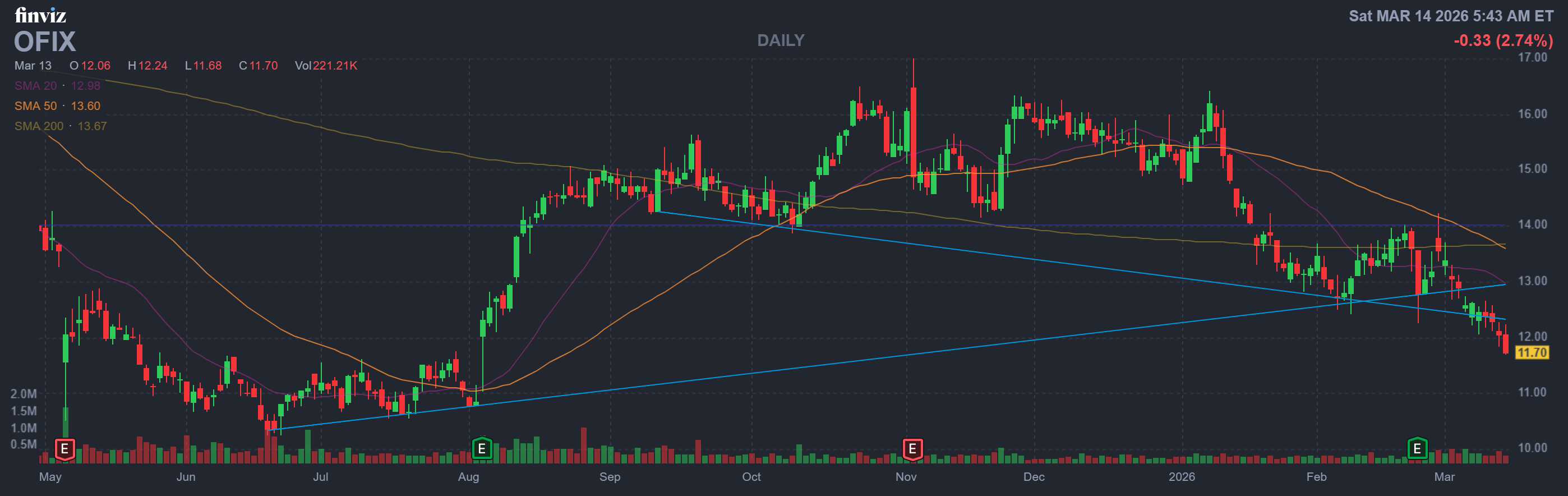
Name: Vickie L. Capps
Position: Director
Transaction Date: 03-09-2026 Shares Bought: 5,000 shares an Average Price Paid of $12.46 for Cost: $62,324
Company: Orthofix Medical Inc. (OFIX)
Orthofix Medical Inc. and its subsidiaries are medical technology companies that operate in the United States, Italy, the United Kingdom, France, Germany, Brazil, and around the world. The Global Spine business produces, sells, and supports bone growth stimulation devices that improve bone fusion. It also designs, develops, and promotes a line of spine fixation implant products for use throughout the spinal column and dental diseases. The Global Limb Reconstruction section provides goods and solutions to the underserved limb reconstruction market, such as deformity correction, limb lengthening, difficult fracture care, and limb preservation. Orthofix Medical Inc. was founded in 1980 and is based in Lewisville, Texas.
Vickie L. Capps has served as a Director of Orthofix Medical Inc. (NASDAQ: OFIX) since March 11, 2025, when she was appointed to the company’s Board of Directors to strengthen governance and strategic oversight. She brings decades of leadership experience in corporate finance and the medical technology sector. Capps previously served as Chief Financial Officer of DJO Global, Inc. from 2002 to 2013, where she helped guide the global orthopedics company through significant growth and operational development. In addition to Orthofix, she has held board roles at several healthcare and biotechnology companies, contributing expertise in finance, strategy, and governance. She is a Certified Public Accountant and earned a BS in Business Administration and Accounting from San Diego State University.
Insomniac Hedge Fund Guy Opinion:
Orthofix Medical Inc. is a small-cap medical device company focused on spine surgery, bone growth therapies, and limb reconstruction products used by orthopedic surgeons. Its portfolio includes spinal implants, biologics, bone growth stimulators, and surgical navigation technology used in complex spine and orthopedic procedures. The company generates about $820M in annual revenue, with the majority coming from its spine segment and bone growth therapy devices.
The moat here is modest. Orthofix competes in the crowded spine and orthopedic implant market against much larger players. Its differentiation mainly comes from niche technologies like bone growth stimulators and navigation systems used in spine surgery, but switching costs are lower than in many other medical device categories. Distribution relationships with surgeons and hospitals matter more than technology lock-in.
Over the past five years, revenue growth has been inconsistent but generally mid-single-digit, with management targeting roughly 6–7% annual sales growth over the next several years. Recurring revenue exists but is limited compared to many med-tech peers since most products are implants or one-time surgical devices rather than consumables or software subscriptions.
Management is led by CEO Massimo Calafiore, who has been focused on integrating prior acquisitions, improving the spine sales channel, and expanding the limb reconstruction business. Operational execution has improved recently, with several quarters of EBITDA margin expansion and progress toward positive free cash flow.
Profitability, however, remains the key issue. Orthofix has produced consistent net losses in recent years, even as adjusted EBITDA improves.
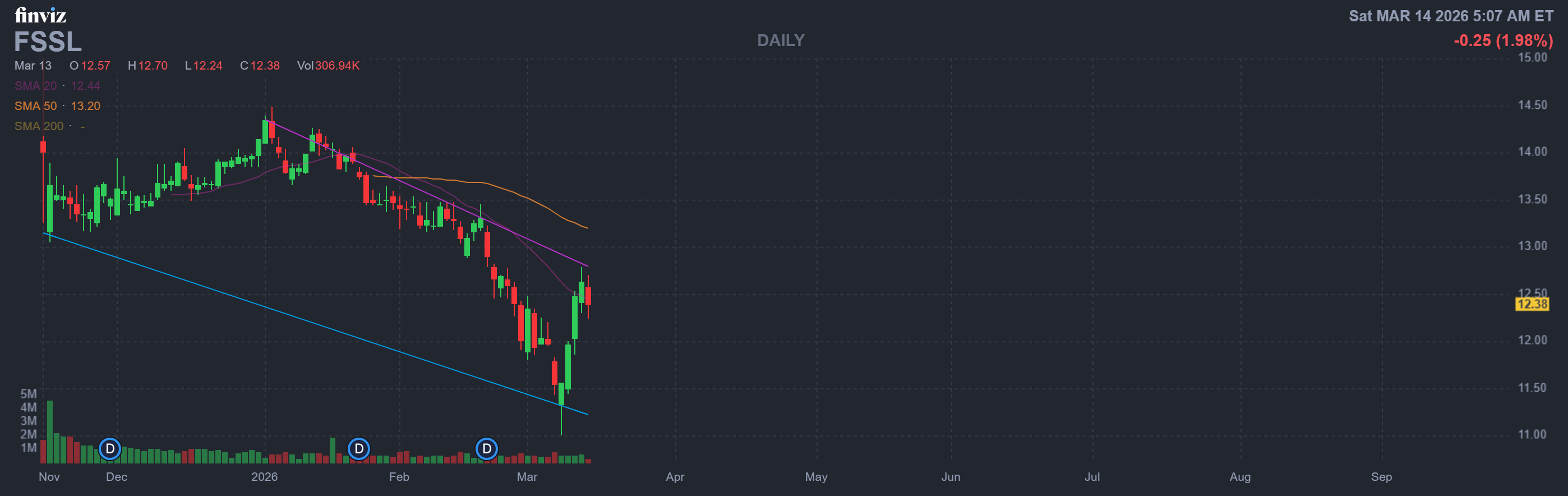
Name: Michael C. Forman
Position: See Remarks
Transaction Date: 03-06-2026 Shares Bought: 40,884 shares an Average Price Paid of $11.83 for Cost: $483,658
Company: FS Specialty Lending Fund (FSSL)
FS Specialty Lending Fund is a US-based closed-end investment fund focused on generating current income and long-term capital appreciation through investments in credit-oriented assets. The fund invests primarily in private and public credit opportunities, including event-driven credit, special situations, and private capital solutions across multiple industries. It was originally structured as a business development company and later transitioned to a diversified credit strategy while providing investors with exposure to middle-market lending opportunities. The company was founded in 2010 in Philadelphia, Pennsylvania, United States.
Michael C. Forman has served as Chairman and Chief Executive Officer of FS Specialty Lending Fund since September 2010, when the fund was established and began operations. He has overseen the company’s strategy as a business development company focused on providing debt financing and capital solutions to middle-market businesses. Forman has also played a key role in the broader FS Investments platform, which he co-founded in 2007, helping expand its presence in alternative asset management. Earlier in his career, he co-founded FB Capital Partners and spent nearly two decades as an attorney in the corporate and securities practice at a Philadelphia law firm before transitioning to investment management and entrepreneurship. He earned a BA from the University of Rhode Island and a JD from Rutgers University.
Insomniac Hedge Fund Guy Opinion:
FS Specialty Lending Fund is essentially a credit vehicle rather than a traditional operating company. The fund invests primarily in private credit, special situations, and event-driven lending opportunities, targeting middle-market borrowers through senior secured loans, bonds, and structured credit investments. The portfolio is now heavily weighted toward first-lien senior secured loans, which represent the majority of holdings and provide relatively defensive positioning within private credit.
The strategy has evolved. The fund originally focused on energy investments but transitioned in 2024 to a broader diversified credit strategy across industries. Today the portfolio emphasizes floating-rate loans and direct lending, which benefit from higher interest rates and can generate strong income yields.
Revenue growth has been somewhat volatile because returns depend on credit markets rather than product sales. Recently, the fund generated about $203M in trailing twelve-month revenue with roughly 5% year-over-year growth, following a strong rebound in 2024. Net investment income improved materially as the portfolio shifted toward higher-yielding loans and more diversified credit exposures.
Recurring revenue is effectively the interest income from the loan portfolio, which represents the majority of investment income. Because many loans are floating rate, income adjusts with interest rates. Net retention metrics aren’t typical for funds like this, but portfolio stability looks reasonable with non-accrual loans under 1% of assets, suggesting manageable credit risk so far.
Management comes from FS Investments, an alternative asset manager focused on private credit and middle-market lending strategies. The fund currently manages about $1.9B in assets and targets a high-income profile for investors.
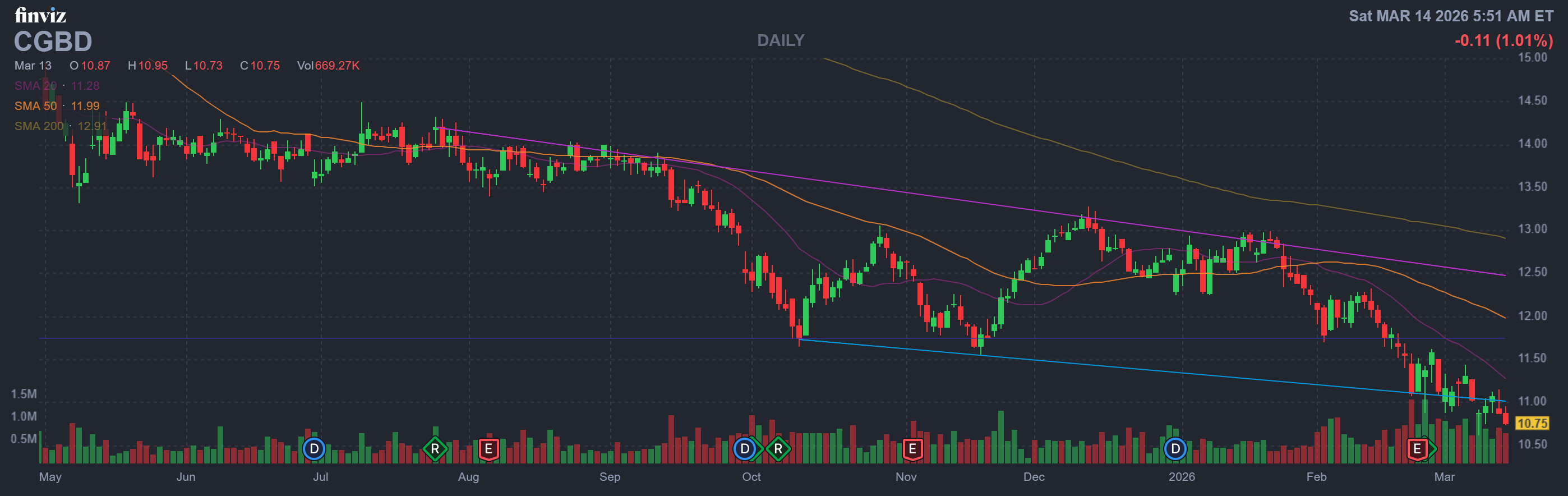
Name: Alex Chi
Position: CEO
Transaction Date: 03-09-2026 Shares Bought: 9,000 shares an Average Price Paid of $10.79 for Cost: $97,127
Company: Carlyle Secured Lending Inc. (CGBD)
Carlyle Secured Lending Inc. is a US-based specialty finance company that provides financing solutions primarily to middle-market companies. Structured as a business development company (BDC), it focuses on generating current income and capital appreciation through investments in secured debt, including first-lien and second-lien senior loans, as well as other credit investments. The company typically lends to businesses backed by private equity sponsors across a variety of industries. It is externally managed by Carlyle Global Credit Investment Management, an affiliate of the global investment firm Carlyle, which supports sourcing and underwriting opportunities. Carlyle Secured Lending Inc. was founded in February 2012 in New York, United States.
Alex Chi has served as Chief Executive Officer of Carlyle Secured Lending Inc. since February 18, 2026, when the company’s Board of Directors appointed him to lead the business following a leadership transition. He joined Carlyle in January 2026 as Deputy Chief Investment Officer of Carlyle Global Credit and Head of Direct Lending, bringing extensive experience in private credit and investment management. Before joining Carlyle, Chi spent more than 30 years at Goldman Sachs, including senior leadership roles in investment banking and asset management, most recently as Co-Head of Private Credit in the Americas and Co-CEO of Goldman Sachs’ affiliated business development companies. He holds a Bachelor of Science degree from the Massachusetts Institute of Technology.
Insomniac Hedge Fund Guy Opinion:
FS Specialty Lending Fund is essentially a credit vehicle rather than a traditional operating company. The fund invests primarily in private credit, special situations, and event-driven lending opportunities, targeting middle-market borrowers through senior secured loans, bonds, and structured credit investments. The portfolio is now heavily weighted toward first-lien senior secured loans, which represent the majority of holdings and provide relatively defensive positioning within private credit.
The strategy has evolved. The fund originally focused on energy investments but transitioned in 2024 to a broader diversified credit strategy across industries. Today the portfolio emphasizes floating-rate loans and direct lending, which benefit from higher interest rates and can generate strong income yields.
Revenue growth has been somewhat volatile because returns depend on credit markets rather than product sales. Recently, the fund generated about $203M in trailing twelve-month revenue with roughly 5% year-over-year growth, following a strong rebound in 2024. Net investment income improved materially as the portfolio shifted toward higher-yielding loans and more diversified credit exposures.
Recurring revenue is effectively the interest income from the loan portfolio, which represents the majority of investment income. Because many loans are floating rate, income adjusts with interest rates. Net retention metrics aren’t typical for funds like this, but portfolio stability looks reasonable with non-accrual loans under 1% of assets, suggesting manageable credit risk so far.
Management comes from FS Investments, an alternative asset manager focused on private credit and middle-market lending strategies. The fund currently manages about $1.9B in assets and targets a high-income profile for investors.
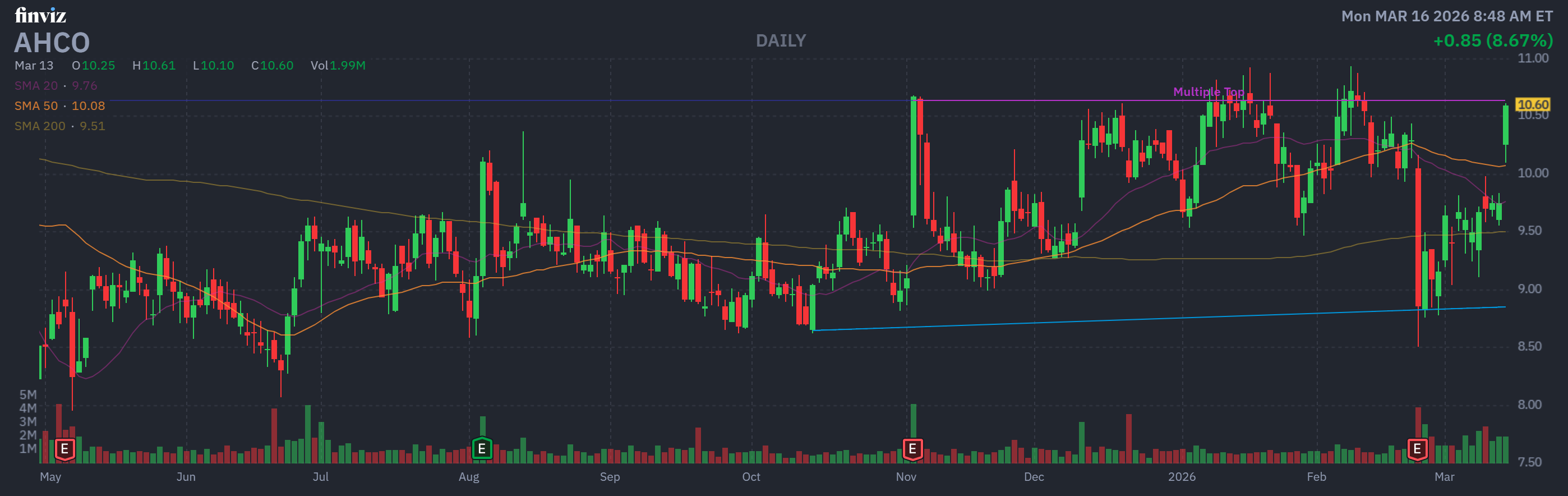
Name: Richard Cashin
Position: 10% Owner
Transaction Date: 03-10-2026 Shares Bought:2,046,691 shares an Average Price Paid of $9.72 for Cost: $19,912,148
Name: Dale B. Wolf
Position: Director
Transaction Date: 02-27-2026 Shares Bought: 8,000 shares an average price paid of $8.96 for a cost of $71,680
Name: Richard W. Rew II
Position: CLO and General Counsel
Transaction Date: 02-26-2026 Shares Bought: 5,000 shares an average price paid of $8.91 for a cost of $44,550
Company: AdaptHealth Corp. (AHCO)
AdaptHealth Corp is a major national provider of home medical equipment (HME) and healthcare services in the United States. Following its Q4 and FY 2025 results (reported Feb 2026), the company is in a transition phase, moving from an acquisition-heavy growth model to an organic, technology-driven model anchored by large “capitated” (fixed-fee) contracts.
-
Richard Cashin is a “10% owner” of AdaptHealth. As of March 2026, his reporting group holds approximately 15.86 million shares, representing an 11.7% stake in the company.
-
Insider Activity: He recently made a significant “insider buy,” purchasing over 2 million shares of AHCO common stock between March 10 and March 12, 2026. This transaction was valued at approximately $20 million.
-
Investment Vehicle: These shares are primarily held through entities associated with One Equity Partners (OEP), specifically OEP AHCO Investment Holdings, VI LLC. Cashin is a member of the investment committee that exercises voting and investment discretion over these securities.
Dale B. Wolf has been a director of AdaptHealth Corp. since November 2019, when he joined the board shortly before the business went public. He continues to play an important governance role and was later named Chair of the Board on July 1, 2024. Wolf has substantial leadership expertise in the healthcare and managed care industries, having previously served as President and CEO of One Call Care Management and CEO of Coventry Health Care. He previously held key management positions at Coventry Health Care, including Vice President of Management, Chief Financial Officer, and Treasurer. He earned a Bachelor of Arts in Mathematics from Eastern Nazarene College and finished the MIT Sloan School Senior Executive Program.
Richard W. Rew II has served as Chief Legal Officer and General Counsel of AdaptHealth Corp. since January 2025, when he also joined the company. In this role, he oversees the company’s legal, regulatory, governance, and compliance functions. Rew brings more than two decades of experience as a public company general counsel, particularly within the life sciences, healthcare, and medical technology sectors. Prior to joining AdaptHealth, he served as Chief Legal Officer and General Counsel at HumanN in 2024 and previously held senior legal leadership roles at companies such as Tabula Rasa Healthcare, IsoPlexis, and Luminex Corporation. He began his career in corporate legal roles and has extensive experience in mergers, acquisitions, and compliance matters. Rew holds a BA from the University of Texas at Austin and a JD from the University of Oklahoma College of Law.
Insomniac Hedge Fund Guy Opinion:
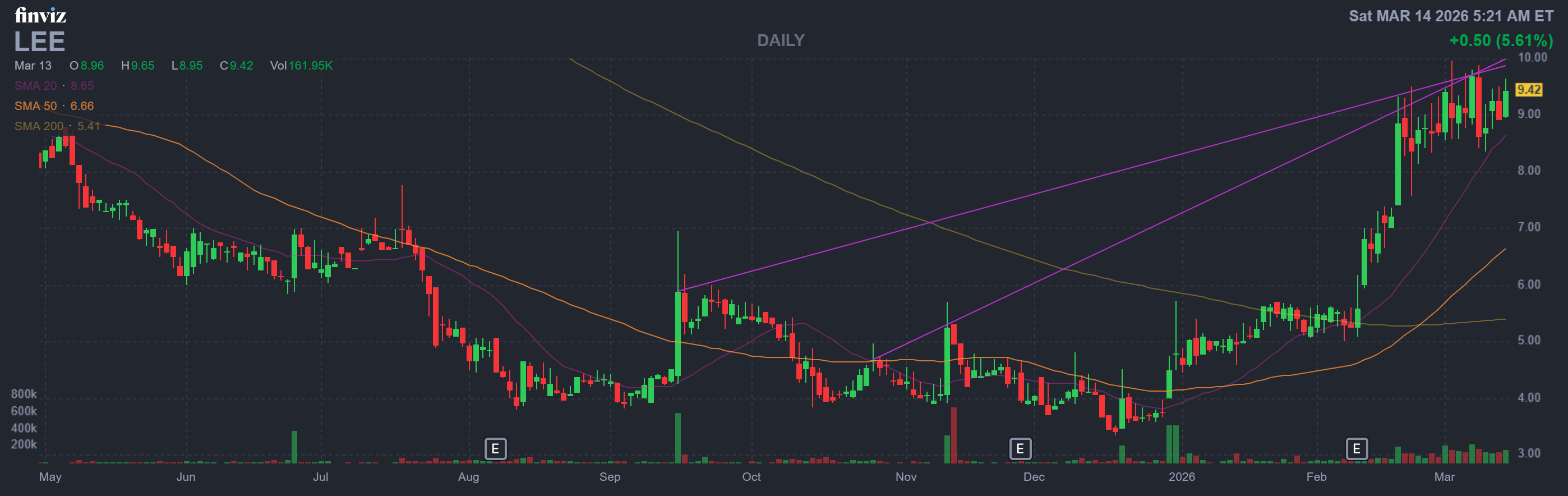
Name: David Henry Hoffmann
Position: Director and 10% Owner
Transaction Date: 03-06-2026 Shares Bought: 74,600 shares an Average Price Paid of $9.16 for Cost: $683,072
Company: Lee Enterprises Inc. (LEE)
Lee Enterprises Incorporated, a digital-first subscription and marketing services company, offers local news, information, and advertising services in the United States. The company offers digital subscription platforms; daily and weekly newspapers; and niche products for national and international news are accessible across digital and print formats through websites and mobile applications. In addition, it offers digital and print subscription services, as well as omni-channel marketing solutions such as digital, print, programmatic, video, and social media campaigns. In addition, the company offers commercial printing, distribution, and other digital services through SaaS content management solution. Lee Enterprises, Incorporated was founded in 1890 and is based in Davenport, Iowa.
David Henry Hoffmann has served as Director and a 10% Owner of Lee Enterprises Inc. since February 5, 2026, when he joined the company’s Board of Directors and was appointed Chairman following the closing of a strategic investment that strengthened the company’s financial position. He brings extensive experience in media, investment management, and corporate leadership, having founded Hoffmann Family of Companies, a global network of businesses operating across numerous industries. Hoffmann is also the founder of DHR Global, an executive search and leadership consulting firm established in 1989, and has built a broad portfolio of media and publishing assets. He earned a Bachelor of Business Administration from the University of Central Missouri and has also received an honorary doctorate from the university.
Insomniac Hedge Fund Guy Opinion:
Lee Enterprises is essentially a legacy newspaper operator trying to reinvent itself as a digital subscription platform. The company owns dozens of local newspapers across the U.S., including major regional titles like the St. Louis Post-Dispatch and Buffalo News. Historically the business relied on print advertising and circulation, but like the rest of the newspaper industry, those revenues have been declining for years.
The strategy now is a full pivot to digital. Today, digital revenue represents about 53–54% of total revenue, up from just 21% in 2020, reflecting aggressive growth in digital subscriptions, digital advertising, and its Amplified Digital marketing agency. The company generated about $562M in revenue in FY2025, with digital revenue nearing $300M. Digital-only subscriptions are growing at roughly 14–16% annually, now producing about $95M in recurring subscription revenue.
The “moat” here is local journalism and regional monopolies—many of Lee’s newspapers are the primary news source in their markets. But the durability of that moat is questionable given competition from social media, local TV, and national digital platforms.
Management, historically led by longtime CEO Kevin Mowbray, has focused on cost cuts, shrinking the print footprint, and reinvesting in digital infrastructure. A recent $50M investment led by media investor David Hoffmann also aims to stabilize the balance sheet and reduce debt costs.
Profitability remains thin. Despite improving digital growth, the company carries significant debt from prior newspaper acquisitions and still faces structural declines in print revenue.
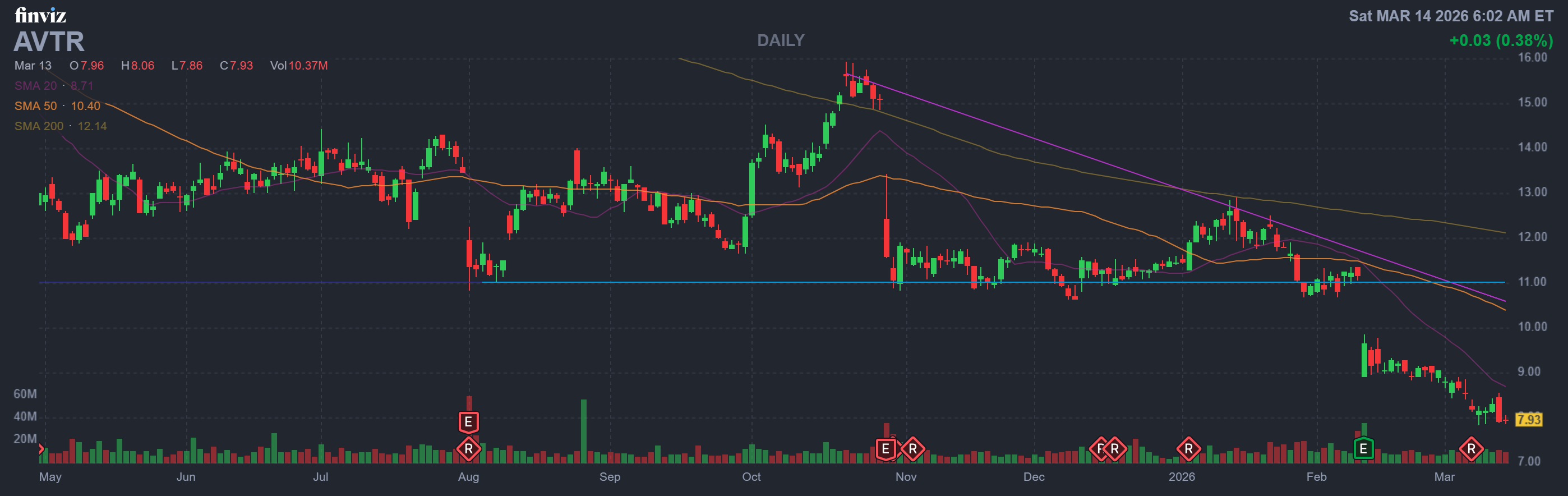
Name: Sanjeev K. Mehra
Position: Director
Transaction Date: 03-10-2026 Shares Bought: 125,000 shares an average price paid of $8.01 for a cost of $1,001,250
Company: Avantor Inc. (AVTR)
Avantor, Inc. provides mission-critical products and services to customers in the biopharma, healthcare, education, and government, advanced technologies, and applied materials industries in the Americas, Europe, Asia, the Middle East, and Africa. The company provides materials and consumables such as purity chemicals and reagents, lab products and supplies, formulated silicone materials, customized excipients, customized single-use assemblies, process chromatography resins and columns, analytical sample prep kits, education and microbiology products, clinical trial kits, and fluid handling tips. It also offers scientific research support services such as DNA extraction, bioreactor servicing, clinical and biorepository, chemical management, cleanroom control, monitoring, maintenance, and sanitization. The company was formed in 1904 and is based in Radnor, Pennsylvania.
Sanjeev K. Mehra has been a Director of Avantor Inc. since December 2025, when he was named to the company’s Board of Directors. In this position, he has substantial experience in private equity, corporate strategy, and capital allocation. Mehra is the Co-Founder and Managing Partner of Periphas Capital LP, a private equity firm that focuses on technology-enabled enterprises in the services, consumer, and industrial sectors. He worked at Goldman Sachs for more than 30 years before launching Periphas Capital. He has also served on the boards of several companies throughout his career. He has a bachelor’s degree in economics from Harvard College and an MBA from the Harvard Business School.
Insomniac Hedge Fund Guy Opinion:
Avantor is a behind-the-scenes supplier to the life sciences industry. The company sells mission-critical laboratory chemicals, reagents, consumables, and production materials used by pharmaceutical companies, biotech firms, hospitals, and research labs. Think solvents, specialty chemicals, tubing systems, and lab supplies that are embedded in research and manufacturing workflows. Revenue is roughly $6.5–6.8B annually today.
The moat is modest but real. Avantor sits in the middle of the life-science supply chain with a huge distribution network (VWR) and long-standing customer relationships with pharma and biotech labs. Once a supplier is approved in regulated manufacturing processes, switching can be inconvenient, which provides some stickiness. Still, this is more of a distribution and supply platform than a technology moat.
The problem recently has been growth. After strong pandemic-era demand, revenues have stalled and even declined slightly over the past two years as biotech funding slowed and customers reduced inventory. Five-year revenue growth has been roughly low-single digits, and recent organic growth has actually been negative.
Recurring or consumable-type products represent the majority of the portfolio because most of Avantor’s offerings are chemicals and lab supplies that must be replenished regularly. That said, pricing power is limited compared with higher-end instrument companies like Waters or Thermo Fisher.
Management has been led by CEO Michael Stubblefield, though the company has been undergoing strategic changes, including divesting its Clinical Services unit and launching cost-reduction initiatives to stabilize margins and debt levels.
Profitability is decent but not elite. Gross margins run roughly low-30%, and EBITDA margins are in the mid-teens.
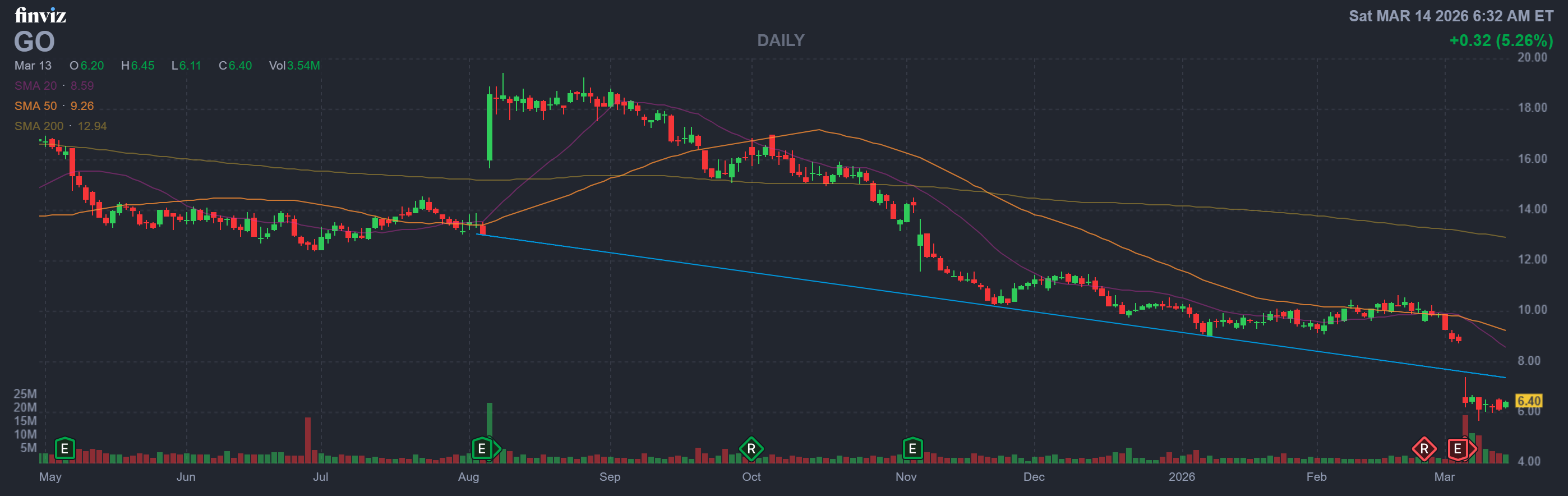
Name: Carey F. Jaros
Position: Director
Transaction Date: 03-10-2026 Shares Bought: 40,000 shares an average price paid of $6.26 for a cost of $250,400
Name: Eric J. Lindberg Jr.
Position: Director
Transaction Date: 03-09-2026 Shares Bought: 275,000 shares an average price paid of $5.98 for a cost of $1,644,500
Name: Jeffrey York
Position: Director
Transaction Date: 03-09-2026 Shares Bought: 120,000 shares an average price paid of $5.82 for a cost of $698,200
Company: Grocery Outlet Holding Corp. (GO)
Grocery Outlet Holding Corp. sells consumables and fresh products through independently operated stores in the United States. It sells perishable category products such as dairy and deli, produce and floral, and meat and seafood. The company also sells non-perishable category items such as groceries, general merchandise, health and beauty care, frozen foods, and beer and wine. The company has stores in California, Washington, Oregon, Pennsylvania, Tennessee, Idaho, Maryland, Nevada, North Carolina, New Jersey, Georgia, Ohio, Alabama, Delaware, Kentucky, and Virginia. The company was formed in 1946 and is based in Emeryville, California.
Carey F. Jaros has been a Director at Grocery Outlet Holding Corp. since September 2020, when she was named to the company’s board. She has over 20 years of leadership expertise in strategy, finance, and consumer products, and she contributes to board governance by serving on board committees such as remuneration. Jaros is also President and CEO of GOJO Industries, which manufactures the PURELL brand, and has previously held prominent positions such as Chief Operating Officer and Chief Strategy Officer within the company. Earlier in her career, she worked in strategy and consulting, including a decade at Bain and Company. He has a bachelor’s degree in public policy from Brown University and an MBA from Harvard Business School.
Eric J. Lindberg Jr. has been a Director of Grocery Outlet Holding Corp. since January 2006. He joined the company in 1996 and has held various high leadership positions during his long employment, including Co-Chief Executive Officer from January 2006 to December 2018 and CEO from January 2019 to December 2022. In January 2023, he became Chairman of the Board, continuing to give strategic supervision and direction to the company’s board. Lindberg is well-known for transforming Grocery Outlet into a publicly traded, cheap grocery retailer and dramatically expanding its store network and revenue during his CEO tenure. He earned a Bachelor of Arts in Economics from Hampden-Sydney College.
Jeffrey R. York has been a Director at Grocery Outlet Holding Corp. since November 2010, when he joined the board. He has substantial leadership expertise in the retail and grocery industry. York previously served as Co-Chief Executive Officer and President of Farm Boy Inc. from 2009 until 2020, after which he became a Partner at Farm Boy Stores. He has also worked as a Special Advisor for Sobeys Inc., one of Canada’s leading food stores, and is currently the Chief Executive Officer of Altea Active, a fitness and wellness company. In addition to his business duties, he has served on boards in a variety of industries, bringing knowledge in retail operations and corporate governance. He has a bachelor’s degree from Princeton University.
Insomniac Hedge Fund Guy Opinion:
Grocery Outlet is a discount grocery chain built around a simple idea: buy excess or closeout inventory from food manufacturers and sell it cheap. The company operates more than 500 stores across about 16 U.S. states using an unusual independent operator model, where store managers run locations almost like franchisees while corporate handles sourcing and logistics.
The moat is unconventional. Grocery Outlet’s advantage is its opportunistic buying network—relationships with thousands of suppliers willing to offload excess inventory, packaging changes, or discontinued products. That creates constantly changing shelves and price points often 40–70% below traditional grocers, which keeps value-focused customers coming back. The operator model also lowers corporate labor risk and aligns incentives at the store level.
Growth has been solid but not spectacular. Revenue has grown from roughly $3.1B in 2021 to about $4.7B in 2025, implying high-single-digit growth largely driven by new store openings rather than same-store sales. Comparable store growth has generally been low single digits, meaning expansion is doing most of the heavy lifting.
Recurring revenue isn’t really a concept here—this is a retail model—so retention shows up through traffic and transaction growth rather than subscriptions.
Management recently brought in CEO Jason Potter, a grocery industry veteran, to push national expansion and operational improvements.
Profitability is decent but thin, as expected in grocery retail. Gross margins hover around ~30%, while operating profitability fluctuates due to store growth and restructuring costs.
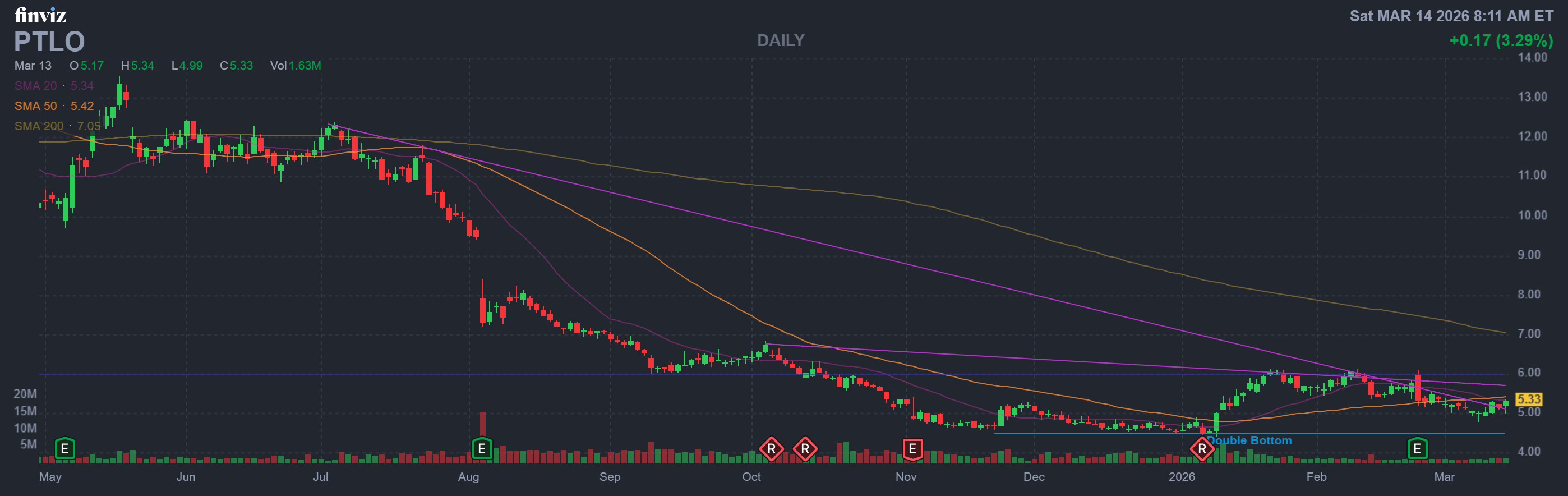
Name: Lee Eugene I Jr.
Position: Director
Transaction Date: 03-13-2026 Shares Bought: 286,000 shares an average price paid of $5.18 for a cost of $1,481,480
Company: Portillo’s Inc. (PTLO)
Portillo’s Inc. owns and operates fast casual restaurants around the United States. The company serves Chicago-style hot dogs and sausages, Italian beef sandwiches, char-grilled burgers, chopped salads, crinkle-cut and cheese fries, handcrafted chocolate cakes, and chocolate cake shakes. It also maintains a food van called The Beef Bus, as well as a ghost kitchen. In addition, the company offers delivery services via its app and website, as well as third-party delivery systems. Additionally, it sells gift cards. Portillo’s Inc. was formed in 1963 and is headquartered in Oak Brook, Illinois.
Eugene I. Lee Jr. has served as Director at Portillo’s Inc. since June 2025. He brings extensive leadership experience in the restaurant industry and corporate governance. Lee previously served as Chief Executive Officer of Darden Restaurants from 2015 to 2022 and later as Chairman of its board from 2021 to 2023, where he helped drive significant revenue growth and operational improvements. Earlier in his career, he held several senior leadership roles at RARE Hospitality International, including President and Chief Operating Officer, before joining Darden through its acquisition of the company. In addition to his role at Portillo’s, he also serves as Independent Board Chair of Advance Auto Parts. He holds an MBA from Suffolk University in Boston.
Insomniac Hedge Fund Guy Opinion:
Portillo’s is a fast-casual restaurant chain built around Chicago street food—Italian beef sandwiches, hot dogs, burgers, and shakes. The concept is culturally strong in the Midwest, and management’s growth thesis is simple: take a beloved regional brand and expand it nationally. The company currently generates roughly $730M in annual revenue with modest growth as new restaurants open in Sunbelt markets like Texas and Arizona.
The moat here is brand and unit economics rather than technology. Portillo’s restaurants tend to produce high average unit volumes and strong restaurant-level EBITDA margins above 20%, which is impressive in fast casual. However, the brand recognition outside the Midwest is still developing, and expansion markets have been uneven.
Revenue growth over the past five years has been volatile but generally mid-single-digit, largely driven by opening new locations rather than strong same-store traffic growth. The business has very little recurring revenue in the SaaS sense—it’s a traditional restaurant model dependent on foot traffic and menu pricing. Same-restaurant sales have been weak recently, even declining in some quarters as transaction volumes slipped.
Management has gone through some turbulence. The company has undergone leadership changes and a strategic reset to slow expansion and improve restaurant performance before aggressively opening more stores.
Profitability is decent but not exceptional. Operating margins sit in the high-single digits, with net margins around 3–4%, reflecting rising food, labor, and occupancy costs across the industry.
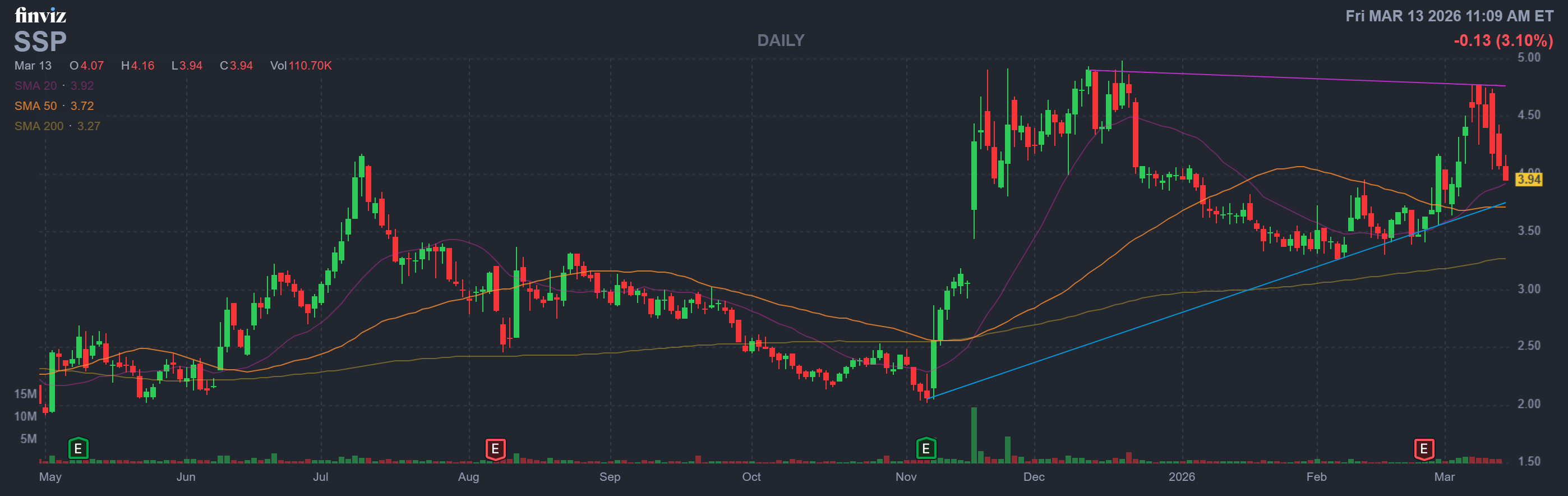
Name: Margaret Scripps Klenzing
Position: 10% Owner
Transaction Date: 03-06-2026 Shares Bought: 159,515 shares an Average Price Paid of $4.64 for Cost: $740,644
Company: E.W. Scripps Co (SSP)
The E.W. Scripps Company, along with its subsidiaries, is a media conglomerate that operates a portfolio of local television stations, national news, and entertainment networks across the United States. It operates through two segments: Local Media and Scripps Networks. The Local Media division operates broadcast television stations and related digital activities as well as produces over-the-air news, information, sports, and entertainment content. Its Scripps Networks division owns major news sources, Scripps News and Court TV, as well as entertainment properties. The firm also runs the Scripps National Spelling Bee, which is an educational event. It provides cable and satellite services to its customers and companies. The E.W. Scripps Company was founded in 1878 and has its headquarters in Cincinnati, Ohio.
Margaret Scripps Klenzing has been a 10% owner of E.W. Scripps Co. since 2013, when beneficial ownership documents revealed her large stake in the company via the Scripps family ownership structure. She is a member of the Scripps family, which has historically held a significant investment in the media corporation, and she reports stock transactions as an insider shareholder via SEC filings. While she is not active in day-to-day operations, her ownership accounts for a significant share of the company’s voting power.
Insomniac Hedge Fund Guy Opinion:
E. W. Scripps Company is a traditional broadcast media company that owns local television stations and national TV networks such as Ion, Bounce, and Scripps News. The business is split mainly between Local Media (local TV stations and advertising) and Scripps Networks, which distributes national networks through cable, satellite, and connected-TV platforms. Annual revenue is roughly $2.2B, largely tied to advertising and distribution fees.
The moat is weak compared with most media assets. Local TV stations still benefit from regulatory licensing and political advertising cycles, but structurally the industry faces long-term pressure from streaming and digital ad platforms. Scripps has tried to offset this by expanding free ad-supported TV (FAST channels) and live sports distribution.
Revenue growth has been modest and inconsistent. Over the past few years, growth has averaged roughly low-single digits, heavily influenced by political advertising cycles that boost election-year results. Unlike software or data companies, Scripps has very little recurring revenue; most revenue depends on advertising demand and carriage fees, which can fluctuate with the economy and media trends.
Management, led by CEO Adam Symson, has focused on cost cuts, debt refinancing, and restructuring. The company recently launched a transformation plan targeting $125–$150M in annual EBITDA improvement by 2028, mainly through efficiency initiatives and technology adoption.
Profitability remains the problem. Despite billions in revenue, Scripps has struggled with losses recently, including about $164M in trailing-twelve-month losses, reflecting advertising volatility and high leverage.
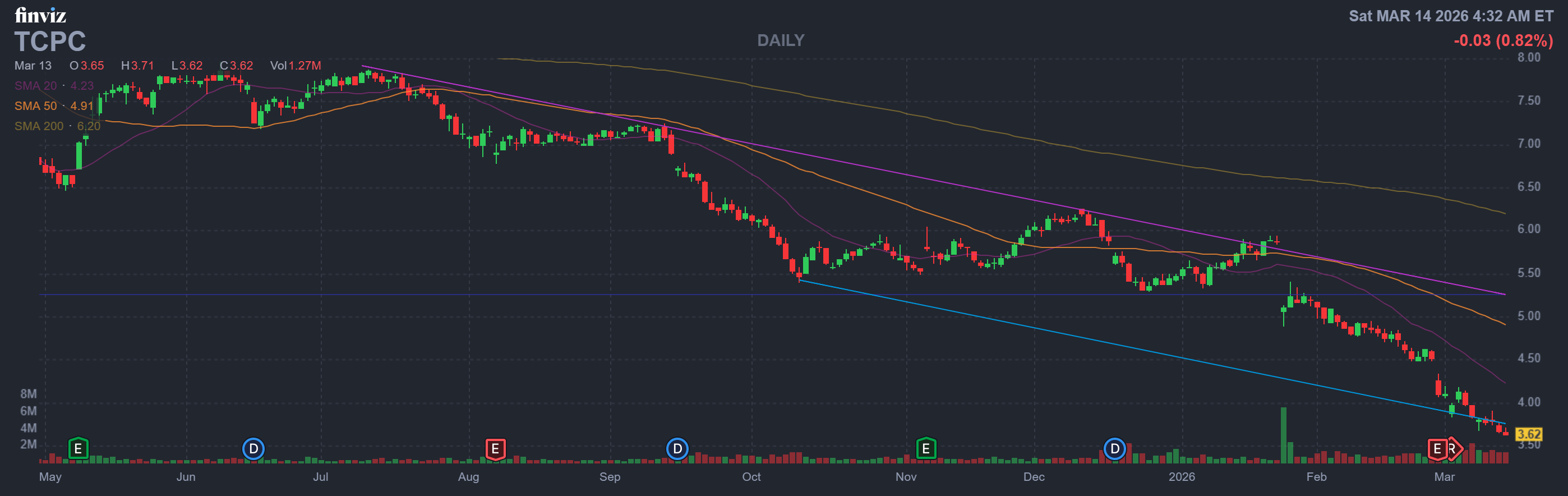
Name: August Daniel Worrell
Position: Co-Chief Investment Officer
Transaction Date: 03-06-2026 Shares Bought: 80,000 shares an Average Price Paid of $3.82 for Cost: $305,600
Company: Blackrock TCP Capital Corp. (TCPC)
BlackRock TCP Capital Corp. is a specialized finance company established in the United States that focuses on direct lending and credit solutions for middle-market and small enterprises. The company primarily invests in senior secured loans, debt securities, and other financing instruments, with the goal of generating high total returns from current income and capital appreciation while stressing principal protection. TCPC operates as a publicly traded business development company governed by the Investment Company Act of 1940 and is externally managed by a BlackRock, Inc. advisor. Its investment strategy concentrates on companies with established market positions and significant competitive advantages across a wide range of industries. BlackRock TCP Capital Corp was created in 2012.
August Daniel Worrell has been Co-Chief Investment Officer of BlackRock TCP Capital Corp. since November 6, 2024, when the business announced leadership changes and nominated him to the position alongside Phil Tseng. Worrell formerly worked as a senior investment professional and Managing Director for BlackRock’s U.S. Private Capital platform, where he focused on direct lending and special-situations strategies. He is in charge of the firm’s investment process, which includes evaluating, structuring, and executing private credit investments for middle-market companies. Before joining BlackRock via Tennenbaum Capital Partners, he had senior investment positions, including a high-yield portfolio manager. Worrell has an MBA from Columbia University and a BS from California State University, Northridge.
Insomniac Hedge Fund Guy Opinion:
BlackRock TCP Capital Corp is a business development company (BDC) that provides private credit—primarily senior secured loans—to U.S. middle-market companies. The firm invests mainly in floating-rate loans and mezzanine debt, earning interest income from a diversified portfolio of borrowers across sectors like software, financial services, and consumer businesses. As of 2025 the portfolio had roughly $1.7–$1.9B in investments, mostly first-lien or senior secured loans.
The “moat” is limited. Like most BDCs, TCPC competes in a crowded private credit market. Its main advantage is access to sourcing and underwriting resources through the broader BlackRock credit platform and its advisor, Tennenbaum Capital Partners. Still, underwriting discipline matters far more than scale in this business.
Revenue and investment income have grown modestly over the past several years, with annual revenue reaching about $259M in 2024 before weakening more recently as credit conditions tightened. Because the company earns interest on loans, nearly all revenue is recurring interest income, though it fluctuates with credit performance and interest rates.
Recent performance has been rough. In 2025 the company reported $104M in adjusted net investment income, but asset quality issues drove large portfolio write-downs and pushed NAV per share down to about $7.07 by the end of 2025. Several troubled portfolio companies triggered markdowns and raised concerns about underwriting quality.
Management is led by CEO Philip Tseng, who has focused on rotating the portfolio toward first-lien senior loans and improving diversification.