
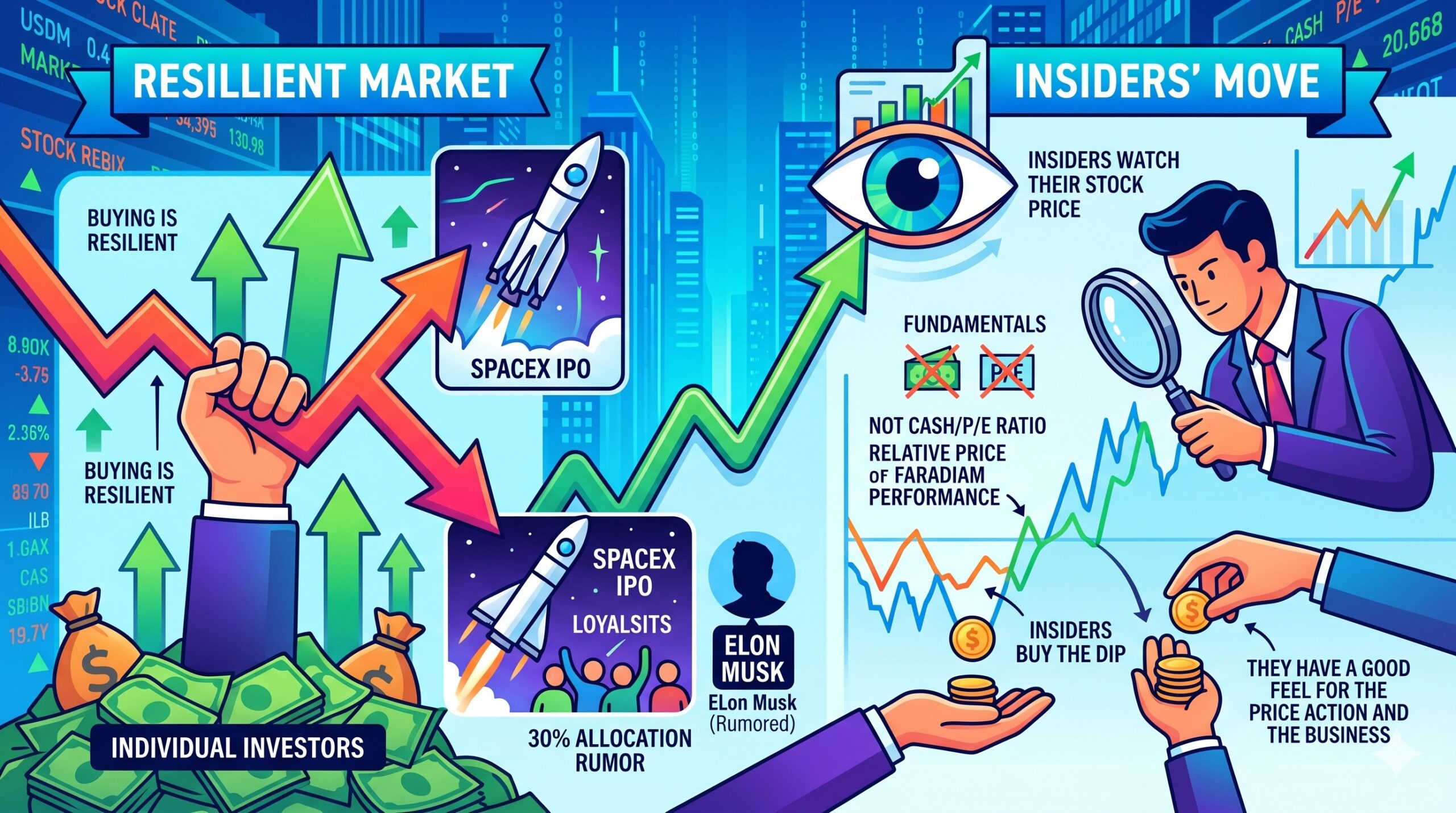
This market attempts to go down but the buying is resilient. One has to believe that the individual investors has so much more influence in this era than in the past. Just look at the allocation Elon Musk is rumored to be giving the loyalists. Individual investors are rumored to be getting 30%,of the upcoming Space X IPO, an unprecedented amount.
Insiders continue to nibble at stocks that could be classified as value stock, not so much because of their fundamentals, but more based on performance. Insiders buy the dip, not so much the cash flow or the P.E. ratios but more the relative price performance. Of course no one watches their stock price more assiduously than insiders. They do have a good feel as well as “inside” information. Let’s just leave it ‘they have a good feel for the price action and the business’.
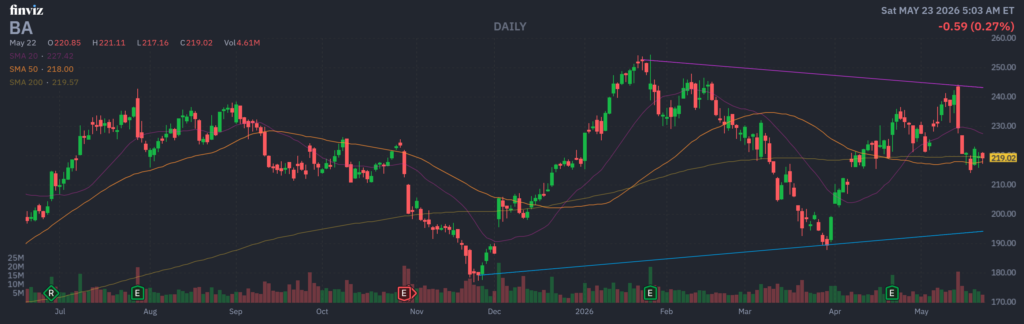
Name: Bradley D. Tilden
Position: Director
Transaction Date: 05-20-2026 Shares Bought: 1,370shares an average price paid of $218.50 for Cost: $299,345
Company: Boeing Co (BA)
Commercial jetliners, military aircraft, satellites, missile defense, human space flight and launch systems, and services are all designed, developed, manufactured, sold, serviced, and supported globally by The Boeing Company and its subsidiaries. The business is divided into three segments: Global Services, Defense, Space & Security, and Commercial Aircraft. Research, development, manufacturing, and modification of manned and unmanned military aircraft and weapons systems; strategic defense and intelligence systems, including strategic missile and defense systems, command, control, communications, computers, intelligence, surveillance and reconnaissance, cyber and information solutions, and intelligence systems; and satellite systems, including government and commercial satellites and space exploration, are all part of the Defense, Space & Security segment. Founded in 1916, the Boeing Company is headquartered in Arlington, Virginia.
Bradley D. Tilden has served as a Director of The Boeing Company since January 2021, when he joined the company’s Board of Directors following his retirement as Chairman and Chief Executive Officer of Alaska Air Group. Tilden spent nearly three decades at Alaska Air after originally joining the company in 1991, serving as CEO from 2012 to 2021 and Chairman from 2014 to 2021. He brings extensive experience in aviation operations, finance, and corporate leadership through his long career in the airline industry. Tilden earned a bachelor’s degree in accounting from Pacific Lutheran University and an MBA from the University of Washington.
Insomniac Hedge Fund Guy Opinion: Boeing is one of the most important aerospace companies in the world, building commercial aircraft, defense systems, and space technology. The business is effectively a global duopoly with Airbus in large commercial jets, which should make it an incredible business. Instead, the last several years have been dominated by self-inflicted operational failures, safety issues, and execution problems.
The moat is still enormous. Airlines cannot easily replace Boeing, and certification barriers in aerospace are massive. Backlogs stretch years into the future, giving the company long-term revenue visibility. Defense and services also provide diversification, though commercial airplanes remain the key profit driver.
Revenue growth over the past five years has been ugly because of the 737 MAX crisis, pandemic disruptions, supply-chain problems, and manufacturing setbacks. The company is still rebuilding production consistency. Unlike software companies, Boeing does not have meaningful recurring revenue; most sales are tied to aircraft deliveries, maintenance, and long-cycle contracts.
Management has spent the last few years focused less on growth and more on repairing credibility with regulators, airlines, and investors. CEO Kelly Ortberg inherited a business where operational discipline matters far more than financial engineering.
Profitability remains far below historical levels. Before the MAX crisis, Boeing generated strong margins and enormous free cash flow. Today, the story is balance-sheet repair, production stabilization, and restoring trust.
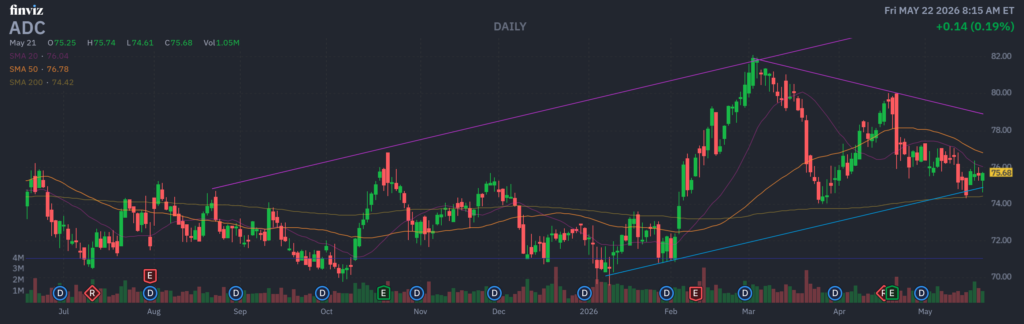
Name: John Rakolta Jr
Position: Director
Transaction Date: 05-15-2026 Shares Bought: 20,000 shares an average price paid of $74.57 for Cost: $1,491,400
Company: Agree Realty Corp (ADC)
Agree Realty Corporation is a publicly traded real-estate investment trust. The firm is rethinking retail by acquiring and developing properties that are net leased to industry-leading, omni-channel retailers. As of December 31, 2025, the company owned and operated a portfolio of 2,674 properties throughout all 50 states, totaling about 55.5 million square feet of gross leasable area. The company’s common stock is listed on the New York Stock Exchange. Agree Realty Corporation was founded in 1971 and is headquartered in Royal Oak, Michigan, USA.
John Rakolta Jr. has been a Director at Agree Realty Corp. since May 2025, when he was elected to the company’s Board of Directors. Rakolta is a former United States Ambassador to the United Arab Emirates and the long-time Chairman and CEO of Walbridge, one of the largest privately held construction and engineering corporations in the United States, which he joined in 1971. He has decades of experience in construction, real estate development, infrastructure, and global company leadership. Rakolta received a bachelor’s degree in civil engineering from Marquette University and later pursued executive education at Harvard Business School.
Insomniac Hedge Fund Guy Opinion: Agree Realty is one of the cleaner stories in net-lease real estate. The company acquires and develops single-tenant retail properties leased to large national operators like Walmart, Tractor Supply, Dollar General, and Home Depot. Unlike lower-quality retail landlords chasing dying strip malls, Agree focuses heavily on necessity-based retail and investment-grade tenants.
The moat is underwriting discipline and tenant quality. Net-lease REITs look simple until the economy weakens and weak tenants stop paying rent. Agree has avoided much of that pain by concentrating on recession-resistant retailers and maintaining a conservative balance sheet. Occupancy consistently sits near 99%, which is exactly what you want in this business.
Over the past five years, revenue growth has generally been strong for a REIT, driven by aggressive acquisitions and development activity. Nearly all revenue is recurring because leases are long term and contractual, often running 10–20 years with built-in rent escalators. Tenant retention and cash-flow visibility are excellent, even if traditional SaaS-style net revenue retention metrics do not apply here.
Management, led by CEO Joey Agree, has built credibility with investors through disciplined capital allocation and steady dividend growth. The company has also benefited from maintaining lower leverage than many peers, giving it flexibility during tougher financing environments.
Profitability and AFFO growth have remained solid despite rising interest rates, which is important because many REITs struggled when capital costs surged.
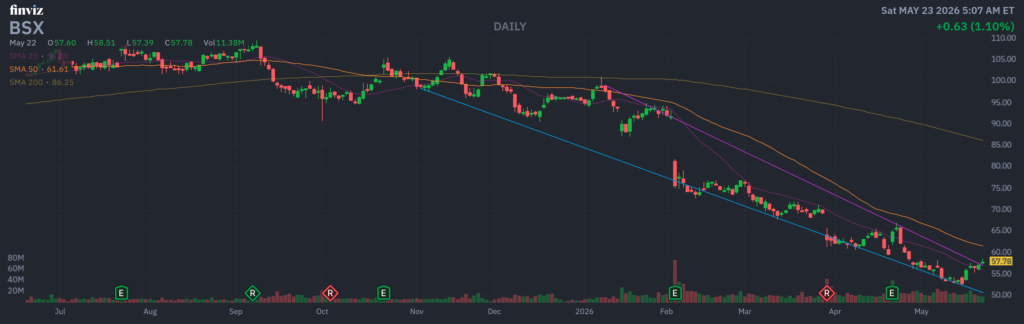
Name: Edward J. Ludwig
Position: Director
Transaction Date: 05-20-2026 Shares Bought: 3,580 shares an average price paid of $56.68 for Cost: $202,914
Name: Cheryl Pegus
Position: Director
Transaction Date: 05-20-2026 Shares Bought: 1,770shares an average price paid of $56.49 for Cost: $99,987
Name: David C. Habiger
Position: Director
Transaction Date: 05-19-2026 Shares Bought: 4,450 shares an average price paid of $56.43 for Cost: $251,098
Company: Boston Scientific Corp (BSX)
Boston Scientific Corporation develops, produces, and markets medical devices for use in a variety of interventional medical specialties around the world. The company operates in two segments: MedSurg and Cardiovascular. It provides devices to diagnose and treat a variety of gastrointestinal problems, including resolution clips, biliary stent systems, stents, and electrocautery improved delivery systems, as well as SpyGlass, which are single-use scopes used for diagnostic and therapeutic treatments in the pancreaticobiliary system. The company also offers technology for identifying and treating a variety of heart ailments and irregularities, including WATCHMAN FLX, a left atrial appendage closure (LAAC) device. The company was established in 1979 and is based in Marlborough, Massachusetts.
Edward J. Ludwig has served as a Director of Boston Scientific Corp. since April 2013. Ludwig is the former Chairman, President, and Chief Executive Officer of Becton, Dickinson and Company, where he spent more than three decades after joining the company in 1979 and served as CEO from 2000 to 2011. He brings extensive experience in global healthcare, medical technology, operations, and corporate strategy through his leadership roles across the healthcare industry. Ludwig earned a bachelor’s degree in biology from The College of the Holy Cross and an MBA from Columbia Business School.
Cheryl Pegus has served as a Director at Boston Scientific Corporation since February 2025, when she was elected to the company’s Board of Directors. Pegus is a physician executive and healthcare technology leader with extensive experience across digital health, pharmaceuticals, and consumer healthcare, including senior leadership roles at Walgreens Boots Alliance, Walmart Health, and Cambia Health Solutions. She has also served as Executive Vice President and Chief Medical Officer at several major healthcare organizations, helping drive innovation in patient care and health technology. Pegus earned a medical degree from Weill Cornell Medicine and a master’s degree in public health from Columbia University.
David C. Habiger has served as a Director at Boston Scientific Corp. since February 2024, when he was elected to the company’s Board of Directors. Habiger is an experienced technology and media executive who previously served as Chief Executive Officer of J.D. Power and as President and CEO of NDS Group, a global software and digital television technology company. He has also held senior leadership roles at Sonic Solutions and NBC Universal, bringing extensive expertise in digital transformation, software, data analytics, and global business operations. Habiger earned a bachelor’s degree in business administration from St. Norbert College and an MBA from the University of Chicago Booth School of Business.
Insomniac Hedge Fund Guy Opinion: Boston Scientific is one of the best-run large-cap medical device companies in the market today. The company develops minimally invasive devices used in cardiology, electrophysiology, neuromodulation, urology, and endoscopy. Unlike slower-growing medtech peers, Boston Scientific has consistently gained share in faster-growing categories like pulsed field ablation, structural heart, and pain management.
The moat comes from physician relationships, clinical data, regulatory approvals, and the sheer complexity of integrating devices into hospital systems. Once doctors are trained on a platform and hospitals standardize purchasing, switching becomes difficult. This creates sticky demand and strong pricing power in specialized procedures.
Over the last five years, revenue growth has averaged roughly 8–10% annually, well above many diversified medtech peers. A meaningful portion of revenue is recurring because devices are repeatedly used in procedures rather than sold as one-time capital equipment. Procedure growth, aging populations, and rising cardiovascular disease continue to provide long-term tailwinds.
CEO Mike Mahoney has executed exceptionally well for nearly a decade, focusing on innovation, tuck-in acquisitions, and high-growth therapeutic categories instead of empire building. Management deserves significant credit for turning BSX from a mediocre operator into a premium-growth medtech company.
Profitability has steadily improved, with operating leverage expanding as higher-margin businesses scale. Free cash flow generation remains strong despite heavy R&D investment.
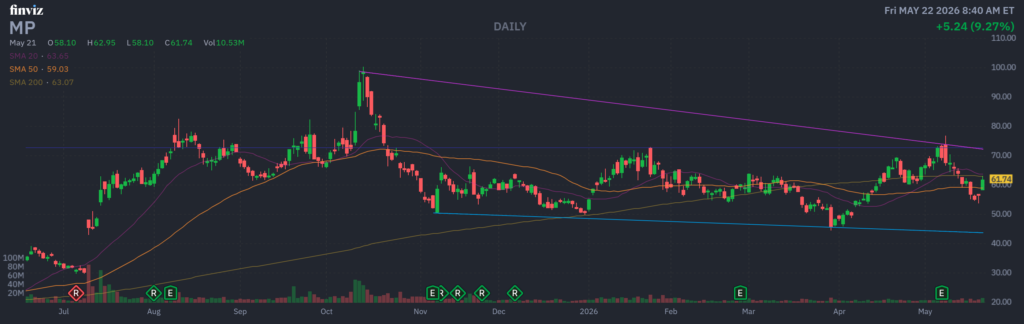
Name: Michael Stuart Rosenthal
Position: Chief Operating Officer
Transaction Date: 05-20-2026 Shares Bought: 17,000 shares an average price paid of $56.62 for Cost: $962,540
Company: MP Materials Corp. (MP)
MP Materials Corp. produces rare earth materials and magnetic products in the Western Hemisphere. The company operates through its Materials and Magnetics segments, focusing on the mining, processing, and manufacturing of critical materials used in advanced technologies. MP Materials owns and operates the Mountain Pass Rare Earth Mine and processing facility in California, one of the largest rare earth resources in North America. The company also produces magnetic precursor materials and manufactures NdFeB permanent magnets used in electric vehicles, renewable energy systems, electronics, and defense applications. Founded in 2017, MP Materials is headquartered in Las Vegas, Nevada.
Michael Stuart Rosenthal has been Chief Operating Officer of MP Materials Corp. since June 2024. He joined the firm in 2020 and previously worked as Executive Vice President of Operations, overseeing the refurbishment and expansion of the Mountain Pass rare earth mining and processing facilities in California. Prior to joining MP Materials, Rosenthal had operational and engineering leadership positions in the mining and industrial sectors, gaining substantial experience in large-scale processing and manufacturing operations. He holds a bachelor’s degree in metallurgical engineering from the Colorado School of Mines.
Insomniac Hedge Fund Guy Opinion: MP Materials is essentially America’s flagship rare earth story. The company owns and operates the Mountain Pass mine in California, one of the only major rare earth mining and processing assets in the Western world. Rare earth materials are critical for electric vehicles, wind turbines, robotics, and defense systems because they are used in permanent magnets. The strategic angle here is simple: the U.S. and its allies want a non-Chinese supply chain.
The moat is geopolitical as much as operational. China dominates global rare earth processing, and MP is one of the few scaled Western alternatives. That strategic importance has attracted government support and long-term customer interest. The challenge, however, is that mining and processing are cyclical, capital intensive, and heavily dependent on commodity pricing.
Revenue growth over the last five years has been volatile rather than consistently compounding. The company benefited enormously from strong rare earth prices in 2021–2022, but weaker pricing has pressured more recent results. Unlike software or life-science businesses, MP has very little recurring revenue; results are driven mostly by production volumes and commodity prices. Net retention metrics are therefore not especially meaningful here.
Management, led by CEO James Litinsky, deserves credit for transforming Mountain Pass into a strategically relevant U.S. asset while pushing downstream into magnet manufacturing. The long-term vision is vertically integrated rare earth production in America.
Profitability has swung with rare earth pricing cycles. Margins exploded during peak pricing periods and compressed sharply afterward, reminding investors this is still fundamentally a commodity business.
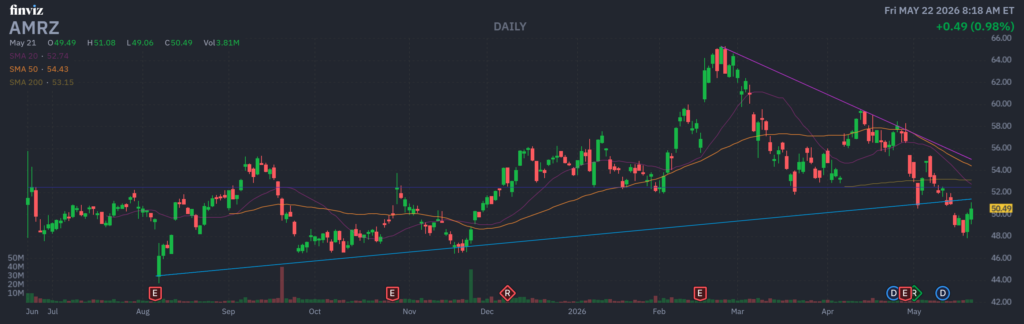
Name: Jan Philipp Jenisch
Position: Chairman & CEO
Transaction Date: 05-19-2026 Shares Bought: 19,001 shares an average price paid of $49.39 for Cost: $938,451.
Company: Amrize Ltd (AMRZ)
Amrize AG provides building solutions for the infrastructural, commercial, and residential construction markets in North America. It operates in two segments: building materials and building envelope. The Building supplies division provides cement, aggregates, ready-mix concrete, asphalt, and other building supplies. The Building Envelope division offers innovative roofing and wall systems, such as single-ply membranes, insulation, shingles, sheathing, waterproofing, and protective coatings, as well as adhesives, tapes, and sealants. The company was previously known as Holcim North America Finance Ltd before changing its name to Amrize AG in December 2013. Amrize AG was established in 2023 and is headquartered in Zug, Switzerland.
Jan Philipp Jenisch has been the Chairman and CEO of Amrize Ltd. since 2025, when the firm was spun off from Holcim’s North American business to become an independent publicly traded company. Before joining Amrize, Jenisch was CEO of Holcim from 2017 to 2024 and Chairman of Holcim from 2023 to 2025, where he helped convert the firm into a global leader in sustainable and creative construction solutions. Prior to joining Holcim, he was CEO of Sika AG from 2012 to 2017. Jenisch received her MBA from the University of Fribourg in Switzerland after studying business in both Switzerland and the United States.
Insomniac Hedge Fund Guy Opinion: Amrize is the newly spun-off North American building materials business from Holcim, focused on cement, aggregates, ready-mix concrete, roofing, and infrastructure products. The company is essentially a pure-play bet on North American construction spending, infrastructure modernization, data centers, manufacturing reshoring, and eventually a housing recovery.
The moat is scale and local market density. Cement is a brutally hard business to disrupt because plants are expensive, heavily regulated, and transportation costs matter. Amrize operates more than 1,000 sites across the U.S. and Canada, giving it strong regional advantages and pricing power in key markets.
Financially, the business has actually been impressive. Revenue reached roughly $11.7B in 2024, with a 13% CAGR since 2021, while adjusted EBITDA grew even faster at 16% CAGR. EBITDA margins around 27% are very strong for a heavy materials company.
Recurring revenue is lower than software-style businesses, but roofing, repair, refurbishment, and infrastructure maintenance provide steadier demand than investors usually assume. The company also has a long M&A history, completing dozens of acquisitions over the past several years.
Management is led by Jan Jenisch, the former Holcim CEO who engineered the spin-off. Investors generally view him as a disciplined operator with strong capital allocation instincts.
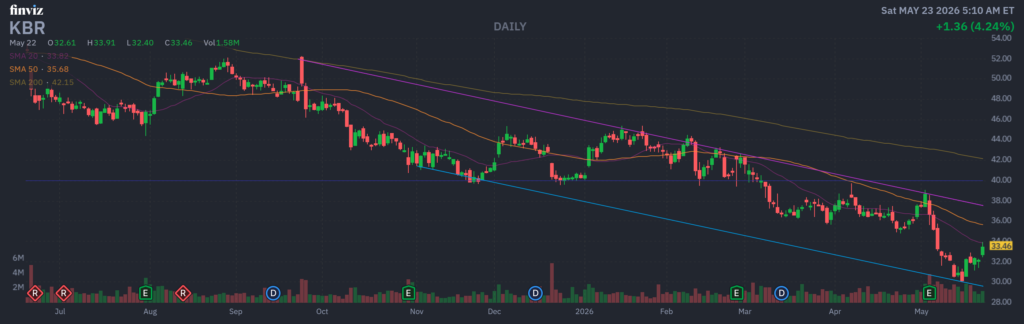
Name: Carlos A. Sabater
Position: Director
Transaction Date: 05-19-2026 Shares Bought: 14,500 shares an average price paid of $32.47 for Cost: $470,815
Name: Jack B. Moore
Position: Director
Transaction Date: 05-20-2026 Shares Bought: 4,000 shares an average price paid of $31.44 for Cost: $125,766
Company: KBR Inc. (KBR)
KBR, Inc. offers scientific, technological, and engineering solutions to governments and commercial customers worldwide. The company operates in two segments: Government Solutions and Sustainable Technology Solutions. It provides research and development, advanced prototyping, acquisition assistance, and systems engineering. The company also manages a portfolio of unique process technologies for ammonia/syngas, chemicals/petrochemicals, clean refining, and circular process/circular economy solutions. It also offers synergistic services such as energy security, broad-based energy transition and net-zero carbon emission solutions, high-end engineering, design, and program management focused on decarbonization, energy efficiency, environmental impact, and asset optimization, as well as digitally enabled operating and monitoring solutions. KBR, Inc. was formed in 1901 and is based in Houston, Texas.
Carlos A. Sabater has served as a Director of KBR Inc. since February 2024, when he was appointed to the company’s Board of Directors. Sabater brings extensive experience in finance, energy, and infrastructure investing, currently serving as a senior executive at KKR & Co. where he focuses on industrials, infrastructure, and energy-related investments. Prior to joining KKR, he held investment banking and private equity roles advising and investing in global industrial and engineering businesses. Sabater earned a bachelor’s degree in economics from Princeton University and an MBA from Harvard Business School.
Jack B. Moore has served as a Director of KBR Inc. since February 2022, when he was appointed to the company’s Board of Directors. Moore is the former Chairman, President, and Chief Executive Officer of Cameron International Corporation, where he spent more than three decades after joining the company in 1979 and ultimately led the company through its acquisition by Schlumberger in 2016. He brings extensive experience in energy services, engineering, manufacturing, and global operations management. Moore earned a bachelor’s degree in marketing from the University of Arkansas.
Insomniac Hedge Fund Guy Opinion: KBR is no longer the old “war contractor” many investors remember. Today, the company is a diversified engineering, government services, and technology solutions business serving defense, space, energy, and industrial markets. Roughly half the business now comes from highly sticky government solutions contracts tied to the U.S. military, NASA, and allied governments, while the other half comes from sustainable technology and industrial engineering services.
The moat comes from long-term customer relationships, technical expertise, and security clearances. In government services especially, once KBR is embedded in mission-critical programs, switching providers becomes difficult and disruptive. The company also benefits from proprietary process technologies licensed to refiners and petrochemical operators.
Over the last five years, revenue growth has been solid, generally in the mid- to high-single-digit range, helped by acquisitions and strong defense spending trends. A large portion of revenue is recurring or backlog-supported through multi-year contracts, giving the business decent visibility. KBR’s backlog consistently sits well above annual revenue, which is exactly what investors want to see in project-based businesses.
CEO Stuart Bradie has done a strong job reshaping KBR away from volatile construction exposure toward higher-margin, more predictable government and technology work. The transformation has improved both margins and earnings quality.
Profitability has steadily improved over time, with EBITDA margins materially better than they were a decade ago. Free cash flow generation is also much healthier and more consistent than in the legacy EPC era.
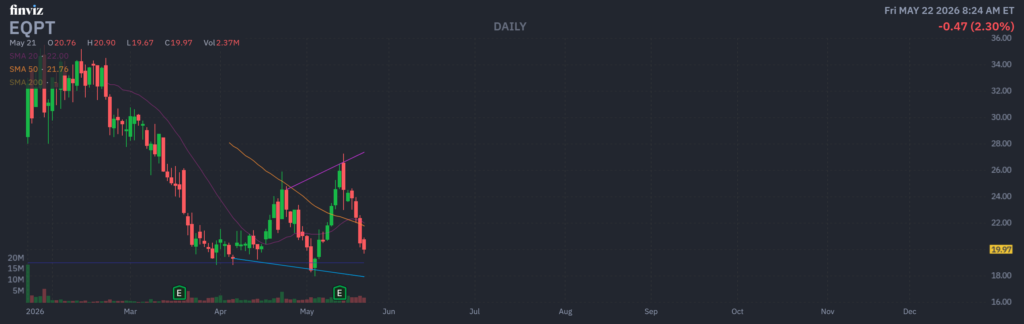
Name: Naveen Bhatia
Position: Director
Transaction Date: 05-15-2026 Shares Bought: 10,000 shares an average price paid of $24.22 for Cost: $242,200
Name: Bryan W. Hill
Position: Director
Transaction Date: 05-19-2026 Shares Bought: 21,803 shares an average price paid of $22.89 for Cost: $499,071
Company: EquipmentShare.com Inc. (EQPT)
EquipmentShare.com Inc. offers comprehensive, full-service construction solutions, including equipment rental, sales, and technology. It provides rental services for aerial work platforms, electric and hydraulic power tools, vehicles, trailers, attachments, agriculture and landscaping equipment, climate control, compaction, compressed air, concrete and masonry, earth moving, fluid solutions, forklifts and material handling, ground protection, industrial tooling, ladders and scaffolding, lighting and security, power solutions, surface preparation and cleaning products, storage solutions and containers, and welding. EquipmentShare.com Inc. was previously known as EquipmentShare Inc. The company was created in 2014 and is headquartered in Columbia, Missouri.
Naveen Bhatia has been a director of EquipmentShare.com Inc. since May 2021. Bhatia is an experienced investor and corporate governance professional, having previously worked as a Senior Director in Blackstone’s Tactical Opportunities Group from 2013 to 2020. He has also held leadership and investment positions at 40 North Industries, Eagle Lake Capital, and Rothschild, and he sits on the boards of several public and private companies. He presently serves as EquipmentShare’s independent director and committee chair. He received a Bachelor of Arts in Public Health from Johns Hopkins University.
Bryan W. Hill has been a director of EquipmentShare.com Inc. since 2023. Hill is the founding and managing partner of BH3 Management LLC, with substantial experience in investment management, private equity, and corporate governance. Prior to joining the EquipmentShare board, he had top leadership and investment positions in a number of financial and operating firms. He serves as an independent director, providing strategic advice on development and capital allocation initiatives. Hill holds a Bachelor of Business Administration degree from the University of Texas in Austin.
Insomniac Hedge Fund Guy Opinion: EquipmentShare is basically trying to modernize the construction equipment rental industry with a tech-enabled platform layered on top of a rapidly expanding rental network. The company rents heavy equipment, sells machinery, and offers fleet-management software through its proprietary T3 platform. Think of it as a blend of United Rentals and a construction-tech startup.
The bull case is straightforward: construction equipment rental is a huge, fragmented market, and EquipmentShare has been growing at an extremely aggressive pace. Rental revenue alone grew more than 30% in 2025, which is the higher-quality recurring side of the business.
The moat is still developing. Traditional rental companies compete mostly on fleet size and local relationships, but EquipmentShare believes its software and telematics platform create operational advantages and better fleet utilization. If that technology actually improves contractor productivity, the company could carve out a differentiated niche.
Management, led by co-founder Jabbok Schlacks, deserves credit for scaling from startup to public company in under a decade. But this is still a very expansion-heavy story. The company continues opening locations aggressively, targeting roughly 700 sites over time.
Profitability remains the debate. EBITDA looks strong, but the business is capital intensive and carries meaningful leverage.
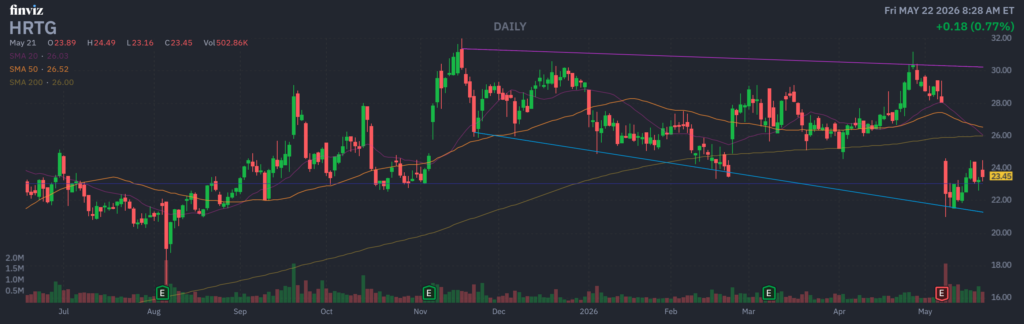
Name: Paul L. Whiting
Position: Director
Transaction Date: 05-19-2026 Shares Bought: 16,000 shares an average price paid of $23.56 for Cost: $376,950
Company: Heritage Insurance Holdings Inc. (HRTG)
Heritage Insurance Holdings, Inc. and its subsidiaries offer personal and commercial residential insurance products. It provides personal residential insurance in Alabama, California, Connecticut, Delaware, Florida, Georgia, Hawaii, Maryland, Massachusetts, Mississippi, New Jersey, New York, North Carolina, Rhode Island, South Carolina, and Virginia; and commercial residential property insurance in Florida, Hawaii, New Jersey, and New York. The company also offers homeowners insurance, condo insurance, house fire protection, equipment coverage, and an artisan contractor program. It provides insurance products through a network of independent agents. The company was created in 2012, and its headquarters are in Tampa, Florida.
Paul L. Whiting has been a director of Heritage Insurance Holdings, Inc. since 2014. Whiting has decades of insurance industry expertise, including leading positions in underwriting, operations, and risk management. Prior to joining Heritage’s board, he held executive positions at many property and liability insurance companies and brought knowledge in corporate governance and strategic development. He is an independent director and a member of the board’s audit and risk committees. Whiting holds a bachelor’s degree in business administration from the University of South Florida.
Insomniac Hedge Fund Guy Opinion: Heritage Insurance Holdings is a small property & casualty insurer focused mainly on homeowners insurance in catastrophe-prone states like Florida. That alone usually scares investors away, and honestly, for good reason. The business has historically been exposed to hurricane losses, rising reinsurance costs, and regulatory headaches that can wipe out profitability in a bad year.
But the recent story is different. Management has spent the last few years aggressively cleaning up the underwriting book, raising rates, reducing risk exposure, and improving reinsurance protection. The result is that Heritage has moved from survival mode toward something resembling a normal insurance company again.
Revenue growth over the last five years has been uneven because premium growth often gets offset by policy reductions and catastrophe exposure management. This is not a recurring-revenue SaaS story; revenue depends on underwriting conditions and pricing cycles. Retention matters, but underwriting discipline matters far more.
The moat here is limited. Insurance is mostly a scale and underwriting business, and Heritage is much smaller than national peers. Its edge, if any, comes from regional expertise in coastal markets and a sharper focus on pricing risk after years of industry pain.
Management deserves some credit for stabilizing the balance sheet and returning the company to profitability after several rough years. Recent combined ratios and underwriting margins have improved materially compared to the loss-heavy periods of 2021–2022.
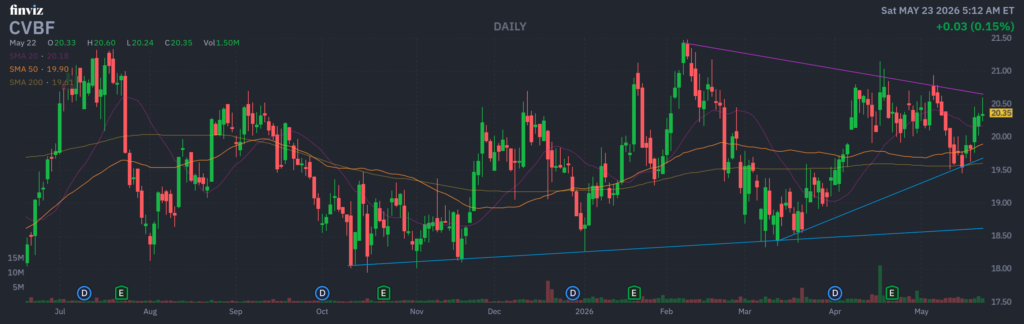
Name: George A. Borba Jr.
Position: Director
Transaction Date: 05-22-2026 Shares Bought: 48,894 shares an average price paid of $20.45 for Cost: $999,985
Company: CVB Financial Corp (CVBF)
CVB Financial Corp. serves as the bank holding company for Citizens Business Bank, National Association, a state-chartered bank that offers banking and financial services to small and medium-sized enterprises and individuals. The company provides checking, savings, money market, and certificates of time deposit products for business and personal accounts, municipalities and districts, and specialized deposit products for title and escrow. It also functions as a federal tax depository for business customers. Commercial lending products include lines of credit and other working capital financing, cattle feeders, consumer financing products such as automobile leasing and financing, lines of credit, credit cards, home mortgages, and home equity loans, as well as equipment and vehicle leasing services. CVB Financial Corporation was founded in 1974 and is based in Ontario, California.
George A. Borba Jr. has served as a Director of CVB Financial Corp. since 2000 and is also a member of the board of its subsidiary, Citizens Business Bank. Borba brings decades of experience in California agriculture and business operations through his leadership roles at Borba Farms and related agricultural enterprises in the Central Valley. In addition to his banking board responsibilities, he has been active in numerous agricultural and community organizations throughout California. Borba studied business and agricultural management in California, building a career focused on farming, agribusiness, and community leadership.
Insomniac Hedge Fund Guy Opinion: CVB Financial Corp is the parent company of Citizens Business Bank, a conservative California regional bank focused on middle-market businesses, commercial real estate, and private banking. Unlike many aggressive regional banks that chased growth with risky loan books, CVBF has historically played defense first. That conservative culture is basically the entire investment case.
The moat is not technological or flashy—it’s relationship banking. Citizens Business Bank has deep ties with privately owned businesses across California and tends to keep clients for years. The bank avoided a lot of the balance-sheet drama that crushed weaker regional banks during the 2023 banking panic because management stayed disciplined on credit and deposit gathering.
Growth has been modest. Over the last five years, revenue growth has generally stayed in the low- to mid-single digits, with earnings driven more by stable net interest margins and expense control than explosive loan growth. Recurring revenue is effectively its net interest income and fee-based banking services, which remain relatively predictable unless rates move sharply. Net retention metrics are not disclosed like SaaS companies, but customer loyalty appears strong due to relationship-driven banking.
Management deserves credit for consistency. The company maintained solid credit quality and capital ratios while many peers stretched for yield. Profitability remains above average for regional banks, with strong returns on equity and disciplined underwriting.
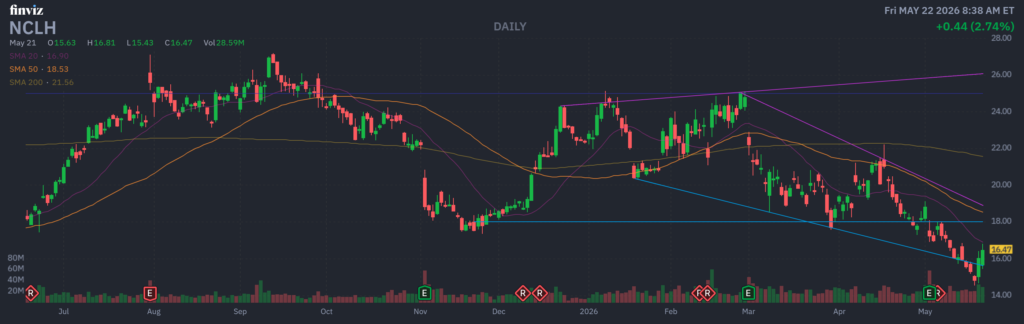
Name: Jose E. Cil
Position: Director
Transaction Date: 05-18-2026 Shares Bought: 15,000 shares an average price paid of $15.02 for Cost: $225,350
Company: Norwegian Cruise Line Holdings Ltd. (NCLH)
Norwegian Cruise Line Holdings Ltd. and its subsidiaries operate cruise ships in North America, Europe, Asia-Pacific, and across the world. It offers itineraries to Europe, Asia, Australia, New Zealand, South America, Africa, Canada, Bermuda, the Caribbean, and Alaska, as well as an inter-island tour in Hawaii. The company also offers features, amenities, and activities such as various accommodations, dining venues, bars and lounges, spas, casino and retail shopping areas, and entertainment options; shore excursions at each port of call; and air transportation and hotel packages for stays prior to or following a voyage. It offers its products and services under the Norwegian Cruise Line, Oceania Cruises, and Regent Seven Seas Cruises brands. The company was created in 1966 and is headquartered in Miami, Florida.
Jose E. Cil has been a director of Norwegian Cruise Line Holdings Ltd. since 2024. Cil is a seasoned hospitality and consumer business executive best recognized for his role as CEO of Restaurant Brands International from 2019 to 2023, where he controlled worldwide brands such as Burger King, Tim Hortons, and Popeyes. He serves as an independent director of Norwegian Cruise Line Holdings, where he brings expertise in worldwide operations, brand management, and corporate strategy. Cil holds a bachelor’s degree in business administration from the University of Miami.
Insomniac Hedge Fund Guy Opinion: Norwegian Cruise Line is the smallest of the three major publicly traded cruise operators, sitting behind Carnival Corporation & plc and Royal Caribbean Group in scale. The company operates the Norwegian, Oceania, and Regent Seven Seas brands, targeting a mix of mass-market and premium cruise travelers. The cruise business is ultimately a floating hotel model: high fixed costs, heavy debt, and enormous sensitivity to consumer demand.
The bull case is straightforward. Travel demand has remained extremely resilient post-pandemic, pricing has recovered sharply, and onboard spending continues to improve. Norwegian has also been repositioning toward higher-end customers through its premium brands, which helps margins and reduces some cyclical risk. Revenue growth over the past five years looks distorted because of the COVID shutdown period, but the company has now surpassed pre-pandemic occupancy and booking levels.
The moat is weaker than investors sometimes assume. Brand loyalty matters, but customers can easily switch between cruise operators depending on itinerary and price. Unlike software or medical devices, there are limited switching costs. Scale and fleet quality are the real advantages.
Management has done a decent job rebuilding operations after the pandemic collapse, but the balance sheet remains the biggest issue. Debt exploded during COVID and interest expense now absorbs a meaningful portion of operating cash flow. Profitability has improved materially versus 2021–2022 losses, but leverage still limits flexibility.

Name: Aidan N. Gomez
Position: Director
Transaction Date: 05-15-2026 Shares Bought: 18,000 shares an average price paid of $13.97 for Cost: $251,460
Company: Rivian Automotive Inc. (RIVN)
Rivian Automotive, Inc., and its subsidiaries create, manufacture, and distribute category-defining electric vehicles. It operates in two segments: Automotive and Software and Services. The company sells consumer cars such as a two-row, five-passenger pickup truck under the R1T brand and a three-row, seven-passenger sport utility vehicle under the R1S moniker. It also offers software and services such as vehicle electrical architecture and software development, Autonomy+, remarketing, car repair and maintenance, software subscriptions, vehicle accessories, finance, insurance, and others. It also provides the Rivian Commercial Van platform for electric delivery vans in conjunction with Amazon.com, Inc. Rivian Automotive, Inc. was created in 2009 and is headquartered in Irvine, California.
Aidan N. Gomez has served as a Director at Rivian Automotive Inc. since April 2025, when he was appointed to the company’s Board of Directors. Gomez is the co-founder and Chief Executive Officer of Cohere, an enterprise artificial intelligence company he co-founded in 2019, and is widely recognized for his contributions to modern AI research, including co-authoring the influential “Attention Is All You Need” paper. Prior to Cohere, he worked as a researcher at Google Brain under AI pioneer Geoffrey Hinton. Gomez earned a Bachelor of Science degree from the University of Toronto and a Ph.D. in Computer Science from the University of Oxford.
Insomniac Hedge Fund Guy Opinion: Rivian is one of the few EV startups that actually made it to mass production without completely imploding. The company builds premium electric trucks, SUVs, and commercial delivery vans, with major backing from Amazon and a growing partnership with Volkswagen Group. Its core products—the R1T pickup, R1S SUV, and commercial vans—target the higher end of the EV market where consumers care more about performance and brand than just price.
The moat is still developing. Rivian’s biggest strengths are brand, software integration, and engineering capability. The vehicles are widely viewed as some of the best-designed EVs outside of Tesla. But unlike Tesla, Rivian lacks scale, which is everything in the auto industry. Manufacturing efficiency and supply chain execution will determine whether the company survives long term.
Revenue growth has been explosive since production ramped, but this is still a business burning cash. Revenue has grown from almost nothing to several billion dollars in just a few years, though profitability remains deeply negative. Recurring revenue is minimal today outside software and service opportunities, and net retention metrics are not meaningful at this stage.
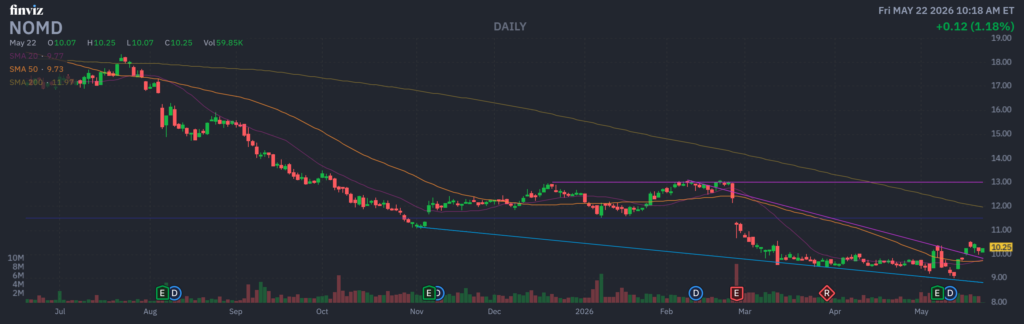
Name: Dominic Brisby
Position: Chief Executive Officer
Transaction Date: 05-15-2026 Shares Bought: 150,000 shares an average price paid of $9.79 for Cost: $1,468,860
Name: Ruben Baldew
Position: Chief Financial Officer
Transaction Date: 05-14-2026 Shares Bought: 14,731 shares an average price paid of $9.71 for Cost: $143,069
Name: Noam Gottesman
Position: Co-Chair
Transaction Date: 05-11-2026 Shares Bought: 700,000 shares an average price paid of $9.47 for Cost: $6,632,410
Name: Ian G. H. Ashken
Position: Director
Transaction Date: 05-13-2026 Shares Bought: 100,000 shares an average price paid of $9.13 for Cost: $912,690
Company: Nomad Foods Ltd. (NOMD)
Nomad Foods Limited, along with its subsidiaries, manufactures, markets, and distributes a variety of frozen food items in the United Kingdom and elsewhere. The company sells frozen fish goods such as fish fingers, coated fish, and natural fish; ready-to-cook vegetable products including peas and spinach; and frozen poultry and beef products such as nuggets, grills, and burgers. It also sells ready-to-cook noodles, pasta, lasagna, pancakes, and other ready-made meals, as well as ice creams (both at home and away), soups, pizzas, bakery goods, and meat alternatives. Nomad Foods Limited was created in 2014 and is based in Woking, United Kingdom.
Dominic Brisby has been Chief Executive Officer of Nomad Foods Ltd. since January 2026. He joined the firm in 2015 and rose through the ranks to become Group Chief Financial Officer and later President of Western Europe, where he helped drive growth across major frozen food brands such as Birds Eye, Findus, and Iglo. Brisby previously worked in investment banking and corporate finance, with a focus on consumer and food firms. He holds a degree in economics and management from the University of Oxford.
Ruben Baldew has been Chief Financial Officer of Nomad Foods Ltd. since May 2024. He joined the company in 2015 and has held various top finance leadership positions, including Group Controller and Chief Accounting Officer. He is responsible for financial strategy, integration initiatives, and operational performance across the company’s European frozen food sector. Before joining Nomad Foods, Baldew worked at PwC, where he got substantial knowledge in accounting, audit, and corporate finance. He holds a master’s degree in business economics from Erasmus University Rotterdam and is a Dutch certified public accountant.
Noam Gottesman has served as Co-Chairman of Nomad Foods Ltd. since its inception in 2015. He co-founded Nomad Foods with Martin Franklin and was instrumental in transforming the company into one of Europe’s largest frozen food businesses through acquisitions such as Iglo and Findus. Gottesman also serves as the founder and Chief Investment Officer of GLG Partners, a global alternative asset management firm he co-founded in 1995. He holds a bachelor’s degree in finance and economics from the University of Manchester.
Ian G. H. Ashken has been a Director of Nomad Foods Ltd. since 2015, when the firm was founded and listed publically. Ashken is an experienced investment banker and corporate counselor who formerly served as Vice Chairman of Lehman Brothers International and later as Senior counselor to a number of investment and consultancy firms. In addition to his role on the Nomad Foods board, he has served on the boards of several consumer, financial, and industrial enterprises. Ashken studied economics and finance in the United Kingdom before launching his career in international banking and business consultancy services.
Insomniac Hedge Fund Guy Opinion: Nomad Foods is basically a European frozen-food rollup masquerading as a sleepy consumer staples company. The business owns well-known frozen food brands including Nomad Foods’s Birds Eye, Iglo, and Findus franchises across Europe. It sells frozen fish, vegetables, poultry, and prepared meals into supermarkets, benefiting from strong household penetration and defensive consumer demand.
The moat is brand recognition plus distribution scale. Frozen food is not glamorous, but retailers need reliable suppliers with established shelf space and marketing power. Birds Eye especially has decades of consumer trust in several European markets. The category also benefits from convenience, affordability, and lower food waste, which has helped demand remain resilient even during weaker consumer spending periods.
Revenue growth over the last five years has been modest, generally in the low-to-mid single digits, driven more by pricing and acquisitions than explosive volume growth. But this is a cash-flow story, not a growth story. A very large percentage of revenue is effectively recurring because consumers repeatedly buy the same grocery staples every week. Net retention metrics are not disclosed like a SaaS company, but customer behavior is stable and predictable.
Management, led by CEO Stefan Descheemaeker, has focused on margin expansion, acquisitions, and returning capital through dividends and buybacks. Profitability has steadily improved, with EBITDA margins among the stronger names in European packaged foods.
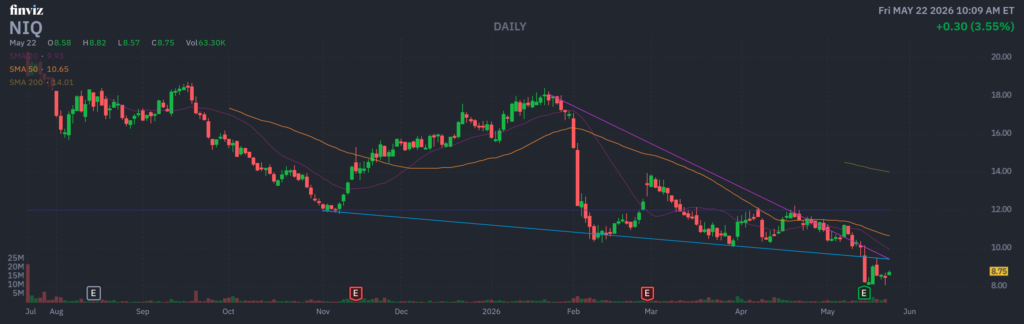
Name: James M. Peck
Position: See Remarks
Transaction Date: 05-18-2026 Shares Bought: 118,625 shares an average price paid of $8.43 for Cost: $1,000,009
Company: NIQ Global Intelligence plc (NIQ)
NIQ Global Intelligence plc is a global consumer intelligence and analytics company that provides data-driven insights to brands, retailers, and manufacturers throughout the world. The company employs AI-powered technology platforms to collect, harmonize, and analyze vast amounts of consumer purchase and behavioral data from both online and offline channels. Its solutions assist customers in optimizing pricing strategies, product innovation, marketing effectiveness, and customer targeting decisions. Retail, media, technology, financial services, and consumer goods are among the industries served by NIQ, which provides omnichannel measurement and analytics tools to help businesses expand and plan strategically. The company was started in 1923.
James M. Peck has been Chairman and CEO of NIQ Global Intelligence plc since March 2021, when he collaborated with Advent International to acquire NielsenIQ from Nielsen Holdings. Peck formerly worked as CEO of TransUnion from 2012 to 2019, where he oversaw the company’s digital transformation and public market development. He has also held top leadership positions at LexisNexis Risk Solutions, where he helped drive significant growth and acquisition projects. Peck received a bachelor’s degree in economics from the University of Dayton and completed executive education at The Wharton School of the University of Pennsylvania.
Insomniac Hedge Fund Guy Opinion: NIQ Global Intelligence is basically a data tollbooth for the consumer packaged goods industry. The company provides retailers and consumer brands with market measurement, pricing analytics, consumer behavior data, and shelf-level intelligence across global markets. If Pepsi, Nestlé, or Walmart want to understand what products are gaining share, where pricing is breaking demand, or how consumers are behaving, NIQ is one of the core datasets they rely on.
The moat comes from scale, historical data, and embedded customer workflows. Consumer behavior databases become more valuable over time because longitudinal data is difficult to replicate. Large global retailers and brands integrate NIQ’s data directly into planning and forecasting systems, creating meaningful switching costs.
The business has a strong recurring revenue profile, with subscription and contract-based analytics making up the large majority of sales. Revenue growth has historically been in the mid-single-digit range organically, though acquisitions and international expansion have helped accelerate growth recently. Net retention appears healthy because customers often expand product usage once integrated into the platform.
Management has focused heavily on modernizing the company after years of being viewed as a slower legacy data provider. The push into AI-driven analytics, omnichannel retail tracking, and faster real-time data delivery is critical because competition from newer analytics firms is increasing.
Profitability is solid but not elite. Margins are improving as the business shifts toward software-like analytics and automation rather than labor-heavy services. Free cash flow generation is respectable, though leverage remains something investors monitor closely after private-equity ownership.
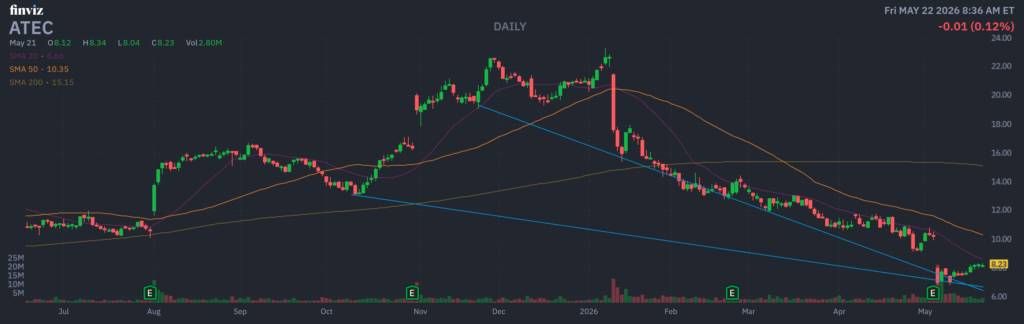
Name: Keith Valentine
Position: Director
Transaction Date: 05-07-2026 Shares Bought: 135,000 shares an average price paid of $7.38 for Cost: $996,192
Company: Alphatec Holdings Inc. (ATEC)
Alphatec Holdings, Inc. develops medical technologies for the surgical treatment of spinal problems in the United States and internationally. The company creates and sells spinal implants, fixation systems, biologics, imaging platforms, navigation tools, and robotic-assisted surgical solutions. Its product offerings include the EOS imaging system, the SafeOp Neural InformatiX monitoring platform, the Valence navigation and robotics system, and the NanoTec and Invictus spinal implant systems. Alphatec also provides biologic graft solutions for spinal operations, including AlphaGRAFT and BioCORE. Today, the corporation sells its products worldwide through direct reps and independent sales agents. The company was founded in 1990 and has its headquarters in Carlsbad, California.
Keith Valentine has been a Director of Alphatec Holdings Inc. since July 2024, having previously served as special advisor to the Board starting in October 2023. Valentine has over 30 years of expertise in the spine and orthopedic industries, including leadership roles as President and CEO of Orthofix and previously SeaSpine, where he managed the company since 2015. His significant experience includes top leadership roles at NuVasive and Medtronic Spine & Biologics. He graduated from Western Michigan University with a Bachelor of Business Administration in Management and Biomedical Sciences.
Insomniac Hedge Fund Guy Opinion: Alphatec Holdings is one of the more interesting turnaround-growth stories in medical devices. The company focuses on spinal surgery products, including implants, fixation systems, and robotic/navigation technologies used in complex spine procedures. Unlike larger orthopedic players, ATEC is trying to build a fully integrated spine ecosystem combining implants, imaging, navigation, and surgical workflow tools.
The bull case is straightforward: ATEC has been taking market share in a traditionally slow-moving industry. Revenue growth over the past five years has been exceptional, consistently running well above most med-tech peers, driven by surgeon adoption and expansion of its procedural platform. The company’s EOS imaging acquisition and robotic investments are designed to create a differentiated surgical workflow rather than just sell hardware.
The moat, however, is still developing. Spine surgery is competitive, with giants like Medtronic and Stryker dominating hospital relationships. ATEC’s edge today is innovation speed and surgeon engagement rather than entrenched scale advantages. Recurring revenue is limited compared to software or consumables-heavy med-tech companies, though implant pull-through and procedural usage create some repeat business dynamics.
Management, led by CEO Pat Miles, is highly aggressive and growth-oriented. Miles has built the company around surgeon relationships and rapid product iteration, and investors largely view him as the key driver of execution.
Profitability remains the biggest issue. Despite rapid revenue growth, ATEC is still generating losses as it spends heavily on sales infrastructure, R&D, and market expansion. Gross margins are improving, but operating leverage has not fully arrived yet.
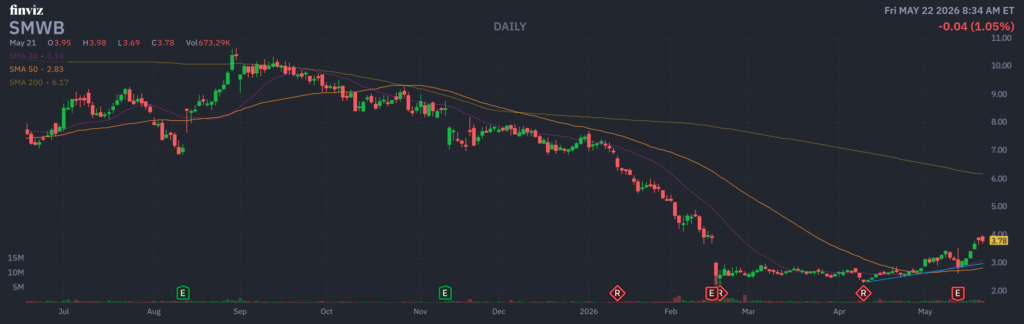
Name: Harel Moshe Beit-On
Position: Director
Transaction Date: 05-20-2026 Shares Bought: 75,000 shares an average price paid of $3.89 for Cost: $291,750
Name: Or Offer
Position: Chief Executive Officer
Transaction Date: 05-18-2026 Shares Bought: 56,105 shares an average price paid of $3.56 for Cost: $199,586
Name: Tamar Rapaport-Dagim
Position: Director
Transaction Date: 05-18-2026 Shares Bought: 40,000 shares an average price paid of $3.22 for Cost: $128,880
Company: Similarweb Ltd. (SMWB)
Similarweb Ltd. delivers digital data and analytics to help businesses make vital decisions in the United States, Europe, Asia Pacific, the United Kingdom, Israel, and beyond. The company provides web intelligence solutions for its customers to benchmark performance against competitors, analyze market trends, conduct deeper research into specific companies, and analyze audience behavior, as well as solutions to help customers understand their competitors’ digital acquisition strategies across various marketing channels and optimize their own strategies. The company caters to retail, consumer packaged goods, consumer finance, consultancies, marketing and advertising agencies, media and publishers, business-to-business software, payment processors, travel, and institutional investors, as well as luxury and premium consumer brands. Similarweb Ltd. was established in 2009 and is based in Givatayim, Israel.
Harel Moshe Beit-On has been a Director of Similarweb Ltd. since 2013, immediately after the company’s initial growth phase and expansion into digital intelligence and web analytics. Beit-On is the founder and managing partner of Viola Credit, as well as a co-founder of the Viola Group, one of Israel’s premier technological investment platforms. He has decades of experience in venture capital, fintech, and technology investing, having worked with growth-stage organizations. Beit-On studied economics and computer science at Tel Aviv University, and he also received advanced military technology training while serving in the Israeli Defense Forces.
Or Offer is Similarweb Ltd.’s co-founder and Chief Executive Officer, having headed the company since its founding in 2007. He has been CEO of the company since its creation and also serves as a director on the board. Similarweb expanded from a modest Israeli startup to a global digital intelligence and analytics platform that serves businesses, investors, and marketers all over the world. Before joining Similarweb, Offer was a founding partner at AfterDownload, which was ultimately bought by IronSource. He holds a bachelor’s degree in business administration from Reichman University in Israel.
Tamar Rapaport-Dagim has been a director of SimilarWeb Ltd. since 2021. Rapaport-Dagim is an accomplished technology and finance leader with a strong background in business strategy, capital markets, and financial operations. She was previously the Chief Financial Officer of several technological companies and has held significant leadership positions in Israel’s high-tech sector. As an independent director of Similarweb, she helps to oversee the board and lead strategic governance efforts. Rapaport-Dagim holds a bachelor’s degree in economics and accounting from Tel Aviv University and is a qualified public accountant in Israel.
Insomniac Hedge Fund Guy Opinion: Similarweb is essentially a digital intelligence platform that helps companies understand website traffic, app usage, online consumer behavior, and competitive positioning. Customers use it for marketing analytics, e-commerce tracking, sales intelligence, and investment research. In a world where every business wants data on competitors and customer behavior, Similarweb has carved out a useful niche.
The moat comes from its proprietary data collection network and the scale of its analytics platform. The more usage data it gathers, the more valuable the platform becomes. That said, this is still a competitive market with players like Semrush Holdings, Inc. and larger enterprise data vendors fighting for budget. The product is sticky, but not untouchable.
Revenue growth over the past five years has been strong, generally in the 20%+ range historically, though growth has moderated recently as enterprise software spending cooled. The business is heavily subscription-based, with recurring revenue making up the vast majority of sales. Net revenue retention has historically been healthy, typically above 100%, showing customers tend to expand usage over time.
Management, led by founder CEO Or Offer, deserves credit for building a globally recognized intelligence platform while steadily improving operational discipline. The company has shifted investor focus from pure growth toward profitability and cash flow generation.
Profitability is improving but still not elite SaaS quality. Margins remain below top-tier software peers, though operating leverage is beginning to appear as growth stabilizes.
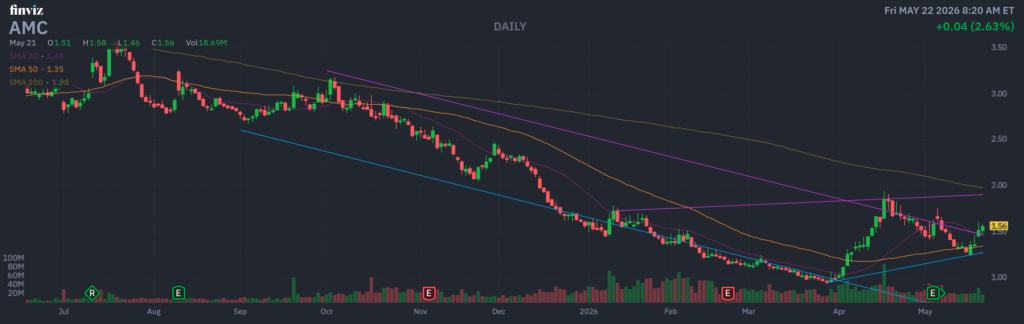
Name: Adam M. Aron
Position: Chairman, Ceo & President
Transaction Date: 05-19-2026 Shares Bought: 250,000 shares an average price paid of $1.38 for Cost: $344,350.
Company: Amc Entertainment Holdings Inc. (AMC)
AMC Entertainment Holdings, Inc. is one of the world’s major theatrical exhibition companies, with movie theaters in the United States and internationally. The corporation owns, runs, or has interests in hundreds of theaters with thousands of screens, including premium large-format and IMAX experiences. AMC’s revenue streams include box office admissions, food and beverage sales, and theater advertising. Despite increased competition from streaming platforms, the firm has developed alongside the entertainment industry and continues to be a prominent participant in theatrical film. AMC continues to focus on improving the moviegoing experience through technology, loyalty programs, and premium amenities. The company was founded in 1920 and is based in Leawood, Kansas.
Adam M. Aron has been the Chairman, CEO, and President of AMC Entertainment Holdings, Inc. since January 2016, when he joined the firm following its acquisition by Dalian Wanda Group. Aron has led AMC through important industry transitions, such as the pandemic-era recovery and increased retail investor interest in the company’s stock. Before joining AMC, he held senior executive positions at Starwood Hotels and Norwegian Cruise Line. He holds a bachelor’s degree from Harvard College and an MBA from Harvard Business School.
Insomniac Hedge Fund Guy Opinion: AMC is no longer really a normal movie theater company. It’s part cinema operator, part meme stock, part retail trading phenomenon. The company operates one of the largest theater chains globally, with revenue tied heavily to box office performance, concession sales, and theater attendance trends.
The moat is weaker than bulls admit. AMC has scale, premium theater formats, and strong brand recognition, but theaters remain a difficult business with high fixed costs and limited pricing power. Streaming permanently changed consumer behavior, and studios now release films digitally much faster than before.
Revenue growth over the last five years has been distorted by COVID and the meme-stock era. Sales rebounded sharply after lockdowns, but profitability remains inconsistent. Unlike software or subscription businesses, AMC has very little true recurring revenue. Membership programs like AMC Stubs help customer loyalty, but recurring revenue as a percentage of total sales remains low. Net retention metrics are not really meaningful here because this is not a SaaS-style business.
Management, led by CEO Adam Aron, deserves credit for surviving. Aron used the meme-stock frenzy to raise massive amounts of equity capital and avoid bankruptcy. Existing shareholders were heavily diluted, but without those capital raises AMC probably would not exist today.
Profitability is still the issue. Debt remains high, interest expense is painful, and the business depends on strong blockbuster movie slates to generate cash flow.
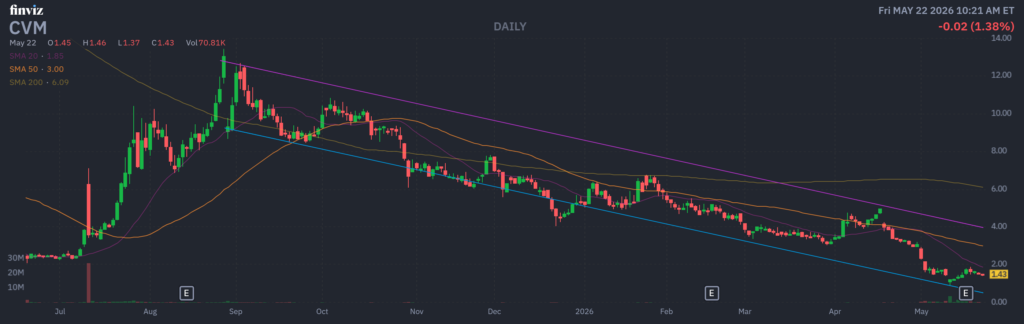
Name: Geert R. Kersten
Position: Chief Executive Officer
Transaction Date: 05-14-2026 Shares Bought: 300,000 shares an average price paid of $1.20 for Cost: $360,000
Company: Cel Sci Corp (CVM)
CEL-SCI Corporation is a clinical-stage biotechnology firm based in the United States that conducts research and development to treat cancer and other disorders through the immune system. Multikine, the company’s primary immunotherapy, has completed Phase III clinical studies to treat specific head and neck tumors. It is also working on Ligand Epitope Antigen Presentation System technology, which is a patented T-cell modulation process that stimulates the human immune system to fight bacterial, viral, and parasitic infections, autoimmune conditions, allergies, transplant rejections, and cancer, as well as potentially treating rheumatoid arthritis. CEL-SCI Corporation has formed a strategic agreement with Saudi Arabian Pharma Company to develop Multikine for the treatment of head and neck cancer. The company was established in 1983 and is based in Vienna, Virginia.
Geert R. Kersten has been Chairman and CEO of CEL-SCI Corporation since 1995. He joined the company in 1987 as Vice President of Operations, then became President before taking on the positions of Chairman and CEO. Under his direction, CEL-SCI has prioritized the development of immunotherapy technology and cancer treatments, notably Multikine, its flagship experimental medicine. Prior to joining CEL-SCI, Kersten worked in investment banking and corporate finance. Mr. Kersten earned his undergraduate degree in accounting, an M.B.A. from George Washington University, and a law degree from American University in Washington, D.C. Mr. Kersten is also the originator of a patent for the prospective use of Multikine to manage cholesterol.
Insomniac Hedge Fund Guy Opinion: CEL-SCI is the definition of a speculative biotech. The company is built almost entirely around one asset: Multikine, an investigational immunotherapy for head and neck cancer. Unlike diversified biotech firms with multiple approved drugs and recurring revenue streams, CEL-SCI remains a clinical-stage company with essentially no meaningful recurring commercial revenue. Everything depends on whether Multikine can eventually secure regulatory approval and commercial adoption.
The bull case is straightforward: if Multikine demonstrates clear survival benefits in late-stage studies, the upside could be enormous relative to CEL-SCI’s small market capitalization. Management has spent years arguing that the therapy works best when administered before standard cancer treatments weaken the immune system. Supporters view it as a potentially disruptive immunotherapy platform.
The problem is execution and credibility. The company has been developing Multikine for decades, and the timeline has repeatedly stretched. That creates investor fatigue and financing risk. Without approved products, CEL-SCI relies heavily on capital raises to fund operations, which means dilution is a constant concern for shareholders.
There is effectively no competitive moat today because the company lacks commercial scale, distribution infrastructure, or approved intellectual-property-backed cash flows. Net retention and recurring revenue metrics are irrelevant at this stage since the business is still pre-commercial.
Management, led by longtime CEO Geert Kersten, deserves credit for persistence, but the market increasingly wants definitive clinical and regulatory outcomes rather than promises.
This blog is solely for educational purposes and the author’s own amusement. IT IS NOT INVESTMENT ADVICE. Think of the blog as part of my personal investment journal that I am willing to share with the DIY investor. We could be long, short, or have no position at all in any of the stocks mentioned and express no written or implied obligation to disclose any of that. Nothing contained here constitutes a recommendation to buy or sell any security. Investing involves risk, including the possible loss of principal, and past performance is not indicative of future results.
“The insomniac hedge fund guy” is a moniker Harvey Sax, the portfolio manager for The Insiders Fund” has used from time to time on email, blog ,and social media posts. While Mr. Sax is the portfolio manager of The Insiders Fund, these posts are not communications from, nor endorsed by, Alpha Wealth Funds, LLC or any of its managed funds. References to Alpha Wealth Funds or its affiliates are for identification only and do not imply sponsorship or approval.
All company names, logos, and trademarks belong to their respective owners. The use of company logos is solely for descriptive and illustrative purposes under fair use. Any information provided is based on publicly available data and should not be considered financial, investment, or legal advice. Readers should conduct their own research or consult with a professional before making any investment decisions. Insiders sell the stock for many reasons, but they generally buy for just one – to make money. You’ve always heard the best information is inside information. Everyone with any stock market experience pays close attention to what insiders are doing. After all, who knows a business better than the people running it? Officers, directors, and 10% owners are required to inform the public through a Form 4 Filing of any transaction, buy, sell, exercise, or any other within 48 hours of doing so.
This info is available for free from the SEC’s Web site, Edgar, although we subscribe to SECForm4 as they provide a way to manage and make sense of the vast realms of data. I’ve tried a lot of vendors. SECForm4 is one of the smaller ones, but I like supporting Frank. He is not arrogant. He’s helpful and has great prices. He also trades on his own data, so I like people that eat what they kill. The bar is different from selling because the natural state of management is to be a seller. This is because most companies provide significant amounts of management compensation packages as stock and options. Therefore, we analyze unusual patterns with selling, such as insiders selling 25 percent or more of their holdings or multiple insiders selling near 52-week lows. Another red flag is large planned sale programs that start without warning. Unfortunately, the public information disclosure requirements about these programs, referred to as Rule 10b5-1, are horrendously poor. Also, planned sales that pop up out of nowhere are basically sales and are seeking cover under this corporate welfare loophole.
I also generally ignore 10 percent shareholders as they tend to be OPM (other people’s money) and perhaps not the smart money on which we are trying to read the tea leaves. I say generally because some 10% shareholders are great investor, think Warren Buffett and others. Of course, insiders can also be wrong about their Company’s prospects. Don’t let anyone fool you into believing they never make mistakes. Do your own analysis. They can easily be wrong, and in many cases, maybe most cases, have no more idea what the future may hold than you or me. In short, you can lose money following them. We have, and we curse aloud; what were they thinking!
We like Fly on the Wall for keeping up with what events might be happening, analysts’ comments, and whatever else could be moving the stock. Dow Jones news service is an essential tool, but many services pick up their feed like they do Bloomberg. My assistant probes the 10k for a reasonable description of the business. I’ve found that to be the most accurate and succinct place to find out what a business actually does.