
Last week was a bit rough. The S&P 500 lost 1.63% and the Nasdaq tumbled 2.94%. It felt a bit like the magic was over. Warren Buffett said the stock market was a weighing machine but in recent months it seemed more like a printing press. That changed last week. It’s hardly a surprise, though. The equal weighted index has been underperforming since August. The average stock chart looks like crap.
Is it a breather or something more malign? Insiders are the classic dip buyer. Will they bite now that the earnings season blackout is lifting?
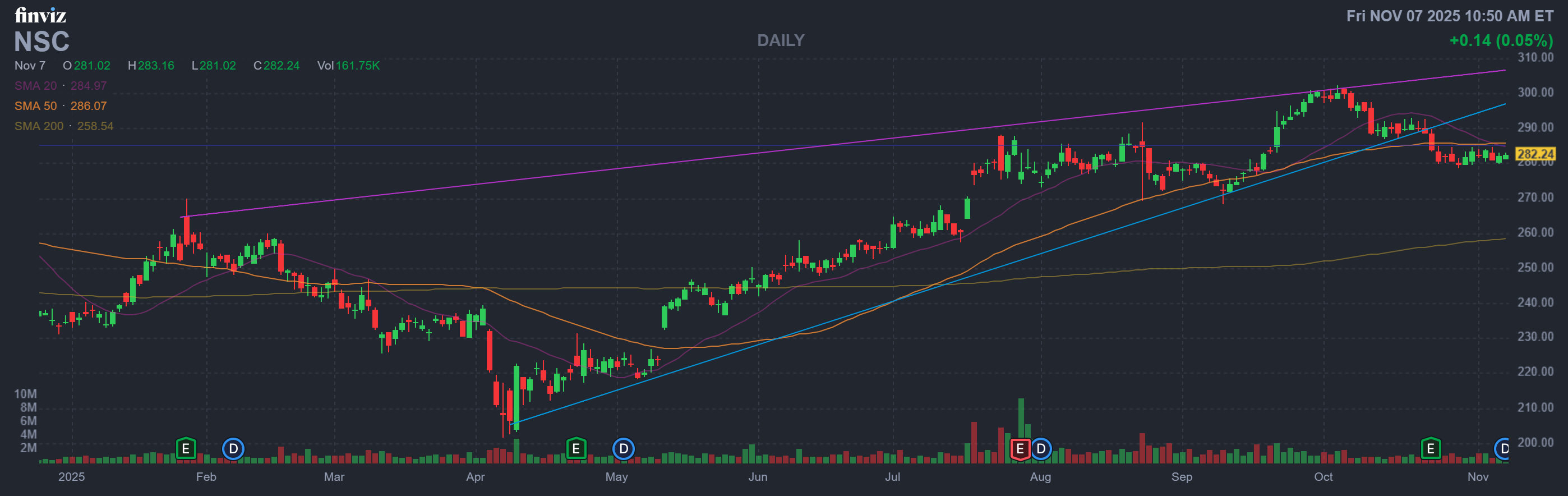
Name: Sameh Fahmy
Position: Director
Transaction Date: 11-05-2025 Shares Bought: 1,650 shares an Average Price Paid of $282.97 for Cost: $466,901
Company: Norfolk Southern Corp (NSC)
Norfolk Southern Corporation, founded in 1980 and headquartered in Atlanta, Georgia, provides rail transportation services for raw materials, intermediate products, and finished goods across the United States. The company transports a wide range of commodities, including agricultural and forestry products, consumer goods, chemicals, metals, construction materials, automotive products, coal, and international freight through Atlantic and Gulf Coast ports. Its extensive intermodal network enables the efficient movement of containers and trailers, connecting major markets and supporting reliable nationwide freight transportation.
Sameh Fahmy joined the Board of Directors of Norfolk Southern Corporation as an Independent Director in 2024. He brings more than 30 years of experience in the rail industry, having most recently served as Executive Vice President of Precision Scheduled Railroading at Kansas City Southern. Earlier in his career, he held senior roles in engineering, mechanical operations, and supply management at Canadian National Railway Company. Fahmy holds both an undergraduate degree and a Master of Business Administration from McGill University, where he also earned professional accounting accreditation.
Insomniac Hedge Fund Guy Opinion:
Norfolk Southern is a strong infrastructure franchise with real advantages: network scale, service focus, productivity potential and major transformational catalyst (merger with Union Pacific). If you believe that the merger will get approved, that the company will execute productivity gains, and that volume headwinds moderate, then NSC has upside.
However — the valuation is pricing a lot of that optimism. My rough DCF suggests ~$170-200/share under base assumptions; trading at ~$282 implies a premium for merger and growth. The risk of execution mis-steps, regulatory block, weaker volumes or cost inflation is real.
My lean: cautiously bullish, but with caveats. If I were you, I’d consider a moderate position rather than heavy allocation until clearer signals—specifically: merger progress, sustained margin improvement, stabilization of volume trends. If any of those falter, downside could be meaningful.
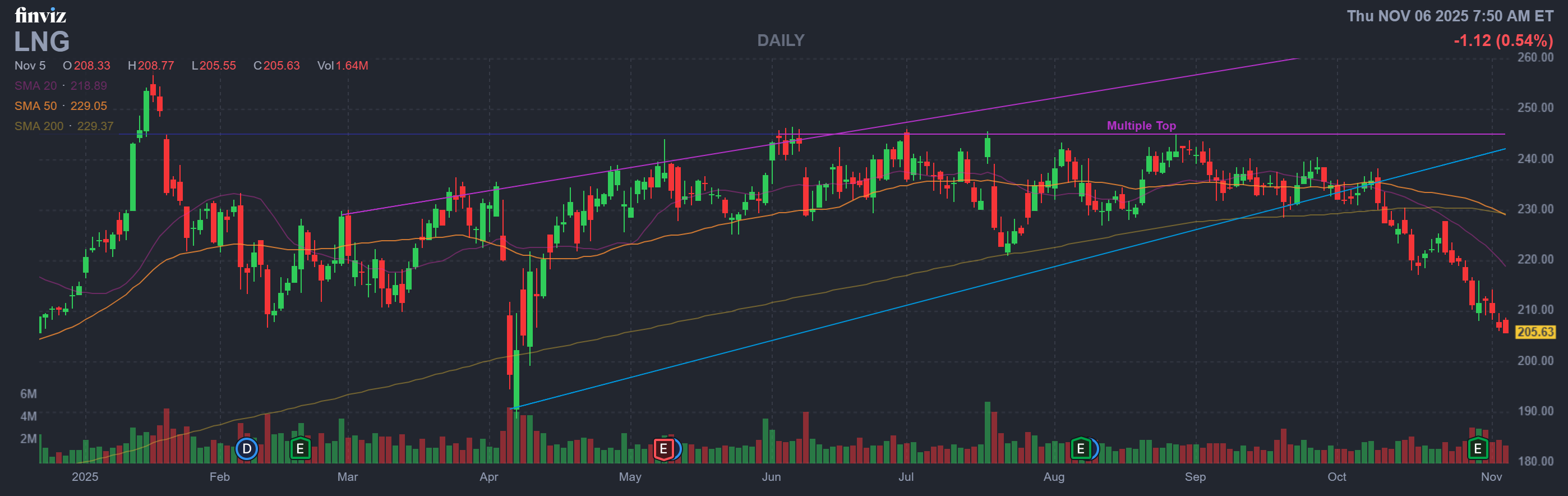
Name: W. Benjamin Moreland
Position: Director
Transaction Date: 11-04-2025 Shares Bought: 5,000 shares an Average Price Paid of $208.22 for Cost: $1,041,096
Company: Cheniere Energy Inc. (LNG)
Cheniere Energy, Inc., a Delaware corporation headquartered in Houston, Texas, is an energy infrastructure company specializing in liquefied natural gas (LNG). The company supplies clean, reliable, and cost-effective LNG to energy companies, utilities, and trading firms worldwide. Its operations include the production, liquefaction, and export of natural gas, which is later regasified for residential, commercial, and industrial use. As a cleaner alternative to coal, LNG produces significantly fewer pollutants and carbon emissions. Cheniere’s liquefaction process enables the efficient global transportation of natural gas via specialized carriers designed to maintain the gas in a low-temperature, liquid state.
W. Benjamin Moreland joined the Board of Directors of Cheniere Energy, Inc. in early 2025. He is a private investor and the former Chief Executive Officer of Crown Castle Inc., where he began his tenure in 1999 following fifteen years in corporate finance and real estate investment banking at Chase Manhattan Bank and its predecessors. Moreland serves on Cheniere’s Audit and Compensation Committees. He holds a Bachelor of Business Administration from the University of Texas at Austin and a Master of Business Administration from the University of Houston.
Insomniac Hedge Fund Guy Opinion:
Cheniere is a high-quality pipeline into the global LNG export boom. If you believe in the secular thesis — demand for LNG into Asia/Europe will grow, U.S. supply advantage holds, and Cheniere executes expansion projects smoothly — then this company has meaningful upside.
But here’s the blunt part: at ~$205/share the market is already pricing in those favorable outcomes. My rough DCF suggests the base case fair value is quite a bit lower unless growth and margin beat expectations. The insider selling (though small) and maintenance/project risk add layers of breach possibility.
So I lean cautiously bullish. If you’re comfortable with execution risk, commodity exposure, and want exposure to LNG, Cheniere may be worth a modest allocation. But if you’re looking for a deep margin of safety right now, this doesn’t quite tick that box. In other words: potential upside is real, but reward is matched by elevated risk and high expectations.
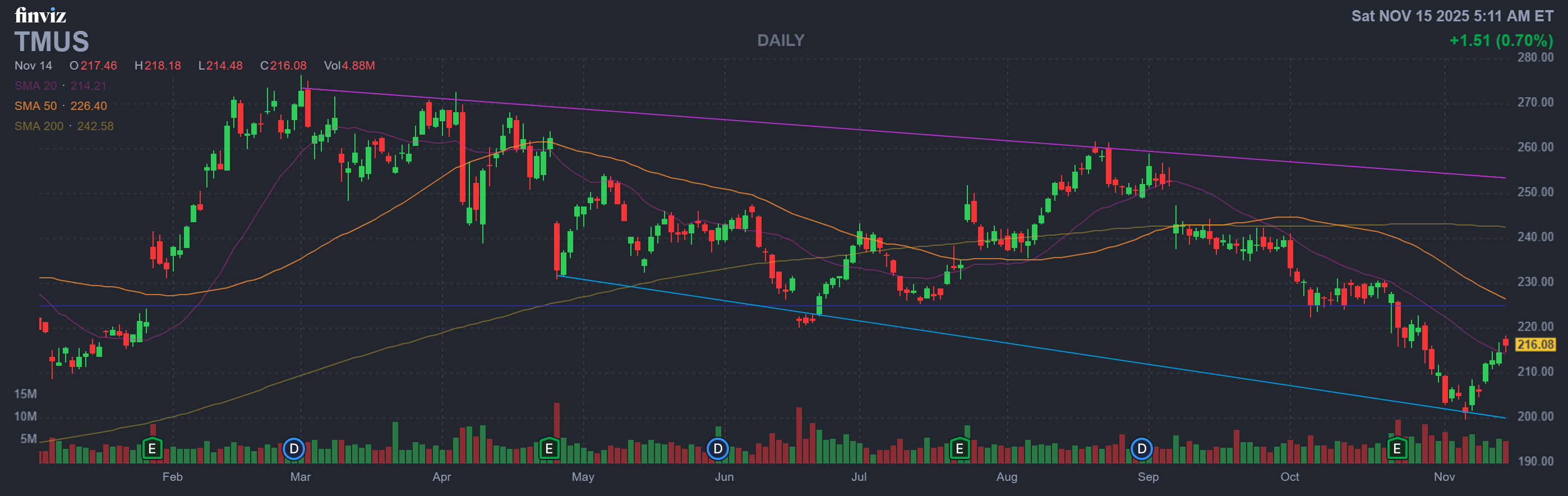
Name: Srini Gopalan
Position: President and CEO
Transaction Date: 11-06-2025 Shares Bought: 9,800 shares an Average Price Paid of $201.82 for Cost: $1,977,836
Company: T-Mobile US Inc. (TMUS)
T-Mobile US, Inc. provides cellular communication services across the United States, Puerto Rico, and the U.S. Virgin Islands. The company delivers voice, messaging, data, and high-speed internet services to postpaid, prepaid, and wholesale customers, along with devices such as smartphones, tablets, wearables, home broadband routers, and related accessories. T-Mobile also offers device financing, reinsurance for device protection programs, and sells products through retail stores, online channels, national retailers, and mobile apps under the T-Mobile, Metro by T-Mobile, and Mint Mobile brands. A subsidiary of Deutsche Telekom AG, T-Mobile US was founded in 1994 and is headquartered in Bellevue, Washington.
Srini Gopalan was appointed President and CEO of T-Mobile US, Inc., effective November 1, 2025. Previously, he served as the company’s Chief Operating Officer, overseeing the Technology, Consumer, and Business units and playing a key role in network and fiber development. Before joining T-Mobile, Gopalan held leadership positions as CEO of Deutsche Telekom Germany and executive roles at Bharti Airtel, Vodafone, and Capital One. He earned a Bachelor’s degree in Business Administration from St. Stephen’s College, Delhi University, and an MBA from the Indian Institute of Management, Ahmedabad.
Insomniac Hedge Fund Guy Opinion: T-Mobile US (TMUS) is firing on all cylinders in 2025: in Q2, it posted $21.13B in revenue (+6.9% YoY) and $3.2B in net income (+10%), while delivering record customer additions (1.7M postpaid net adds) and 454K net 5G broadband subscribers. Its adjusted free cash flow hit $4.6B — a Q2 record — and the company raised full-year guidance to $17.6–18.0B. T-Mobile is leaning into its “Un-carrier” DNA, pushing premium plans aggressively (ARPA up >5%), expanding its network with nearly 4,000 new sites planned, and rolling out T-Satellite to cover remote areas. Management also expects $400M in Q3 revenue boost from its UScellular acquisition, targeting $1.2B in annual cost synergies. Risks remain: big CapEx ($9.5B range), churn could tick, and the UScellular integration is not trivial. But T-Mobile’s scale, network strength, and cash-flow engine give it a powerful position. Base-case valuation points to $175–230/share, assuming continued ARPA growth, disciplined capital spending, and successful integration of acquisitions.
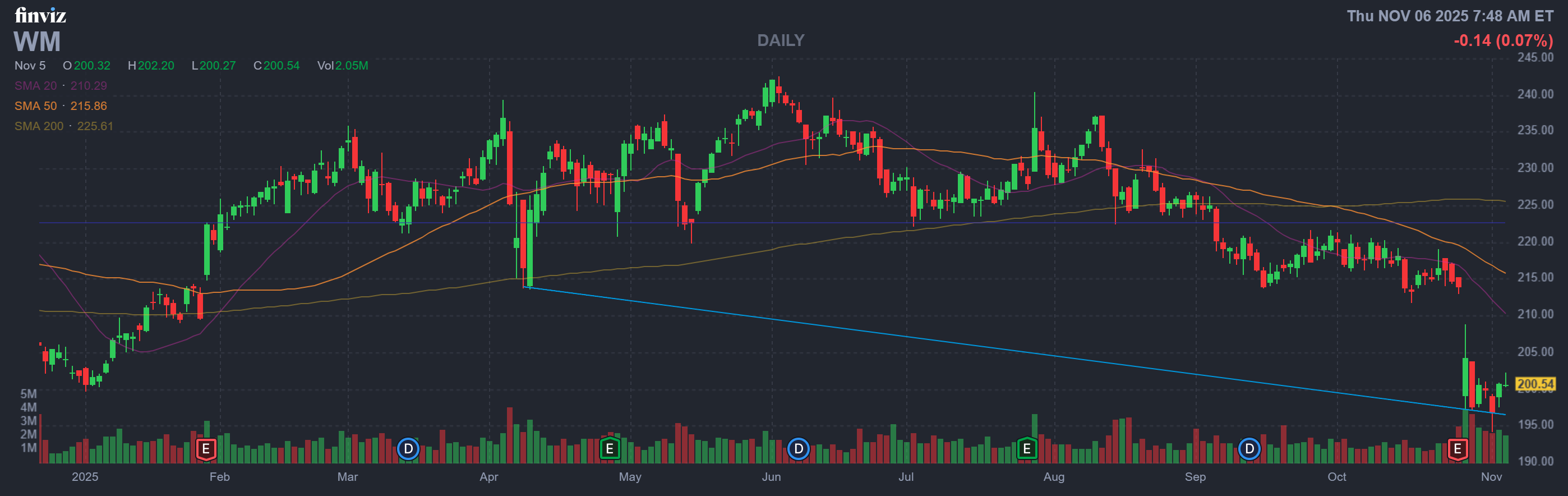
Name: Sean E. Menke
Position: Director
Transaction Date: 11-03-2025 Shares Bought: 2,000 shares an Average Price Paid of $196.42 for Cost: $392,840
Company: Waste Management Inc. (WM)
Waste Management, Inc., founded in 1968 and headquartered in Houston, Texas, is a leading provider of environmental solutions serving the United States, Canada, Western Europe, and other international markets. Through its subsidiaries, the company offers waste and recycling collection, transfer, and disposal services, as well as landfill gas-to-energy operations and materials recovery. Additional services include recycling brokerage, composting, industrial waste management, and remediation, along with regulated waste handling and secure data destruction solutions. Formerly known as USA Waste Services, Inc., the company adopted its current name in 1998.
Sean E. Menke has served as an independent director on the Board of Waste Management, Inc. since 2021. He brings extensive leadership experience from the airline and travel technology industries, having previously served as Chief Executive Officer and Chair of Sabre Corporation. Menke holds a Bachelor’s degree in Economics and Aviation Management from The Ohio State University and a Master of Business Administration from the University of Denver. He contributes a strong combination of expertise in technology, logistics, and operational transformation to support Waste Management in advancing its strategic objectives.
Insomniac Hedge Fund Guy Opinion:
Waste Management is one of those “boring but brilliant” infrastructure plays — essential services, strong positioning, durable cash flows, moderate growth and decent margin potential. If you’re looking for a “safe” compounder in an unglamorous but necessary industry, this ticks many boxes.
That said, it’s not a high-flyer. The valuation appears to price in a lot of the good stuff (organic growth, acquisitions, vertical expansion). My DCF suggests the stock is fairly valued in the base scenario. For meaningful upside you’re banking on: stronger organic yield growth, better margin expansion, successful integration of large acquisitions (like Stericycle) and execution in growth verticals (RNG, healthcare waste).
I lean neutral-to-moderately bullish. If I were allocating, I’d include WM as a core-holding for stability and moderate growth, but I’d temper expectations: this is more “grow steadily, compound slowly” than “blow far past expectations”. If management surprises to the upside, there is upside; if things go sideways (cost inflation, regulatory hiccups, recycling weakness), the downside is real but less dramatic than high-growth speculative stocks.
Name: Eugene F. Reilly
Position: Director
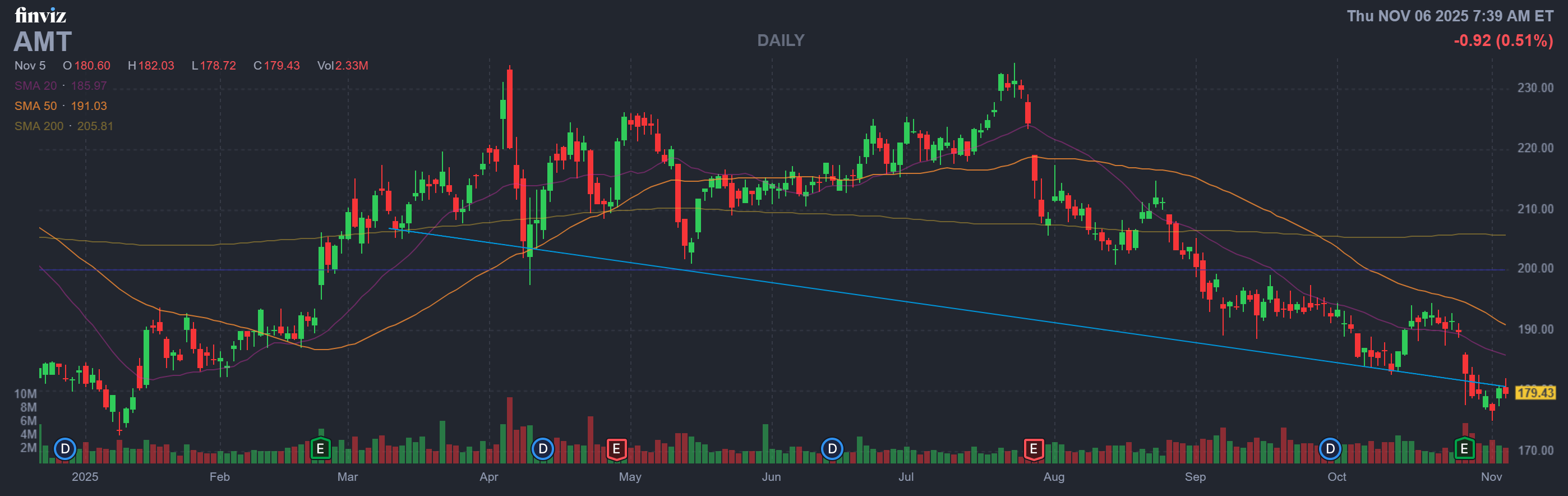
Transaction Date: 10-31-2025 Shares Bought: 5,554 shares an Average Price Paid of $178.99 for Cost: $994,110
Company: American Tower Corp (AMT)
American Tower Corporation is one of the world’s largest real estate investment trusts and a leading independent owner, operator, and developer of multitenant communications real estate. The company’s primary business involves leasing space on communications sites to wireless service providers, broadcasters, data providers, government agencies, municipalities, and other organizations. Its property operations segment, which includes data center activities, generates the majority of total revenue. In the United States, American Tower also provides tower-related services—including site application support, zoning and permitting, structural analysis, and construction management—to facilitate site leasing and tenant expansion. The company’s customers include tenants, licensees, and other payers across multiple sectors.
Eugene F. Reilly joined the Board of Directors of American Tower Corporation in 2025 and serves as a member of the Compensation Committee. He brings more than four decades of experience in real estate investment, development, and operations. Reilly most recently served as Vice Chairman of Prologis, Inc., after holding prior roles as Chief Investment Officer and Chief Executive of the Americas. Earlier in his career, he was a founding partner and Chief Investment Officer of Cabot Properties, Inc. He holds a Bachelor of Arts in Economics from Harvard College.
Insomniac Hedge Fund Guy Opinion:
American Tower is a tame infrastructure champion—less sexy than a high-flying tech growth name, but with a strong business model, decent moat, recurring revenue and global rights to scale. If you believe 5G/6G, data centres, edge computing and telecom infrastructure expansion will continue unabated, AMT is a logical place to park capital.
That said — this is not a deeply undervalued bargain at current levels. My rough DCF suggests the base case fair value is around ~$180-$230/share, and the current price is at the lower end of that range. So you’re not getting a huge margin of safety; you’re buying into execution and future growth tailwinds.
My lean: moderately bullish. If I were allocating, I’d include AMT as a core infrastructure holding for long-term stability and moderate growth. But I’d temper expectations: upside is likely moderate unless the company accelerates data-center growth, international leasing leaps, or new technology (e.g., private 5G) creates a step-change demand. If those don’t materialize, the return may be modest and the risk of multiple compression real.
Name: James Breyer
Position: Director
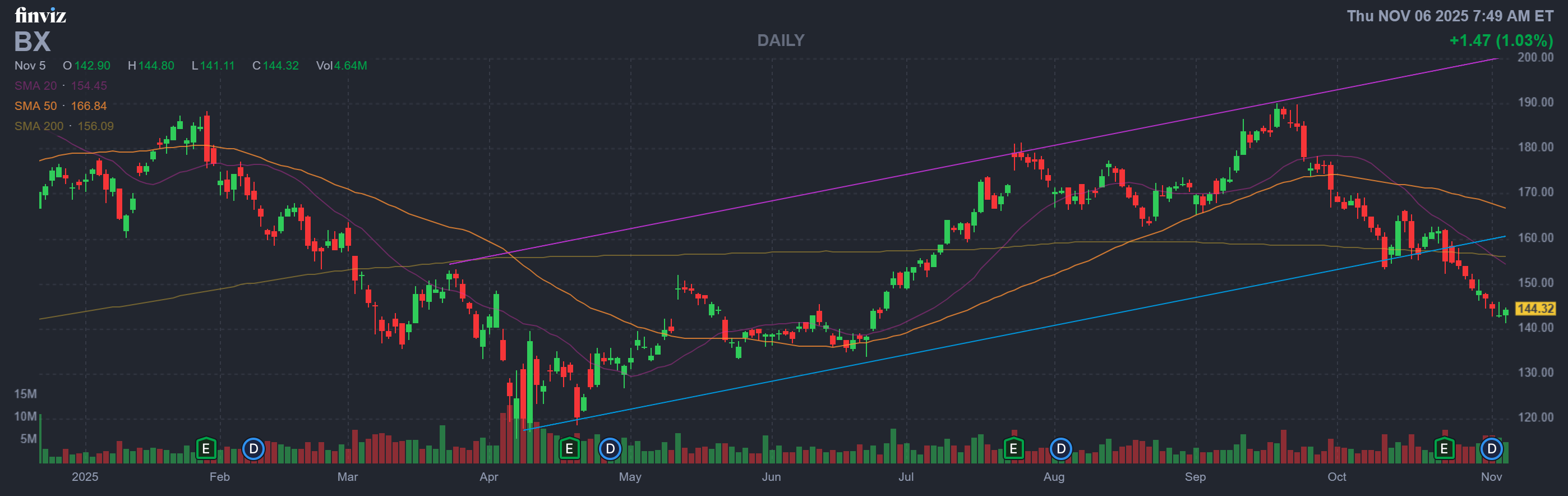
Transaction Date: 11-04-2025 Shares Bought: 13,900 shares an Average Price Paid of $143.86 for Cost: $1,999,635
Company: Blackstone Inc. (BX)
Blackstone is the world’s largest alternative asset manager, specializing in global investment strategies across real estate, private equity, infrastructure, life sciences, growth equity, credit, real assets, secondary markets, and hedge funds. The firm employs a solutions-driven approach to enhance the performance and value of its portfolio companies and assets. Its scale, diversified business model, strong investment track record, disciplined investment process, and deep client relationships collectively foster long-term growth, innovation, and resilience amid changing market conditions.
James W. Breyer was elected to the Board of Directors of Blackstone Inc. in mid-2016. He is the Founder and Chief Executive Officer of Breyer Capital, a venture capital and investment firm, and previously served as a Managing Partner at Accel Partners. His appointment to Blackstone’s board reflects his extensive expertise in technology, growth investing, and university–industry collaborations, with a particular focus on artificial intelligence and life sciences initiatives. Breyer earned his Bachelor’s degree from Stanford University and a Master of Business Administration from Harvard Business School, where he was recognized as a Baker Scholar.
Insomniac Hedge Fund Guy Opinion:
Blackstone remains the alpha dog in alternative asset management, commanding over $1 trillion AUM across private equity, real estate, credit, and infrastructure. Its moat is size, brand, and sticky capital — none of which can be built overnight. Fee-related earnings are stable; performance fees inject cyclicality. The shift toward private credit and wealth-channel distribution is expanding its recurring fee base, but this remains a market-dependent cash-machine.
Blackstone is a juggernaut — but the stock already reflects that. At these levels, you’re buying a premium franchise at a premium multiple, with little room for missteps. The upside rests on continuous inflows and a buoyant exit market; the downside is a re-rating if those stall. My stance: moderately bullish on the business, cautious on the stock. Great company, fully priced.
Name: Colin V. Reed
Position: Executive Chairman Of The Board
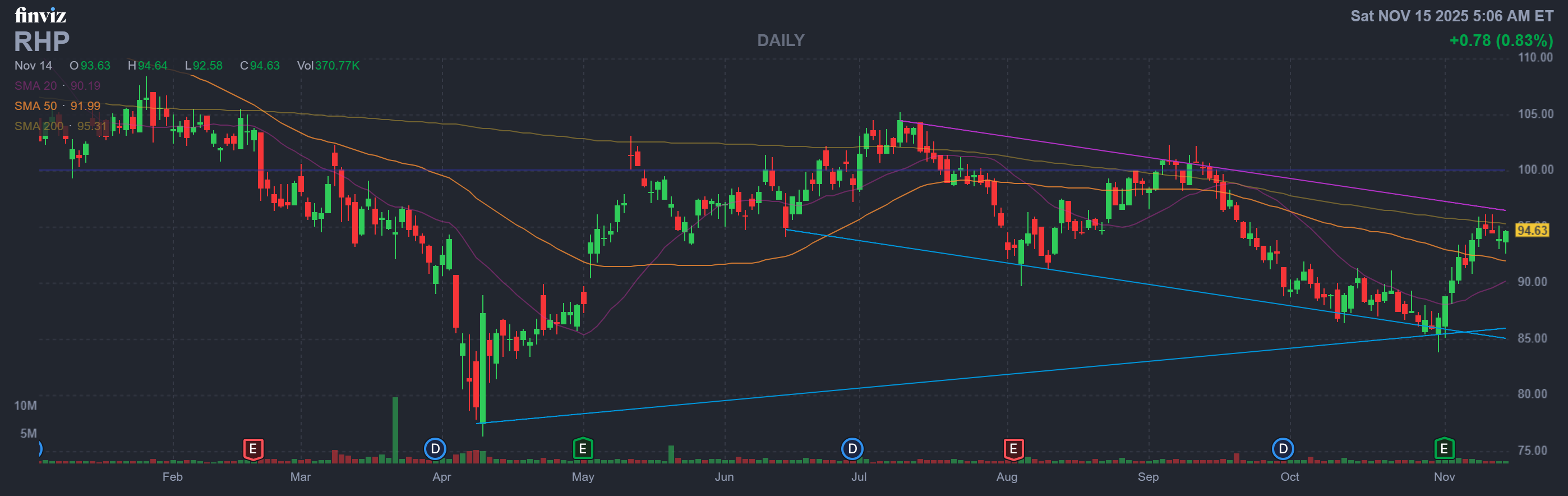
Transaction Date: 11-07-2025 Shares Bought: 8,993 shares an Average Price Paid of $92.16 for Cost: $828,814
Company: Ryman Hospitality Properties Inc. (RHP)
Ryman Hospitality Properties, Inc. is a Delaware based real estate investment trust that acquired Gaylord Entertainment Company in 2012 as part of a corporate restructuring. The company began operating as a self-advised and self-administered REIT on January 1, 2013. Ryman focuses on group oriented destination hotel properties in both urban and resort markets. As a REIT, it is generally exempt from federal corporate income taxes on distributed earnings, which allows it to avoid the double taxation applied to traditional corporations. However, its non REIT operations, including those conducted through taxable REIT subsidiaries and entertainment related businesses, remain subject to federal and state income taxes.
Colin V. Reed serves as the Executive Chairman of Ryman Hospitality Properties, Inc., a role he assumed in January 2023 after serving as Chief Executive Officer from 2001 to 2022. He joined the company in 2001 and became Chairman of the Board in 2005. Before joining Ryman, he held senior leadership positions at Harrah’s Entertainment, including Chief Financial Officer and member of the President’s Office. Reed led Ryman’s transformation into a hotel and entertainment focused REIT and played a key role in the development of the Gaylord Hotels brand. He holds both undergraduate and graduate degrees from Vanderbilt University.
Insomniac Hedge Fund Guy Opinion: Ryman Hospitality Properties (RHP) is a differentiated destination-group REIT that owns large Gaylord convention hotels, other luxury resorts (like JW Marriott Desert Ridge, recently acquired), and a significant entertainment business through its majority-owned Opry Entertainment Group. In Q2 2025, RHP posted record consolidated revenue of $659.5 M (hospitality: $516.2M; entertainment: $143.3M), net income of $75.9M and Adjusted EBITDAre of $211.9M. The company continues to expand: it’s investing $131M to add 108,000 sq ft of meeting space at Gaylord Opryland, improving its competitive position for large conferences. RHP also raised $275M via a $96.20/share common stock offering and took on $625M of 6.5% senior debt to fund the Desert Ridge acquisition. On the risk side, group demand remains sensitive to macro conditions, capex is heavy, and debt is not insignificant. But the upside is real if they can monetize their differentiated hospitality + entertainment combo and fully leverage their meeting infrastructure. I estimate a fair-value range of $90–120/share under a base-case execution scenario. RHP is not just a hotel REIT — it’s a destination + event + lodging compounder with real optionality, but only if they execute on expansion and retain group momentum.
Name: William H. McRaven
Position: Director
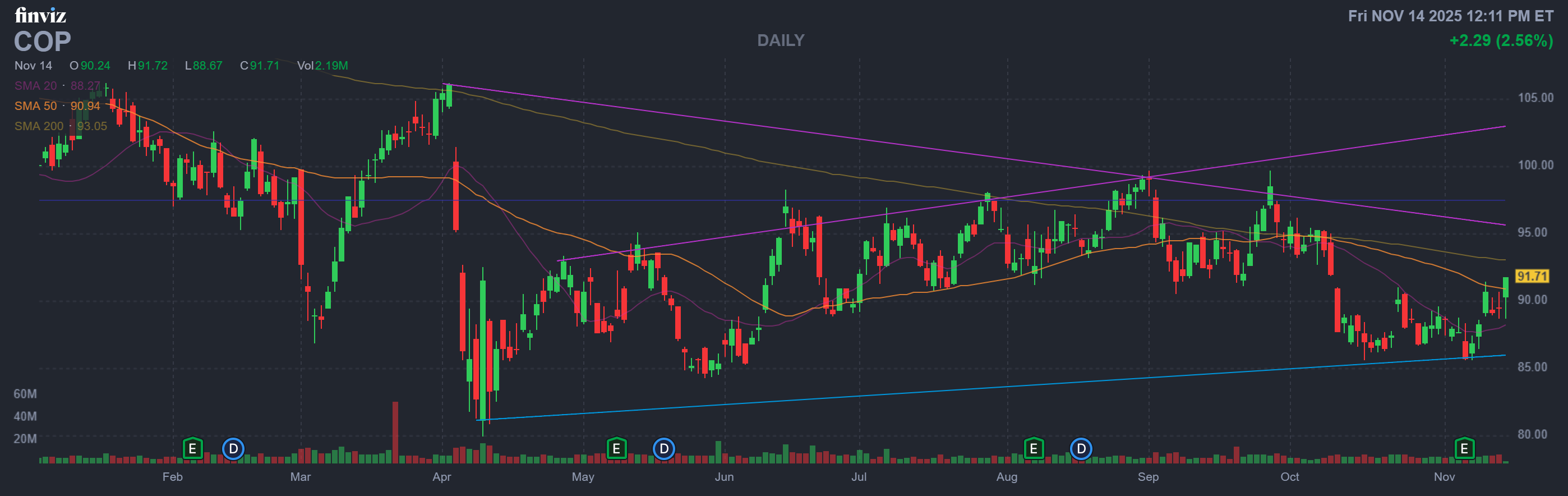
Transaction Date: 11-10-2025 Shares Bought: 5,768 shares an Average Price Paid of $86.68 for Cost: $500,000
Company: Conocophillips (COP)
ConocoPhillips is a multinational energy company engaged in the exploration, production, transportation, and marketing of crude oil, bitumen, natural gas, LNG, and natural gas liquids. The company operates through six segments: Alaska, Lower 48, Canada, Europe, Middle East and North Africa, Asia Pacific, and Other International. Its global portfolio includes unconventional resources in North America, large-scale conventional assets across several continents, major LNG developments, Canadian oil sands, and a substantial exploration pipeline. Founded in 1917 and headquartered in Houston, Texas, ConocoPhillips conducts operations in the United States, Canada, the United Kingdom, Norway, Malaysia, China, Singapore, Equatorial Guinea, Libya, and various other international markets.
William H. McRaven, a retired four-star admiral in the United States Navy and former Chancellor of the University of Texas System, joined the ConocoPhillips board in October 2018. He brings extensive leadership experience from commanding special operations forces at every level, including serving as Commander of the United States Special Operations Command and advising senior US leaders on national security and defense matters. McRaven holds a bachelor’s degree in journalism from the University of Texas at Austin and a master’s degree from the Naval Postgraduate School. At ConocoPhillips, his governance responsibilities include oversight in areas such as auditing, finance, human resources, and compensation.
Insomniac Hedge Fund Guy Opinion:
ConocoPhillips (COP) is a top-tier independent E&P company with a diversified upstream portfolio and strong capital discipline. In 2024, it generated $20.1 B in operating cash, reported adjusted earnings of $9.2 B, and replaced more than twice its reserves, signaling strength in its resource base. Management under Ryan Lance is executing a returns-driven playbook: they plan to return $10B+ to shareholders in 2025 via dividends and buybacks, while also raising production guidance and lowering cost forecasts. Key value unlocks include the $1.3B planned sale of non-core Anadarko Basin assets and deeper integrations from the Marathon Oil acquisition. However, the business remains highly exposed to oil/gas price risk and requires substantial capital investment — ~$12 B+ in capex annually. Conoco is cutting costs aggressively, including laying off up to 25% of its workforce, underlining the volatility of the energy sector. Short interest is low (~1% of float), indicating relatively modest bearish sentiment. A conservative DCF model (assuming stable mid-cycle prices and disciplined capital returns) returns a fair value range of $85–110 per share. Strengths include scale, cash generation, and deep reserves; weaknesses center on capex load and commodity exposure. Opportunities lie in asset sales and LNG expansion, while threats stem from regulatory risk and price volatility. In short, COP is a mature, capital-light (in terms of risk-adjusted returns) energy compounder, built for both cash flow and capital return.
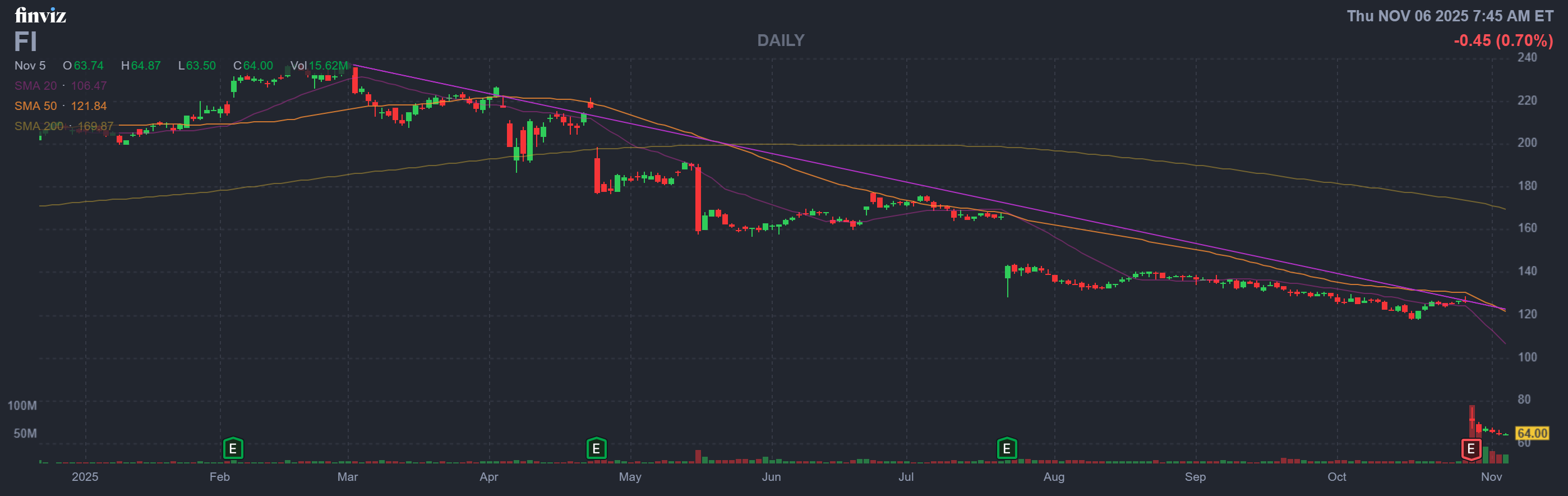
Name: Lance M. Fritz
Position: Director
Transaction Date: 10-30-2025 Shares Bought: 10,000 shares an Average Price Paid of $65.18 for Cost: $651,800
Company: Fiserv Inc. (FI)
Fiserv, Inc. is a leading global provider of payments and financial technology solutions that is publicly traded on the New York Stock Exchange and included in the S&P 500 Index. The company’s global clientele includes retailers, banks, credit unions, financial institutions, as well as corporate and public sector entities. Fiserv provides cutting-edge solutions in digital banking, account processing, card issuance, network services, payments, e-commerce, and merchant acquisition, including the Clover cloud-based point-of-sale and company management platform. Its goods and services are critical to clients’ operations and are delivered via regional teams throughout North America, Europe, the Middle East, Africa, Latin America, and the Asia Pacific.
Fiserv, Inc. is a leading global provider of payments and financial technology solutions, publicly traded on the New York Stock Exchange and included in the S&P 500 Index. The company serves a diverse global clientele, including retailers, banks, credit unions, financial institutions, and corporate and public sector organizations. Fiserv delivers innovative solutions across digital banking, account processing, card issuance, network services, payments, e-commerce, and merchant acquiring, featuring the Clover cloud-based point-of-sale and business management platform. Its products and services are essential to client operations and are supported by regional teams across North America, Europe, the Middle East, Africa, Latin America, and the Asia-Pacific region.
Insomniac Hedge Fund Guy Opinion:
Here’s how I see it: Fiserv is an attractive business in the payments/fin-tech infrastructure space — strong moat, scale, embedded customer relationships, and solid growth platforms (merchant/ POS, bank-tech). If the company executes, you could see steady growth, margin expansion, and value creation.
However — and this is the kicker — you’re paying for execution and growth that needs to materialize, and there’s limited margin of safety at current levels given recent deceleration and guidance trimming. My DCF suggests fair value in the $70-$90 range (depending on assumptions); if the shares are trading materially above that, you’re betting on upside surprises. If they’re below, maybe you have some cushion.
So my stance: cautiously optimistic. If I were you, I’d consider a moderate position assuming you believe in the merchant/ embedded finance growth story and Fiserv hitting its targets. But I would not go full leverage here — the downside risk is real if growth stalls further or margin gets squeezed. I’d want to see the next 2-3 quarters show accelerations (especially in Clover and international) before increasing conviction.
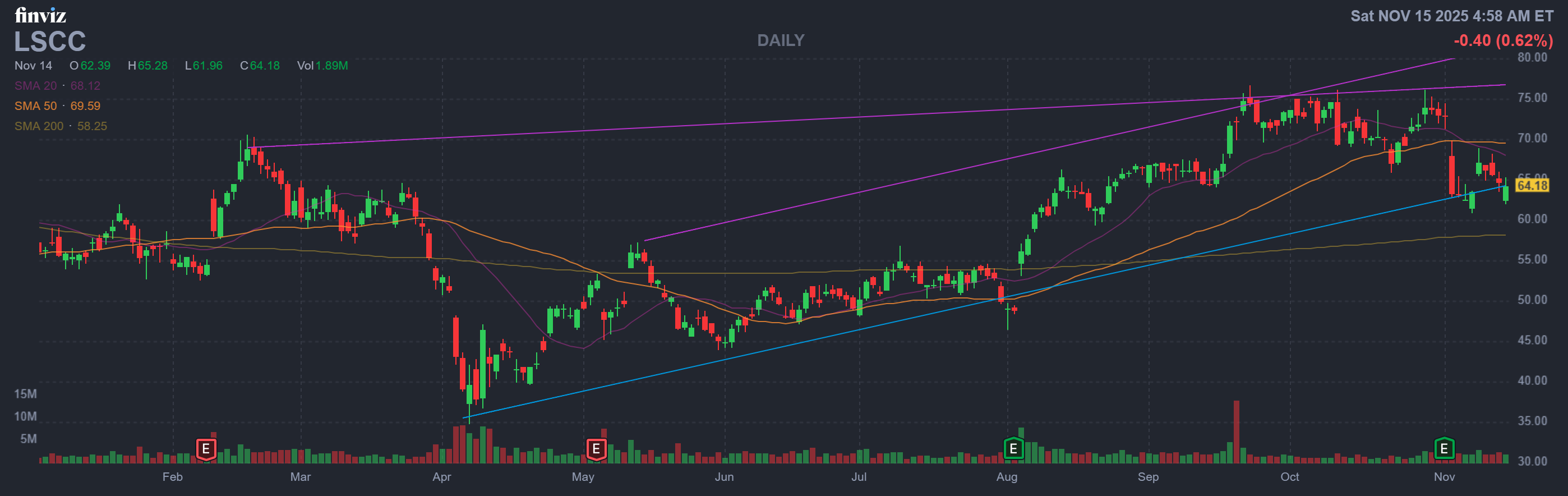
Name: Ford Tamer
Position: President & CEO
Transaction Date: 11-06-2025 Shares Bought: 30,000 shares an Average Price Paid of $63.07 for Cost: $1,892,115
Company: Lattice Semiconductor Corp (LSCC)
Lattice Semiconductor Corporation creates and sells programmable logic semiconductor chips, system solutions, design services, and licensing. Recognized as a leader in low-power programmable technology, the company services the Communications, Computing, Industrial, Automotive, and Consumer markets, meeting network needs from the edge to the cloud. Lattice uses superior technology, long-standing industry ties, and committed support to assist customers in developing smart, secure, and connected solutions.
Ford G. Tamer was appointed President and CEO of Lattice Semiconductor Corporation in September 2024, and he also joined the company’s board of directors. He brings decades of executive leadership experience in the semiconductor and networking industries, having previously served as President and CEO of Inphi Corporation and held senior roles at other major technology companies. Under his leadership, Lattice is positioned to benefit from his expertise in driving growth and innovation in cloud, telecom, and edge computing. Dr. Tamer holds an M.S. and Ph.D. in Engineering from the Massachusetts Institute of Technology, along with an undergraduate engineering degree from the American University of Beirut.
Insomniac Hedge Fund Guy Opinion: Lattice Semiconductor (LSCC) is a niche but strategically important FPGA company focused on low-power, edge-friendly programmable logic for industrial, communications, and AI applications. In Q3 2025, Lattice reported $133.3 M in revenue (+4.9% YoY), non-GAAP gross margin of 69.5%, non-GAAP EPS of $0.28, and free cash flow of $34M (25.5% margin). The company is guiding Q4 2025 revenue of $138–148M, implying ~22% YoY growth. Lattice’s product roadmap is strong: they’re pushing new FPGA families (MachXO5 NX) and leaning into AI-focused compute, especially for low-power edge applications. Management remains focused on operating leverage, but they are also investing heavily in R&D, which constrains near-term earnings. Operating margins remain healthy (non-GAAP ~29%), and adjusted EBITDA margin (~35.6%) gives them strong cash flow potential. On the risk side, Lattice is exposed to cyclical demand in industrial markets, and its growth depends on continued design wins in communications and AI. Their moat is real in the low-power space, but they must execute flawlessly as they scale. Valuation-wise, assuming stabilizing growth and margin leverage, I think LSCC could be worth $75–85 in a base-case scenario.
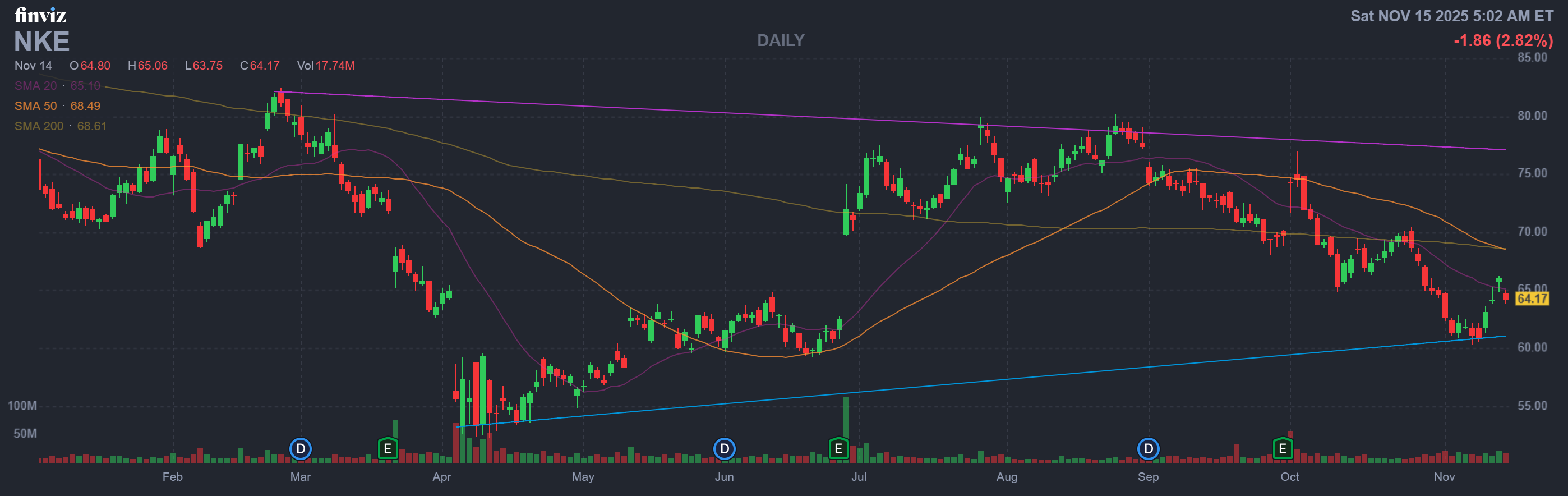
Name: Jørgen Vig Knudstorp
Position: Director
Transaction Date: 11-07-2025 Shares Bought: 16,150 shares an Average Price Paid of $62.09 for Cost: $1,002,754
Company: NIKE Inc. (NKE)
Nike, Inc., founded in Oregon in 1967, is a global leader in the design, development, marketing, and sale of athletic footwear, apparel, equipment, accessories, and services. The company sells its products worldwide through Nike owned stores, digital platforms, retail partners, independent distributors, licensees, and sales representatives. Nike also delivers engaging customer experiences through its digital ecosystem. Most of its footwear and apparel is manufactured by independent contractors outside the United States, while its equipment is produced both domestically and internationally.
Jørgen Vig Knudstorp joined the Nike board in 2025, bringing decades of global leadership experience. Beginning in 2004, he served as President and CEO of The LEGO Group before becoming Executive Chair of the LEGO Brand Group. Prior to LEGO, he worked as a management consultant at McKinsey and Company. Knudstorp is recognized for his expertise in brand strategy, digital marketing, and consumer products leadership, which aligns well with Nike’s focus on innovation and storytelling. He holds a master’s degree and a PhD in economics and business management from Aarhus University in Denmark.
Insomniac Hedge Fund Guy Opinion: Nike (NKE) is the world’s most iconic athletic brand, generating tens of billions in revenue across footwear, apparel, and equipment. In fiscal 2025, Nike’s revenues fell to $46.3B from $51.4B as inventory-clearing, discounting, and macro weakness weighed. Gross margin was pressured, falling to 42.7%, impacted by channel mix and higher return reserves. Nike returned $5.3B to shareholders via buybacks and dividends last year, signaling strong confidence in the long-term brand. New CEO Elliott Hill is steering the company through a “Win Now” turnaround — cutting excess inventory, reducing promotional behavior, refocusing on core sports (running, basketball), and repairing wholesale relationships. There is early evidence of margin recovery, though risks remain: sales declines, especially in China, and significant tariff headwinds. Nike’s moat is real — built on global scale, premium brand, innovation, and a strong DTC + digital engine. But execution is critical. If Hill’s reset works, Nike could recover its margin, grow more sustainably, and regain growth momentum. On the other hand, continued discounting or demand softness could erode its competitive edge. Valuation in a base-case turnaround scenario could approach $85–110/share, assuming clean inventory, stable margins, and a return to growth.
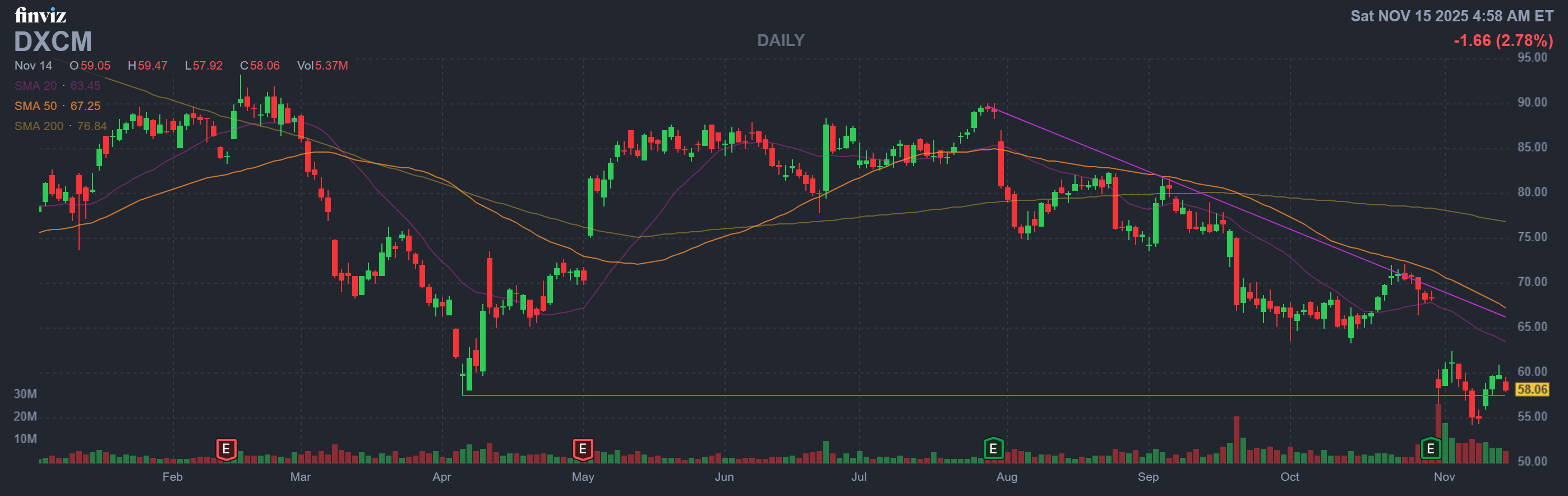
Name: Jacob Steven Leach
Position: President & COO
Transaction Date: 11-10-2025 Shares Bought: 18,200 shares an Average Price Paid of $55.04 for Cost: $1,001,702
Company: Dexcom Inc. (DXCM)
DexCom, Inc., founded in 1999 and headquartered in San Diego, California, is a leading medical device company specializing in the design, development, and commercialization of continuous glucose monitoring systems for individuals with diabetes and those managing metabolic health. Its product portfolio includes the Dexcom G6 and G7 integrated CGM systems, Dexcom Share for remote monitoring, the Dexcom RealTime API for integration with third party applications, Dexcom ONE as a modern alternative to traditional fingerstick testing, and Stelo, an over-the-counter glucose biosensor for adults with prediabetes and Type 2 diabetes. DexCom also partners with Verily Life Sciences to advance next-generation glucose monitoring technologies. Its products are distributed globally to endocrinologists, healthcare providers, and diabetes educators.
Jacob Steven Leach joined DexCom, Inc. in 2004 and currently serves as President and Chief Operating Officer. Before this role, he was the company’s Chief Technology Officer, where he helped drive advancements in Dexcom’s continuous glucose monitoring technologies. In his current capacity, Leach oversees global operations, research and development, clinical affairs, quality management, and regulatory functions. He earned a Bachelor of Science in Electrical Engineering with a minor in Biomedical Engineering from the University of California, Los Angeles.
Insomniac Hedge Fund Guy Opinion:
Dexcom is the category leader in continuous glucose monitoring, growing its active user base to ~2.8–2.9 million and booking record quarters in 2025 as it pushes the product into insulin- and non-insulin Type-2 markets. Revenue reaccelerated in 2025 (Q3’25 $1.209B) and management raised FY25 guidance to roughly $4.63–4.65B, driven by sensor recurring sales (which make up the overwhelming majority of revenue). Dexcom’s competitive advantages are clinical outcomes, payer access expansion, and product cadence (G7 15-day launch). Execution risk is real: an FDA warning letter and manufacturing observations pressured the stock earlier in the year and forced higher supply/logistics cost while the company rebuilt inventory. Insider purchases (e.g., President/COO purchases in Nov 2025) are a positive signal; short interest is low-to-moderate (~2.9% of float), not a crowded bearish position. My conservative 5-year DCF (midpoint guidance, decelerating growth, 21% operating margin, 10% discount rate) implies an intrinsic value around $35.8 / share — below current market price — implying the market is pricing either higher long-term growth, higher margins, or a lower risk premium. Conclusion: Dexcom is a high-quality recurring revenue med-device leader with durable economics — a structural long if you believe continued payer expansion, G7 adoption, and manufacturing stabilization; but this is not a low-volatility “safe” name — regulatory/manufacturing execution and competitive price pressure can compress outcomes quickly.
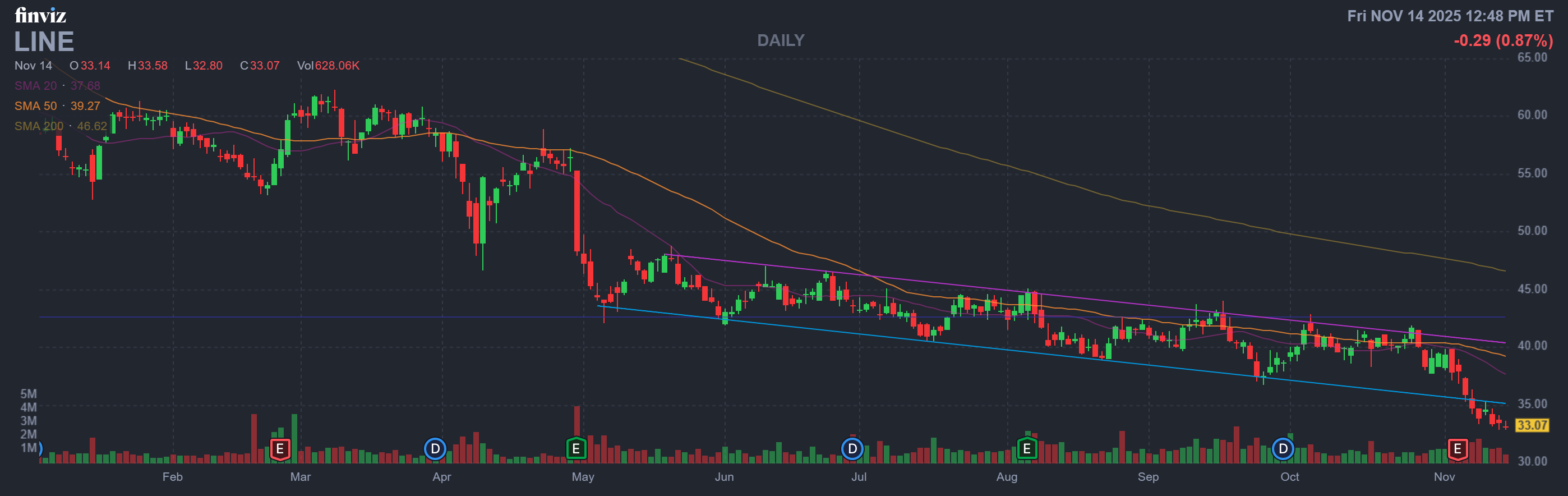
Name: Robert Crisci
Position: Chief Financial Officer
Transaction Date: 11-07-2025 Shares Bought: 10,000 shares an Average Price Paid of $34.56 for Cost: $345,630
Company: Lineage Inc. (LINE)
Lineage, Inc. is the world’s largest temperature-controlled warehouse REIT, operating a broad network of strategically located facilities across North America, Europe, and Asia Pacific. The company provides end-to-end supply chain solutions and advanced technology for leading food and beverage producers, retailers, and distributors. Its services focus on improving distribution efficiency, enhancing sustainability, reducing supply chain waste, and ensuring reliable global food delivery.
Robert Crisci joined Lineage, Inc. as Chief Financial Officer in April 2023, ahead of the company’s IPO. He brings more than 25 years of financial leadership experience, including a long tenure as Executive Vice President and Chief Financial Officer of Roper Technologies Inc. Before joining Roper, he built his career in investment banking, consulting, and capital markets through roles at Morgan Keegan, Deloitte and Touche, and VRA Partners. Crisci holds an AB in Economics from Princeton University and an MBA from Columbia Business School.
Insomniac Hedge Fund Guy Opinion:
Lineage, Inc. (LINE) is the global leader in temperature-controlled warehousing (cold storage), operating hundreds of facilities across North America, Europe, and Asia. As a REIT, it generates revenue from long-term leases and storage contracts, serving major food producers, retailers, and other temperature-sensitive businesses. In Q3 2025, Lineage reported $1.377B in revenue (+3.1% YoY) but also a GAAP net loss of $112M, while adjusted EBITDA was $341M (24.8% margin) and AFFO per share came in at $0.85. The company remains committed to its dividend ($0.5275 / quarter, $2.11 annualized). Challenges include seasonal occupancy headwinds and tariff-related risks, which have pressured guidance. On the other hand, Lineage struck a major agreement with Tyson Foods to reinforce its role in the food supply chain, and it has raised capital via a $500M bond issue to help finance growth. Equity analysts are somewhat constructive: Barclays initiated with an Overweight at a ~$72.7 target, while Evercore remains more cautious but sees upside. The balance sheet is levered, and energy, labor, and occupancy risk remain key variables. But with its unmatched scale, relationship network, and real estate footprint, Lineage has a strong foundation to compound AFFO over time — especially if it executes on expansion and improves cost structure.
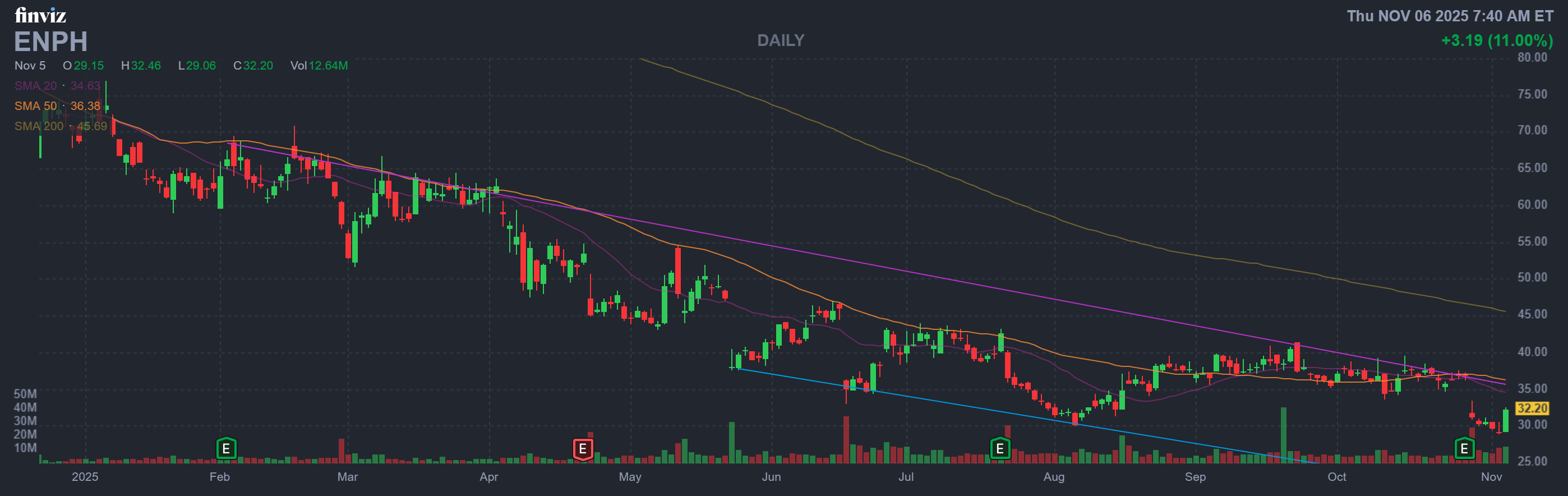
Name: Badrinarayanan Kothandaraman
Position: President & CEO
Transaction Date: 10-31-2025 Shares Bought: 10,000 shares an Average Price Paid of $30.93 for Cost: $309,317
Company: Enphase Energy Inc. (ENPH)
Enphase Energy Inc., formed in 2006, is a global energy technology business that offers smart, integrated solutions for solar generation, storage, and communication. The company’s sophisticated microinverters work with almost all solar panels and, when combined with its clever battery technology, produce high-performance clean energy solutions. Enphase allows people to generate, store, and share renewable energy, thereby facilitating the transition to a more sustainable and decentralized energy grid. With millions of units deployed in over 150 countries, Enphase remains a global leader in sustainable energy technology innovation.
Badrinarayanan Kothandaraman has served as President and Chief Executive Officer of Enphase Energy, Inc. since September 2017, after joining the company earlier that year as Chief Operating Officer. He brings more than two decades of leadership experience from Cypress Semiconductor, where he held several senior positions, including Executive Vice President of the Data Communications Division. Kothandaraman holds a Bachelor’s degree in Materials Science from the Indian Institute of Technology Madras, a Master’s degree in Materials Science from the University of California, Berkeley, and has completed executive education at the Stanford Graduate School of Business. Under his leadership, Enphase has strengthened its position as a global leader in solar and energy storage technology.
Insomniac Hedge Fund Guy Opinion:
Enphase is an intriguing “renewables-hardware plus storage” play with technical leadership and insider buying showing belief in the turnaround. But it’s far from a safe bet. The recent revenue collapse and macro/tariff headwinds mean you’re buying a company with upside if everything goes right (growth reaccelerates, margins improve, policy tailwinds remain), but downside is meaningful if one or more of those breaks.
My lean: cautiously optimistic. If I believed strongly in a rebound in residential solar + storage (in US and globally), and in Enphase’s ability to convert that into growth & margin, I’d consider a small speculative position. But I would not allocate as a core holding yet — the valuation already reflects a good deal of hope. I’d wait for clearer signals: stable acquisitions of market share, consistent quarter-over-quarter growth, margin expansion, and improved guidance before going “all in.”
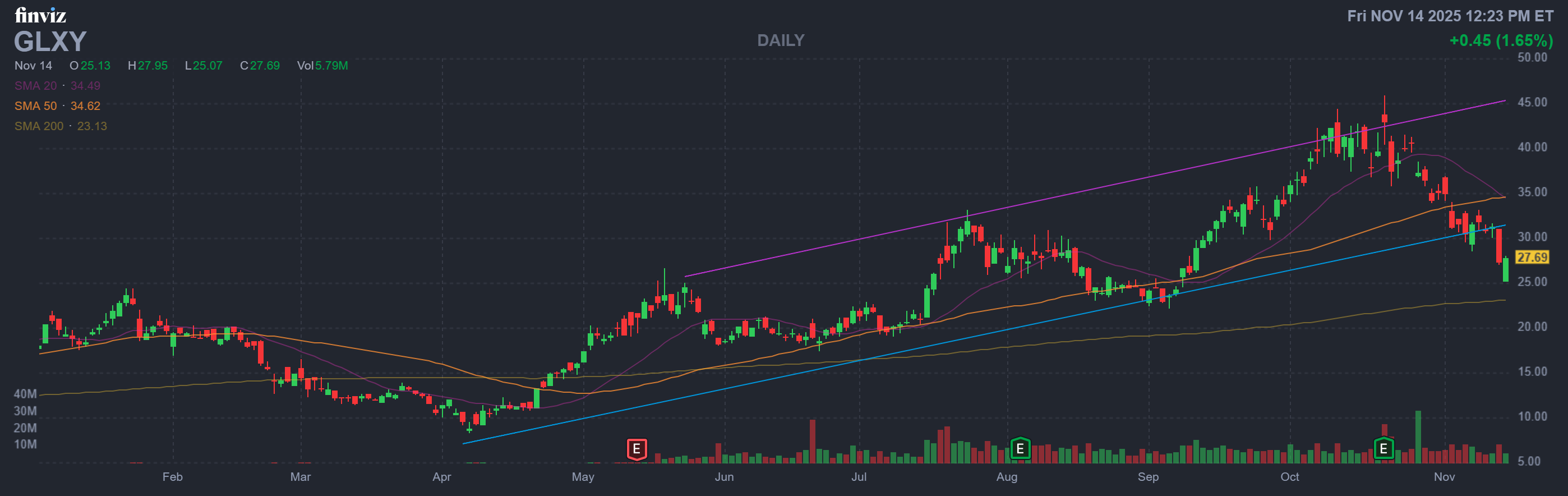
Name: Douglas R. Deason
Position: Director
Transaction Date: 11-07-2025 Shares Bought: 10,000 shares an Average Price Paid of $29.59 for Cost: $295,918
Company: Galaxy Digital Inc. (GLXY)
Galaxy Digital Inc. operates in the digital asset and data center infrastructure sectors, providing institutional trading, advisory services, asset management, staking, self-custody solutions, and tokenization technology. The company also invests in and manages data center infrastructure that supports AI and high-performance computing, helping meet the increasing need for scalable energy and compute capacity in the United States. Based in New York, Galaxy Digital maintains offices across North America, Europe, the Middle East, and Asia.
Douglas R. Deason became a Director of Galaxy Digital Inc. in July 2025 and also serves on the Nominating and Corporate Governance Committee. He has led Deason Capital Services, LLC since 2011 and previously served as CEO of Precept Builders, Inc. and Precept Business Services, Inc., as well as co-manager of Evergreen Realty Partners. Beyond his business leadership, he serves on several boards, including Great American Media as Chairman, Ryan, LLC, and Park Cities Financial Group, and holds civic and educational advisory roles with the Texas Public Policy Foundation and Southern Methodist University. He earned a Bachelor of Science in Data Processing, Quantitative Analysis, and Computer Science from the University of Arkansas.
Insomniac Hedge Fund Guy Opinion: Galaxy Digital (GLXY) is a diversified crypto financial services firm that has successfully pivoted into becoming a hybrid crypto-institution + future AI / high-performance computing (HPC) infrastructure play. On the crypto side, they operate trading, derivatives, lending, and asset management. On the infrastructure side, their Helios data center campus in West Texas (with a 15-year lease from CoreWeave) positions them to be a major landlord as AI demand explodes. In Q2 2025, Galaxy posted $30.7M in net income and $211M in adjusted EBITDA, with $1.2B in cash/stablecoin holdings. Equity under management sits near $17B per its Q3 commentary. The company went through a reorganization and is now a Delaware-incorporated U.S. company (Nasdaq: GLXY), increasing its appeal to U.S. investors.Short interest is non-trivial (~13% of basic shares), suggesting some institutional skepticism. The biggest opportunity is Helios — if Galaxy scales the data-center to its full ~3.5 GW potential, it could unlock recurring, very high-margin cash flows. But risk is real: crypto volatility could hammer its trading business, and capex + execution risk for the data campus is significant. In sum, GLXY is a high-conviction hybrid play — part digital-asset finance, part infrastructure landlord — for investors who believe in crypto long-term and the AI compute boom.
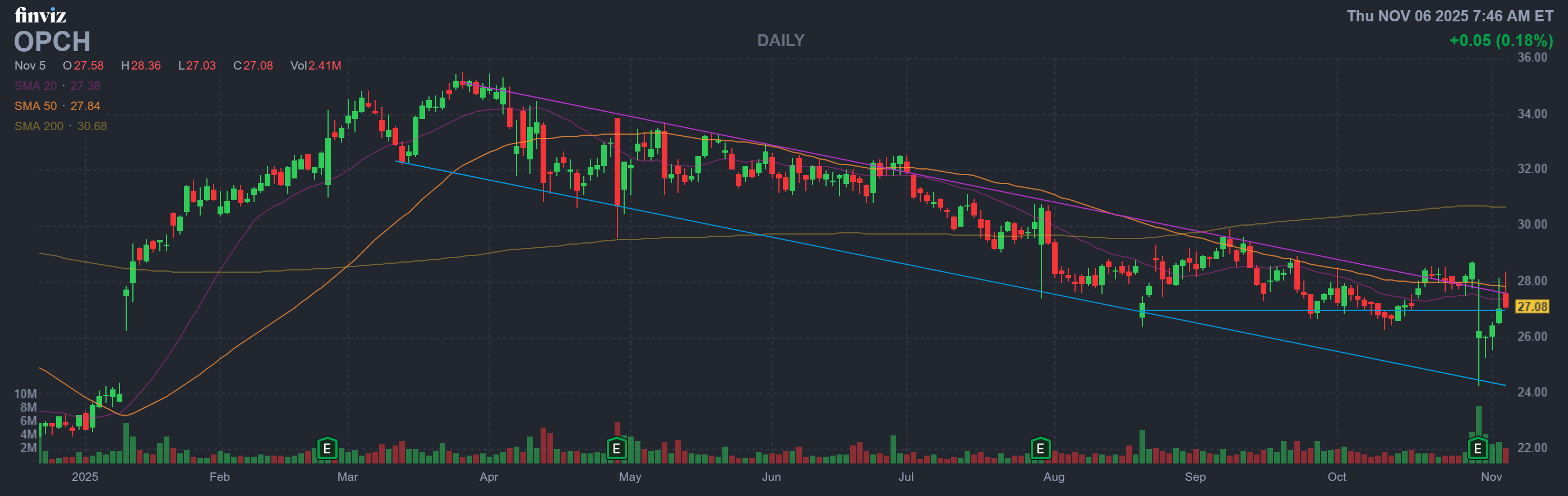
Name: Harry M. Jansen Kraemer Jr.
Position: Director
Transaction Date: 11-03-2025 Shares Bought: 38,000 shares an Average Price Paid of $25.98 for Cost: $987,392
Company: Option Care Health Inc. (OPCH)
Option Care Health, Inc., headquartered in Bannockburn, Illinois, is a leading provider of home and alternate site infusion therapies across the United States. The company delivers treatments for a wide range of conditions, including infections, heart failure, acute and chronic illnesses requiring parenteral and enteral nutrition, and immunoglobulin infusions for immune deficiencies. It also provides therapies for chronic inflammatory and neurological disorders, blood conditions, high-risk pregnancies, pain management, chemotherapy, and respiratory diseases, supported by specialized nursing care. Option Care Health reaches patients through referrals from physicians, hospitals, health maintenance organizations, and preferred provider networks.
Harry M. Jansen Kraemer Jr. has served as a director of Option Care Health, Inc. since 2019 and currently holds the roles of Independent Chair of the Board and Chair of the Nominating and Corporate Governance Committee. He is also a Clinical Professor of Leadership at Northwestern University’s Kellogg School of Management, where he teaches values-based leadership. Prior to joining Option Care Health, Kraemer was Chairman and Chief Executive Officer of Baxter International Inc. He earned a Bachelor’s degree in Mathematics and Economics from Lawrence University and a Master of Business Administration in Finance and Accounting from Northwestern University’s Kellogg School of Management.
Insomniac Hedge Fund Guy Opinion:
Option Care Health is an interesting pick in the home-infusion / alternative-site healthcare services space — a secular tailwind story (home care growth), with solid revenue growth (~15% range) and recent internal buying. If the company executes margin improvement and holds cost/asset discipline, the upside is meaningful.
However — and here’s my blunt part — this is not a no-brainer. You’re buying a company with margin and leverage risk, heavy dependence on reimbursement and supply chain, and a business that needs to prove it can improve profitability, not just revenue. My conservative valuation suggests fair value in the $20-$22 range, whereas the current price (~$26-$30) reflects optimism that execution and margin improvement will come through.
My lean: moderately bullish but cautious. If you believe the home-infusion trend will accelerate, and Option Care can scale, integrate acquisitions and improve margin, then this could be one to hold. But if you’re sceptical about reimbursement risk or execution, you might prefer to wait for better margin proof or a more attractive entry price.
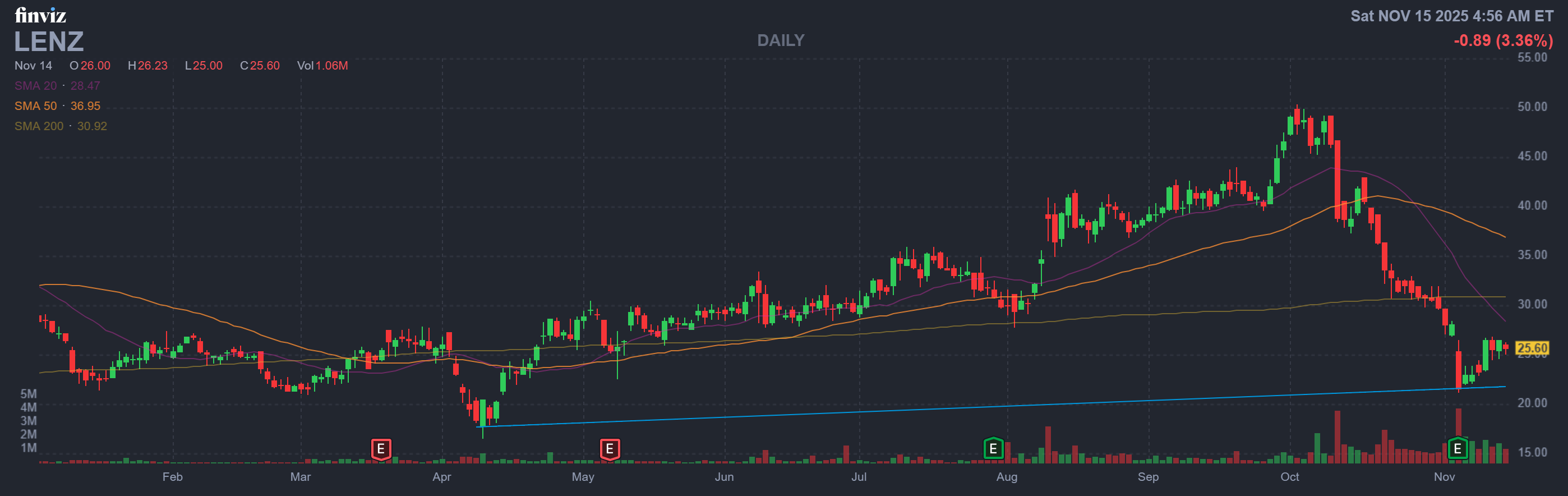
Name: James W. Mccollum
Position: Director
Transaction Date: 11-07-2025 Shares Bought: 10,500 shares an Average Price Paid of $22.79 for Cost: $239,278
Company: Lenz Therapeutics Inc.(LENZ)
Lenz Therapeutics Inc. is a pre-commercial biopharmaceutical company developing novel medicines to improve vision, with a primary focus on treating presbyopia, the age-related loss of near vision that affects most people over the age of forty-five. The company aims to address the large U.S. population impacted by this condition and seeks to provide effective, noninvasive treatment options for this widespread visual impairment.
James W. McCollum, a co-founder and director of LENZ Therapeutics, Inc., has served on the board since July 2013. He was the company’s President and CEO from September 2016 to March 2021. Before joining LENZ, he was President and CEO of an ocular pharmaceutical company he co-founded, as well as several medical device companies focused on ophthalmology. Earlier in his career, he served as Senior Vice President of Worldwide Marketing and Sales at VISX, Incorporated. McCollum holds a Bachelor of Arts in Business from North Carolina State University.
Insomniac Hedge Fund Guy Opinion: LENZ Therapeutics (NASDAQ: LENZ) is a late-stage ophthalmic company focused on VIZZ™ (aceclidine 1.44%), a once-daily eye drop for presbyopia. The company recently received FDA approval (July 31, 2025) and launched commercially in October 2025. During its early launch, more than 2,500 prescribing eye-care professionals have already started using VIZZ, and over 5,000 prescriptions were filled as of October. LENZ has built out an 88-person sales force and is prepared to scale rapidly. As of Q3 2025, they had a pro forma cash position of $324M, giving them a runway into post-launch positive cash flow. They’ve also inked significant licensing deals internationally — including >$195M upfront/milestone payments for Asia and Canada. LENZ’s lead asset, LNZ100, has cleared pivotal Phase 3 trials and aligns with a large addressable market (~128M people in the U.S. with presbyopia). On the risk side, SG&A costs have surged, and profitability is still negative (net loss of $16.7M in Q3). Commercial execution, pricing strategy, and patient adoption will make or break the story. Piper Sandler has initiated on LENZ with an Overweight rating and a $51 target, suggesting strong conviction behind its near-term launch. For investors, LENZ represents a binary-but-conviction biotech play: huge upside if VIZZ becomes a category leader, but real execution risk remains.
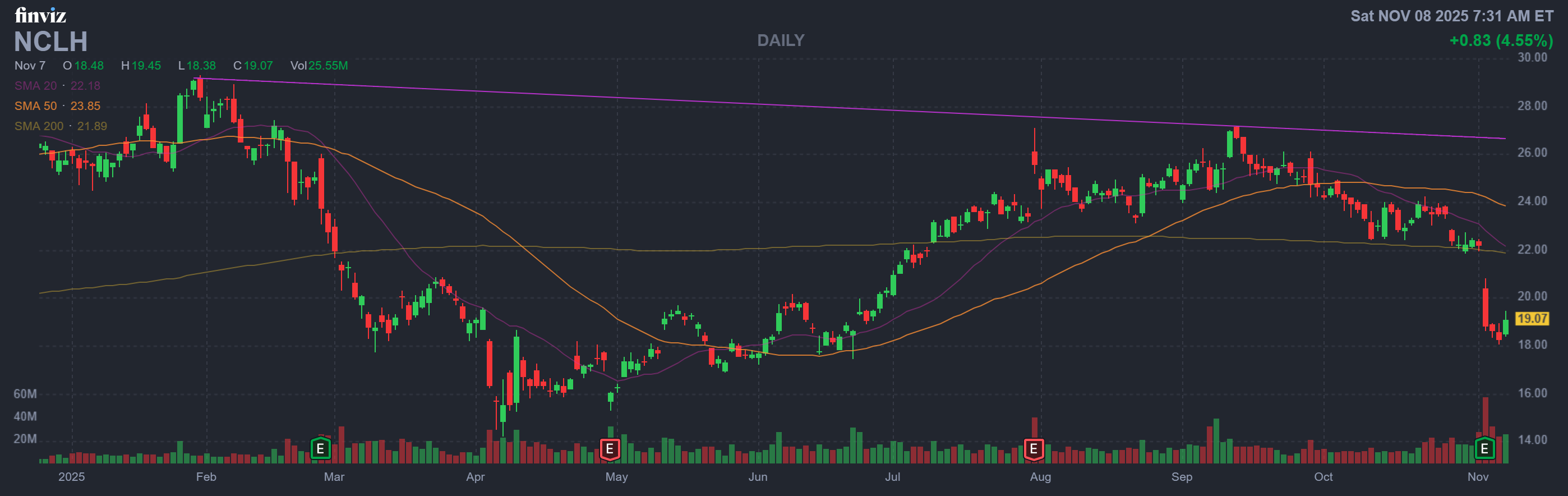
Name: Jason Montague
Position: Chief Luxury Officer
Transaction Date: 11-06-2025 Shares Bought: 13,400 shares an Average Price Paid of $18.81 for Cost: $252,021
Name: Mark Kempa
Position: EVP & CFO
Transaction Date: 11-06-2025 Shares Bought: 10,635 shares an Average Price Paid of $18.53 for Cost: $197,051
Name: Harry Sommer
Position: President & CEO
Transaction Date: 11-06-2025 Shares Bought: 25,000 shares an Average Price Paid of $18.52 for Cost: $462,932
Company: Norwegian Cruise Line Holdings Ltd. (NCLH)
Norwegian Cruise Line Holdings Ltd., founded in 1966 and headquartered in Miami, Florida, is a leading global cruise company operating under the brands Norwegian Cruise Line, Oceania Cruises, and Regent Seven Seas Cruises. The company offers an extensive range of itineraries to destinations across Europe, Asia, Australia, New Zealand, South America, Africa, Canada, Bermuda, the Caribbean, Alaska, and Hawaii. Its cruise experiences feature diverse accommodations, dining options, entertainment, spas, casinos, retail shopping, and shore excursions, as well as comprehensive air travel and hotel packages.
Jason Montague joined Norwegian Cruise Line Holdings Ltd. in 2002 and currently serves as Chief Luxury Officer, overseeing Regent Seven Seas Cruises and Oceania Cruises. He was appointed to this position in February 2025 as part of the company’s “Charting the Course” strategic plan. Prior to this role, he served as President and Chief Executive Officer of Regent Seven Seas Cruises and held key leadership positions at Oceania Cruises and Prestige Cruise Holdings. Before joining the company, Montague worked in finance and consulting, including serving as Vice President of Finance at Alton Entertainment Corporation. He holds a Bachelor of Business Administration in Accounting from the University of Miami.
Mark A. Kempa serves as Executive Vice President and Chief Financial Officer of Norwegian Cruise Line Holdings Ltd., where he is responsible for the company’s financial strategy, accounting, treasury, tax, technology, corporate strategy, and investor relations. According to the company’s website, he began his career in accounting and internal auditing in 1998 and advanced through several leadership roles, including Director of Newbuild Cost & Control, Vice President of Corporate & Capital Planning, and Senior Vice President of Finance, before being appointed CFO in August 2018. Kempa played a key role in the company’s initial public offering and a major acquisition earlier in his tenure. Before joining Norwegian, he served as Assistant Controller for a travel portfolio company. He holds a Bachelor of Arts in Accounting from Barry University in Miami.
Harry J. Sommer joined Norwegian Cruise Line Holdings Ltd. in 2000 and became the company’s President and Chief Executive Officer-Elect on April 1, 2023, officially assuming the role of President and CEO on July 1, 2023. Prior to that, he served as President and CEO of the company’s flagship brand, Norwegian Cruise Line, beginning in January 2020, and earlier held the position of President, International, for the group. Sommer has extensive experience across global sales, marketing, revenue management, and operations. He earned a Bachelor of Business Administration from Baruch College and a Master of Business Administration from Pace University, both in New York, and is an inactive Certified Public Accountant.
Insomniac Hedge Fund Guy Opinion:
NCLH is an interesting speculative play in the travel/leisure resurgence theme — if you believe that demand for cruising will stay strong, pricing power will hold, and cost/efficiency improvements will materialize, it has upside. It’s showing early signs of recovery and strength in the cruising cycle.
But: you’re buying into a business with higher risk than many stable industrial companies. The valuation seems to reflect some of that upside — but the margin of safety is thin. If travel demand falters, fuel costs spike, or ship-delivery financing becomes a burden — the downside could be steep.
My lean: cautiously positive, but only as a speculative position. Not a core low-risk compounder. If I were you, I’d allocate modestly (if at all) and keep a close eye on things like:
-
booked position growth
-
onboard spend per passenger
-
cost per capacity day trends
-
debt/lease obligations and ship delivery pipeline
If all those start ticking strongly upward, then you can upgrade conviction. Until then, treat it as a high-beta, high-risk / high-potential play.
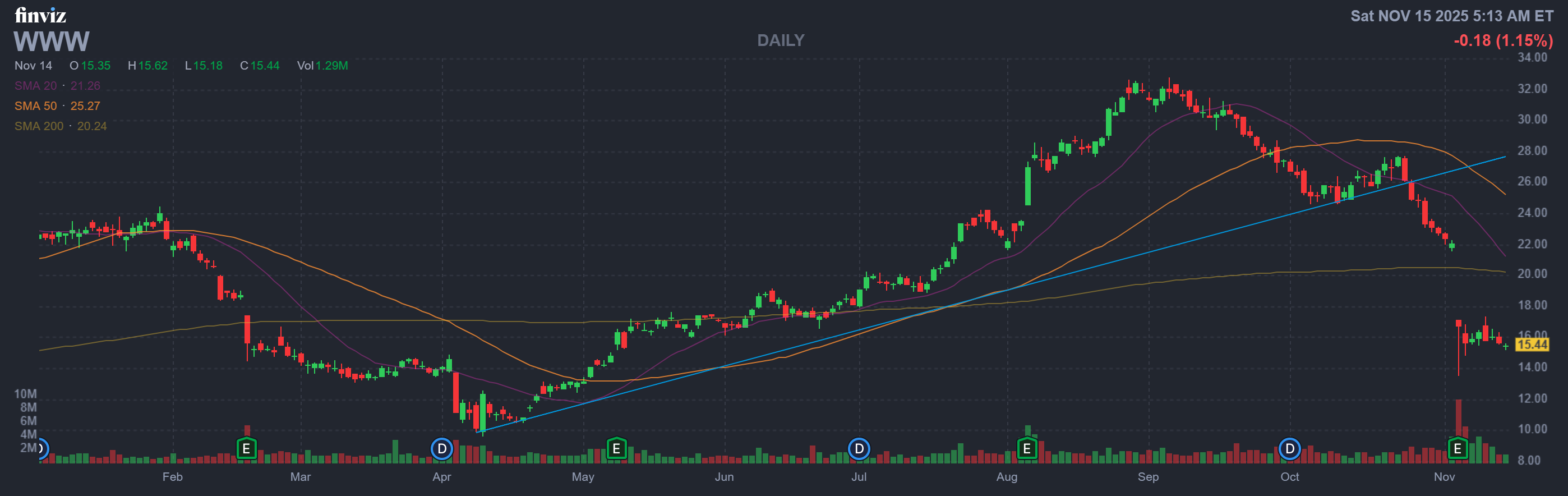
Name: DeMonty Price
Position: Director
Transaction Date: 11-07-2025 Shares Bought: 25,000 shares an Average Price Paid of $15.77 for Cost: $394,250
Company: Wolverine World Wide Inc (WWW)
Wolverine World Wide, Inc. is a global designer, marketer, and licensor of casual, outdoor, athletic, and work footwear and apparel, including children’s products and uniforms. The company distributes its brands in approximately 170 countries, operating directly in the United States, Canada, the United Kingdom, and parts of Europe and Asia Pacific, while reaching additional markets through distributors, licensees, and joint ventures.
DeMonty Price serves as a Director of Wolverine World Wide, Inc., having joined the board in March 2023. He brings extensive retail leadership experience, including his role as President and Chief Operating, Service, and Values Officer at RH, along with senior executive positions at Williams-Sonoma and Gap. Price holds a Bachelor of Science in Fashion Merchandising from Oregon State University.
Insomniac Hedge Fund Guy Opinion: Wolverine World Wide (WWW) is a diversified footwear company with a rich brand portfolio including Merrell, Saucony, Wolverine, Hush Puppies, Chaco, and work boot brands. In Q2 2025, the company reported revenue of $474.2 M, up 11.5% YoY, largely driven by its Active Group (Merrell + Saucony) — Saucony revenue jumped ~41.5% YoY. Gross margin expanded to 47.2% (from 43.1%) thanks to better mix, reduced promotions, and supply-chain improvements. Adjusted operating margin hit ~9.2%, and adjusted EPS was $0.35. On the balance sheet front, net debt stood at ~$568M by the end of Q2, down from the prior year, and inventory is being managed more tightly. Strategic risk remains: DTC sales fell slightly, and the “Other” brand category (older brands) is declining. The company’s outlook for Q3 is cautious but positive, with expected continued revenue growth and a slight margin compression. I assess a base-case valuation around $18–24 / share, assuming continued Active brand strength, margin recovery, and successful debt management. Overall, WWW looks like a turnaround-compounder: not a rocket ship, but a high-conviction bet on mid/long-term growth in performance footwear if they execute.
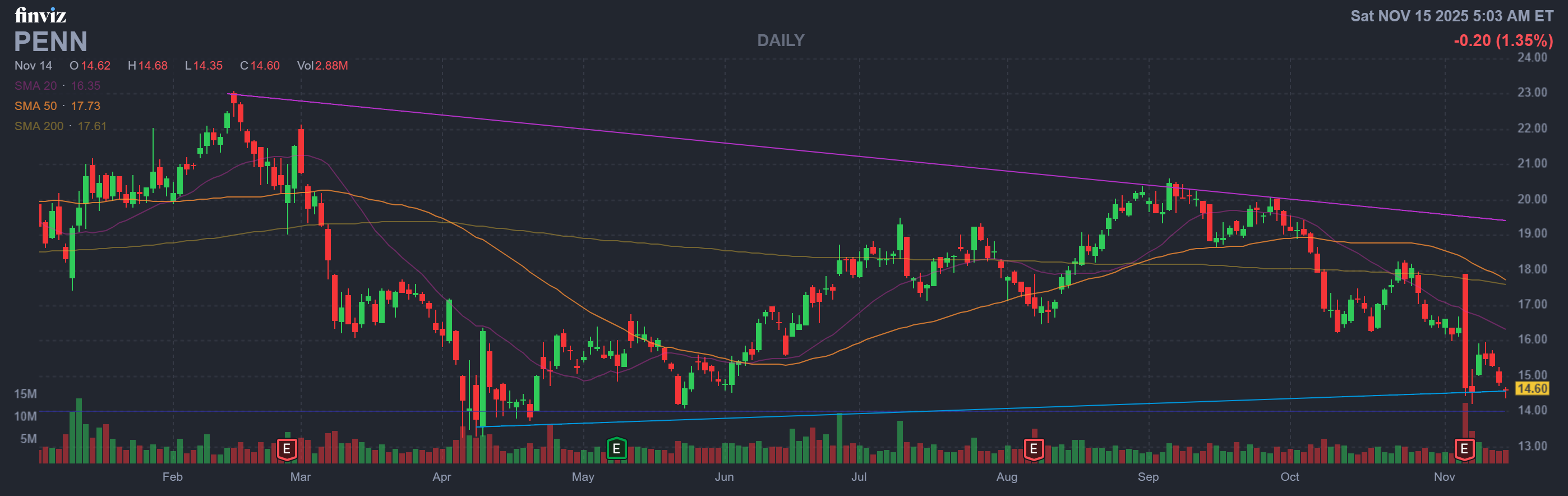
Name: Jay A. Snowden
Position: CEO and President
Transaction Date: 11-07-2025 Shares Bought: 34,700 shares an Average Price Paid of $14.32 for Cost: $496,939
Company: PENN Entertainment Inc. (PENN)
PENN Entertainment, Inc. is a leading North American provider of integrated entertainment, sports content, and casino gaming experiences. The company operates across 28 jurisdictions with well known brands such as Hollywood Casino, L’Auberge, ESPN BET, and theScore BET. Through its partnership with ESPN and ownership of theScore, PENN brings together retail casinos, digital media, and proprietary technology, including its own digital betting platform and iCasino content studio. This creates a unified customer ecosystem supported by the PENN Play loyalty program, which has approximately 32 million members.
Jay A. Snowden is the CEO and President of PENN Entertainment, Inc. He joined the company in October 2011 and has held several senior leadership roles, including Vice President of Regional Operations and Chief Operating Officer. He was appointed President and Chief Operating Officer in March 2017, and later became CEO and President in January 2020. Before joining PENN, he held multiple executive positions at Caesars Entertainment Corporation across various regions. He holds a bachelor’s degree from Harvard University and an MBA from Washington University in St. Louis.
Insomniac Hedge Fund Guy Opinion: PENN Entertainment is a hybrid gaming business combining a stable, cash-flowing retail casino empire with a growing but still-loss-making digital betting and iCasino business. In Q2 2025, PENN generated $1.765B in total revenue, with $1.4B from its physical casinos and $316.1M from its Interactive segment. The retail business contributed $489.6M in adjusted EBITDAR, delivering a robust 33.8% margin, while the Interactive side recorded a $62M adjusted EBITDA loss — a sign that PENN is still aggressively investing in scaling online. Its omnichannel strategy is working: the number of “online-to-retail” players is up 8% YoY, and their “theoretical revenue” (how much they’re expected to spend in retail) jumped 28%. Key recent developments: PENN plans to end its ESPN Bet partnership early (by December 2025), rebrand to theScore Bet, and reallocate capital more efficiently — potentially saving on media and unlocking growth. It’s also executing a massive $350M+ share buyback program. Risks remain: the online business has to scale, regulatory risks are non-trivial, and corporate overhead is still high. A rough valuation based on its dual business model suggests a base-case fair value of $18–24/share, assuming successful cross-sell and margin execution.
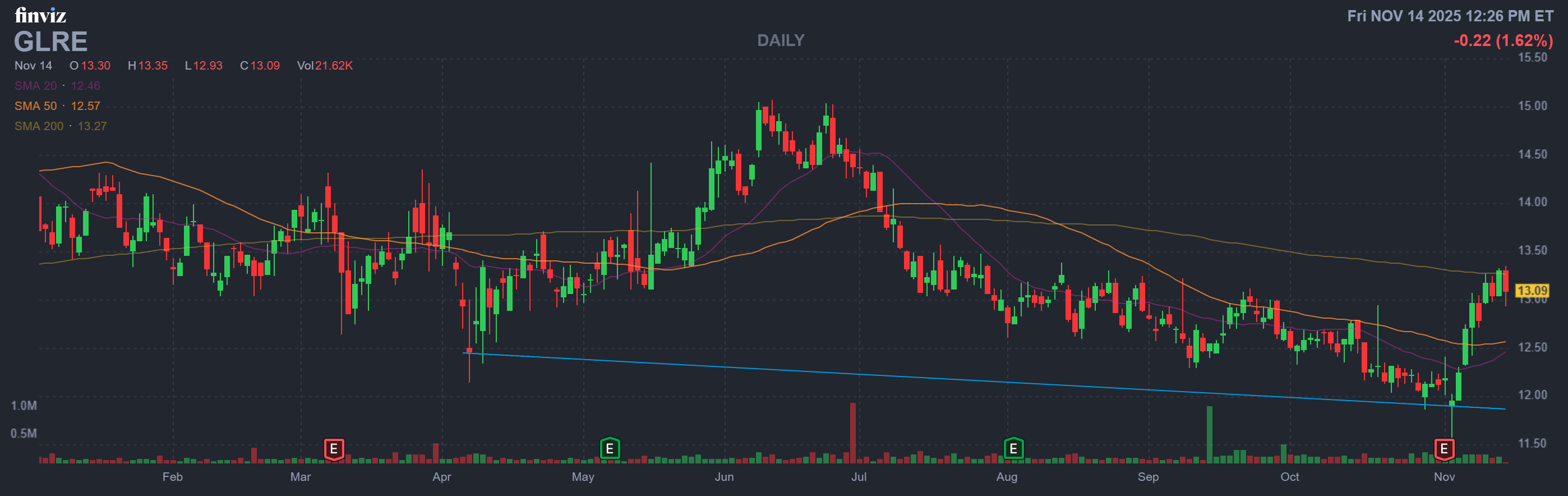
Name: Greg Richardson
Position: Chief Executive Officer
Transaction Date: 11-06-2025 Shares Bought: 50,000 shares an Average Price Paid of $12.75 for Cost: $637,300
Company: Greenlight Capital Re Ltd. (GLRE)
Greenlight Capital Re, Ltd. is a global property and casualty reinsurance company offering a broad portfolio of products, including auto liability, personal and commercial property, general liability, umbrella, multiline casualty, and workers’ compensation. It also provides accident and health, transactional liability, mortgage insurance, surety, trade credit, marine, energy, and specialty coverages such as aviation, cyber, political risk, and terrorism. The company distributes its reinsurance solutions through brokers. Founded in 2004, Greenlight Capital Re is headquartered in Grand Cayman, Cayman Islands.
Greg Richardson is the Chief Executive Officer of Greenlight Capital Re Ltd., a role he assumed in January 2024. Before joining the company, he served as Chief Risk and Strategy Officer at TransRe and held senior leadership roles in strategic planning and underwriting, including Chief Underwriting Officer at Harbour Point Re. Richardson holds a Bachelor of Science in Mathematics from Purdue University, completed graduate studies as a Marshall Scholar at Oxford University, and earned an MBA in Finance from the University of Chicago.
Insomniac Hedge Fund Guy Opinion: Greenlight Capital Re is a small-cap, multiline property and casualty reinsurer that operates globally via entities in the Cayman Islands/Ireland and a Lloyd’s platform. In 2024 it produced approximately $701.6 M in revenue (+7.1% YoY) but net income declined ~50% to ~$42.8 M, reflecting combined-ratio pressure and investment losses. Its core business is split between traditional treaty reinsurance (“Open Market”) and an “Innovations” unit providing capacity to MGAs/startups — a niche differentiator. In Q2 2025 it achieved a combined ratio of 95.0% (solid underwriting) and returned $5 M via buybacks, but its recent Q4 2024 underwriting loss (combined ratio 112.1% due to cat-losses) underscores volatility. Insider signals are mixed: not a strong wave of insider buying; some officers/directors selling. The investment-strategy component (non-traditional investments) adds risk alongside underwriting. The business lacks recurring-subscription-style revenue; growth is modest and margins thin (ROE ~5.7%). Opportunities lie in scaling the Innovations segment and improving underwriting results; threats include massive cat events and investment losses. A back-of–the-envelope intrinsic valuation suggests a range around $9-12/share in a base case. Unless the company can meaningfully improve cumulative investment returns and combined ratio, upside is limited. In short: GLRE is a value-tilted reinsurance special-situation for someone comfortable with volatility and niche underwriting risk.
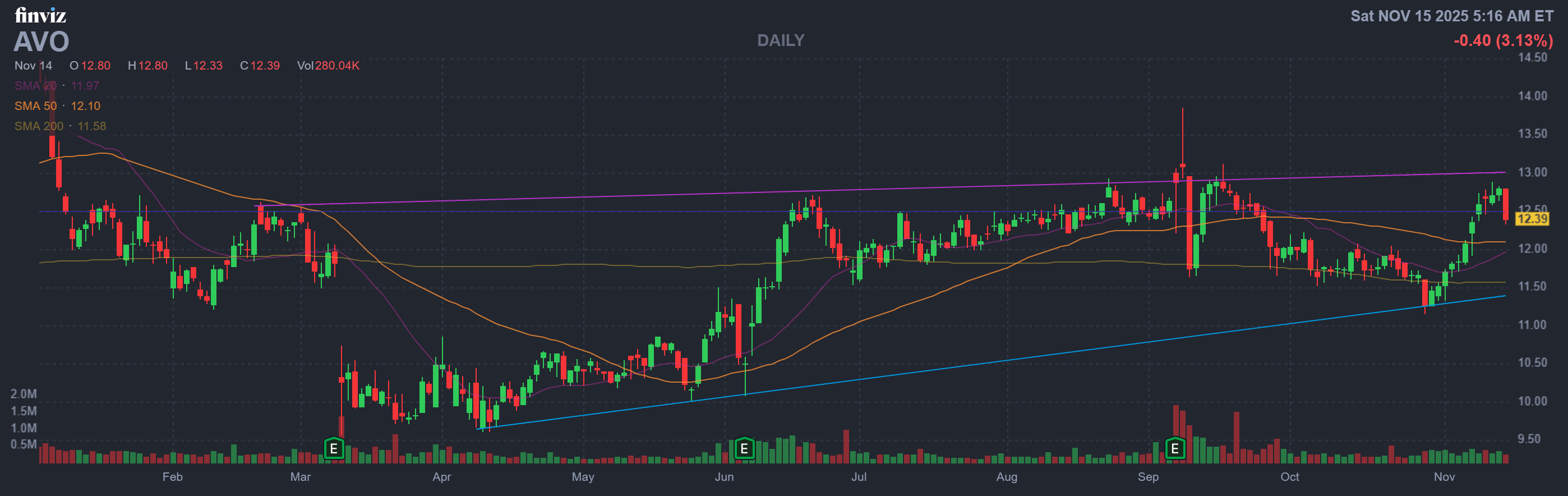
Name: Globalharvest Holdings Venture Ltd
Position: 10% Owner
Transaction Date: 11-06-2025 Shares Bought: 75,710 shares an Average Price Paid of $11.94 for Cost: $904,296
Company: Mission Produce Inc. (AVO)
Mission Produce, Inc. sources, produces, packages, markets, and distributes avocados, mangoes, and blueberries to retailers, wholesalers, and foodservice operators in the United States and globally. The company operates through three segments: marketing and distribution, international farming, and blueberry. It offers services including ripening, custom packing, logistics, quality assurance, merchandising, promotional support, market insights, and training. Mission Produce is headquartered in Oxnard, California.
Insomniac Hedge Fund Guy Opinion: Mission Produce (NASDAQ: AVO) is a vertically integrated produce company focused on Hass avocados, but also growing its footprint in mangoes and blueberries. In Q2 FY2025, it delivered record revenue of $380.3 M (+28% YoY), driven by a 26% increase in its avocado selling price, even though volumes remained flat due to supply constraints. However, margin pressure was real — gross margin dropped to ~7.5%, and adjusted EBITDA fell to $19.1 M. Management is leveraging its global sourcing network (Mexico, Peru, California) to navigate supply volatility, and it’s investing in farming — Peruvian avocado production is projected to hit 100–110 million pounds in 2025. In Q3 FY2025, the company reported $357.7 M in revenue (+10%) and improved gross margin to 12.6%, buoyed by increased farm production. On the risk side, AVO faces supply-chain volatility (tariffs, weather), working capital strain, and per-unit margin swings. But the upside is compelling: if they scale farming operations, optimize distribution, and ride price strength, they could deliver strong cash flow. I estimate a base-case valuation of $10–16/share, assuming stable pricing, improved margins, and growing farming capacity.
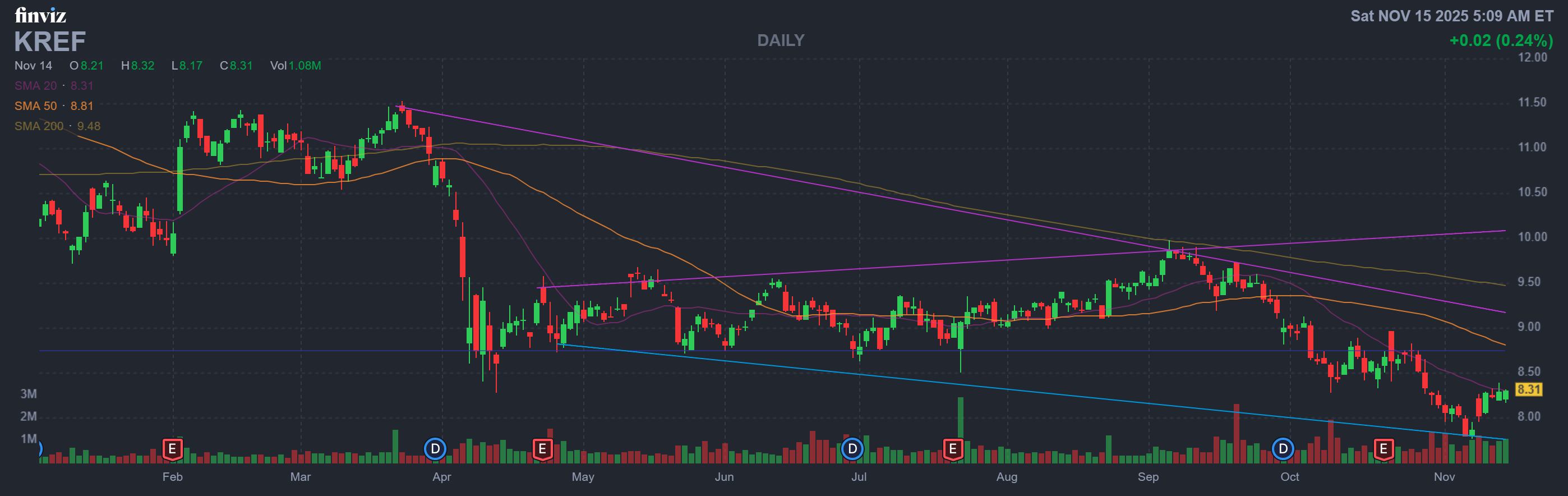
Name: W. Patrick Mattson
Position: President and COO
Transaction Date: 11-06-2025 Shares Bought: 13,000 shares an Average Price Paid of $7.91 for Cost: $102,805
Name: Matthew A. Salem
Position: Chief Executive Officer
Transaction Date: 11-06-2025 Shares Bought: 32,000 shares an Average Price Paid of $7.84 for Cost: $250,963
Name: Terrance R. Ahern
Position: Director
Transaction Date: 11-06-2025 Shares Bought: 23,700 shares an Average Price Paid of $7.81 for Cost: $185,197
Name: Christen E. Lee J.
Position: Director
Transaction Date: 11-07-2025 Shares Bought: 10,000 shares an Average Price Paid of $7.80 for Cost: $77,978
Company: KKR Real Estate Finance Trust Inc. (KREF)
KKR Real Estate Finance Trust Inc. is a mortgage real estate investment trust that primarily originates and acquires transitional senior loans backed by commercial real estate in the United States. The company provides credit investments in commercial real estate, including both leveraged and unleveraged loans. A real estate investment trust is generally exempt from federal corporate income taxes if it distributes at least 90 percent of its taxable income to investors. KKR Real Estate Finance Trust Inc. was founded in 2014 and is headquartered in New York, NY.
W. Patrick Mattson is the President and Chief Operating Officer of KKR Real Estate Finance Trust Inc. He joined KKR in 2015 and currently serves as Managing Director and Chief Operating Officer of the firm’s Real Estate Credit group. Prior to joining KKR, Mattson led Rialto Capital Management’s mezzanine debt platform and spent nine years at Morgan Stanley working in commercial real estate and securitized products, along with experience at Deloitte & Touche’s CMBS practice. He was promoted to President of KKR Real Estate Finance Trust in March 2020. Mattson earned a Bachelor of Arts from the University of Virginia and is a CFA charterholder.
Matthew A. Salem is the CEO and Director of KKR Real Estate Finance Trust Inc. He joined KKR in 2015 and serves as a Partner and Head of KKR’s Real Estate Credit business. Prior to joining KKR, Salem was a Managing Director at Rialto Capital Management and held senior roles at Goldman Sachs, Morgan Stanley, and Citigroup Alternative Investments. He became KKR Real Estate Finance Trust’s sole CEO in March 2020 and joined the board in February 2022. Salem earned a Bachelor of Arts in Economics from Bates College.
Terrance R. Ahern has been a Director of KKR Real Estate Finance Trust Inc. since May 2017. He is the Co-Founder and Chairman Emeritus of The Townsend Group, a global real asset advisory and investment firm he has led for decades. Before founding Townsend, Ahern practiced law and worked in real estate banking. He has also served on the boards of several other REITs, including SITE Centers, where he was Chairman. Ahern holds a Bachelor of Arts and a Juris Doctor from Cleveland State University.
Christen E. J. Lee has been a Director of KKR Real Estate Finance Trust Inc. since April 2020. He is a Partner and President of KKR’s global real estate division and serves as Portfolio Manager for KKR Property Partners Americas. Prior to joining the KREF board, Lee was Co-CEO and Co-President of the company. He joined KKR in 2012 after working in real estate at Apollo Global Management and Goldman Sachs. Lee holds an MBA from Harvard Business School and a Bachelor’s degree in Economics from Emory University.
Insomniac Hedge Fund Guy Opinion: KKR Real Estate Finance Trust (KREF) is a CRE credit-focused REIT that lends primarily on senior, floating-rate commercial real estate loans. As of Q2 2025, its $5.8B loan book is weighted ~62% toward multifamily + industrial, with a 66% average loan-to-value and a 7.6% unlevered yield. However, the company posted a net loss of $35.4M in the quarter, driven by a $50M CECL provision for expected credit losses. Distributable earnings turned negative ($-0.04/share), yet KREF maintained its $0.25 quarterly dividend, implying payout sustainability risk. Liquidity remains strong — $756.7M in total liquidity (cash + undrawn revolver) gives the company runway as it works through problem loans. KREF has also repurchased ~2.17M shares in Q2 at ~$9.21, signaling belief in its intrinsic value. On the risk front, the increase in CECL reserves, impaired “risk-5” loans, and exposure to more volatile CRE sectors (life science, office) could continue pressuring earnings and book value. On the opportunity side, active REO management and origination skills could allow KREF to recycle capital and capture attractive risk-adjusted returns. Valuation is highly variable — under a base case with stabilization, I estimate $11–15 / share, but downside is real if credit stress worsens.
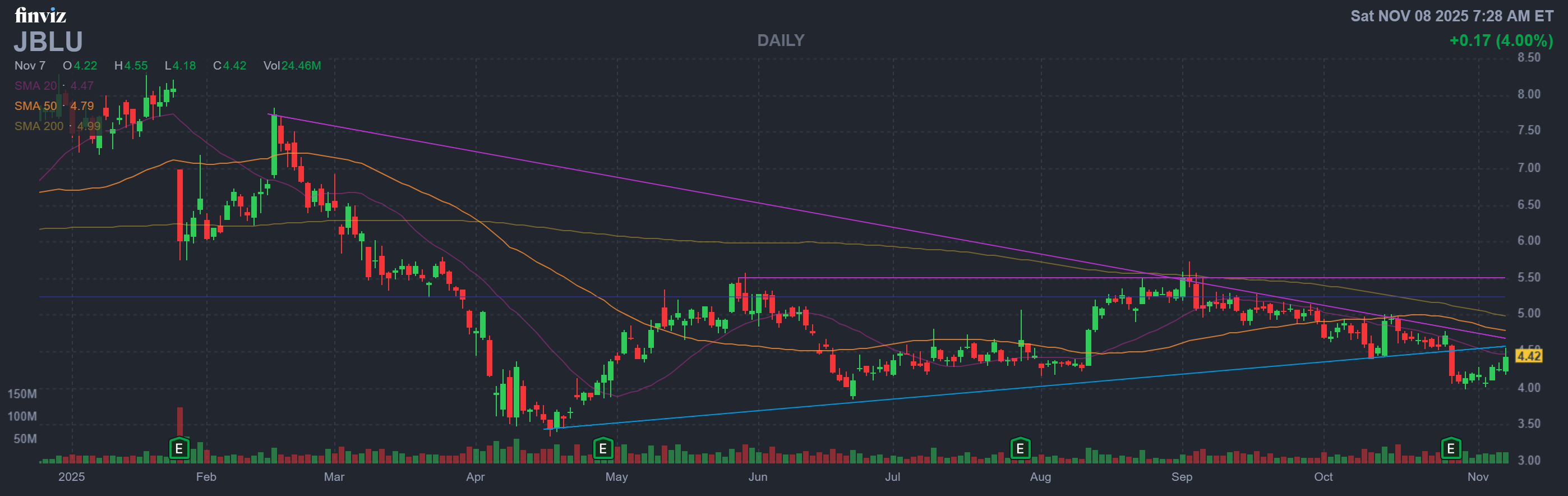
Name: Peter Boneparth
Position: Director
Transaction Date: 11-04-2025 Shares Bought: 50,000 shares an Average Price Paid of $4.12 for Cost: $206,000
Company: Jetblue Airways Corp (JBLU)
JetBlue Airways Corporation, founded in Delaware in 1998 and headquartered in New York, is a major airline serving more than 100 destinations across the United States, the Caribbean, Latin America, Canada, and Europe. Known as New York’s Hometown Airline, JetBlue is distinguished by its customer-centric culture, innovative products, and low-cost structure. The company continues to expand in key markets, invest in advanced products and technologies, and deliver award-winning service through its dedicated team, solidifying its position as a distinctive and growth-oriented airline.
Peter Boneparth has served as a director of JetBlue Airways Corporation since 2008 and was appointed Independent Chair of the Board in 2020. Before joining JetBlue’s board, he was President and Chief Executive Officer of Jones Apparel Group and held senior executive and board roles within the apparel and investment banking industries. Boneparth earned a Bachelor’s degree from the University of North Carolina at Chapel Hill and a Juris Doctor from the University of Virginia School of Law.
Insomniac Hedge Fund Guy Opinion:
JetBlue is a high-risk turnaround story more than a stable value-compounder. It has some structural advantages (brand, niche positioning, network) and recent efforts to cut costs/exits give some hope. But I see significant caveats: revenue shrinkage, losses, heavy competition, debt/leverage, and strategic ambiguity.
At the current ~$4.42 share price, the risk/reward is asymmetric: downside appears limited (price already low, market expects weak outcomes) and there may be upside if JetBlue executes, demand recovers and cost discipline holds. But that upside is not guaranteed and requires multiple moving parts to go right.
My lean: cautiously speculative. If you’re comfortable with the airline sector’s volatility and want exposure to a potential rebound, this could be a small, high-beta position. If you’re looking for safer compounders, I’d probably pass or wait for clearer proof of turnaround. This is a “beat the odds” kind of bet, not a sure thing.