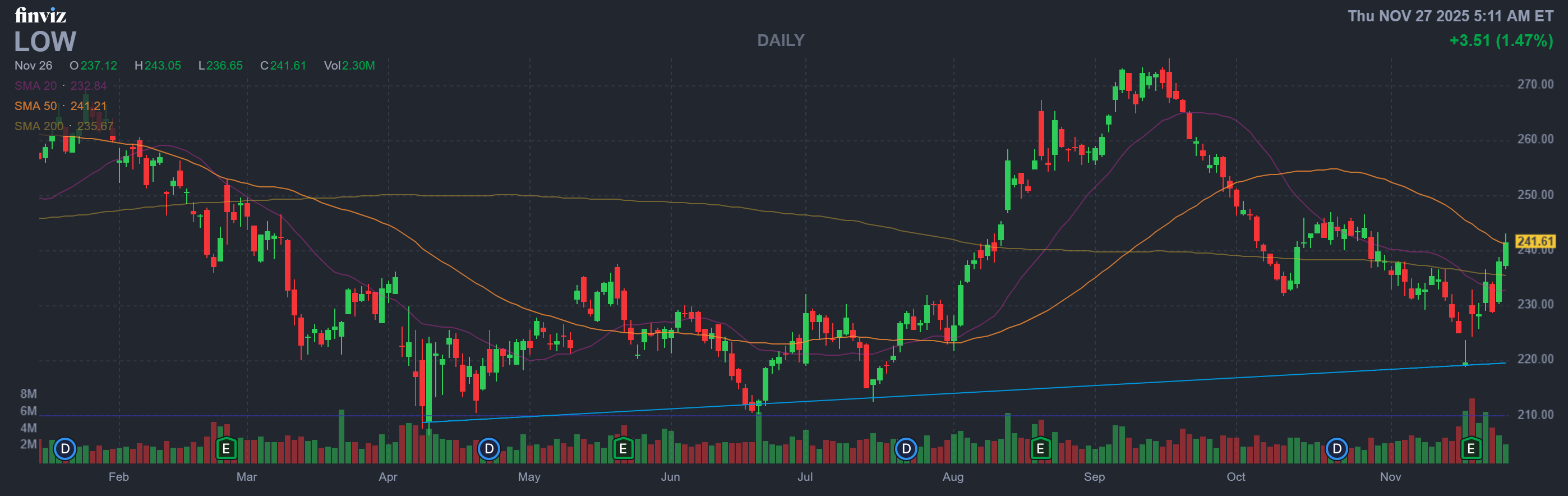
Name: Lawrence Simkins
Position: Director
Transaction Date: 11-24-2025 Shares Bought: 1,000 shares an Average Price Paid of $231.06 for Cost: $231,063
Company: Lowes Companies Inc. (LOW)
Lowe’s Companies, Inc. is a Fortune 50 corporation and the world’s second-largest home improvement retailer. As of January 31, 2025, the firm operated 1,748 home improvement stores and outlets in the United States, accounting for over 195 million square feet of retail selling area. Lowe’s was founded in 1921 in North Wilkesboro, North Carolina, and incorporated in 1952. It has been publicly traded on the New York Stock Exchange since 1961 under the ticker code LOW.
Lawrence Simkins is a director at Lowe’s Companies Inc., having joined the board in 2024 as an independent member. His career includes a long tenure as President and CEO of The Washington Companies, where he oversaw activities in transportation, mining, and industrial services. Simkins provides knowledge in operations, supply chain, governance, and financial control, which strengthens Lowe’s strategic orientation. His previous work focused on managing complicated enterprises and leading organizational growth, which continues to influence his contributions to the board.
Insomniac Hedge Fund Guy Opinion:
Lowe’s is a mid-cap stalwart — a retailer that’s pragmatically evolving. Its shift from DIY-heavy retail toward a more balanced mix with Pro-builders, distribution, services, and loyalty gives it a halfway decent foundation for lower volatility and margin stability. But let’s not kid ourselves: it’s still fundamentally a cyclical retail business tied to housing, rates and consumer swings.
Insider selling and lack of recurring revenue — combined with a normalized FCF yield — temper some of the upside. At current prices, there’s at best a narrow margin of safety, and any real upside depends heavily on execution of Pro/distribution strategy and housing-market recovery.
If you’re hunting for rock-solid yield + modest growth, LOW might belong in a conservative portfolio. But if you’re expecting explosive returns or a “safe” income stream, this isn’t that kind of game.
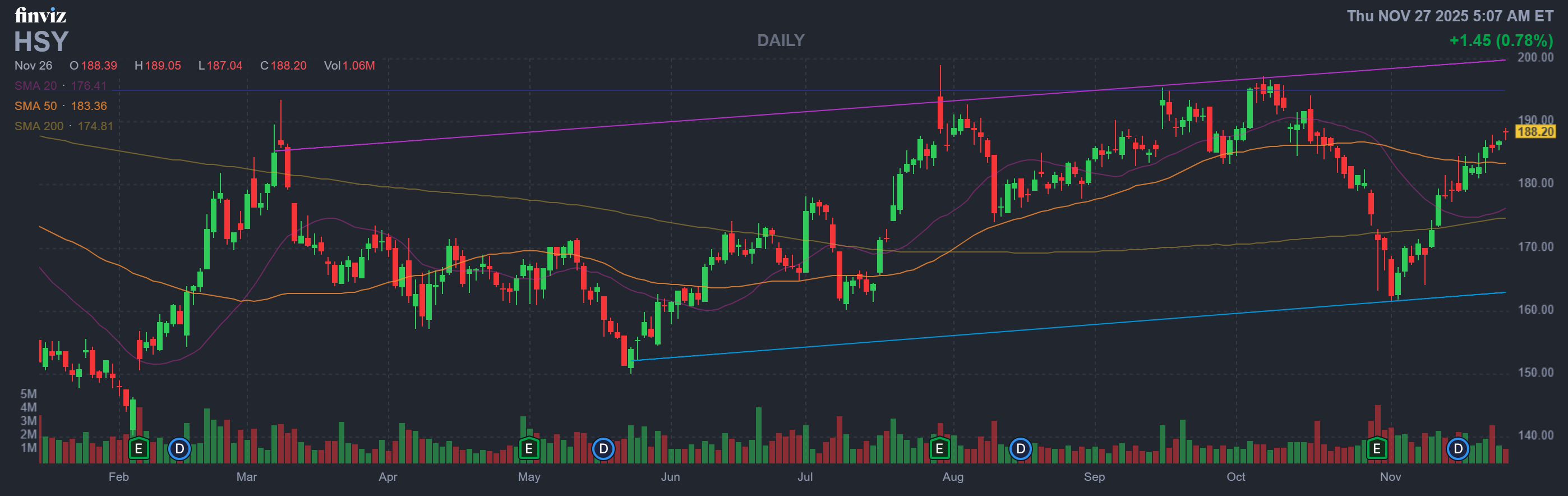
Name: Kirk Tanner
Position: President and CEO
Transaction Date: 11-21-2025 Shares Bought: 2,000 shares an Average Price Paid of $185.46 for Cost: $370,915
Company: Hershey Co (HSY)
The Hershey Company, founded in Delaware in 1927 as the successor to Milton Hershey’s 1894 company, is a global confectionery powerhouse known for creating moments of goodness with chocolate, sweets, mints, and nibbles. Hershey is North America’s largest producer of excellent chocolate, a major US snack manufacturer, and a global leader in chocolate and non-chocolate confectionery. The corporation markets, sells, and distributes its products under more than 90 brands in over 70 countries globally.
Kirk Tanner is the President and Chief Executive Officer of The Hershey Company, a position he acquired on August 18, 2025, when he joined the company’s board. Tanner was CEO of Wendy’s before joining Hershey and spent more than three decades at PepsiCo, where he rose through the ranks to become CEO of PepsiCo Beverages North America and President of PepsiCo Global Foodservice. Throughout his career, he has led significant consumer brands and driven operational excellence in the beverage and snack sectors. Tanner graduated from the University of Utah with a bachelor’s degree in accounting and currently serves on the business school’s advisory board.
Insomniac Hedge Fund Guy Opinion: Hershey remains a fortress built on decades-old brand equity, distribution muscle, and a diversified snacks-plus-confectionery tilt that cushions it better than most FMCG peers. That said, the commodity inflation and hedging-loss slug this year — combined with persistent insider selling — suggest the risk-reward is no longer skewed heavily toward “upside surprise.” The recent rebound on pricing power and seasonal demand is real, but margins remain fragile until cocoa costs normalize. At $188, valuation appears roughly fair under conservative assumptions; you’re not buying a “deep value discount,” you’re buying a well-known, resilient consumer name with limited upside but moderate downside if costs stabilize. I’d classify HSY as a hold/neutral from a value-oriented standpoint.
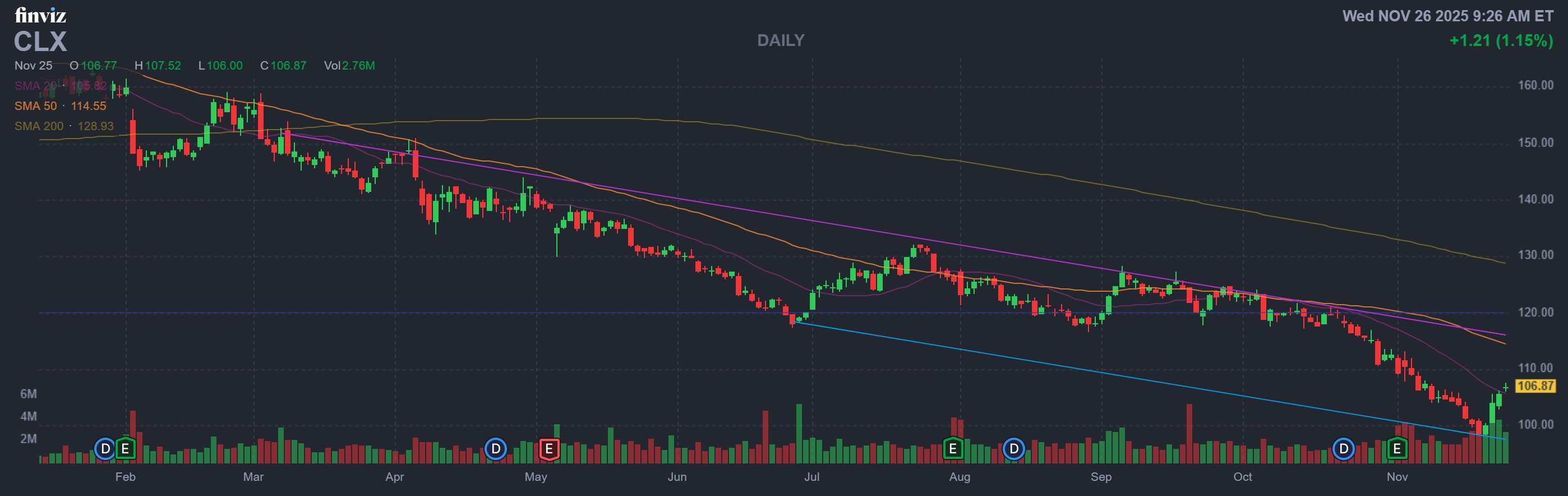
Name: Pierre R. Breber
Position: Director
Transaction Date: 11-21-2025 Shares Bought: 4,000 shares an Average Price Paid of $104.13 for Cost: $416,516
Company: Clorox Co. (CLX)
Clorox Company is a global manufacturer and marketer of consumer and professional products, employing more than 7,600 people and operating in about 25 countries. Its products reach roughly 100 markets through major retail, ecommerce, and distribution channels. Clorox owns many trusted brands, including Clorox cleaning and disinfecting products, Pine Sol, Liquid Plumr, Poett, Glad, Fresh Step, Kingsford, Hidden Valley, Brita, and Burt’s Bees. It also provides industry leading solutions for professional customers through its CloroxPro and Clorox Healthcare lines. More than 80 percent of its revenue comes from brands that hold the top one or two positions in their categories. The company was founded in 1913 in Oakland, California, and is incorporated in Delaware.
Pierre R. Breber is a director of The Clorox Company, elected to the board in November 2024. He brings strong financial and accounting expertise from his tenure as Chief Financial Officer at Chevron Corporation, where he also held major executive and operational roles around the world. At Clorox, he serves as Chair of the Audit Committee and sits on the Nominating, Governance, and Corporate Responsibility Committee. His background includes leading strategic transformation and global growth initiatives in the energy industry. He holds a master’s degree in mechanical engineering from the University of California, Berkeley, and an MBA from Cornell University’s Johnson Graduate School of Management.
Insomniac Hedge Fund Guy Opinion:
Clorox remains a relic of the old-school consumer-products world: a sprawling brand portfolio backed by global distribution muscle and legacy shelf dominance. But its growth engine—if you can call it that—has largely sputtered. The company’s pivot to cost-cutting, margin restoration, and portfolio pruning (divesting non-core health-supplement operations) has stabilized profitability, but it hasn’t reignited meaningful top-line momentum. The DCF puts intrinsic value close to today’s price — meaning the market may have it about right, given Clorox’s muted growth outlook. For a value-minded investor who likes stable dividends and modest upside, CLX is tolerable; but as a growth bet? It’s boring. Worse: with significant customer concentration (big-box retailers controlling ~half of sales), shifts in retailer strategies or consumer behavior could blow away the “steady cash-cow” narrative. Unless Clorox can re-invent brand relevance — and fast — its upside remains capped, and downside isn’t negligible.
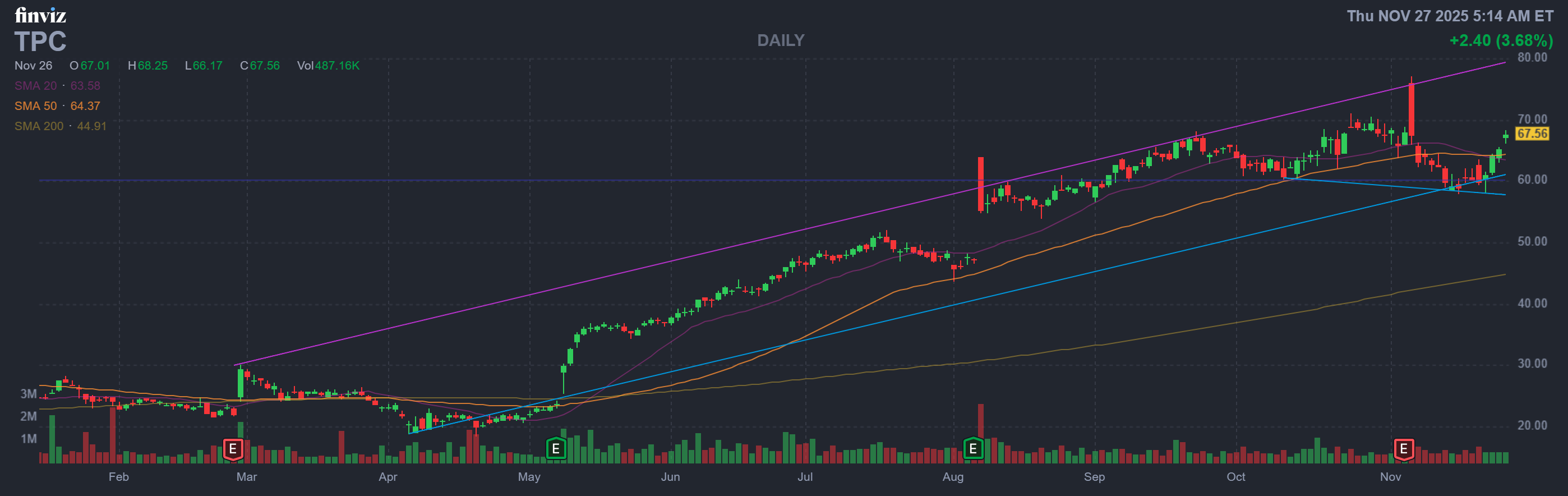
Name: Gary G. Smalley
Position: CEO And President
Transaction Date: 11-19-2025 Shares Bought: 5,000 shares an Average Price Paid of $61.08 for Cost: $305,389
Company: Tutor Perini Corp (TPC)
Tutor Perini Corporation is a renowned construction company that provides general contracting, construction management, and design build services to private and public clients around the world. The company was formed in 2008 through the merger of Tutor Saliba Corporation and Perini Corporation, with roots reaching back to 1894. Tutor Perini is headquartered in Sylmar, California, with additional offices across the United States and its territories. The corporation is incorporated in Massachusetts and trades on the New York Stock Exchange under the ticker symbol TPC.
Gary G. Smalley is the Chief Executive Officer and President of Tutor Perini Corporation, taking on the job on January 1, 2025, following his appointment as President in November 2023. He formerly served as the company’s Executive Vice President and Chief Financial Officer, where he has been since 2015. Before joining Tutor Perini, Smalley spent a lengthy time with Fluor Corporation in key global finance positions across multiple geographies. His background combines financial expertise, operational management, and international experience, which informs his leadership of big civil and building projects across the company’s portfolio.
Insomniac Hedge Fund Guy Opinion:
Tutor Perini is a classic “big-contract, high-stakes contractor” — and right now, the pieces look like they might finally be falling into place. Their backlog is at an all-time high, operating cash flow has soared, and debt is being slashed. The recent shift back to profitability (Q3 2025) and upward EPS guidance suggest the turnaround narrative is real. If management executes without project blow-outs or surprise claims, the stock could reward patient investors.
But let’s not kid ourselves: this is not a subscription business. It’s lumpy, cyclical, and razor-thin on margin safety. The current share price (~US$60–70) already bakes in a lot of optimism — perhaps more than is justified given the inherent execution and political risks. My back-of-the-envelope DCF suggests the “safe value zone” is far lower (~US$15–25), meaning there’s little margin of safety.
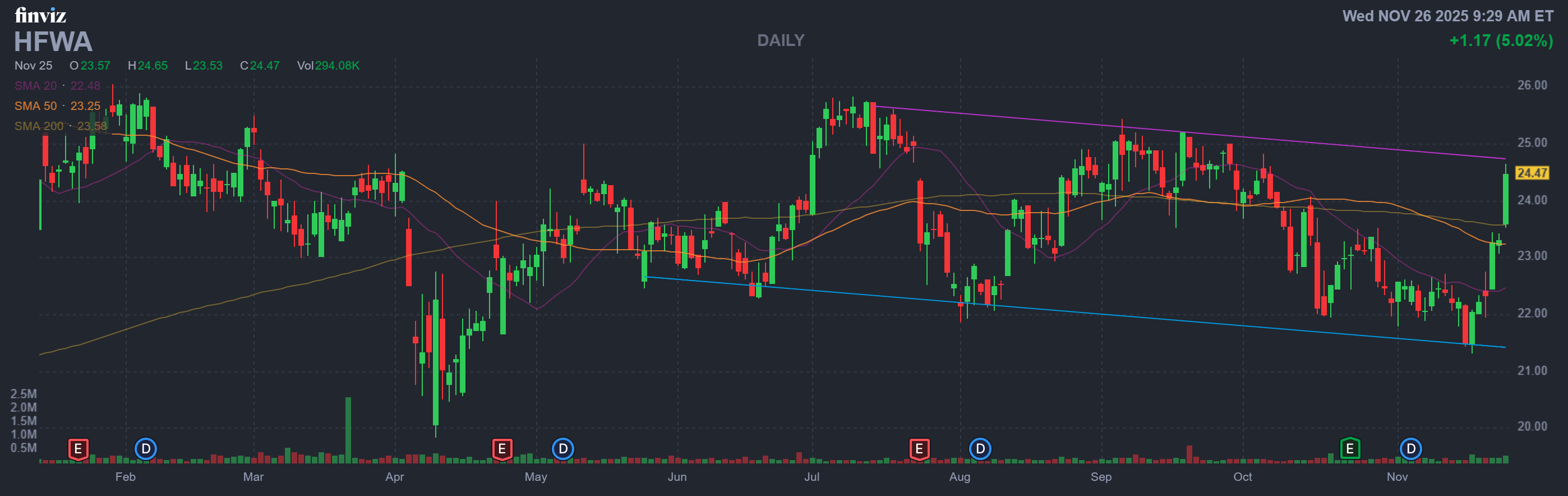
Name: Bryan McDonald
Position: President
Transaction Date: 11-20-2025 Shares Bought: 19,106 shares an Average Price Paid of $22.32 for Cost: $426,446
Company: Heritage Financial Corp (HFWA)
Heritage Financial Corporation is a Washington based bank holding company that oversees Heritage Bank, its wholly owned subsidiary, operating as a single segment. Heritage Bank is headquartered in Olympia and runs 50 branches across Washington, the greater Portland area, Eugene, and Boise, also serving customers under the Whidbey Island Bank name. The bank’s deposits are FDIC insured. Its main focus is commercial lending and deposit services for small and medium sized businesses, along with managing public deposits. It also provides consumer financing and offers real estate construction and land development loans.
Bryan McDonald became President and CEO of Heritage Financial Corporation on May 6, 2025, after being appointed to the Board of Directors. He previously served as President and Chief Operating Officer of Heritage Bank from 2021 to 2024, and as Executive Vice President and Chief Operating Officer from 2018 to 2021. McDonald joined Heritage Bank in 2014 as Executive Vice President and Chief Lending Officer following its merger with Whidbey Island Bank. Throughout his banking career, he has held leadership roles in lending, credit, operations, commercial banking, and residential real estate, giving him broad cross functional expertise across the organization.
Insomniac Hedge Fund Guy Opinion: Heritage Financial is not a high-flying growth poacher — it’s a small-cap regional bank, riding interest-rate cycles and banking fundamentals. The improving net interest margin, disciplined securities-to-loans pivot, and a merger on the horizon give the stock potential upside. But there’s no durable moat; the business is commoditized, sensitive to interest rates and local economic swings. Based on a conservative DCF, the current price seems a little frothy — the present valuation already assumes bullish execution. For a value-oriented investor who believes management can grow the loan book, manage credit tightly, and realize merger synergies, HFWA could deliver. But this is a bank-fundamental trade, not a high-conviction moat play.
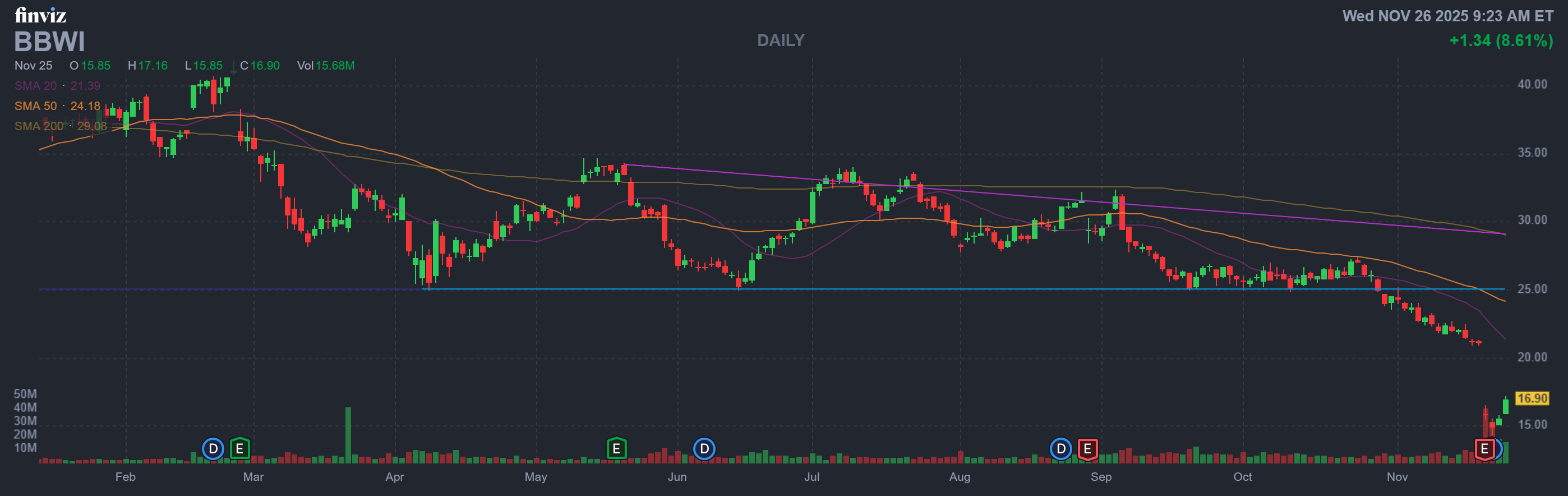
Name: Steven E. Voskuil
Position: Director
Transaction Date: 11-21-2025 Shares Bought: 20,000 shares an Average Price Paid of $15.04 for Cost: $300,700
Company: Bath & Body Works Inc. (BBWI)
Bath and Body Works Inc., founded in 1963 in Columbus, Ohio, has grown from an apparel oriented retailer into a global leader in personal care and home fragrance. For more than 30 years, customers have relied on the brand for high quality products, trend driven collections, and exciting new scents. The company sells its offerings under the Bath and Body Works and White Barn names, covering home fragrance, body care, soaps, and sanitizers. Its focus is on creating delightful experiences and weaving fragrance into everyday life through exclusive aromas and popular products like 3 wick candles, fragrance mists, diffusers, lotions, and creams, while continuing to support its communities and loyal customers.
Steven E. Voskuil has served as an independent director on the Bath and Body Works board since February 21, 2023. He brings more than 30 years of financial and global consumer products experience, supported by his role as Senior Vice President and Chief Financial Officer at The Hershey Company. Before Hershey, he was CFO of Avanos Medical, Inc. and spent 23 years in senior finance and treasury roles at Kimberly Clark Corporation. He holds a BBA in Finance from the University of Wisconsin and a Master of Management from the Stanford Graduate School of Business.
Insomniac Hedge Fund Guy Opinion:
Bath & Body Works is a classic “cash-flow generative retail dinosaur” that’s taken a beating from shifting consumer habits and macro stress. Its core — body-care and home-fragrance — still has value, but the brand drift and discounting of recent years weakened its moat. The new CEO’s tough talk and restructuring plan are necessary, but whether execution will restore relevance — especially among younger shoppers — is uncertain.
From a valuation perspective: the stock trades ~65–70% below a conservative DCF-derived fair value. That’s a fat margin of safety for a value-oriented investor. If BBWI can show a few quarters of stable or improving cash flow, and begin connecting with a new demographic via refreshed branding or expanded channels, this could be a deep-value gem. But it’s a turnaround story — not a growth story.
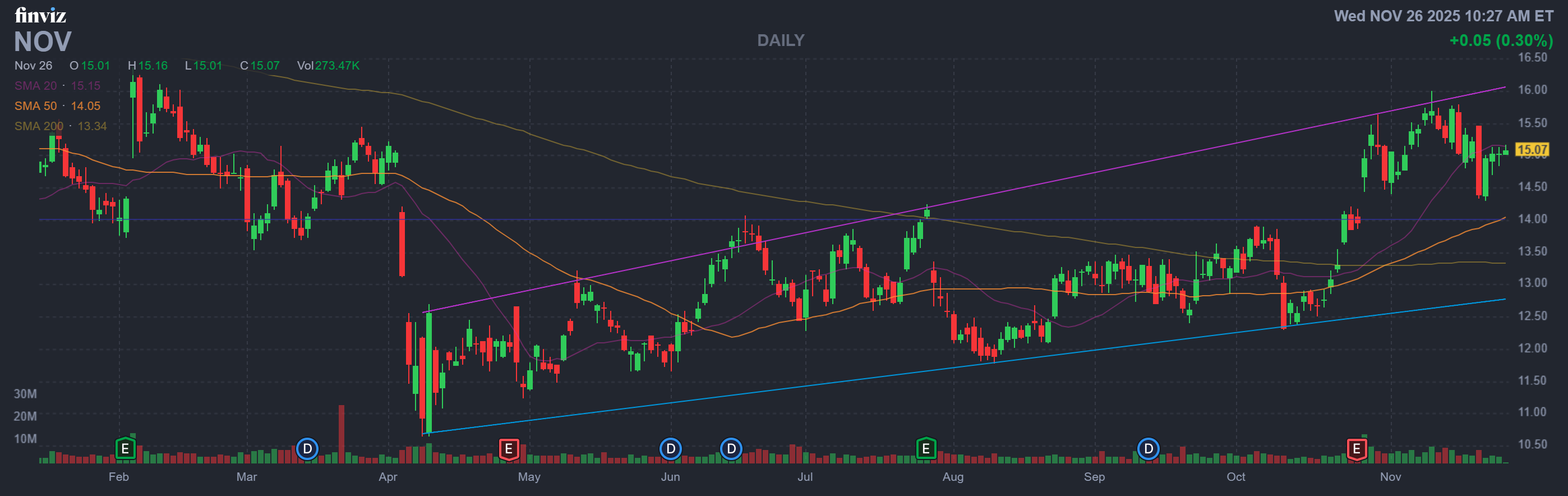
Name: Christian S. Kendall
Position: Director
Transaction Date: 11-21-2025 Shares Bought: 70,000 shares an Average Price Paid of $14.46 for Cost: $1,012,200
Company: NOV Inc. (NOV)
NOV Inc. is a leading independent provider of equipment and technology to the global energy industry, with more than 160 years of innovation that has improved the efficiency, safety, and environmental performance of oil and gas development. The company has been central to advancing technologies for unconventional and deepwater resources and has recently expanded its capabilities to support alternative energy solutions. NOV offers integrated products and services covering drilling, completion, and production needs, with a strong focus on digital tools such as automation, predictive analytics, and condition based maintenance. The company operates in 59 countries and serves a wide range of energy producers, service companies, and contractors through its two segments: energy equipment and energy products and services.
Christian S. Kendall has served as a Director of NOV Inc. since December 2024. He also joined the Board of California Resources Corporation in May 2024, where he chaired the Nominating and Governance Committee. Kendall previously served as President and CEO of Denbury Inc. from 2017 to 2023, after joining the company as COO in 2015 and becoming President in 2016. Earlier in his career, he spent 14 years in senior global leadership roles at Noble Energy and began his professional journey with Mobil Oil Corporation in 1989. In February 2025, he joined the Board of Range Resources. He holds a Bachelor of Science in Engineering Civil Specialty from the Colorado School of Mines and completed the Advanced Management Program at Harvard Business School.
Insomniac Hedge Fund Guy Opinion: NOV is a working-horse oilfield-equipment play — not sexy, but with real backbone. Its strong backlog and steady free cash flow make it attractive when oil capex picks up, and its pricing around $15 means you’re not buying at frothy multiples. That said, the lack of true recurring revenue and meaningful insider accumulation limits upside in a downside scenario. With moderate short interest and a discounted-to-fair-value stock, NOV might be a value-oriented play for deep-cyclic capital equipment exposure. But don’t expect upside akin to a SaaS darling — it’s a capital-intensive industrial with long cycles and execution risk.
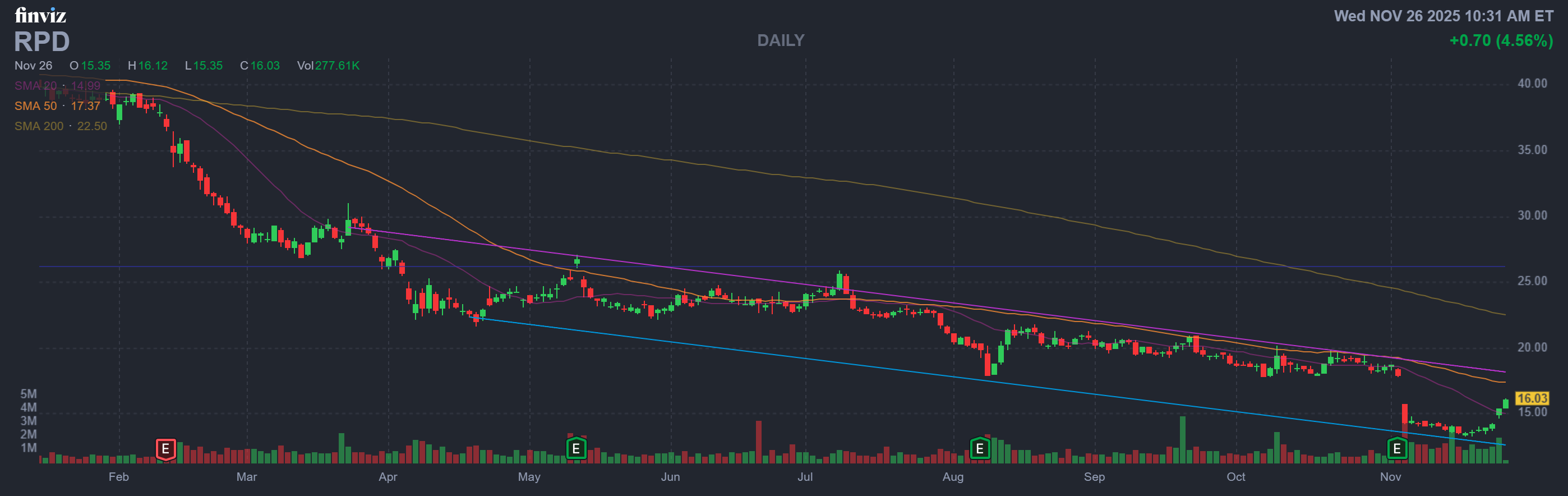
Name: Corey E. Thomas
Position: CEO
Transaction Date: 11-24-2025 Shares Bought: 14,500 shares an Average Price Paid of $13.82 for Cost: $200,390
Company: Rapid7 Inc. (RPD)
Rapid7 is a global cybersecurity company that helps organizations simplify and strengthen their security operations. Its AI powered technologies, deep research capabilities, and long standing expertise enable security teams to understand their attack surface, detect and respond to threats quickly, and reduce overall risk. The Rapid7 Command Platform brings together cloud security, SIEM, detection and response, and vulnerability management, supporting the industry’s move toward integrated and consolidated SecOps solutions.
Corey E. Thomas is the Chief Executive Officer and Chairman of Rapid7 Inc., a role he has held since 2012. He joined the company in 2008 as Vice President of Product Management and Strategy, later becoming President before stepping into the CEO role. Under his leadership, Rapid7 has expanded into a global cybersecurity solutions provider with a broader suite of security products. Before Rapid7, he held executive roles at Parallels, Microsoft, and Deloitte Consulting. He also serves on several boards and advisory groups within the technology and security sectors. Corey Thomas holds a bachelor’s degree in electrical engineering and computer science from Vanderbilt University and an MBA from Harvard Business School.
Insomniac Hedge Fund Guy Opinion: Rapid7 is no high-flying hypergrowth play — it’s a mature, cash-generating cybersecurity firm trading at deeply depressed multiples. Its transition into a unified security operations “Command” platform + the board pressure from Jana Partners gives a credible path to value creation or even a buyout. But growth has cooled, debt is non-trivial, and clients may tighten budgets amid macro risk. If you’re value-oriented, RPD offers an asymmetric risk/reward today — but don’t bet on a moonshot unless you believe they’ll execute big on MDR, upsell, or M&A. Not advice — just one veteran’s view.
Name: H. Sanford Riley
Position: Non-Executive Chairman
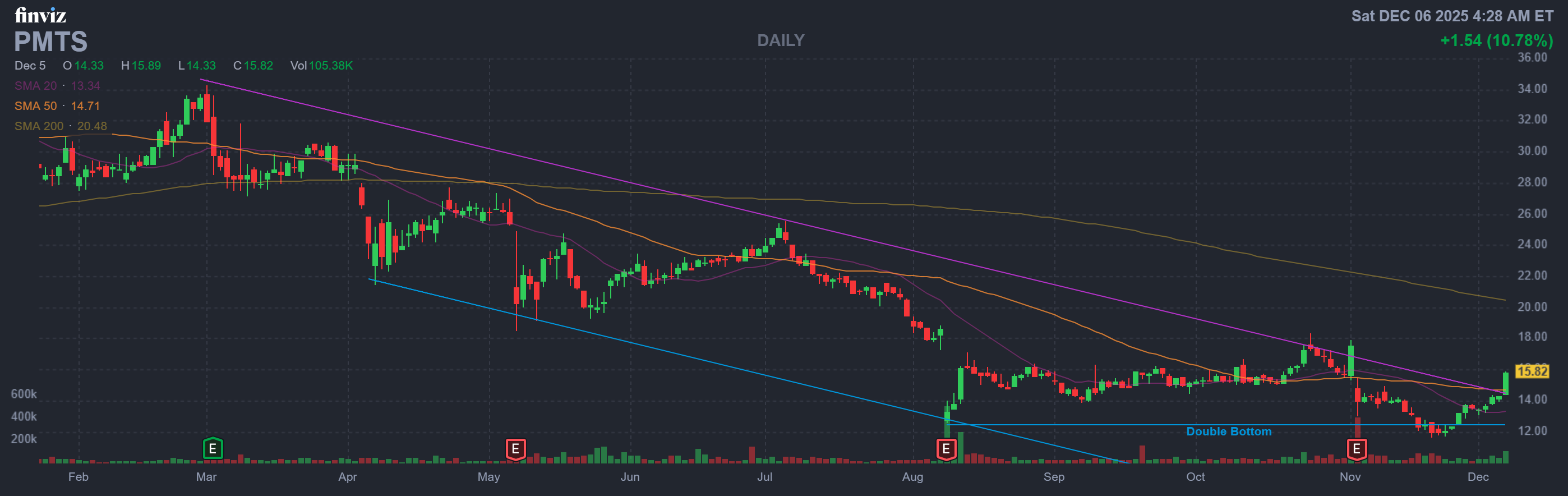
Transaction Date: 12-04-2025 Shares Bought: 200,000 shares an Average Price Paid of $13.51 for Cost: $2,702,000
Company: CPI Card Group Inc. (PMTS)
CPI Card Group Inc. is a payments technology company recognized as a leading provider of comprehensive Financial Payment Card solutions in the United States. Its offerings include credit, debit, and prepaid debit cards issued on major Payment Card Brand networks such as Visa, Mastercard, American Express, and Discover, with prepaid debit defined as cards not linked to a traditional bank account. CPI also delivers instant card issuance solutions, enabling financial institutions to produce and distribute personalized cards directly within their branches. With more than 20 years of industry experience, the company has established a strong footprint in the Financial Payment Card solutions market.
H. Sanford Riley joined the CPI Card Group board in May 2023 and was appointed Chairman of the Board. He brings extensive leadership experience in the financial services industry, having previously served as President and CEO of Investor Group Inc., one of Canada’s largest mutual fund companies, and as President and CEO of Richardson Financial Group Limited since 2003. Riley holds a Bachelor of Arts from Queen’s University in Canada and a J.D. from Osgoode Hall Law School.
Insomniac Hedge Fund Guy Opinion: CPI Card Group is a scrappy niche player — not flashy, but sometimes that’s where value hides. Their integrated card-manufacture + issuance + SaaS stack gives them a defensible if modest moat in a world still printing and issuing physical cards. The 2025 acquisition of Arroweye signals awareness of secular shifts — but margin compression, rising costs and a business mix still heavily reliant on commodity-like physical cards drag on valuation. That said, from a DCF/valuation perspective, PMTS appears under-priced relative to a plausible cash-flow normalized future. Insider buying and debt-reduction moves reinforce management’s own belief that the long-term cash-flow base is undervalued here. I wouldn’t call it a home run, but a disciplined value-oriented spec: buy at a steep discount to intrinsic value, with patience and eyes wide open on execution risk.
Name: James J. Barber
Position: President & CEO
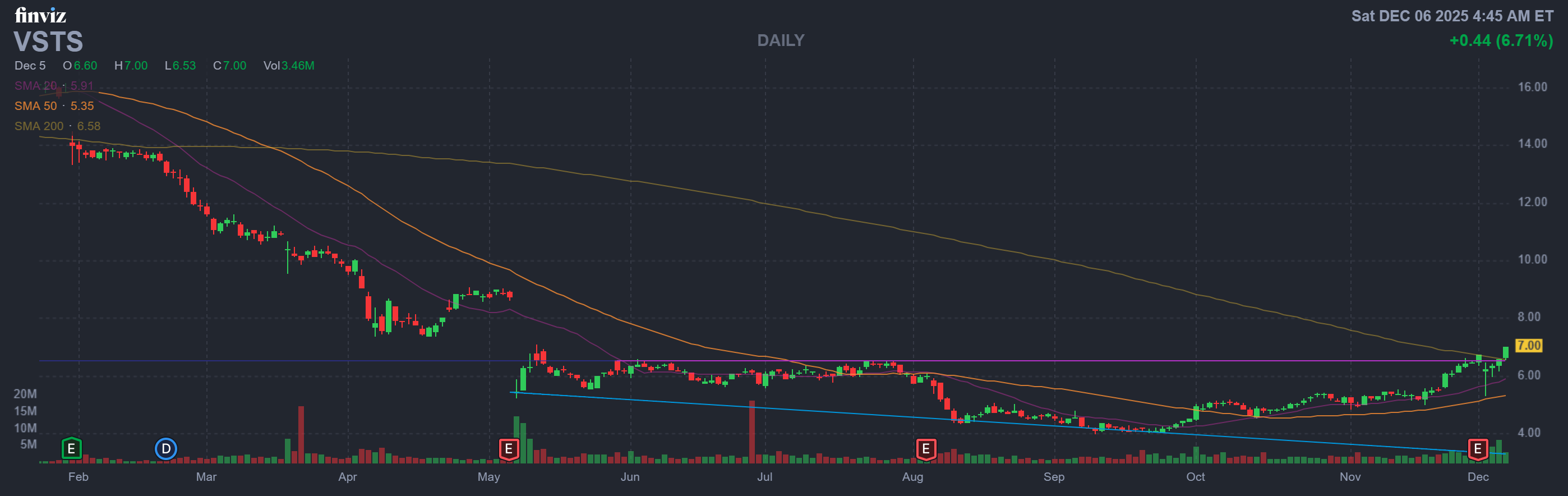
Transaction Date: 12-03-2025 Shares Bought: 164,000 shares an Average Price Paid of $6.35 for Cost: $1,041,964
Company: Vestis Corp (VSTS)
Vestis Corporation provides uniform rental and workplace supply services across the United States and Canada. Its product offerings include shirts, pants, outerwear, gowns, scrubs, high visibility garments, particulate free garments, flame resistant garments, footwear, and accessories. The company also offers workplace supplies including managed restroom services, first aid and safety products, floor mats, towels, and linens. Vestis serves a wide range of industries including manufacturing, hospitality, retail, food processing, food service, pharmaceuticals, healthcare, automotive, and cleanroom environments. The company was founded in 1936 and is headquartered in Roswell, Georgia.
James J. Barber became President and Chief Executive Officer of Vestis Corporation on June 2, 2025, and joined the company’s Board of Directors simultaneously. He previously spent 35 years with United Parcel Service, progressing from delivery driver to senior executive roles, including Chief Operating Officer, President of UPS International, and President of UPS Europe. Barber holds an undergraduate degree from Auburn University.
Insomniac Hedge Fund Guy Opinion:
Vestis is a classic “deep-value, distressed-asset” bet — a network + recurring-revenue business that spun off under heavy debt and is gurgling under margin pressure. But behind the smoke and losses lurks a massive underlying asset: a nationwide uniform & workplace-services platform; 300,000+ customers; 350+ facilities; and a near-guaranteed recurring revenue base (95% rental / service)… if they can stop the bleeding and fix operations.
The recent insider buy by CEO Jim Barber — after the brutal Q4 results — is a bold signal. He’s essentially telling the market: “I believe we can fix this.” If management lands the restructuring and restores EBITDA to the guided $285–$315M, the stock could easily re-rate to mid-teens.
That said — this is a high-risk, high-variance turnaround. Execution must be near flawless: cost cuts, logistics optimization, customer retention. A single misstep, or renewed customer losses, and the debt overhang will crush equity.
Name: Christopher Urmson
Position: Chief Executive Officer
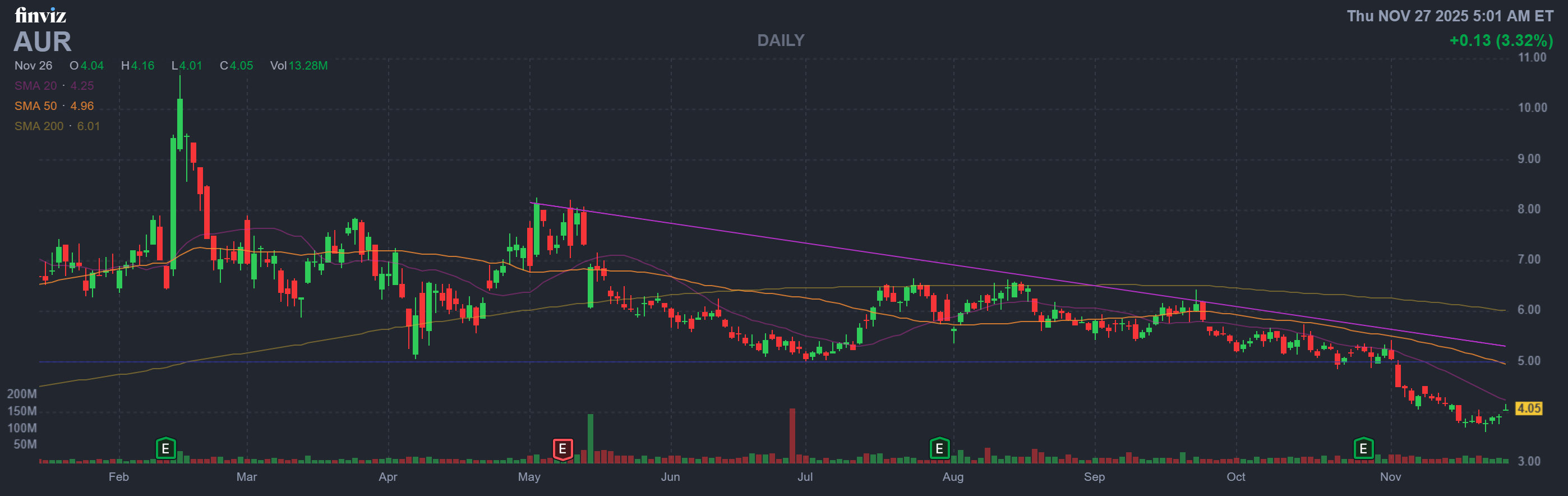
Transaction Date: 11-25-2025 Shares Bought: 258,000 shares an Average Price Paid of $3.88 for Cost: $1,000,627
Company: Aurora Innovation Inc. (AUR)
Aurora Innovation, Inc. is a self-driving technology business in the United States. Its primary focus is the development of Aurora Driver, a platform that combines self-driving hardware, software, and data services to adapt and interoperate with a variety of vehicle kinds and applications. The company was created in 2017 and is based in Pittsburgh, Pennsylvania.
Christopher Urmson, Co-founder and CEO of Aurora Innovation is a pioneer in autonomous vehicle technology, currently serving as the Co-founder, Chairman, and CEO of Aurora Innovation, a company focused on developing the Aurora Driver, an autonomous driving system for commercial trucking. Before co-founding Aurora in 2017, Urmson spent nearly eight years at Google, where he helped launch and lead the self-driving car project (now Waymo), eventually serving as the Chief Technology Officer for the group. His expertise is rooted in his academic career at Carnegie Mellon University’s Robotics Institute, where he earned his Ph.D. in Robotics and was the Director of Technology for the award-winning Tartan Racing teams that competed and won the 2007 DARPA Urban Challenge, demonstrating the feasibility of autonomous driving in complex environments.4 Urmson earned his BEng in Computer Engineering from the University of Manitoba. His work spans over two decades at the intersection of machine learning and robotics, and he has authored over 50 publications.
Insomniac Hedge Fund Guy Opinion: Aurora Innovation sells a powerful vision — self-driving freight at scale — and has finally shown the guts to move from lab to lane. But right now, its financials look like a R&D lab that just started charging pennies for pilot loads. The balance sheet is clean, the insiders bought in, and the short base is huge: that’s the recipe for optionality. If they pull off hardware scaling in 2026 and actually ramp freight miles, $AUR could easily re-rate toward a $8–$12 per-share base, maybe higher if the AV freight market cracks open. That said — the odds are long and the path is littered with execution, regulatory, and capital-markets risk. You’d need serious conviction (or appetite for volatility) to play this out. Not a stable income story — a high-stakes call on the future of freight.
Name: Frank Martell
Position: Chief Executive Officer
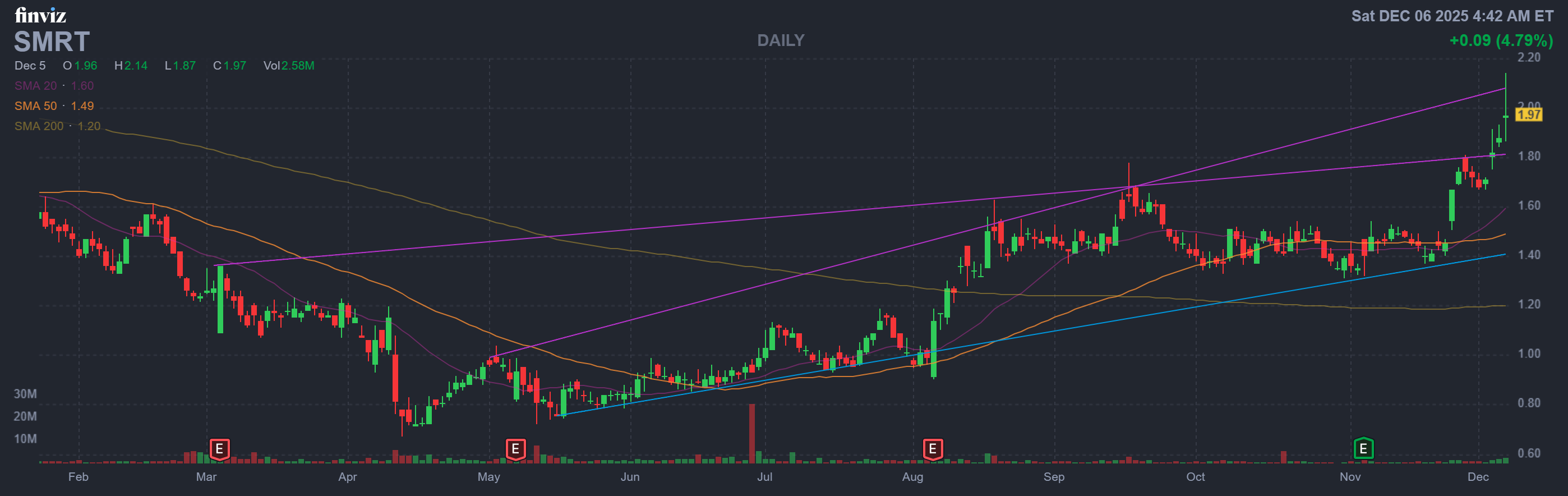
Transaction Date: 12-05-2025 Shares Bought: 124,086 shares an Average Price Paid of $1.91 for Cost: $237,401
Transaction Date: 12-03-2025 Shares Bought: 127,722 shares an Average Price Paid of $1.87 for Cost: $239,133
Transaction Date: 12-01-2025 Shares Bought: 47,278 shares an Average Price Paid of $1.69 for Cost: $79,934
Name: Thomas N. Bohjalian
Position: Director
Transaction Date: 12-02-2025 Shares Bought: 50,000 shares an Average Price Paid of $1.68 for Cost: $84,165
Company: SmartRent Inc. (SMRT)
SmartRent, Inc. is an enterprise real estate technology firm that offers software and smart building solutions to rental property owners, operators, property managers, homebuilders, developers, and inhabitants in the United States and throughout the world. Its cloud-based platform and smart devices are intended to improve visibility, security, and control across real estate assets while providing inhabitants with a unified, all-in-one smart home experience. SmartRent’s offerings include smart apartments and houses, building and unit access control, community and resident Wi-Fi, asset protection and monitoring, parking management, and self-guided tour capabilities. The company also offers professional services, including installation, training, and continuing support. SmartRent was founded in 2017, and its headquarters are in Scottsdale, Arizona.
Frank Martell is the President & CEO of SmartRent. He was appointed to that position on June 16, 2025. Before becoming CEO, he joined SmartRent’s Board of Directors in June 2024 and sat on both the Audit Committee and the Nominating and Corporate Governance Committee. He has over 30 years of leadership experience in real estate services, data analytics, and technology-driven enterprises. His previous responsibilities include CEO of loanDepot, Inc., and executive leadership at CoreLogic, Inc., where he held top positions such as CFO, COO, and later CEO. Martell has a Bachelor of Science in Accounting from Villanova University’s School of Business, which informs his financial and strategic leadership style.
Thomas N. Bohjalian joined the Board of Directors of SmartRent Inc. on June 23, 2025, bringing extensive expertise in real estate investment and leadership within the multifamily housing sector. His career includes senior roles in real estate investment management, notably with Cohen and Steers, Inc. At SmartRent, he serves on both the Audit and Compensation Committees, contributing strategic oversight and financial perspective. Bohjalian holds a Bachelor of Science in Business Administration and an MBA from Northeastern University.
Insomniac Hedge Fund Guy Opinion:
SmartRent is a raw, scrappy under-dog in the smart-building / rental-housing tech space. Its pivot from bulk hardware sales to a recurring-revenue SaaS model is painful in the short run — hence declining top-line and ongoing losses. But the ARR growth, expanding unit base, high retention and aggressive insider buying all suggest management genuinely believes in the long-game.
If they pull off SaaS scale and margin expansion — and the real-estate rental market remains healthy — the company could be worth twice (or more) today’s price. The current valuation includes a lot of pessimism; I view part of it as overdone. That said: execution risk is high, competition looming, and upside is far from assured.
This blog is solely for educational purposes and the author’s own amusement. IT IS NOT INVESTMENT ADVICE. Think of the blog as part of my personal investment journal that I am willing to share with the DIY investor. There are also many parts that I am not willing to share if I think it could influence trading action or be detrimental to the Fund’s partners. We could be long, short, or have no position at all in any of the stocks mentioned and express no written or implied obligation to disclose any of that. Nothing contained here constitutes a recommendation to buy or sell any security. Investing involves risk, including the possible loss of principal, and past performance is not indicative of future results.
“The insomniac hedge fund guy” is a moniker Harvey Sax, the portfolio manager for The Insiders Fund” has used from time to time on email, blog ,and social media posts. While Mr. Sax is the portfolio manager of The Insiders Fund, these posts are not communications from, nor endorsed by, Alpha Wealth Funds, LLC or any of its managed funds. References to Alpha Wealth Funds or its affiliates are for identification only and do not imply sponsorship or approval.
The Insiders Fund and its blogs and posts are not affiliated with, endorsed by, or sponsored by any of the companies mentioned herein. All company names, logos, and trademarks belong to their respective owners. The use of company logos is solely for descriptive and illustrative purposes under fair use. Any information provided is based on publicly available data and should not be considered financial, investment, or legal advice. Readers should conduct their own research or consult with a professional before making any investment decisions. Insiders sell the stock for many reasons, but they generally buy for just one – to make money. You’ve always heard the best information is inside information. Everyone with any stock market experience pays close attention to what insiders are doing. After all, who knows a business better than the people running it? Officers, directors, and 10% owners are required to inform the public through a Form 4 Filing of any transaction, buy, sell, exercise, or any other within 48 hours of doing so.
This info is available for free from the SEC’s Web site, Edgar, although we subscribe to SECForm4 as they provide a way to manage and make sense of the vast realms of data. I’ve tried a lot of vendors. SECForm4 is one of the smaller ones, but I like supporting Frank. He is not arrogant. He’s helpful and has great prices. He also trades on his own data, so I like people that eat what they kill. The bar is different from selling because the natural state of management is to be a seller. This is because most companies provide significant amounts of management compensation packages as stock and options. Therefore, we analyze unusual patterns with selling, such as insiders selling 25 percent or more of their holdings or multiple insiders selling near 52-week lows. Another red flag is large planned sale programs that start without warning. Unfortunately, the public information disclosure requirements about these programs, referred to as Rule 10b5-1, are horrendously poor. Also, planned sales that pop up out of nowhere are basically sales and are seeking cover under this corporate welfare loophole.
I also generally ignore 10 percent shareholders as they tend to be OPM (other people’s money) and perhaps not the smart money on which we are trying to read the tea leaves. I say generally because some 10% shareholders are great investor, think Warren Buffett and others. Of course, insiders can also be wrong about their Company’s prospects. Don’t let anyone fool you into believing they never make mistakes. Do your own analysis. They can easily be wrong, and in many cases, maybe most cases, have no more idea what the future may hold than you or me. In short, you can lose money following them. We have, and we curse aloud; what were they thinking!
We like Fly on the Wall for keeping up with what events might be happening, analysts’ comments, and whatever else could be moving the stock. Dow Jones news service is an essential tool, but many services pick up their feed like they do Bloomberg. She probes the 10k for a reasonable description of the business. I’ve found that to be the most accurate and succinct place to find out what a business actually does. When I have time, over the weekend, I’ll add some preliminary analysis to the Opinion at the end. It is largely done now by my AI. Sometimes I won’t update this for a couple of weeks or more. A good way to use this blog is as I do, it’s a reference point and filing cabinet for various stocks with notable insider buying. It’s one of many tools I use.